Crisis? What crisis? Winnipeg’s sluggish, often indecisive response to climate change has placed it well behind other cities in Canada
Read this article for free:
or
Already have an account? Log in here »
To continue reading, please subscribe:
Digital Subscription
One year of digital access for only $1.44 a week*
- Enjoy unlimited reading on winnipegfreepress.com
- Read the E-Edition, our digital replica newspaper
- Access News Break, our award-winning app
- Play interactive puzzles
*Billed as $5.77 plus GST every four weeks. After 52 weeks, price increases to the regular rate of $19.95 plus GST every four weeks. Offer available to new and qualified returning subscribers only. Cancel any time.
To continue reading, please subscribe:
Add Free Press access to your Brandon Sun subscription for only an additional
$1 for the first 4 weeks*
- Enjoy unlimited reading on winnipegfreepress.com
- Read the E-Edition, our digital replica newspaper
- Access News Break, our award-winning app
- Play interactive puzzles
*Your next Brandon Sun subscription payment will increase by $1.00 and you will be charged $17.95 plus GST for four weeks. After four weeks, your payment will increase to $24.95 plus GST every four weeks.
Read unlimited articles for free today:
or
Already have an account? Log in here »
Hey there, time traveller!
This article was published 24/07/2020 (2275 days ago), so information in it may no longer be current.
There are many instances where municipal governments find themselves hamstrung, victims to the whims of larger governments with bigger spending power and more expansive jurisdictions.
But in the case of one of the biggest looming threats to cities — climate change — municipal governments have an overwhelming amount of power to make meaningful policy moves. Yet, the City of Winnipeg is dragging its feet on consequential action.
In 2018, Winnipeg adopted a climate-action plan aimed at lowering greenhouse-gas emissions generated within the city limits by 20 per cent by 2030, using 2011 levels as a baseline. By 2050, the goal is to have reduced emissions by 80 per cent.
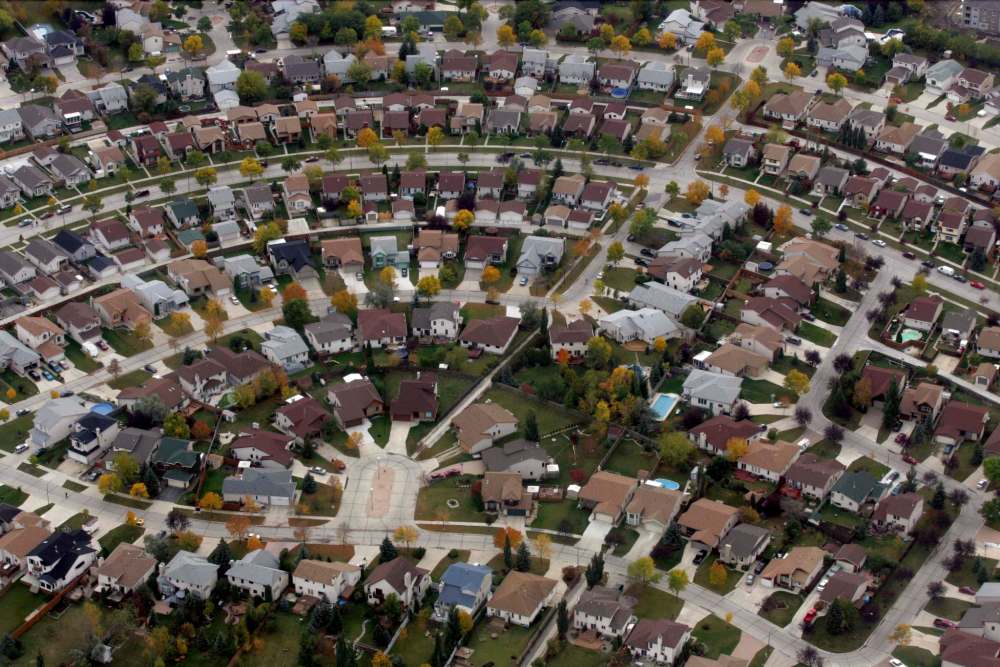
Lowering greenhouse emissions becomes a Herculean task the more Winnipeg sprawls
Posted:
The main arteries of this city tell the story of how Winnipeg grew into a metropolis.
This is below what the federal government committed the country to in the 2015 Paris Agreement; Canada pledged to lower emissions by 30 per cent by 2030, below 2005 levels — a greater percentage on a lower benchmark year. Following those commitments, the federal government also committed to pursuing net-zero emissions by 2050.
When compared with other Canadian cities, Winnipeg’s goals are modest. Vancouver’s aim was to lower emissions by 2020 by 33 per cent, and by 2050 by 80 per cent, using 2007 as a baseline. One might expect emissions reductions would at least be more ambitious in Winnipeg than in the heart of oil and gas country, but Calgary has outstripped Winnipeg in committing to the same emissions reduction percentage by 2050, but using 2005 as a baseline.
The flip side of ambition is the prospect of falling short. Vancouver has failed to meet its 2020 goal, and Calgary similarly missed its previously set 2020 target. Winnipeg Mayor Brian Bowman says this is a case where the good need not be the enemy of the perfect.
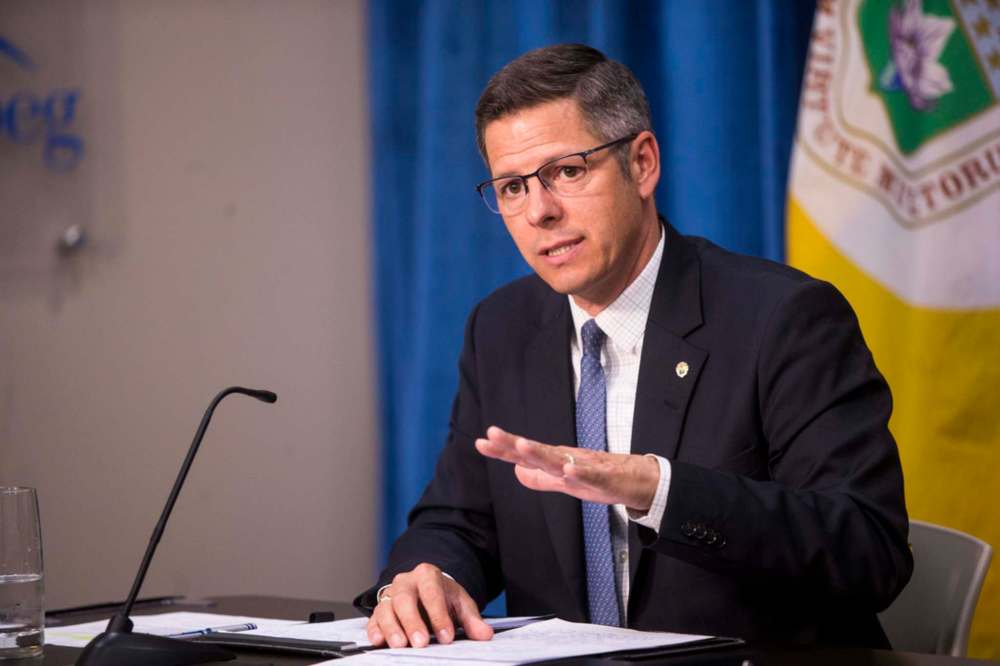
“We did change the targets in 2018,” Bowman says. “The targets were done to make sure they were more achievable. And so, we want to make sure that if we’re setting these targets we’re actually achieving them.”
Or, at least, that is the hope.
“The targets were done to make sure they were more achievable.”–Mayor Brian Bowman
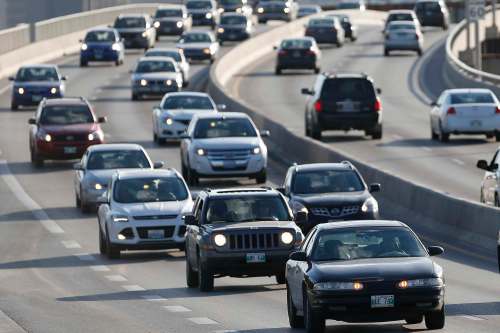
Cities are well-positioned to act on climate change because they’re a large source of emissions, thanks to the number of cars on the streets and the aggregation of buildings and people.
“(Municipalities) are the form of government that are closest to the people, so in terms of engagement, they’re the ones who could engage key decision-makers, the public, key sectors, and have more tailored approaches to climate-change mitigation and adaptation,” says Dave Guyadeen, an assistant professor at the University of Guelph’s School of Environmental Design.
Guyadeen says cities, in many ways, have the most at stake when it comes to coping with the fallout of a changing climate, since there is such a large concentration of people, infrastructure and businesses. And when extreme weather events happen, for example, the damage costs are staggering.
“The most important part is cities have access to land-use and zoning controls and regulations, which the federal and provincial levels don’t necessarily have,” he says.
“So, cities — in land-use planning — they can influence development by specifically targeting things such as mixed-use development, compact development, looking at infill/brownfield (development), green building and infrastructure.”
Winnipeg has begun setting modest targets for 2030, aiming to have 50 per cent of development be infill, which helps create more urban density, but the city continues to grow outward.
“Even transportation — you can promote active transportation, transit-oriented development, building pedestrian-friendly communities, which would reduce our reliance on vehicles for movement,” Guyadeen says.
And this will be critical to Winnipeg’s plan, since sprawl and the accompanying transportation emissions account for a significant amount of the city’s overall output.
Where do emissions come from?
Emissions in Winnipeg fall into three large categories: transportation, natural gas and waste disposal. Local calculations haven’t been made available by the city since 2011, but this year council agreed to allot money for a new inventory.
The 2011 data demonstrated that nearly half (49.7 per cent) of emissions are generated by transportation, one-third from burning natural gas and 14.9 per cent in the waste-disposal process.
Winnipeg, powered principally by hydroelectricity, does have a leg up when it comes to emissions generated to create electricity, which make up less than one per cent of the total. Transit and wastewater both also generate less than one per cent of the total.
Transportation
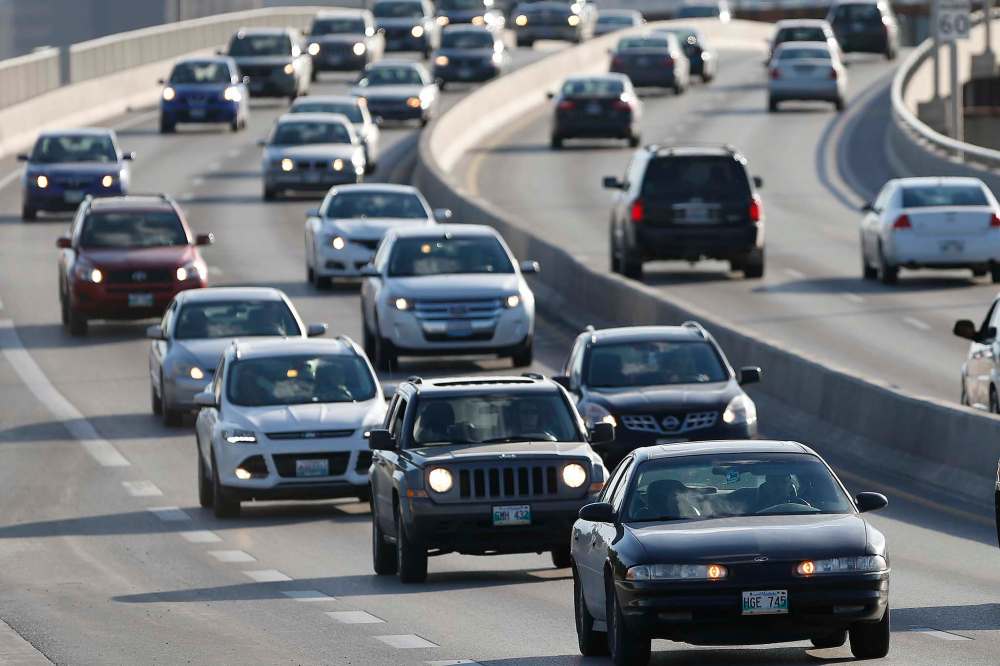
Of the emissions generated by transportation, 65 per cent is by residents driving. And while the overall goals are slightly more ambitious, the aim is to lower transportation emissions by only 17 per cent by 2030.
This includes a target for eight per cent of vehicles on the road to be electric by 2030.
“Eight per cent by 2030? No. That’s a bit low,” says Eric Bibeau, an associate professor in the department of engineering at the University of Manitoba. Bibeau was one of the authors of the federal strategic road map for electric vehicles released in 2009.
Bibeau says Manitoba has lagged behind in electric vehicle sales — less than one per cent of new registrations in the province in 2018 accounted for EVs or hybrids, according to Statistics Canada. That compares to provinces leading the way, such as Quebec and British Columbia where those vehicles accounted for only 5.2 per cent and 6.1 per cent, respectively.
However, Bibeau believes that in the coming decade, the move for manufacturers to create electric-powered trucks will change things for Manitobans, and Winnipeggers, specifically.
“It’s going to be pretty idiotic to buy a gasoline truck by 2025,” he says.
“The eight per cent — I’m not surprised that somebody from Winnipeg would say that, I’m not surprised. It’s low and it shows the culture of not understanding what is going on (in the global context).”
The climate plan also sets out a goal of creating 800 kilometres of pathways for an active transportation network by 2030. Approximately 290 kilometres have been built so far, city officials say.
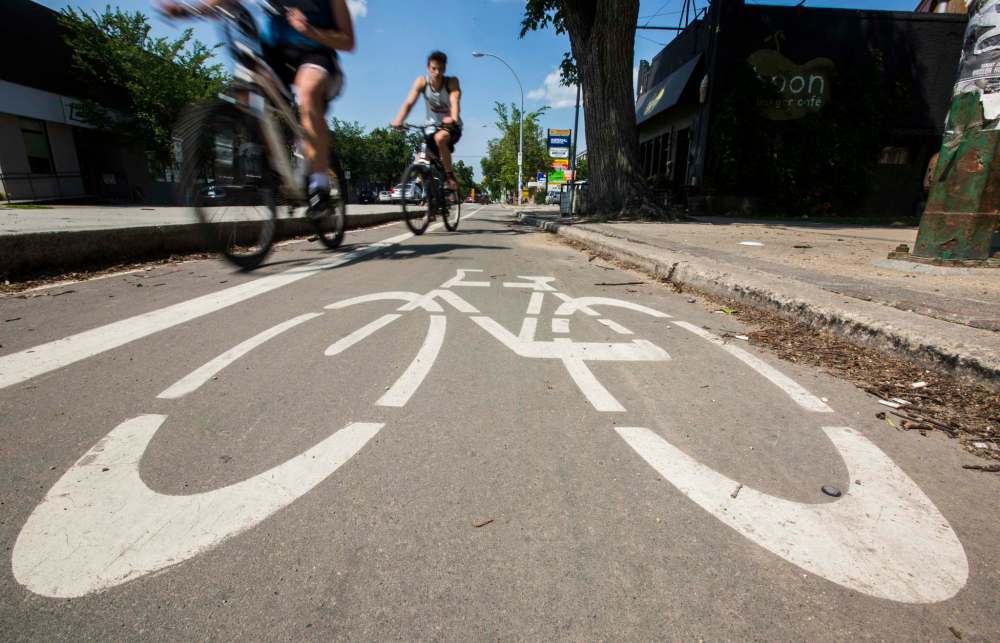
By 2030, the plan states that 14 per cent of people will need to have adopted either walking or biking (or another means of active transport) in order to achieve the 17 per cent emissions-reduction targets. Fifteen per cent will need to take public transit. According to Statistics Canada, based on the 2016 census, 4.7 per cent of Winnipeg’s commuters walked, 1.7 per cent cycled and 14 per cent used public transit.
Bowman says this is an area where citizens can step up, incorporating active or public transportation into their lives as demand will spur more development. Another piece of the puzzle is analyzing the continued growth of the commuter communities surrounding the city and he expects that will be a part of the capital region plan.
“One of the things we’re scrutinizing is the kind of growth that happens in and around Winnipeg,” he says.
Natural gas
Buildings are Winnipeg’s second-largest source of emissions, with 99 per cent produced from burning natural gas, the climate report says.
Natural gas has been long considered a clean solution for heating needs, given that it emits approximately 27 per cent less than burning heating oil for the same purpose, the U.S. Energy Information Administration says.
The only ways to mitigate emissions from natural gas are to change mechanisms for heating to renewable sources, or electric (which could put considerable strain on the province’s electric grid) or to invest in building efficiency.
The city’s plan for mitigation relies entirely on the first and third options.
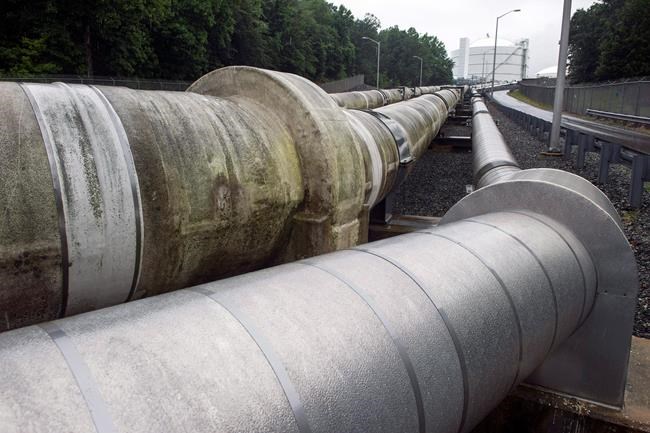
The city aims to decrease emissions from heating buildings — both residential and commercial — by eight per cent by 2030. This includes an increase (yes, increase) in the amount of natural gas burned, compared with 2011 levels by about 24 per cent; the plan expects that will be offset by eight per cent of homes switching to renewable sources of energy, or having made significant energy-efficiency improvements. Meanwhile, 12 per cent of commercial or industrial buildings will be expected to do the same.
The city will make an effort to motivate the switch — especially for commercial owners — by creating energy benchmarks for properties so that each building is rated based on its carbon footprint.
The climate plan also discusses the possibility of using solar energy for water heaters, or possibly investing in geothermal heat pump technology, which is more efficient and generally uses renewable energy sources.
Waste disposal
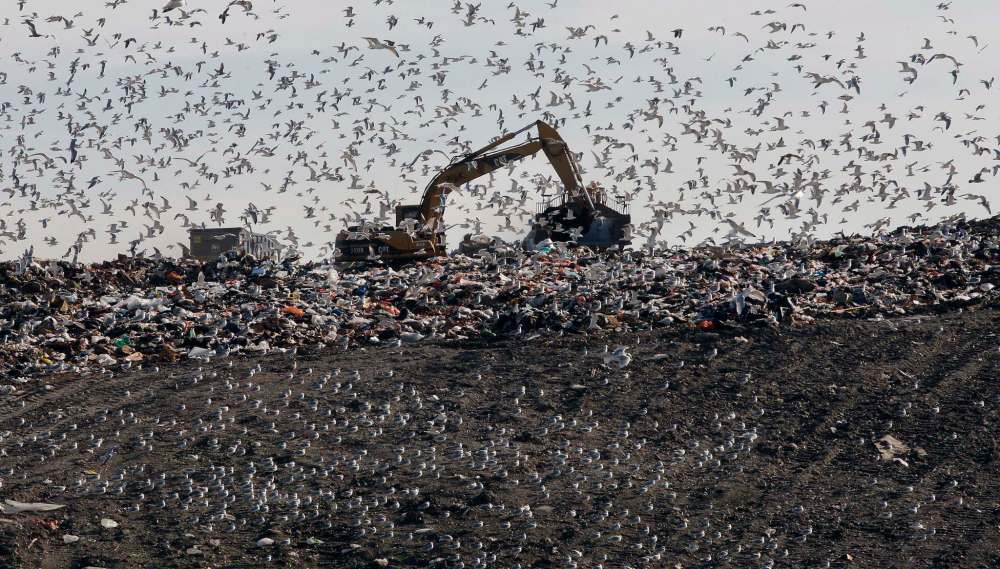
The Brady Road Landfill is one of the top single-source emitters of greenhouse gases in the province.
“While waste generation is similar to other Canadian cities, diversion rates have been comparatively poor in Winnipeg,” the climate plan states.
Approximately 15 per cent of emissions come from waste disposal, generated principally by the decomposition of organic matter in a landfill. A compost program would alleviate and mitigate emissions. A two-year pilot project is finally set to get underway in the fall after nearly a decade of discussions.
“I think I was one of the people who didn’t want to move quickly on compost. Some people blame me on this, I don’t think I deserve all the blame, but my view has shifted on compost,” Coun. Brian Mayes says.
“We should be trying to move that forward if we can get some help from the province. I’d like to pick up the pace right now on this pilot project.”
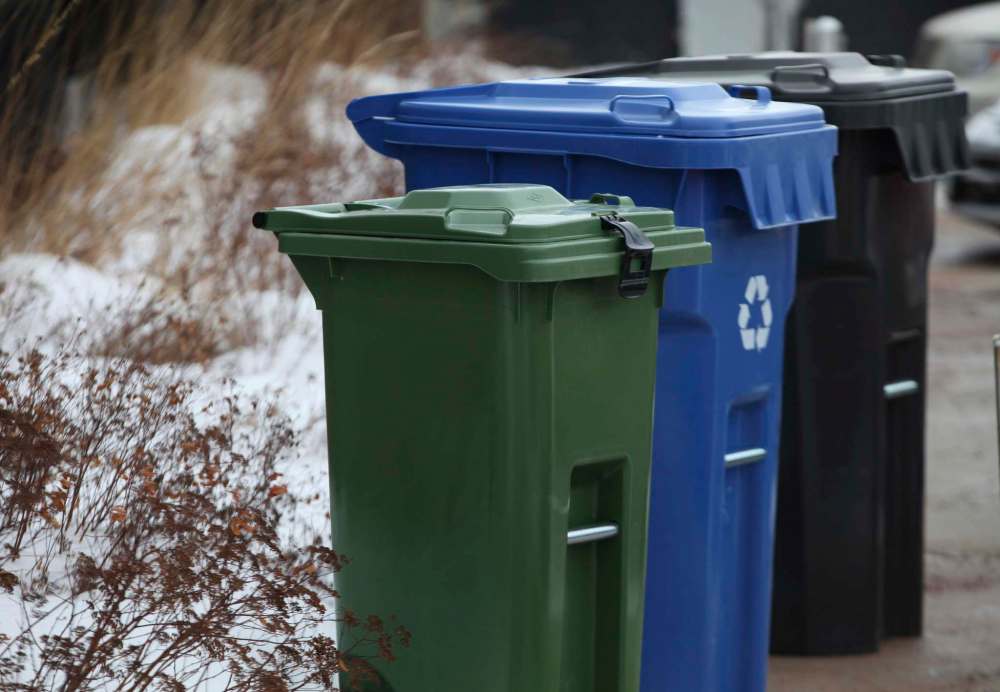
Winnipeg is the largest city in Canada without a compost program. The city could have learned from pilot projects conducted in other municipalities and fast-tracked the initiative, but chose not to pursue it.
“It’s not like this is tricky technology, like some of the stuff at the North End sewage treatment plant, no,” says Mayes, the St. Vital councillor who chairs the Standing Policy Committee on Water and Waste, Riverbank Management and the Environment.
“There’s a bin, you put the bin at the end of your driveway. I think it came down to cost.”
Bowman agrees that council was not receptive to moving forward with curbside organics in the last term.
“One of the reasons we wanted to get the pilot is there are localized costs that have to be quantified so that we can properly budget,” he says.
The city — with the help of the federal government — has invested $3.2 million in drilling 81 gas wells in the landfill to collect the methane that would otherwise be emitted. Instead of using it for heating or other useful purposes, the methane is being burned to simply turn the emissions from methane to less-potent carbon dioxide.
The city’s project web page says the practice will reduce emissions annually by the same amount as if 21,700 passenger vehicles were taken off the roads.
Performance evaluation
The city has plans and targets, but without a local inventory conducted since 2011, knowing where the city stands is difficult. The closest number that can be used to track progress is the federal government’s inventory report that considers the province’s emissions from 2018.
The report, released in the spring, indicated that Manitoba’s emissions have continued to grow, reaching their highest point ever. Between 2005 and 2018, emissions in the province grew by 8.3 per cent.
“The city is nowhere near on the ball on anything. They have no active policy on climate change.”–Eric Bibeau
Keeping track of progress and reporting it publicly is a critical piece of the emissions-reduction puzzle. The Carbon Disclosure Project, an international not-for-profit organization, has become the go-to source for governments and businesses alike to report their emissions-reduction goals and actions.
“Cities that don’t both measure and manage this information are not as readily prepared to withstand the systemic shocks from either extreme weather, or from other types of disruptions,” says Bruno Sarda, president of CDP North America.
“So the motivation these days is that it really is considered to be a standard practice.”
The CDP grades any city government that has voluntarily participated. Winnipeg was not among the seven Canadian cities that received an A-grade, the only score posted publicly. Winnipeg has not updated its inventory report with CDP since 2011.
From that data, Sarda says the city may be on the right path in terms of planning, but has not progressed to the same levels as other Canadian communities.
He says council should be seeking inspiration from places such as Windsor, Ont., which is investing in home-retrofit incentives to maximize energy efficiency. Or Toronto, where idling laws are being enacted and the city transit fleet is being switched over to electric. Or Vancouver, where a clear commitment has been made to utilize more renewable energy sources. All three are A-grade cities, along with North Vancouver, Victoria, Calgary and Edmonton.
“The thing we find with A-list cities is that they have about double the number of actions to adapt to climate change versus non-A-list cities, and about five times as many (emission) mitigation actions,” he says.
“So Winnipeg is certainly on the right path, at least they have these emissions targets that they put out in 2018, you know, not super ambitious — 20 per cent reduction by 2030, relative to 2011 — we see that certainly as being behind the mark compared to a lot of the climate science, which says it should probably be a 50 per cent reduction by 2030.
“Eighty per cent by 2050, that used to be pretty good, now it’s considered a little bit insufficient when it’s really about net-zero by 2050.”
Bibeau is far more critical.
“The city is nowhere near on the ball on anything. They have no active policy on climate change,” he says. “It reflects the (policy of) the provincial government. So, there’s nothing really serious going on in Manitoba.”
Mayes says there are other actions to consider, such as the city’s creation of a food council to consider ways to create locally sourced food networks.
“Maybe we’re just inching along, but at least we’re moving forward. At least we’re doing something,” Mayes says. “I am OK with our efforts.”
At roughly 28 per cent, Winnipeg’s emissions are less than one-third of Manitoba’s, which account for only three per cent of the country’s total, which make up roughly 1.5 per cent of the global total, Environment and Climate Change Canada says.
But the premise of all developed countries acting together to solve the problem is the foundation for global mitigation efforts and it’s not a responsibility to be shirked, Bowman says.
“We know that we’ve got more work to do, and we’ll continue to do so. But we need all levels of government doing their part, and we need citizens pitching in.”–Mayor Brian Bowman
“There are politicians in the world who don’t believe climate change is real and they don’t believe that it’s caused by humans. And fortunately, in Winnipeg, we’re not of that view.
“City council, I believe, to a person, appreciates the fact that we need to meet these (greenhouse-gas) targets and we are in a meaningful way trying to make a difference…. I want to meet the (emissions) targets and I’m going to continue to be aggressive at looking at different measures we can do to achieve them,” he says.
“We know that we’ve got more work to do, and we’ll continue to do so. But we need all levels of government doing their part, and we need citizens pitching in.”