

‘Freedom Convoy’ did not pose threat to the security of Canada: CSIS director
Advertisement
Read this article for free:
or
Already have an account? Log in here »
To continue reading, please subscribe:

Digital Subscription
One year of digital access for only $205*
- Enjoy unlimited reading on winnipegfreepress.com
- Read the E-Edition, our digital replica newspaper
- Access News Break, our award-winning app
- Play interactive puzzles
*First annual payment billed as $205.00 + GST for one year. This annual subscription will automatically renew at $233.00 + GST every 52 weeks (10% off the regular annual price of $259.35). Offer available to new and qualified returning subscribers only. Cancel any time.
To continue reading, please subscribe:
Add Free Press access to your Brandon Sun subscription for only an additional
$1 for the first 4 weeks*
- Enjoy unlimited reading on winnipegfreepress.com
- Read the E-Edition, our digital replica newspaper
- Access News Break, our award-winning app
- Play interactive puzzles
*Your next Brandon Sun subscription payment will increase by $1.00 and you will be charged $17.95 plus GST for four weeks. After four weeks, your payment will increase to $24.95 plus GST every four weeks.
Read unlimited articles for free today:
or
Already have an account? Log in here »
Hey there, time traveller!
This article was published 14/11/2022 (1417 days ago), so information in it may no longer be current.
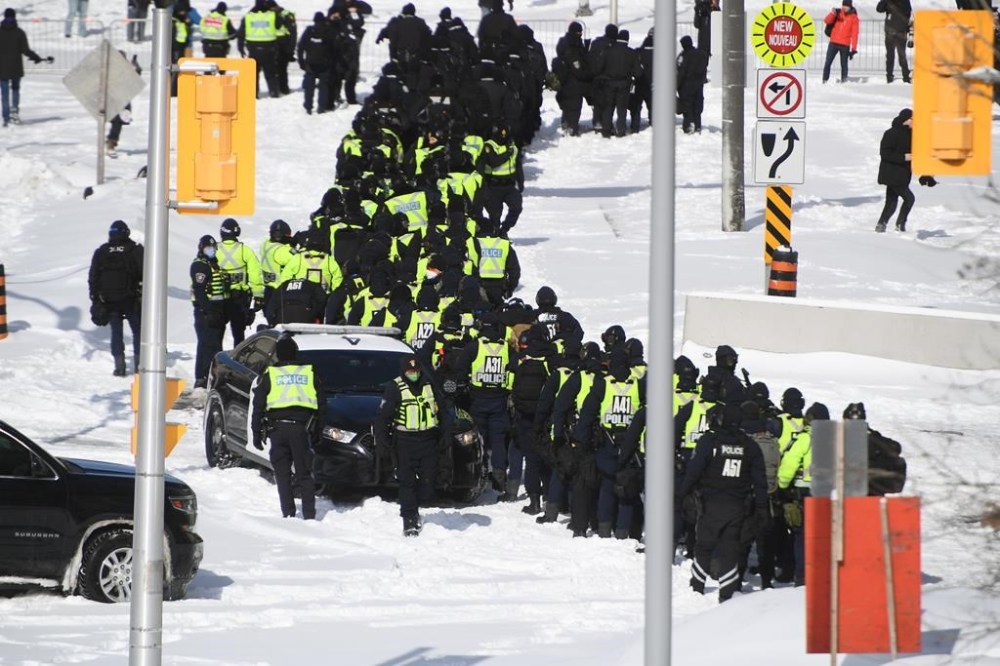
OTTAWA – Liberal cabinet ministers deemed last winter’s “Freedom Convoy” protests a threat to national security, despite warnings from the federal intelligence agency that threshold was not met, an inquiry into the use of the Emergencies Act learned Monday.
Prime Minister Justin Trudeau invoked the act on Feb. 14, arguing its temporary and extraordinary powers were needed to end blockades in Ottawa and at border crossings.
The legislation says a public order emergency is one that comes from a “serious threat to the security of Canada, as defined by the Canadian Security Intelligence Service Act.”
The definition includes espionage or sabotage of Canada’s interests, foreign-influenced activities, or the violent overthrow of the government.
The Public Order Emergency Commission, which is holding hearings in Ottawa until Nov. 25, is tasked with determining whether the government was justified in triggering the legislation.
A document summarizing the evidence from David Vigneault, director of CSIS, shows he believed the protest “at no time” posed a threat to Canada’s security and that there were no signs of foreign interference.
“He felt an obligation to clearly convey the service’s position that there did not exist a threat to the security of Canada as defined by the service’s legal mandate,” said the document, which was released on Monday through the public inquiry.
CSIS was, however, monitoring subjects of intelligence investigations who were taking part in the protests.
Vigneault, who is expected to testify before the commission next week, advised cabinet that invoking the Emergencies Act could further inflame extreme anti-government rhetoric.
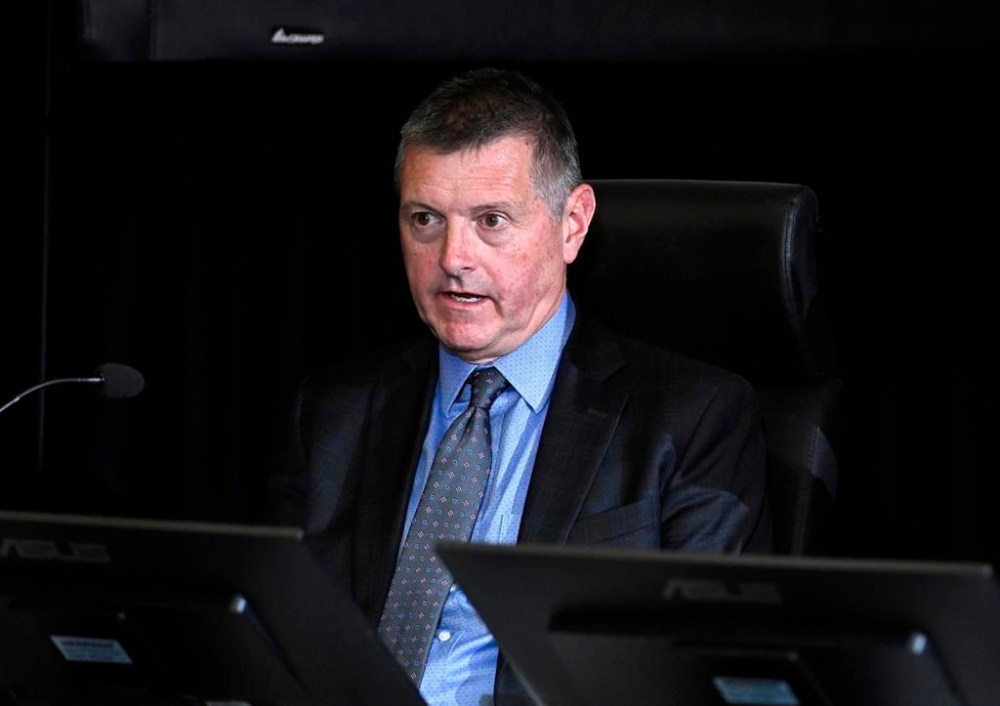
Rob Stewart, who was deputy minister of public safety at the time of the protests, told the commission on Monday that the government would have a more broad interpretation of what constitutes a national security threat.
“The cabinet is making that decision and their interpretation of the law is what governs here,” Stewart told the commission. “And their decision was evidently that the threshold was met.”
Brendan Miller, a lawyer for the Ottawa “Freedom Convoy” protesters, suggested that no federal agency advised cabinet that the protest posed a national threat, as defined in the legislation.
“You have the RCMP, you have CSIS, you have the entire intelligence apparatus in the federal government and none of them said that this threshold was met, did they?” Miller asked Stewart during cross-examination Monday.
“They weren’t asked,” Stewart said.
The government worried that the longer the protest went on, the more likely it was that ideologically motivated violent extremists would take advantage of the situation, said Dominic Rochon, the senior assistant deputy minister of the national and cybersecurity branch of the government.
“That was a significant concern for the security intelligence community,” Rochon said during his testimony Monday.
By the time the act was invoked on Feb. 14, Ottawa streets had been barricaded by large idling trucks and huge groups of protesters calling for an end to COVID-19 public health restrictions for weeks, forcing the closure of many businesses in the downtown area.
Two major international border crossings in Alberta and Ontario had recently been cleared, but other smaller demonstrations continued across the country.
In a letter to premiers on Feb. 15, Trudeau said the federal government believed the situation reached a point “where there is a national emergency arising from threats to Canada’s security.”
“We are facing significant economic disruptions, with the breakdown of supply chains. This is costing Canadians their jobs and undermining our economic and national security, with potentially significant impacts on the health and safety of Canadians,” he wrote.
“It is affecting Canada’s reputation internationally, hurting trade and commerce, and undermining confidence and trust in our institutions.”
The testimony Monday provided the commission with its first look behind the curtain at cabinet discussions before they invoked the act for the first time since it replaced the War Measures Act in 1988.
As early as Feb. 7, John Ossowski, who was then-president of the Canada Border Services Agency, suggested to federal, provincial and territorial officials that the Emergencies Act could be used to compel tow truck drivers to help remove large rigs, the commission has learned.
On Feb. 10, cabinet formally discussed the idea of invoking the act. A summary of notes from an emergency cabinet committee meeting that day says Trudeau raised the notion of two tracks forward: actions that could be undertaken under existing authorities, and the process of invoking the Emergencies Act.
Most of the details from the ensuing discussion have been blacked out.
Cabinet ministers did consider plans to engage with the organizers of the “Freedom Convoy” in Ottawa in an effort to shrink the protest.
Stewart tolda cabinet committee on Feb. 8 that 80 per cent of protesters in Ottawa had a “weak” connection to the protest.
An Ontario Provincial Police negotiator suggested protest leaders might be encouraged to leave and denounce the blockade in exchange for being able to register their complains with the federal government.
It was hoped many demonstrators would then leave before police moved in to clear the protest, but the idea was abandoned after a discussion among ministers.
Stewart says the effort was not co-ordinated with other attempts by the provincial and municipal governments to engage with the protest organizers.

When preparing to brief the public on the government’s decision to invoke the act, Stewart encouraged staff to come up with examples of ways police could use the new powers to quash the protests and stop new ones from cropping up, according to an email released by the public inquiry.
“I’m afraid I don’t have a lot of great ideas because there aren’t a lot of significant benefits, but we have to try to tout (public safety) portfolio specifics as much as we can,” Stewart wrote on Feb. 14.
Stewart told the commission Monday that he underestimated the benefits of the Emergencies Act, which proved useful in clearing the demonstrations.
“There was, within two weeks, very little manifestation of those kinds of protests around the country,” he said.
This report by The Canadian Press was first published Nov. 14, 2022.
Related Articles
Concern about political interference with RCMP spotlighted at Emergencies Act inquiry
Advertisement Advertise With Us
Advertisement Advertise With Us