

Consume, at what cost?
New report points to growing trend of lower-income earners struggling to keep up, prop up system requiring continual growth
Advertisement
Read this article for free:
or
Already have an account? Log in here »
To continue reading, please subscribe:

Digital Subscription
One year of digital access for only $205*
- Enjoy unlimited reading on winnipegfreepress.com
- Read the E-Edition, our digital replica newspaper
- Access News Break, our award-winning app
- Play interactive puzzles
*First annual payment billed as $205.00 + GST for one year. This annual subscription will automatically renew at $233.00 + GST every 52 weeks (10% off the regular annual price of $259.35). Offer available to new and qualified returning subscribers only. Cancel any time.
To continue reading, please subscribe:
Add Free Press access to your Brandon Sun subscription for only an additional
$1 for the first 4 weeks*
- Enjoy unlimited reading on winnipegfreepress.com
- Read the E-Edition, our digital replica newspaper
- Access News Break, our award-winning app
- Play interactive puzzles
*Your next Brandon Sun subscription payment will increase by $1.00 and you will be charged $17.95 plus GST for four weeks. After four weeks, your payment will increase to $24.95 plus GST every four weeks.
Read unlimited articles for free today:
or
Already have an account? Log in here »
Consumers are the kings, queens, servants and paupers of the market economy, increasingly relied upon to drive growth.
A recent study points to many struggling to keep up — a sign of growing income inequality post-COVID-19 pandemic.
The report from RBC highlights wealth growing faster for those at the top, while others are experiencing their share declining.

Freepik
Target sales. Clients attraction accuracy, shopping list, consumerism idea. Retail service customer, shopper with trolley cartoon character. Vector isolated concept metaphor illustration
“There’s a lot of questions regarding consumption in the (United) States … with this narrative about the K-shaped economy,” says Rachel Battaglia, an RBC economist and co-author of Affordability: Decoding Canada’s uneven household realities.
“Even though the bottom 80 per cent of households are pulling back, feeling not very good about their financial situation, the top 20 per cent of households are still chugging along so total consumption in the U.S. is still moving forward.”
RBC’s report sought to understand if Canada’s economy traces the same pattern, indicating a deepening trend that most consumers have long suspected. After all, many of us feel it in our tightening budgets.
Investors, economists and governments suspect it, too, looking to consumers — or in the case of the RBC report “households” — to see how they’re making out: are they spending more or less?
They have concerns for good reason. Consumers drive close to 68 per cent of GDP of the U.S. economy, the world’s largest.
In Canada, consumers drive about 55 per cent of GDP.
Leaning on consumption has been a winning formula. After all, the U.S. has led growth globally for decades.
“In Canada, likewise, consumption chugs ahead pretty resiliently, but what’s happening under the hood differs a bit from the U.S,” Battaglia says.
All consumers saw wealth gains during the pandemic due to enhanced government support. That disappeared after support stopped, and high inflation not seen in decades — sparked by “revenge spending,” supply chain disruptions and the Russian invasion of Ukraine — further eroded purchasing power.
Both nations experienced that pullback in overall consumer wealth, but Battaglia notes the big difference between Canada and the U.S. is Canadian high-income consumers are not spending as aggressively.
“They seem to prioritize saving,” she says. They’re not hurting economically; rather, they have seen wealth grow amid higher interest rates and record stock market highs.
Canada’s upper-income earners are likely being prudent, particularly given North American trade uncertainty. Battaglia notes the experience is different for lower-income earners.
“People at the bottom end, holding larger shares of debt, are hurt,” Battaglia says.
The report provides a snapshot of how consumers are faring today, but it also illustrates a longer trend.
Economist Michael Jenkin, vice-president of the Consumers Council of Canada, notes income inequality has been rising for decades.
He cites a change in policy that began about 40 years ago, referred to as the Washington Consensus.
At the time, policy-makers were concerned about deficits, and a group of influential economists posited a plan to reduce the size of government that included cutting back on low-income supports. This approach also favoured easing the tax burden on consumers, which often benefited higher income households, Jenkin says.
This approach has negatively affected income equality over several years. Outside of top earners, income growth has slowed.
“I think that is a key driver of Trump-ism,” Jenkin adds, pointing to many of U.S. President Donald Trump’s most ardent supporters are often among those with lower incomes, upset with the “elites.”
Inequality is less problematic in Canada. Its safety net is more like European nations than the U.S.’s “emaciated” welfare system, he says.
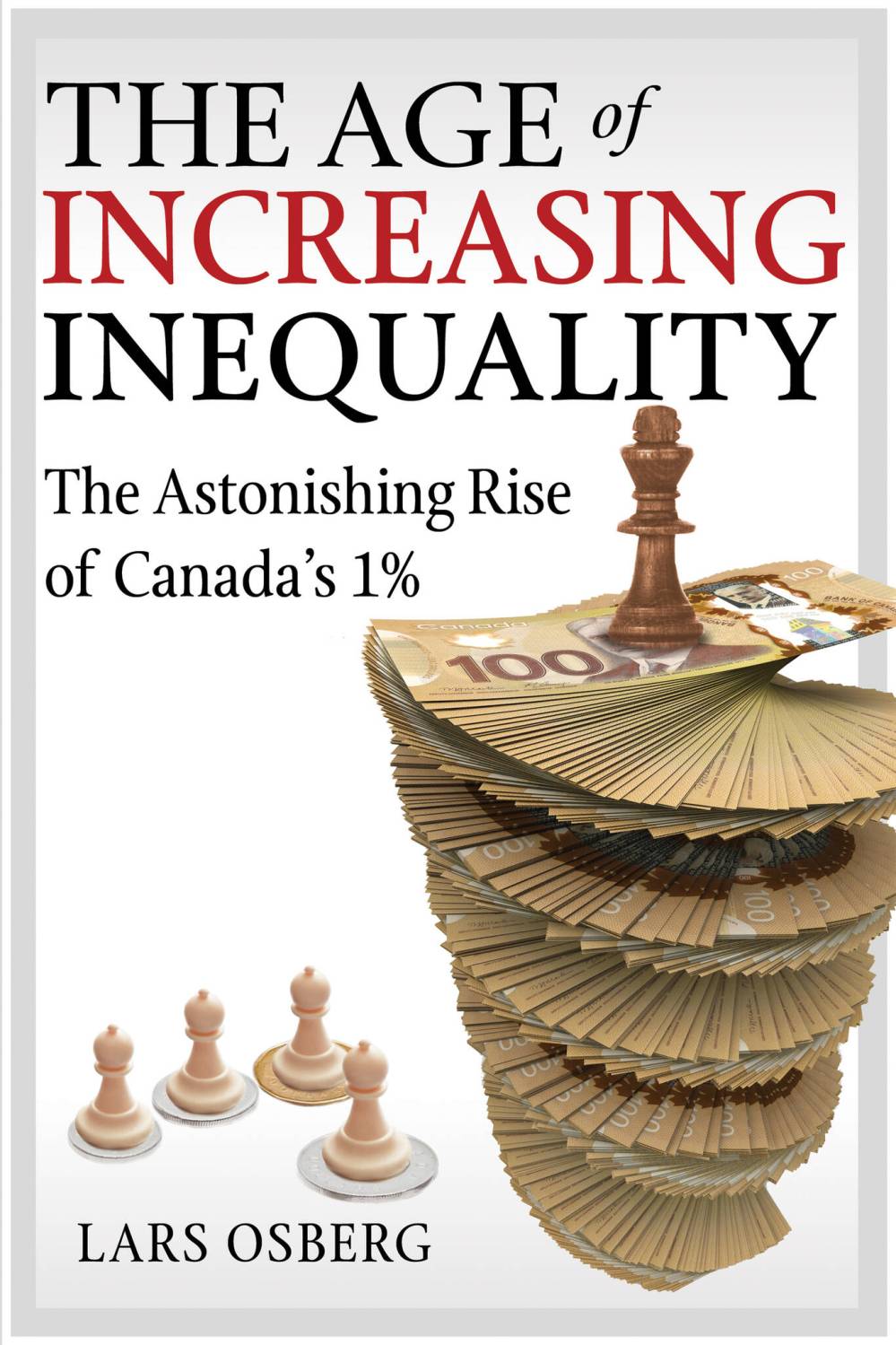
Still, Jenkin points to the research of Dalhousie University professor and economist Lars Osberg. In his 2018 book, The Age of Increasing Inequality: the Astonishing Rise of Canada’s 1%, he notes how between 1945 to 1980, real incomes (after accounting for inflation) collectively grew at the same rate, about 2.5 per cent yearly.
After that, the bottom 90 per cent of Canadian income earners have seen no growth, after accounting for inflation, while the top one per cent have seen incomes skyrocket.
Among the middle class, wage growth has lagged the top earners by two to three per cent when compounded annually over the last three decades, Osberg writes.
An exacerbating factor is the nature of market economics itself, which requires continual long-term growth, increasingly driven by consumption, says Mark Hudson, University of Manitoba professor of sociology, who co-authored the 2021 book Consumption.
“Consumers must buy stuff, and they have to keep buying stuff at an accelerating rate,” he says, adding economically, “if we’re not growing, we’re dying.”
Western democracies increasingly moved toward a consumption-driven economy after the Second World War, when mass production techniques were shifted to consumer goods, he says.
“The problem wasn’t scarcity,” Hudson says, it was potential over-abundance. “How do we convince people to buy all the goods we can now produce?”
Advertising became fundamental to the paradigm, positioning consumption as an expression of freedom.
This approach has drawbacks.
For one, the Earth “cannot sustain a universally extended kind of consumer lifestyle,” Hudson says.
Consumers also feel the side-effects. They struggle to keep pace and are often encouraged to borrow to supplement spending. Governments also face difficult choices regarding where to invest limited tax dollars.
Jenkin suggests the best bang for those public bucks remains investing in health care, education and similar infrastructure. These benefit all consumers, but they especially help those on low incomes.

“You want people who are healthy, well-skilled and able to participate in the economy, because that means they earn better incomes.”
They often then spend extra money on consumption — be it food and shelter or discretionary goods.
“So it’s a virtuous circle that generates more wealth for the society as a whole,” Jenkin says.
Joel Schlesinger is a Winnipeg-based freelance journalist
joelschles@gmail.com