

Knowing when it’s time to leave ‘good enough’ job
Advertisement
Read this article for free:
or
Already have an account? Log in here »
To continue reading, please subscribe:
Monthly Digital Subscription
$1 per week for 24 weeks*
- Enjoy unlimited reading on winnipegfreepress.com
- Read the E-Edition, our digital replica newspaper
- Access News Break, our award-winning app
- Play interactive puzzles
*Billed as $4.00 plus GST every four weeks. After 24 weeks, price increases to the regular rate of $19.95 plus GST every four weeks. Offer available to new and qualified returning subscribers only. Cancel any time.
Monthly Digital Subscription
$4.99/week*
- Enjoy unlimited reading on winnipegfreepress.com
- Read the E-Edition, our digital replica newspaper
- Access News Break, our award-winning app
- Play interactive puzzles
*Billed as $19.95 plus GST every four weeks. Cancel any time.
To continue reading, please subscribe:
Add Free Press access to your Brandon Sun subscription for only an additional
$1 for the first 4 weeks*
*Your next subscription payment will increase by $1.00 and you will be charged $16.99 plus GST for four weeks. After four weeks, your payment will increase to $23.99 plus GST every four weeks.
Read unlimited articles for free today:
or
Already have an account? Log in here »
One of the most surprising things about working in human resources is how often I meet people who openly hate their jobs. Not dislike. Not feel bored by. Hate.
You can see it in their shoulders, hear it in their tone and sometimes experience it directly when you are on the receiving end of their frustration.
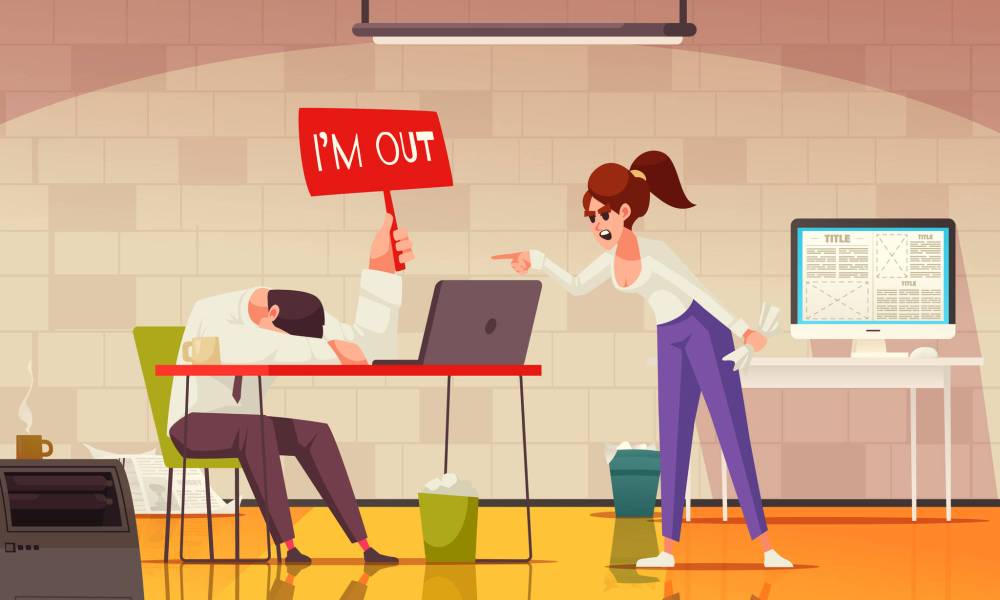
There is a receptionist at a place that shall remain nameless who is consistently rude, irritable and visibly aggravated that people are calling her and asking questions. Which is, to be fair, the entire job. Every interaction feels like an interruption to something more important.
Freepik
Every time I encounter this situation, I find myself wondering the same thing: why stay?
My best guess is this is a “good enough” job. The pay might be steady. The vacation might be generous. The benefits might be decent. There may be a pension, seniority or the comfort of knowing exactly what tomorrow looks like.
And yet, for the eight or so hours a day spent actually doing the work, there appears to be zero joy and even less patience.
We spend an enormous amount of our lives at work. Not just the time itself, but the mental energy before work, the decompression afterward, and the stories we tell at dinner. When someone hates their job this much, it spills over everywhere. Colleagues feel it. Customers feel it. Family members feel it. In reality, the employee feels it most of all.
A “good enough” job is often the most dangerous kind to stay in for too long. It is not bad enough to force change, but not good enough to nourish growth. It quietly drains motivation while whispering practical reasons to stay put. You can tolerate it. You can manage it. You can survive it — and that is precisely the problem.
One of the first signs it might be time to move on is when irritation becomes your default setting.
Everyone has bad days, bad weeks and even bad seasons at work. That is normal.
But when annoyance becomes your baseline and every request feels like an inconvenience, something deeper is going on. Work should not feel like a personal attack just because someone needs help.
Many people stay because of perks they enjoy outside the job rather than the job itself. Vacation time is a common one. Benefits are another. Flexibility, seniority, or job security often round out the list. These are all valid considerations, but they are not enough on their own. Time off is meant to help you recharge, not recover from chronic misery. Benefits are there to support your life, not compensate for dreading Monday morning.
Another reason people stay is fear. Fear of starting over. Fear of being the new person. Fear the grass will not be greener. Fear of explaining a move that does not come with a promotion or a dramatic story.
These are understandable, but they often overestimate the risk of leaving and underestimate the cost of staying.
If you are not going to retire in your current role and you are not actively building your resumé, it may be time to go. That does not mean every job must be a stepping stone or a passion project, but it should either contribute to your long-term plan or be a place you genuinely enjoy showing up to most days.
If it is doing neither, you are treading water while slowly sinking.
Actively building your resumé does not always mean formal promotions. It can mean learning new systems, developing leadership skills, expanding your scope or taking on projects that stretch you. If your role has become static and you are no longer growing, comfort can quietly turn into stagnation.
There is also a ripple effect to staying in a job you hate.
Your mood influences others more than you think. That receptionist’s frustration does not exist in isolation. It shapes how customers feel about the organization and how colleagues experience their own workday. Over time, workplaces normalize that energy and it becomes part of the culture. No one wins.
Some people argue work is just work and happiness should come from elsewhere. There is some truth in that. Your job does not need to fulfill every emotional need or bring constant joy, but there is a big difference between neutral and miserable, tolerable and toxic, and not loving your job and actively resenting it.
Leaving a “good enough” job does not require a dramatic exit or a perfect plan. It can start with curiosity. Updating your resumé. Having conversations. Paying attention to what energizes you and what drains you. You do not have to quit tomorrow to admit something is no longer working.
It is also worth remembering staying too long in a role you dislike can quietly shape how you see yourself. Cynicism hardens. Patience thins. Confidence erodes. Over time, people forget they are capable of more than survival. They begin to believe this is just how work feels.
The truth is, work will always involve effort. There will always be tasks you do not love and people who test your patience. But it should not make you miserable to the point that basic human interaction feels unbearable.
Life is simply too short and workdays are far too long.
If you recognize yourself in this, consider it an invitation rather than a criticism. An invitation to imagine something better. An invitation to remember that stability does not have to come at the cost of dignity or decency. An invitation to move on before frustration becomes your professional identity.
A “good enough” job can be a useful stop along the way. It just should not be where you park forever if it makes you someone you do not like being.

Tory McNally, CPHR, BSc., vice-president,
professional services at TIPI Legacy HR+
(formerly Legacy Bowes),is a human resource
consultant, strategic thinker and problem solver.
She can be reached at tmcnally@tipipartners.com