

Seeking Asian market development, growth
Hong Kong-Canada Business Association, Hong Kong Trade Development Council sign letters of co-operation with Manitoba

Advertisement
Read this article for free:
or
Already have an account? Log in here »
To continue reading, please subscribe:
Monthly Digital Subscription
$1 per week for 24 weeks*
- Enjoy unlimited reading on winnipegfreepress.com
- Read the E-Edition, our digital replica newspaper
- Access News Break, our award-winning app
- Play interactive puzzles
*Billed as $4.00 plus GST every four weeks. After 24 weeks, price increases to the regular rate of $19.95 plus GST every four weeks. Offer available to new and qualified returning subscribers only. Cancel any time.
Monthly Digital Subscription
$4.99/week*
- Enjoy unlimited reading on winnipegfreepress.com
- Read the E-Edition, our digital replica newspaper
- Access News Break, our award-winning app
- Play interactive puzzles
*Billed as $19.95 plus GST every four weeks. Cancel any time.
To continue reading, please subscribe:
Add Free Press access to your Brandon Sun subscription for only an additional
$1 for the first 4 weeks*
*Your next subscription payment will increase by $1.00 and you will be charged $16.99 plus GST for four weeks. After four weeks, your payment will increase to $23.99 plus GST every four weeks.
Read unlimited articles for free today:
or
Already have an account? Log in here »
On Alfonz Koncan’s agenda: get more Manitoba businesses into Hong Kong.
Koncan is Winnipeg chapter co-president of the Hong Kong-Canada Business Association. The group recently signed a letter of co-operation with the Manitoba government.
The Hong Kong Trade Development Council, a statutory body, also signed a co-operation letter with the province.
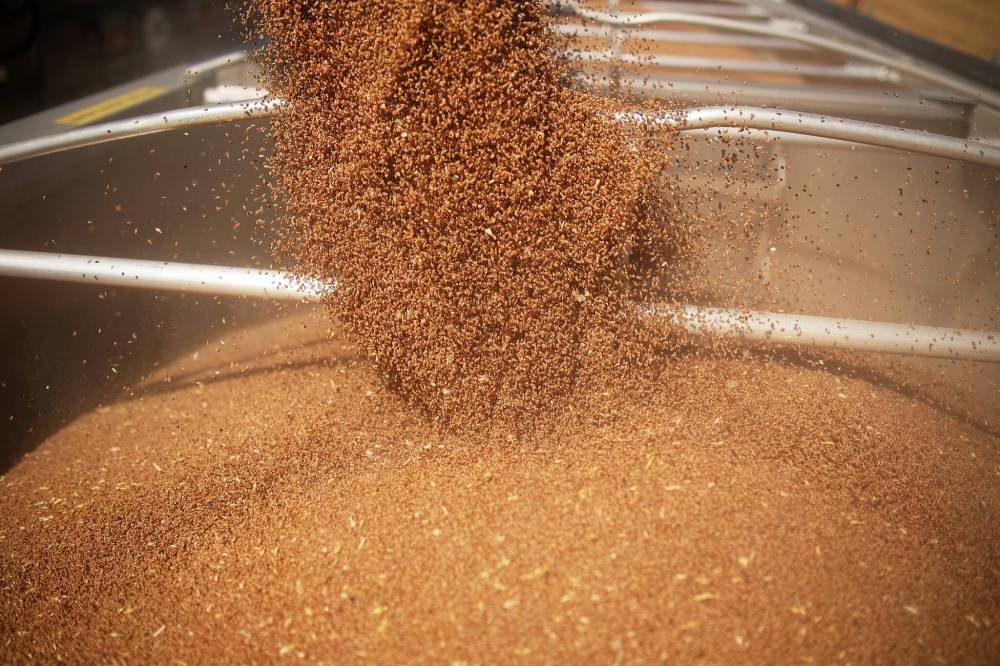
Tim Smith / Brandon Sun files
Cereals Canada staff are in Singapore this week for the Canada-in-Asia Conference. ‘We definitely support building relationships with these trading hubs like Hong Kong,’ said V-P Leif Carlson.
“We’re not focused hard enough,” Koncan said of local trade with Hong Kong (a special administrative region of China) and Southeast Asia. “We have too much of our trade going south (to the U.S.) and it’s vulnerable.”
He called Hong Kong a “pivot point” — a financial hub where players from nearby countries find trading partners.
Manitoba ships commodities such as barley, canola and wheat to Southeast Asia. There’s room for growth, especially as areas become wealthier and more populous, Koncan said.
He and colleagues aim to connect Manitoba firms with Hong Kong trade shows. The association has been doing so for several decades; it’s creating a pitch for funding to expand its efforts.
It’ll present the plan to the Manitoba and federal governments, Koncan said. He didn’t have a timeline for presentation on Tuesday.
Money hasn’t been slated for either Hong Kong-focused group the province has signed letters with, Agriculture Minister Ron Kostyshyn said.
“This is an ongoing discussion,” Kostyshyn said. “(The letters are) a tool that we feel is an important segment of dealing with countries such as China, Hong Kong (and) all across the European trade.”
The documents will open trade doors for Manitoba agricultural commodities, Kostyshyn said. The Hong Kong-Canada Business Association is eyeing small- and medium-size companies, largely in the agriculture and food production sector.
The letters don’t go far enough, said Konrad Narth, agriculture critic for the provincial Progressive Conservatives.
“(Producers) don’t need symbolic announcements,” said Narth, a third-generation farmer. “Letters alone don’t move a single bushel of canola or a ton of pork.”
Manitoba is competing with a global market and local farmers face regulatory pressures, including in livestock processing and grain-drying, Narth said.
“These are great trade organizations that the businesses deal with,” Narth said of the Hong Kong-focused entities. “But it’s not what government should be leading.
“Manitobans … should be asking — and many of them are asking — where are the signed agreements? Where are the new purchase commitments?”
The letters are “a start,” providing a new communications base and the foundation for new clientele, Kostyshyn said.
Meantime, some Asian markets have upped their Canadian agricultural imports over the past year.
Cereals Canada staff have joined their pulse and canola counterparts in Singapore this week. The country is hosting the Canada-in-Asia Conference; Canadian groups are pitching their wares.
“(The letters are) a tool that we feel is an important segment of dealing with countries such as China, Hong Kong (and) all across the European trade”– Ron Kostyshyn, Manitoba Agriculture Minister
“We definitely support building relationships with these trading hubs like Hong Kong,” said Leif Carlson, Cereals Canada vice-president of markets and trade.
The Winnipeg-based entity has tracked record-breaking export numbers.
Bangladesh, for example, took 1.7 million tons of cereals crops in January-November 2025, hitting a new high.
The Philippines reached a 10-year peak, purchasing more than 530,000 tons of Canadian wheat in 2025, Carlson said. In 2024, before U.S. President Donald Trump was inaugurated, Indonesia bought 2.4 million tons of non-durum wheat.
“Canadian cereals and Canadian wheat are really well-suited for the products they’re making in those markets,” Carlson said. “(And) I’m sure that, with global trade risks being higher, that their purchasing groups are looking at all their options, and they’ve chosen Canada.”
Canada exports cereals to roughly 80 different countries. The United States will likely remain the largest export market, Carlson said, adding having a variety of export locations is useful.
Canadian pork exports to Japan, South Korea, Taiwan and Mexico grew year-over-year in January. Canada’s canola seed exports jumped year-over-year in 2025 in Bangladesh, the European Union, Japan, Mexico and the United Arab Emirates.
Pulse Canada’s website includes a page calling for the industry to find “new ways to compete” amid uncertainty and barriers to free and open trade.
“Market development (is) top of mind for everybody right now,” said Colin Hornby, general manager of the Keystone Agricultural Producers.
He spent Tuesday in a meeting about the Sustainable Canadian Agriculture Partnership, a government-funded initiative for agri-food and agri-products firms. A point of discussion was ensuring dollars go to expanding market access, Hornby said.
He called Manitoba’s letters of co-operation with the Hong Kong-facing organizations a “good first step” in government assisting companies with market access.
gabrielle.piche@winnipegfreepress.com
Gabby is a big fan of people, writing and learning. She graduated from Red River College’s Creative Communications program in the spring of 2020.
Our newsroom depends on a growing audience of readers to power our journalism. If you are not a paid reader, please consider becoming a subscriber.
Our newsroom depends on its audience of readers to power our journalism. Thank you for your support.
Gabby is a big fan of people, writing and learning. She graduated from Red River College’s Creative Communications program in the spring of 2020.
Our newsroom depends on a growing audience of readers to power our journalism. If you are not a paid reader, please consider becoming a subscriber.
Our newsroom depends on its audience of readers to power our journalism. Thank you for your support.
Advertisement Advertise With Us
Advertisement Advertise With Us