

Farm sector weirdness becomes new normal

Advertisement
Read this article for free:
or
Already have an account? Log in here »
To continue reading, please subscribe:
Monthly Digital Subscription
$0 for the first 4 weeks*
- Enjoy unlimited reading on winnipegfreepress.com
- Read the E-Edition, our digital replica newspaper
- Access News Break, our award-winning app
- Play interactive puzzles
*No charge for 4 weeks then price increases to the regular rate of $19.95 plus GST every four weeks. Offer available to new and qualified returning subscribers only. Cancel any time.
Monthly Digital Subscription
$4.99/week*
- Enjoy unlimited reading on winnipegfreepress.com
- Read the E-Edition, our digital replica newspaper
- Access News Break, our award-winning app
- Play interactive puzzles
*Billed as $19.95 plus GST every four weeks. Cancel any time.
To continue reading, please subscribe:
Add Free Press access to your Brandon Sun subscription for only an additional
$1 for the first 4 weeks*
*Your next subscription payment will increase by $1.00 and you will be charged $16.99 plus GST for four weeks. After four weeks, your payment will increase to $23.99 plus GST every four weeks.
Read unlimited articles for free today:
or
Already have an account? Log in here »
Farming has never been a wise career choice for people who thrive on predictable outcomes, but last year set a new bar for craziness in what was already a risky business.
Looking ahead, the uncertainty laced with foreboding that heralded the start of 2025 has been replaced in 2026 with the certainty that comes from knowing the chaos will continue.
Just when you think it can’t get any weirder, the government administration south of the border at the centre of it all grabs the headlines once again with something even more unimaginably outlandish.
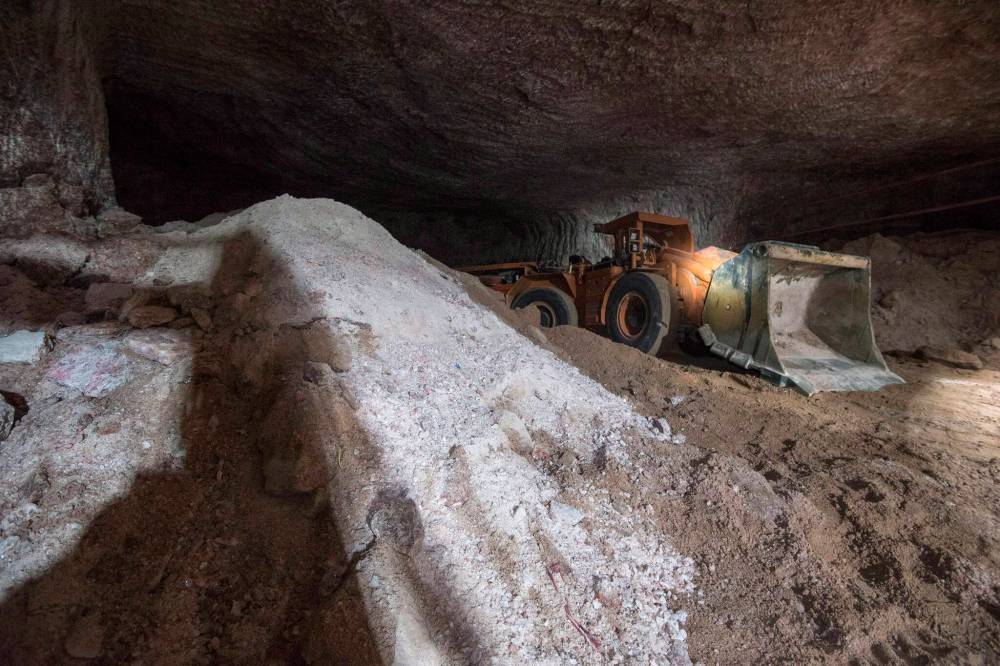
For example, the announcement late last year that the U.S. is considering placing steep tariffs on two key fertilizers — potash and phosphorus — ostensibly to increase domestic production. Except the U.S. doesn’t have the necessary reserves to develop.
Industry estimates indicate 87 per cent of the potash American farmers apply comes from Canada. It’s an essential nutrient, so it’s not like farmers can stop buying it.
So far, the producers taking the biggest hit as the Trump administration careens from announcement to announcement are its own. Production costs have risen, labour shortages are exacerbated by the undocumented worker roundups and export sales of soybeans to key markets such as China have plummeted.
Notably, the U.S. policy that could wreak the most havoc for Canadian farmers in 2026 is one put into place under the previous administration. United States Department of Agriculture labelling rules came into effect as of Jan. 1 requiring meat, poultry and egg products labelled as “product of USA” to come from animals born, raised and slaughtered in the United States.
Live animals shipped from Canada to the U.S. for feeding and slaughter don’t qualify, which means processors must either segregate their processing lines or not buy Canadian animals. Canada ships about 6.8 million live hogs and 800,000 head of cattle annually to the U.S.
The label is voluntary. Reliable statistics that show how much meat is sold using it are elusive.
However, there are anecdotal reports some processors in the U.S. have already stopped buying Canadian pigs. If the processors won’t take them, it’s a safe bet the feeder operations buying them won’t either. Depending on how widely this occurs, it could rapidly translate into a crisis for the Manitoba farms raising export piglets.
Lodging a complaint with the World Trade Organization, which has been costly and time-consuming but effective for Canada in the past, could prove fruitless. For starters, the WTO trade dispute process is broken. For another, a voluntary labelling rule will be more difficult to challenge than the mandatory rule the Americans implemented in 2008 and repealed in 2015 after Canada successfully challenged it.
While the bulk of Canadian agricultural exports have so far continued to move unfettered under the current Canada-United States-Mexico Agreement on trade, that deal is up for review in 2026. We already know the Americans will be demanding concessions on dairy.
There will be broader issues than agriculture on the table, but farmers have already seen how agriculture and food can become collateral damage in trade talks. For example, China’s tariffs on Canadian canola are widely seen as retaliation for Canada’s tariffs on Chinese-made electric vehicles.
What these scenarios underscore more than anything is Canada’s relationship with its closest neighbour and biggest trading partner is undergoing a fundamental shift. There is no question U.S. President Donald Trump loves being in the spotlight, but he’s had lots of help instigating this upheaval.

Even though the previous administration under president Joe Biden was less aggressive, it didn’t retreat from trade measures the first Trump-term team put into place.
The next 50 years of living next to the U.S. are likely to be very different from the decades of progressive economic and trade integration that followed the first bilateral trade agreement signed in the late 1980s.
While it remains an alluring market for Canadian agriculture and food, accessing the U.S. market will cost more and it will behave much less predictably than normal supply chain fundamentals would imply.
The American neighbour we thought we knew now hovers on the horizon like a wintertime mirage, which on a cold, clear day makes distant objects appear distorted, closer and larger than they really are.
Laura Rance is executive editor, production content lead for Glacier FarmMedia. She can be reached at lrance@farmmedia.com
Laura Rance is editorial director at Farm Business Communications.
Our newsroom depends on a growing audience of readers to power our journalism. If you are not a paid reader, please consider becoming a subscriber.
Our newsroom depends on its audience of readers to power our journalism. Thank you for your support.
Laura Rance is editorial director at Farm Business Communications.
Our newsroom depends on a growing audience of readers to power our journalism. If you are not a paid reader, please consider becoming a subscriber.
Our newsroom depends on its audience of readers to power our journalism. Thank you for your support.
Advertisement Advertise With Us
Advertisement Advertise With Us