

City finds potential gap in sewage treatment capacity

Advertisement
Read this article for free:
or
Already have an account? Log in here »
To continue reading, please subscribe:
Digital Subscription
One year of digital access for only $1.44 a week*
- Enjoy unlimited reading on winnipegfreepress.com
- Read the E-Edition, our digital replica newspaper
- Access News Break, our award-winning app
- Play interactive puzzles
*Billed as $5.77 plus GST every four weeks. After 52 weeks, price increases to the regular rate of $19.95 plus GST every four weeks. Offer available to new and qualified returning subscribers only. Cancel any time.
To continue reading, please subscribe:
Add Free Press access to your Brandon Sun subscription for only an additional
$1 for the first 4 weeks*
- Enjoy unlimited reading on winnipegfreepress.com
- Read the E-Edition, our digital replica newspaper
- Access News Break, our award-winning app
- Play interactive puzzles
*Your next Brandon Sun subscription payment will increase by $1.00 and you will be charged $17.95 plus GST for four weeks. After four weeks, your payment will increase to $24.95 plus GST every four weeks.
Read unlimited articles for free today:
or
Already have an account? Log in here »
The City of Winnipeg could exhaust a key element of its sewage treatment capacity “as early as late 2029,” while a new facility isn’t expected to help take on more volume until about a year later.
“Based on recent trends, it is estimated that there is approximately 25,000 to 35,000 people-equivalent remaining capacity. This means capacity could be reached as early as late 2029,” writes Cynthia Wiebe, Winnipeg water and waste’s manager of engineering services, in a new report.
New biosolids facilities are on track to help start providing some of the needed sewage treatment in October 2030, then be finalized and fully commissioned by 2031.
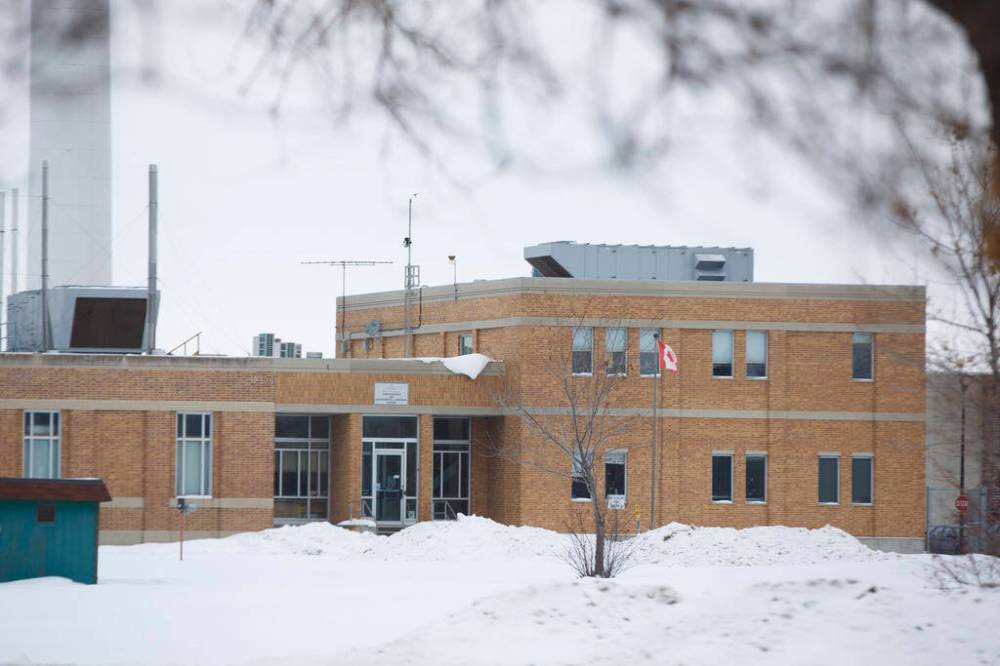
MIKE DEAL / FREE PRESS FILES.
Biosolids are treated at the North End sewage treatment plant.
Ensuring that capacity never runs out is critical to letting Winnipeg continue to add new homes and businesses, said Mayor Scott Gillingham.
Gillingham stressed staff are working hard to eliminate the gap between when capacity could run out and when the new facility is ready to boost the volume of waste that can be treated.
“Right now, I’m confident that, if our staff continues to do the work that they’re doing to find ways to optimize capacity, that we will get the project completed in time before we run out,” he said, during in a phone interview from a Federation of Canadian Municipalities convention in Brandon Tuesday.
An annual report on biosolids treatment capacity, which includes the latest estimated timeline, was released Tuesday. Biosolids, the solids leftover from wastewater treatment, are treated at the North End sewage treatment plant on north Main Street.
The mayor noted he has been “waving the red flag of capacity issues” for years.
In 2024, he said the city faced a “crisis moment” and urgently needed federal and provincial funding to help complete the three-phase mega upgrade to the North End plant that would boost its capacity.
“This report validates what I and others have been saying, that this is a critical project,” said Gillingham.
The three governments announced a deal to split the cost of the final phase of the $3.1-billion megaproject on Oct. 30.
The second phase of the upgrade will create new biosolids facilities to expand the capacity to treat the sewage byproduct. Its construction began in August.
The mayor said the city is not currently considering imposing any limit on development to address the issue.
“I would never want us to get to that point,” he said.
Coun. Sara MacArthur, chairwoman of the water and waste committee, said the risk will be closely monitored.
“It is something that we, as elected officials, and as a public service … need to all be keeping our eye on and ensuring that we’re not going to be compromising our capacity. Ensuring proper treatment of our sewage is vitally important,” said MacArthur.
In an interview, Wiebe said city officials have several projects underway to remove as much grit, oil, fats, grease and other contaminants as possible that can take up space in sewage digesters (tanks) to help alleviate the concern.
“We do keep an eye on a variety of different factors and we’re doing everything we can to make sure Winnipeg can continue to grow and develop while we build these upgrades,” she said.
For example, better screening to remove rags, dirt and sand from wastewater is now in place at the North End treatment plant, with a similar update expected at the city’s West End treatment plant within the next couple of years.
The city needs to complete more testing to determine the exact impact that will have, said Wiebe.
Overall, she’s “fairly optimistic” the treatment can continue without capacity issues thwarting future development.

“We are looking at contingency plans, so we’re looking at it from a lot of different angles,” she said.
Winnipeg water and waste first warned in late 2020 that biosolids treatment capacity could run out within five to nine years, which triggered the annual updates.
The new report notes actual capacity can vary in each of the next few years, depending on population growth, the type and size of industrial developments and chemical treatments that affect the overall volume of sewage sludge.
joyanne.pursaga@winnipegfreepress.com
X: @joyanne_pursaga
Born and raised in Winnipeg, Joyanne loves to tell the stories of this city, especially when politics is involved. Joyanne became the city hall reporter for the Winnipeg Free Press in early 2020.
Our newsroom depends on a growing audience of readers to power our journalism. If you are not a paid reader, please consider becoming a subscriber.
Our newsroom depends on its audience of readers to power our journalism. Thank you for your support.
Advertisement Advertise With Us
Advertisement Advertise With Us