

Manitoba curriculum changes expected to emphasize francophone history

Advertisement
Read this article for free:
or
Already have an account? Log in here »
To continue reading, please subscribe:
Digital Subscription
One year of digital access for only $1.44 a week*
- Enjoy unlimited reading on winnipegfreepress.com
- Read the E-Edition, our digital replica newspaper
- Access News Break, our award-winning app
- Play interactive puzzles
*Billed as $5.77 plus GST every four weeks. After 52 weeks, price increases to the regular rate of $19.95 plus GST every four weeks. Offer available to new and qualified returning subscribers only. Cancel any time.
To continue reading, please subscribe:
Add Free Press access to your Brandon Sun subscription for only an additional
$1 for the first 4 weeks*
- Enjoy unlimited reading on winnipegfreepress.com
- Read the E-Edition, our digital replica newspaper
- Access News Break, our award-winning app
- Play interactive puzzles
*Your next Brandon Sun subscription payment will increase by $1.00 and you will be charged $17.95 plus GST for four weeks. After four weeks, your payment will increase to $24.95 plus GST every four weeks.
Read unlimited articles for free today:
or
Already have an account? Log in here »
Manitoba’s education minister has been given new marching orders to ensure all children learn about the half-century ban that forced francophones to hide textbooks and other learning material published in their mother tongue.
English was the only language that was allowed to be taught in public schools across the province from 1916 to 1970.
The fallout of this law — which was overturned by NDP premier Edward Schreyer — is anticipated to be front and centre in new curriculum.
SHANNON VANRAES / FREE PRESS FILES
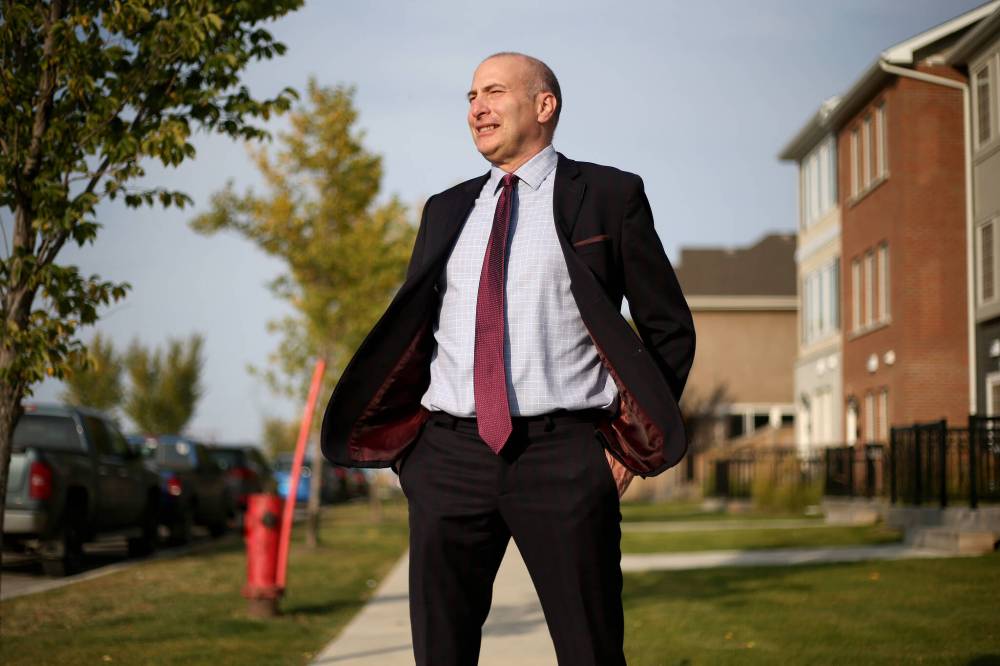
“We seem to forget that: A) we’re founders of Manitoba and, B) more than being the founders of Manitoba, we’re here and we still exist after all these years,” says Alain Laberge, superintendent of the Division scolaire franco-manitobaine.
“Right now, I’m fairly confident that students are learning about Louis Riel and the Métis resistance of 1870,” said Joël Ruest, a teaching professor who trains French-language teacher-candidates at Université de Saint-Boniface.
The francophone academic said he’s far less certain that children are being taught that Riel was “a great defender of the French language.”
Curriculum revisions are overdue to communicate the Red River Métis leader’s multifaceted legacy, along with all the reasons why Manitoba’s francophone population has plummeted since Riel’s death, Ruest said.
Francophone history, culture and influence are sprinkled throughout compulsory kindergarten-to-Grade 11 social studies courses.
In Grade 9, for instance, students are supposed to analyze perceptions of francophones, among other minority groups, and evaluate how language and education laws affect Franco-Manitobans.
Education Minister Tracy Schmidt said her department wants to do “a bigger and better job” to make sure all Grade 12 graduates understand the historical struggles of Franco-Manitobans.
The anglophone minister told the Free Press the project is similar to the one that led to the 2025 release of mandatory, standalone Holocaust education.
The social studies curricula, made up of documents created in the early 2000s, is currently “in renewal.”
While the Second World War has long been taught, new resources that are complementary to those documents include explicit learning outcomes about Jewish history and antisemitism in grades 6, 9 and 11.
School trustees — “les commissaires” on the francophone school division’s governing board — have raised questions about status quo history lessons internally and among their elected colleagues in recent years.
“We seem to forget that: A) we’re founders of Manitoba and, B) more than being the founders of Manitoba, we’re here and we still exist after all these years,” said Alain Laberge, superintendent of the Division scolaire franco-manitobaine, which has approximately 6,500 students.
The new lessons should be interwoven throughout grades in “a crescendo way,” Laberge said, adding that many francophone newcomers who join his division are unaware about the historical context of their minority community.
There’s no shortage of historical examples of prejudice against francophones, although they aren’t common knowledge — especially not outside St. Boniface, said Joel Martine, of Canadian Parents for French Manitoba.
“When my grandma was younger, they had to hide their textbooks and the inspector would come in and they’d hide them in the floorboards,” said Martine, executive director of the local chapter of the national advocacy organization.
The provincial government introduced laws that overrode previous bilingual agreements — such as those established in the province’s founding legislation, the Manitoba Act — in 1890 and 1916.
The Conservative government’s Official Language Act sought to abolish Manitoba’s bilingual school system, owing to his criticisms of the Catholic-run French schools, at the end of the 20th century.
The “Laurier-Greenway Compromise” of 1896 settled matters, but it was amended 20 years later by a Liberal government.
Schreyer ended a century of discriminatory policymaking against francophones in 1970.
The NDP premier laid the groundwork for École Sacré-Coeur to open, becoming Manitoba’s first French-immersion school, in 1973. Two decades later, a standalone francophone school division was established.
Between those historic wins for francophones, there was a spate of anti-French vandalism and other violent acts in St. Boniface.
The Société de la francophonie manitobaine offices on Provencher Boulevard were destroyed after they were fire-bombed on Jan. 30, 1983.
Martine, a father of two in St. Boniface, said it’s important that anglophones learn about these events to build understanding about the experiences of their neighbours’ ancestors.
Premier Wab Kinew — who is fluent in Ojibwa (Anishinaabemowin), as well as Canada’s two official languages — has regularly spoken in French during question period this fall.
The NDP government’s latest throne speech was published in all three of his languages. Lt.-Gov. Anita Neville delivered it Tuesday, in English, to start a new legislative session.
The 10-page speech identified updating curriculum “to teach all students about the fight for French language rights in Manitoba” as a priority over the coming year.
It also hinted at plans to fund new after-school programs staffed by Indigenous language educators.
Lillian Klausen, president of the Manitoba Teachers’ Society, criticized the NDP for proposing “Band-Aids” to numerous problems, such as the rise in violence against her classroom colleagues.
At the same time, Klausen said she endorses bolstering curriculum to ensure students are exposed to more perspectives about historical events.
“The more, the merrier,” the francophone teacher said about the inclusion of French and Indigenous language education in public schools across the Prairies.
Klausen said introducing explicit learning outcomes related to francophone struggles will promote critical thinking by forcing students to examine ”versions of the truth.”
Forty-four per cent of the K-12 student population in Manitoba studies French, according to a federal analysis of 2023-24 enrolment.
A third of English program students take at least one course in French. DSFM and immersion students represent about 18 per cent of the population.

The Bureau de l’éducation française is slated to oversee the new curriculum development project.
A member of USB’s education faculty, Ruest said it will be a time-intensive project, although it’s a worthwhile one, especially given the Kinew government’s goal to create a “truly bilingual” province.
“If we do have that objective in mind, then Manitobans need to know where that comes from,” the professor said.
“(Bilingualism) is really at the basis of the founding of Manitoba.”
maggie.macintosh@winnipegfreepress.com
Maggie Macintosh reports on education for the Winnipeg Free Press. Funding for the Free Press education reporter comes from the Government of Canada through the Local Journalism Initiative.
Our newsroom depends on a growing audience of readers to power our journalism. If you are not a paid reader, please consider becoming a subscriber.
Our newsroom depends on its audience of readers to power our journalism. Thank you for your support.
Advertisement Advertise With Us
Advertisement Advertise With Us