

Seniors, consumers seek promises from council candidates to transfer water, sewer rate decisions to PUB

Advertisement
Read this article for free:
or
Already have an account? Log in here »
To continue reading, please subscribe:
Digital Subscription
One year of digital access for only $1.44 a week*
- Enjoy unlimited reading on winnipegfreepress.com
- Read the E-Edition, our digital replica newspaper
- Access News Break, our award-winning app
- Play interactive puzzles
*Billed as $5.77 plus GST every four weeks. After 52 weeks, price increases to the regular rate of $19.95 plus GST every four weeks. Offer available to new and qualified returning subscribers only. Cancel any time.
To continue reading, please subscribe:
Add Free Press access to your Brandon Sun subscription for only an additional
$1 for the first 4 weeks*
- Enjoy unlimited reading on winnipegfreepress.com
- Read the E-Edition, our digital replica newspaper
- Access News Break, our award-winning app
- Play interactive puzzles
*Your next Brandon Sun subscription payment will increase by $1.00 and you will be charged $17.95 plus GST for four weeks. After four weeks, your payment will increase to $24.95 plus GST every four weeks.
Read unlimited articles for free today:
or
Already have an account? Log in here »
Groups representing seniors, consumers and people living in poverty say a provincial oversight agency should gain the power to set Winnipeg water and sewer rates, partly to ensure future fees are affordable.
On Wednesday, the Manitoba Seniors Equity Action Coalition and Harvest Manitoba, as well as provincial branches of the Canadian Association of Retired Persons and Consumers Association of Canada, called on all 2026 city council candidates to push for that change.
Specifically, the groups want all candidates to publicly promise they would support a motion that asks the province to shift that responsibility from the city to the Public Utilities Board, if they’re elected.
MIKAELA MACKENZIE / FREE PRESS
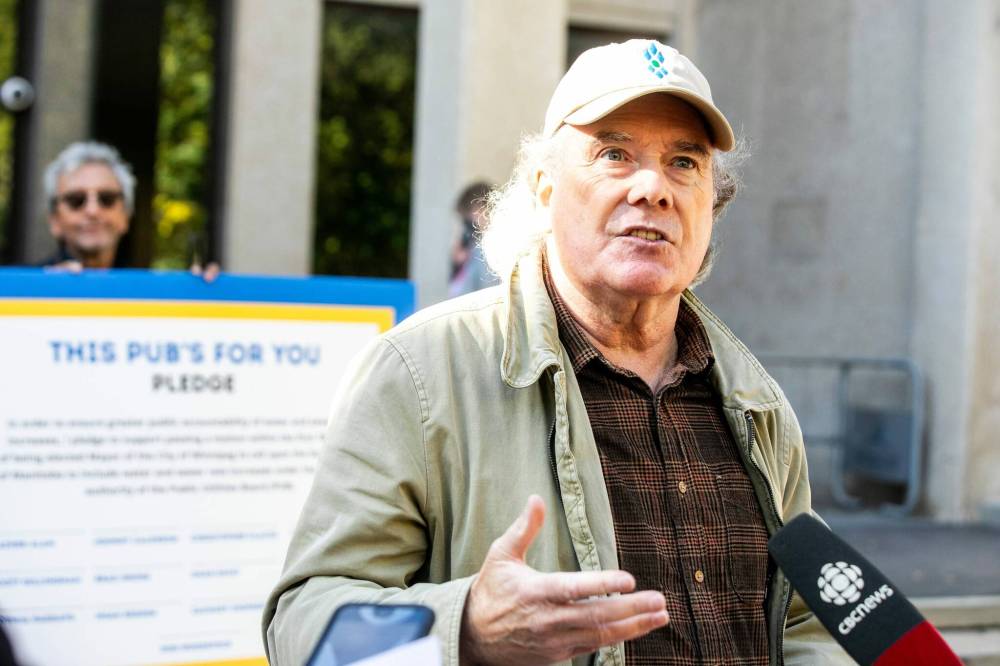
Tom Simms of the Manitoba Seniors Equity Action Coalition: “It’s tough, making those payments, and they’re going up all the time.”
One supporter said some Winnipeggers are struggling to pay their utility bills.
“I’m a senior, I have my own place. It’s tough, making those payments, and they’re going up all the time,” said Tom Simms, a member of Manitoba Seniors Equity Action Coalition.
In 2025, a substantial hike to the typical home’s sewer rate of $18.67 per month took effect April 1, which added $168.03 to that bill for the remainder of that year.
The annual bill rose by an additional $44 on Jan. 1, 2026 and is set to jump a further $68 on Jan. 1, 2027.
City council has voted to freeze the 2027 rate, but only if the province and feds each agree to fund one-third of the cost of the final $1.57-billion phase of the North End sewage treatment plant upgrade. The province has promised to do so, while the feds are expected to offer an update in the near future.
Simms said rate proposals and approvals have proven difficult for voters to keep track of.
He noted another staff proposal asked city council to add $1,000 to the typical household sewer rate between 2024 and 2027. When that recommendation was publicly released in March 2025, Mayor Scott Gillingham and city council promptly rejected it; Gillingham said imposing it would “crush people.”
A switch to PUB control over the utility rates could avoid such “political theatre” in the future, said Simms.
“I get really tired of that as a citizen. Like, let’s be straight and let’s deal with this important issue. And we think that there’s options that we could be exploring that help keep things affordable,” he said.
Lucille Bruce, co-chair of the Manitoba Seniors Equity Action Coalition, noted the PUB already sets sewer and water rates for every municipality in Manitoba, except Winnipeg.
“We think that, in order to have greater accountability regarding our water and sewer bills, that it is only fair that the City of Winnipeg’s water utility rates be approved by the PUB, as well,” said Bruce.
Others said monopoly utilities such as the city warrant external oversight, since consumers have no choice but to pay for their services.
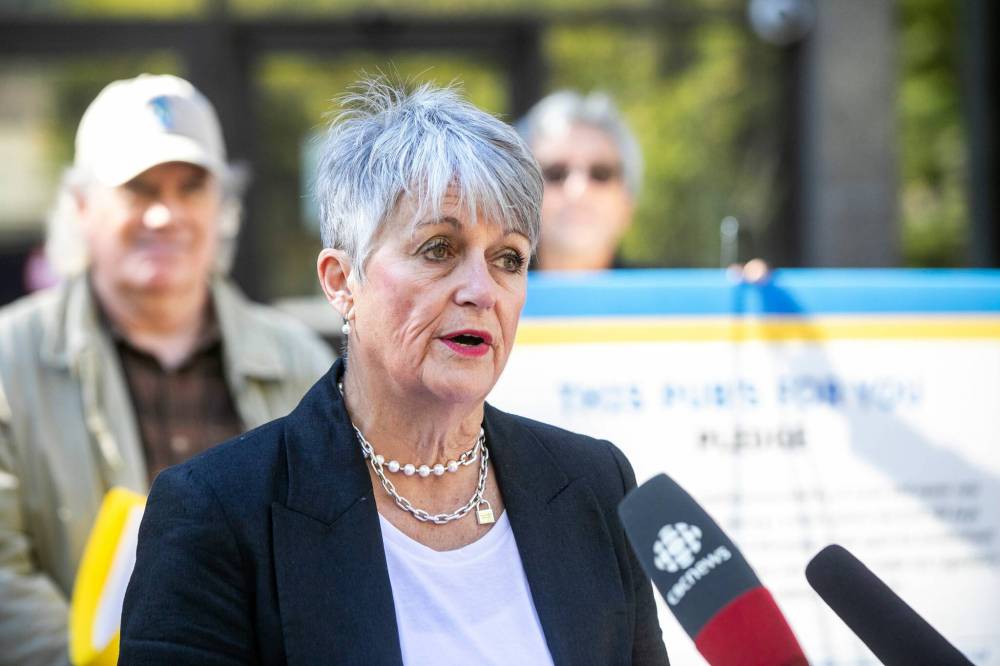
“Seniors, along with all citizens of Winnipeg, need to be assured that decisions about water and sewer rates are evidence-based, taking into consideration issues of affordability, financial and environment(al) sustainability and (transparency),” said Marnie Strath, Manitoba chair of the Canadian Association of Retired Persons.
Simms noted the city also transfers millions of dollars from water and sewer rate revenues to its general budget each year, including $45.2 million in 2026, a practice he said the PUB should also assess.
MIKAELA MACKENZIE / FREE PRESS
Marnie Strath, chair of the Canadian Association of Retired Persons.
In an email, incumbent mayoral candidate Scott Gillingham said he’s “open” to conversations about having the PUB set the rates. However, he said his key priority is to secure funding to support the final project of the North End sewage treatment plant upgrade.
“Rates are currently set through a public council process, and we’d need to explore whether a shift to external regulation would have an impact on the city’s broader financial planning and debt management. So, petitioning the province for PUB oversight isn’t an urgent priority right now,” he said.
In a written statement, mayoral candidate Kevin Klein did not answer if he wants the PUB to oversee the rates, promising to release his own plan for water and sewer services next week.
He accused Gillingham of treating the utility as a revenue stream to “prop up” city finances, due to past budget transfers.
“That is not how you treat households already stretched by the cost of living,” wrote Klein.
Meanwhile, mayoral candidate Don Woodstock promised key changes for police, if he’s elected, which he said would support a crackdown on crime.

“To the criminals operating in this city, let me make this unequivocally clear to you: You have until Oct. 28 (election day) to get out of Winnipeg. This is a warning. Leave now,” said Woodstock.
His plan includes hiring “at least” 100 more police officers and embracing new technology to boost resources.
He would also try to boost police participation in local sports programs and youth leagues, possibly by allowing some officers to use paid time to take part.
joyanne.pursaga@freepress.mb.ca
X: @joyanne_pursaga
Born and raised in Winnipeg, Joyanne loves to tell the stories of this city, especially when politics is involved. Joyanne became the city hall reporter for the Winnipeg Free Press in early 2020.
Our newsroom depends on a growing audience of readers to power our journalism. If you are not a paid reader, please consider becoming a subscriber.
Our newsroom depends on its audience of readers to power our journalism. Thank you for your support.
Advertisement Advertise With Us
Advertisement Advertise With Us