

City exceeds housing targets as millions in federal funds set to roll in

Advertisement
Read this article for free:
or
Already have an account? Log in here »
To continue reading, please subscribe:

Digital Subscription
One year of digital access for only $205*
- Enjoy unlimited reading on winnipegfreepress.com
- Read the E-Edition, our digital replica newspaper
- Access News Break, our award-winning app
- Play interactive puzzles
*First annual payment billed as $205.00 + GST for one year. This annual subscription will automatically renew at $233.00 + GST every 52 weeks (10% off the regular annual price of $259.35). Offer available to new and qualified returning subscribers only. Cancel any time.
To continue reading, please subscribe:
Add Free Press access to your Brandon Sun subscription for only an additional
$1 for the first 4 weeks*
- Enjoy unlimited reading on winnipegfreepress.com
- Read the E-Edition, our digital replica newspaper
- Access News Break, our award-winning app
- Play interactive puzzles
*Your next Brandon Sun subscription payment will increase by $1.00 and you will be charged $17.95 plus GST for four weeks. After four weeks, your payment will increase to $24.95 plus GST every four weeks.
Read unlimited articles for free today:
or
Already have an account? Log in here »
The City of Winnipeg has exceeded several homebuilding targets tied to its share of the federal Housing Accelerator Fund, with permits issued for 14,833 new housing units since December 2023.
The agreement to claim $126.5 million from the fund since the end of 2023 required the city to approve at least 14,251 new dwellings before Dec. 5.
“We set aggressive targets for new building permits in the Housing Accelerator Fund and we have exceeded the targets that we set three months before the deadline… (It) is very good news for Winnipeg at a time when we need more housing,” said Mayor Scott Gillingham.
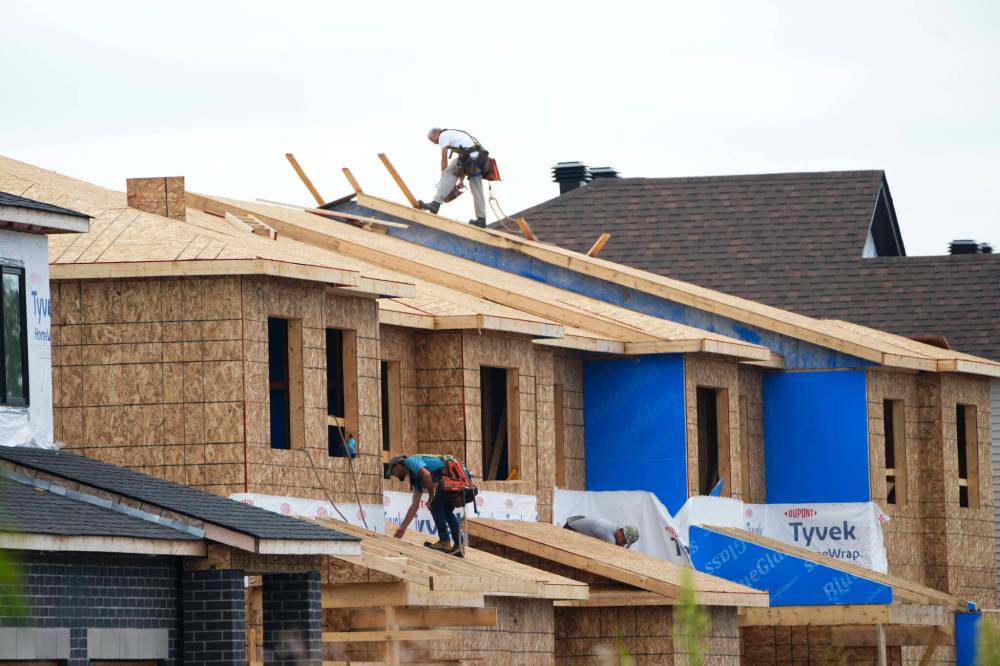
SEAN KILPATRICK / THE CANADIAN PRESS FILES
New home construction projects to be approved in Winnipeg this year are expected to include 1,409 new affordable housing units.
The city expects to receive its final $32.6-million federal payment in early 2027, after its results are reviewed by the Canada Mortgage and Housing Corporation.
In March, CMHC added $4 million to Winnipeg’s overall funding and increased the target number of units to 14,251, up from an initial 14,101 set in 2023.
The new permits are set to produce 7,989 homes near high-frequency transit, 2,649 missing middle units (such as duplexes, triplexes, fourplexes, row houses, low-rise apartments), 2,323 additional muti-family units, and 1,872 single-detached homes.
Of that construction, 1,409 new affordable housing units will be added.
“Increasing the supply of housing also takes some of the pressure off the cost of housing (because) the law of supply and demand kicks in … By adding more housing, approving close to 15,000 units of housing, that should start to alleviate some of the pressure in the rental market and the new housing market as well,” said Gillingham.
At Ottawa’s request, city council approved controversial zoning changes to help it claim the cash in 2023. Those sweeping changes permitted construction of: up to four housing units on a single lot in most residential areas; up to four-storey residential buildings near transit corridors; and mid-rise housing along mall and major transportation corridor sites.
The changes eliminated the need for public hearings and city committee approvals to complete such projects. Critics argued that reduced public input on housing projects and put green space and neighbourhood amenities at risk of being replaced by much denser housing.
On Wednesday, the mayor said the city’s housing numbers show the effort paid off.

“Winnipeg needs, and has needed, more housing for years … And, so, the historic zoning changes that we have made as a council, were changes that took courage for us to make because there’s a bigger goal of getting more housing built,” said Gillingham.
Coun. Brian Mayes (St. Vital), said the number of homes built indicates there is no need to further alter the zoning standards.
“We reached a very difficult compromise on the (triplexes) and fourplexes (being allowed on most residential lots). We haven’t been overrun with them … I think in the next zoning overhaul we don’t need to dramatically change the rules on this,” said Mayes.
joyanne.pursaga@freepress.mb.ca
X: @joyanne_pursaga
Born and raised in Winnipeg, Joyanne loves to tell the stories of this city, especially when politics is involved. Joyanne became the city hall reporter for the Winnipeg Free Press in early 2020.
Our newsroom depends on a growing audience of readers to power our journalism. If you are not a paid reader, please consider becoming a subscriber.
Our newsroom depends on its audience of readers to power our journalism. Thank you for your support.
Born and raised in Winnipeg, Joyanne loves to tell the stories of this city, especially when politics is involved. Joyanne became the city hall reporter for the Winnipeg Free Press in early 2020.
Our newsroom depends on a growing audience of readers to power our journalism. If you are not a paid reader, please consider becoming a subscriber.
Our newsroom depends on its audience of readers to power our journalism. Thank you for your support.
Advertisement Advertise With Us
Advertisement Advertise With Us