

Province allows pharmacists to prescribe birth control; more services coming, Asagwara says

Advertisement
Read this article for free:
or
Already have an account? Log in here »
To continue reading, please subscribe:

Digital Subscription
One year of digital access for only $205*
- Enjoy unlimited reading on winnipegfreepress.com
- Read the E-Edition, our digital replica newspaper
- Access News Break, our award-winning app
- Play interactive puzzles
*First annual payment billed as $205.00 + GST for one year. This annual subscription will automatically renew at $233.00 + GST every 52 weeks (10% off the regular annual price of $259.35). Offer available to new and qualified returning subscribers only. Cancel any time.
To continue reading, please subscribe:
Add Free Press access to your Brandon Sun subscription for only an additional
$1 for the first 4 weeks*
- Enjoy unlimited reading on winnipegfreepress.com
- Read the E-Edition, our digital replica newspaper
- Access News Break, our award-winning app
- Play interactive puzzles
*Your next Brandon Sun subscription payment will increase by $1.00 and you will be charged $17.95 plus GST for four weeks. After four weeks, your payment will increase to $24.95 plus GST every four weeks.
Read unlimited articles for free today:
or
Already have an account? Log in here »
Manitoba pharmacists have new powers to assess for, prescribe and administer birth control.
Health Minister Uzoma Asagwara announced an expanded scope of practice — although limitations on the profession remain the strictest in Canada — during a news conference Friday.
“This means that people will be able to access contraception more quickly, more conveniently and closer to home,” Asagwara told reporters inside the legislature.
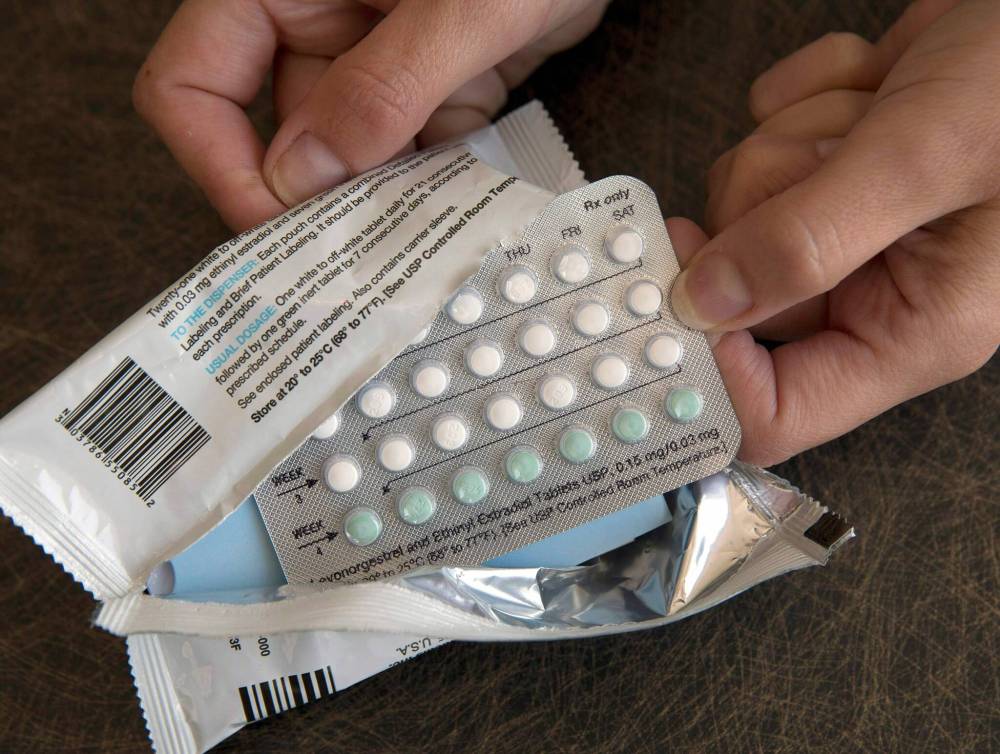
Pharmacists who have taken the training can issue several prescription contraceptives, including oral contraceptive pills (pictured), hormonal patches, vaginal rings and intramuscular contraceptive injections, the province said. (Rich Pedroncelli / The Associated Press files)
The minister touted the regulatory changes, which came into effect Tuesday, as an expansion of the province’s free birth control initiative.
Manitoba’s pharmacare program, which covers the full cost of dozens of birth control methods, has resulted in 288,150 prescriptions being filled since the initiative was introduced in October 2024.
Pharmacists can now issue prescriptions for oral pills, hormonal patches, vaginal rings and intramuscular injections.
Pharmacists Manitoba endorsed the changes as overdue, but a counterpart organization representing doctors condemned the province’s lack of proactive consultation.
Doctors Manitoba issued a statement Friday saying its members need clarity about the new retail prescription process and “who is responsible for monitoring complications and engaging in the follow-up.”
There are 200 new professionals, about 14 per cent of the community pharmacy workforce, currently qualified to provide expanded services.
The University of Manitoba is making related training mandatory for incoming pharmacy students this fall. Working pharmacists must complete five credit hours of study to be eligible to prescribe, assess and administer these kinds of injections.
“For too long, women’s health has not received the priority it deserves,” said Jennifer Hlynsky, vice-president of Pharmacists Manitoba.
Hlynsky said the changes recognize pharmacists are qualified professionals who can help deliver the “accessible, convenient, no-cost” reproductive health-care services that patients deserve.
Pharmacists Manitoba has repeatedly called on the province to allow its 1,400 community pharmacist members to perform more primary-care services.
Prior to this week, the organization was lobbying for the ability to diagnose and prescribe medications for 41 common conditions that pharmacists elsewhere in Canada can treat. That number is now 40.
The Progressive Conservatives criticized the NDP for announcing the limited and long overdue changes.
PC health critic Kathleen Cook noted that pharmacies in Alberta and Saskatchewan offer far more services, such as assessing tick bites and treating ringworm, than their counterparts in this province.
“Manitoba’s actually ranked last among the Canadian provinces when it comes to the authorized services that they can provide,” Cook said. “I’d like to see Manitoba catch up.”
Pharmacists Manitoba’s latest analysis shows its members are authorized to provide 15 services. Alberta’s are able to offer 59.
B.C. pharmacists have the second most-limited scope of practice of all 10 provinces, but their list contains 32 items — more than double the size of Manitoba’s.
The health minister, who was joined by a group of pharmacists at Friday’s announcement, hinted further expansion is on the horizon.
“We haven’t hit the finish line here — I don’t know that there is a finish line,” Asagwara said, adding the province plans to announce pharmacists will be able to treat more “minor ailments” in the fall.

“Our priority is in making sure that Manitobans have access to more primary care, not less.”
It’s proving more time-intensive than anticipated to navigate all the regulatory changes required to approve an expanded scope, Asagwara said.
Eligible patients with a valid Manitoba Health card can receive up to three pharmacist-provided contraceptive assessments each benefit year and as many as four pharmacist-administered contraceptive injections annually at no cost.
Pharmacists Manitoba representatives are urging patients to call their local pharmacy to find out what they can offer at present.
maggie.macintosh@freepress.mb.ca
Maggie Macintosh reports on education for the Winnipeg Free Press. Funding for the Free Press education reporter comes from the Government of Canada through the Local Journalism Initiative.
Our newsroom depends on a growing audience of readers to power our journalism. If you are not a paid reader, please consider becoming a subscriber.
Our newsroom depends on its audience of readers to power our journalism. Thank you for your support.
Maggie Macintosh reports on education for the Winnipeg Free Press. Funding for the Free Press education reporter comes from the Government of Canada through the Local Journalism Initiative.
Our newsroom depends on a growing audience of readers to power our journalism. If you are not a paid reader, please consider becoming a subscriber.
Our newsroom depends on its audience of readers to power our journalism. Thank you for your support.
Advertisement Advertise With Us
Advertisement Advertise With Us
History
Updated on Friday, August 7, 2026 6:02 PM CDT: Adds comments.