Hutterite women take first steps into health-care sector
Read this article for free:
or
Already have an account? Log in here »
To continue reading, please subscribe:

Digital Subscription
One year of digital access for only $205*
- Enjoy unlimited reading on winnipegfreepress.com
- Read the E-Edition, our digital replica newspaper
- Access News Break, our award-winning app
- Play interactive puzzles
*First annual payment billed as $205.00 + GST for one year. This annual subscription will automatically renew at $233.00 + GST every 52 weeks (10% off the regular annual price of $259.35). Offer available to new and qualified returning subscribers only. Cancel any time.
To continue reading, please subscribe:
Add Free Press access to your Brandon Sun subscription for only an additional
$1 for the first 4 weeks*
- Enjoy unlimited reading on winnipegfreepress.com
- Read the E-Edition, our digital replica newspaper
- Access News Break, our award-winning app
- Play interactive puzzles
*Your next Brandon Sun subscription payment will increase by $1.00 and you will be charged $17.95 plus GST for four weeks. After four weeks, your payment will increase to $24.95 plus GST every four weeks.
Read unlimited articles for free today:
or
Already have an account? Log in here »
Hey there, time traveller!
This article was published 16/05/2022 (1583 days ago), so information in it may no longer be current.
Growing up, Karissa Maendel never dreamed of being a nurse. But when she got the chance to embark on such a career, she knew she had to take it.
“It hadn’t been an option but the opportunity presented itself,” says Maendel, now in her first year as a registered nurse. “It just seemed like too good an opportunity to pass up.”
Visionary change at a Manitoba Hutterite colony made her new vocation possible.
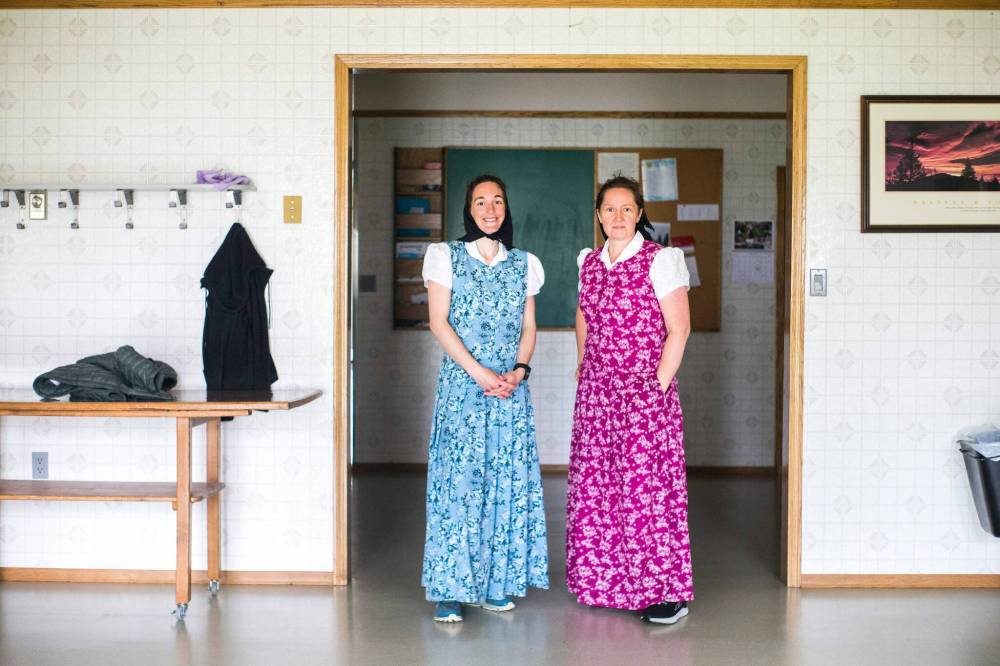
Maendel is one of only a handful of Hutterite nurses in the province. Now, she’s trying to encourage more representation within the health-care system to help colonies and alleviate staff shortages.
“I know a part of the solution to this problem is the resources that the Hutterite community can contribute,” Maendel says.
With the support of the Baker Colony, the 37-year-old mother enrolled in a three-year baccalaureate nursing program at Red River College Polytechnic’s Portage la Prairie campus in 2018, and graduated with honours earlier this year — in time to join the front lines of the COVID-19 pandemic.
She now works part-time in the medical pediatric unit at Portage la Prairie Hospital alongside her sister-in-law, Judith Maendel, one of the four first Hutterite women to become a nurse in Manitoba.
Baker Colony, located about 50 kilometres southwest of Portage, is home to 120 people and has seen a need to encourage its members to join the profession, thanks in part to its longtime leader, the late Rev. Ben Maendel.
Traditionally, Hutterites don’t seek jobs outside the colony and don’t have individual incomes. Members work inside the colony as a collective and pool resources from farming, manufacturing and other economic operations. For decades, Hutterites have received teaching degrees and also receive certification to work in the trades, as accountants, and some as first responders.
Registered nurses in Hutterite communities are still rare.
The earnings Karissa and Judith receive as nurses go back to the colony. They work 12-hour shifts a few days a week at the hospital and still cook, garden and work at the colony on their off time.
They’re both informally on-call in the community to deliver basic care (such as changing dressings) and have the assessment skills to recognize when a trip to the emergency room is necessary.
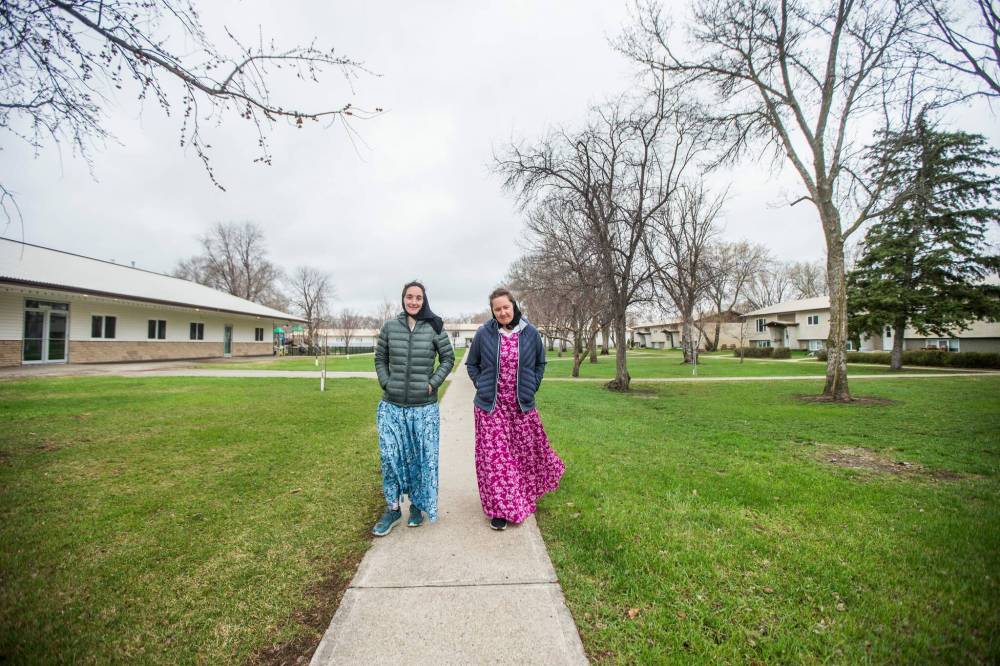
There were no other Hutterite nurse role models for Judith to look up to when she enrolled in Brandon University’s four-year nursing program in 2009, but she comes from a long line of trail-blazing women. Her aunts from the Fairholme Colony near Portage were the first Hutterite women to be educated as teachers, she says.
“They have strongly been advocating for education and for having more of these professions in our community,” she says, adding Ben Maendel backed the cause.
Judith describes him as a “visionary leader.” Because of her training, she was able to offer him palliative care before he died in 2018, so he could be at home instead of in hospital.
“At the end of his life, it was very meaningful,” Judith says. “My role as a Hutterite nurse made sense, even amid that tragedy.”
Both women say they wouldn’t have ventured into nursing without the support of their community, and they hope other colonies will follow. The Hutterite population in Manitoba is roughly 10,000.
They’ve both seen the expressions of pleasant surprise on Hutterite patients’ faces when they realize their nurse can comfort them in their dialect.
“In a vulnerable space, just seeing my kerchief, seeing my dress, hearing my accent… (brings) relief for them. I’m happy to be there for them,” Judith says.
Every time she meets an appreciative Hutterite patient, she urges them to spread the word within their home colony to “gently encourage” more Hutterite nurses.

“Then they hesitate, because it would have to be a whole community mindset shift. And that’s where the change needs to happen,” Judith says.
“I do what I can in talking to people, and I wish the colonies would recognize how seamless this is. I can keep my responsibilities (at home) plus contribute a few days a week at the hospital.”
Offering culturally sensitive care is only part of the reason the women are advocating for more Hutterites in nursing. Within the colony structure (which runs, as Judith puts it, like a “well-oiled machine”) they have financial and social supports to help them pursue education, and Hutterite patients do rely on provincial health care.
It aligns with their religious beliefs to give back to the wider community, and say the Manitoba health-care system could use the help.
Leaving her “comfort zone” of the colony to pursue nursing was difficult, but worth it, Karissa says. “You quickly discover that you can form community anywhere.”
After she graduated in January, Karissa recounted her experience in a Facebook post. She eloquently urged others in the wider Hutterite community to pursue health-care education.
“I would be lying if I said this has been easy. It has been very hard. The kind of hard with regular 5:30 (a.m.) alarms and pots of coffee before sunrise,” she wrote, later emphasizing support the colony offered.
“I did not meet a single person, none of my classmates, other working moms, anybody, that had the support system in place that I did. From my gas and vehicle to meals prepared for my family and every financial and social need in between, I was covered.”
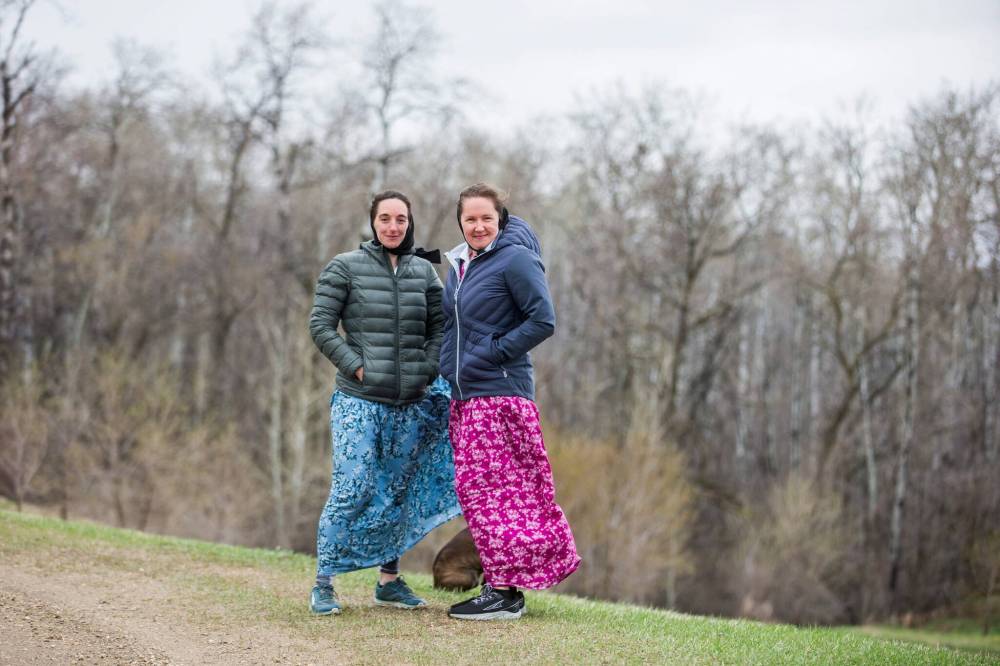

“I would love for the greater Hutterite community to extend that support and vision beyond the borders of the community,” Karissa added in an interview with the Free Press, saying she’s particularly concerned about the provincewide nursing shortage.
But change is happening: two other colony members have signed up for health-care aide courses.
Karissa says she hopes she can encourage Hutterite girls everywhere, including her two young daughters.
“My daughters have said how proud they are, and I’m just so thankful that I’m able to do it — for the simple reason that they see me doing it.”
katie.may@freepress.mb.ca

Katie May is a general-assignment reporter for the Free Press.
Our newsroom depends on a growing audience of readers to power our journalism. If you are not a paid reader, please consider becoming a subscriber.
Our newsroom depends on its audience of readers to power our journalism. Thank you for your support.
Related Articles
Warm and fuzzy for Winnipeg winter





History
Updated on Monday, May 16, 2022 8:46 AM CDT: Amends photo cutlines