

Shared meth syringes drive hepatitis outbreak

Advertisement
Read this article for free:
or
Already have an account? Log in here »
To continue reading, please subscribe:

Digital Subscription
One year of digital access for only $205*
- Enjoy unlimited reading on winnipegfreepress.com
- Read the E-Edition, our digital replica newspaper
- Access News Break, our award-winning app
- Play interactive puzzles
*First annual payment billed as $205.00 + GST for one year. This annual subscription will automatically renew at $233.00 + GST every 52 weeks (10% off the regular annual price of $259.35). Offer available to new and qualified returning subscribers only. Cancel any time.
To continue reading, please subscribe:
Add Free Press access to your Brandon Sun subscription for only an additional
$1 for the first 4 weeks*
- Enjoy unlimited reading on winnipegfreepress.com
- Read the E-Edition, our digital replica newspaper
- Access News Break, our award-winning app
- Play interactive puzzles
*Your next Brandon Sun subscription payment will increase by $1.00 and you will be charged $17.95 plus GST for four weeks. After four weeks, your payment will increase to $24.95 plus GST every four weeks.
Read unlimited articles for free today:
or
Already have an account? Log in here »
Hey there, time traveller!
This article was published 11/12/2018 (2826 days ago), so information in it may no longer be current.
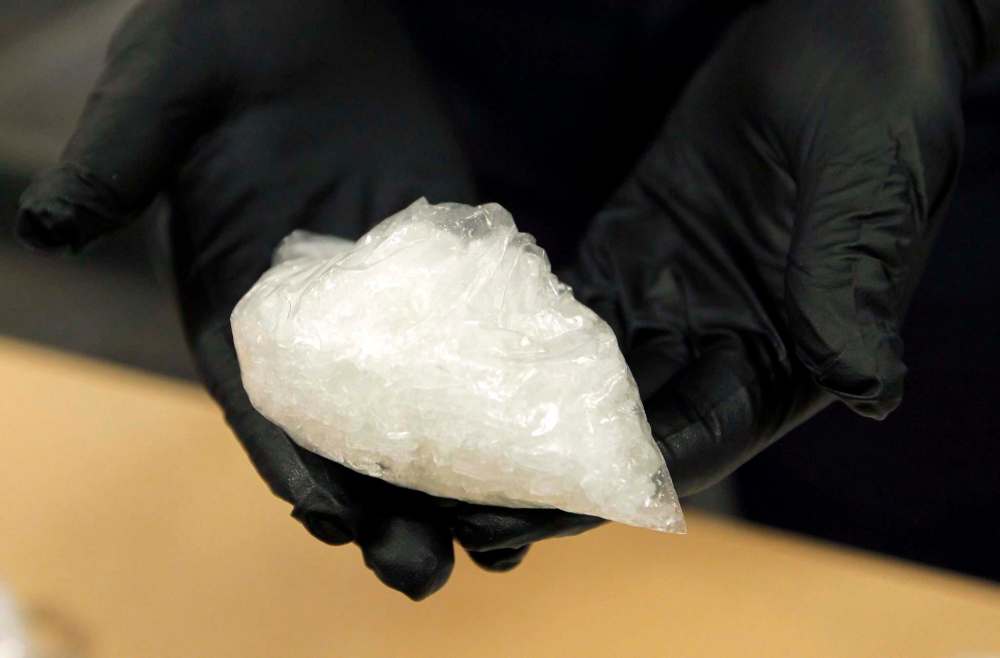
A sharp rise in the use of needles in Winnipeg to inject methamphetamine is driving up rates of hepatitis and other blood-borne diseases to alarming levels, according to documents obtained by the provincial NDP.
The “lack of provincial leadership” has also exacerbated the city’s ability to cope with the crisis, says an Aug. 1 briefing note issued by the Winnipeg Regional Health Authority.
It’s part of a series of documents the NDP obtained through freedom-of-information laws and released Tuesday that shows officials believe a staggering rise in infections in Winnipeg is largely due to shared syringes.
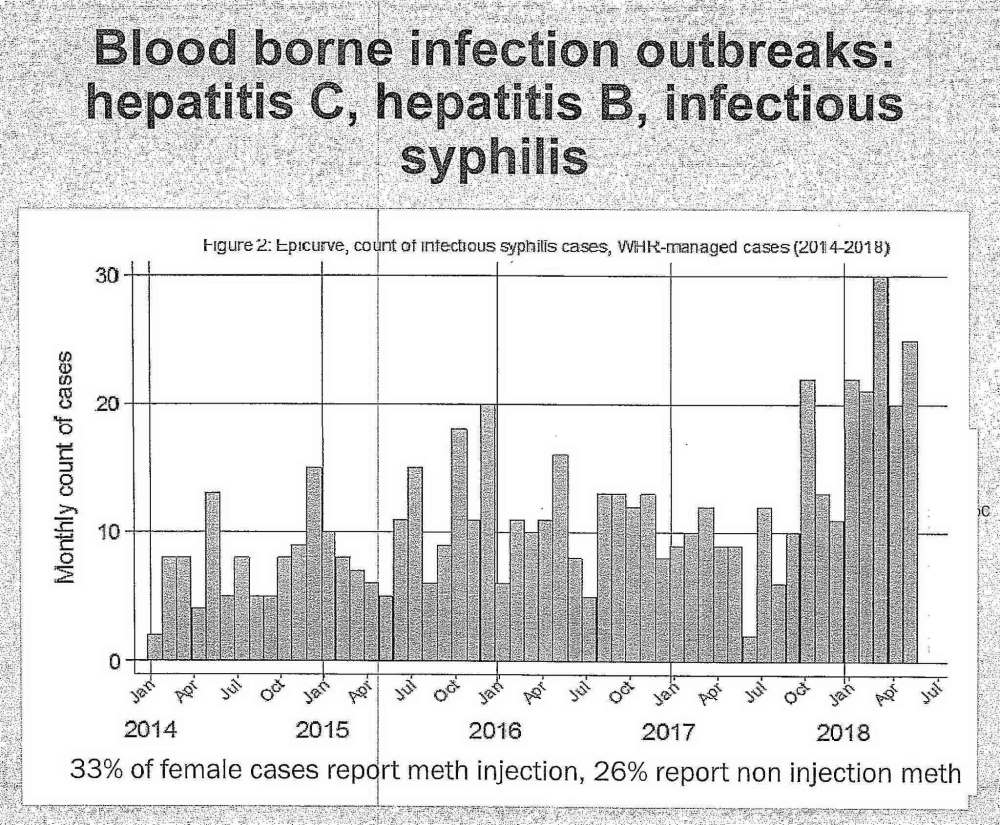
Public health officials have declared an outbreak “of acute hepatitis B” that is almost exclusively linked to injection drug use. Hepatitis C is also on the rise among young people under the age of 25, “something that is unprecedented…,” the documents reveal.
Meanwhile, the current syphilis outbreak is “the highest number ever recorded” in the Winnipeg health region, according to one WRHA briefing note.
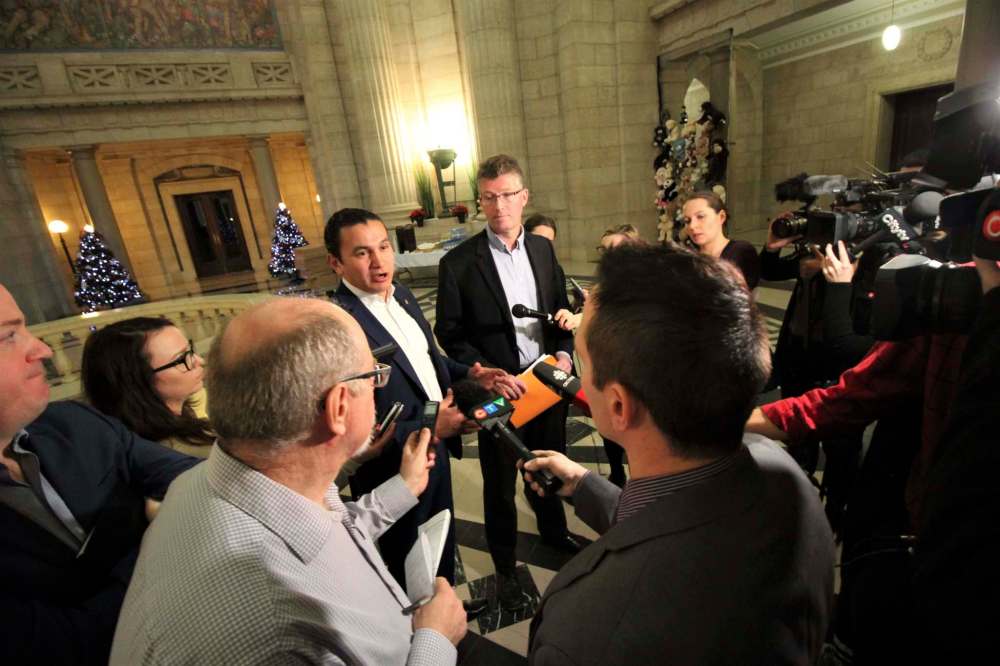
“These documents show that the meth crisis in Winnipeg is now becoming a public health crisis,” NDP Leader Wab Kinew said. “This issue is not just affecting people who are addicted to methamphetamine, but also that it… can spread to the broader population,”
The documents also suggest that the the six mental-health beds the province allocated for the Health Sciences Centre back in January are temporary measures only — although Health Minister Cameron Friesen hotly disputed that.
In a later scrum with reporters, Friesen referred to the Aug. 1 briefing note as an “historical document.” He said he has ordered that the addictions treatment beds be maintained in any reorganization of health delivery services.
The documents make clear that health officials are bracing for increased costs due to meth addiction and other illnesses that stem from it. Officials are predicting a steep rise in emergency room visits as well as lengthier hospital stays due to systemic or cardiac illnesses related to drug injection.
The documents say a single hepatitis C diagnosis costs taxpayers more than $40,000, while a case of HIV or AIDS costs roughly $1 million in treatment and drugs. It compares that with the cost of a needle: nine cents.
According to the documents:
- 47 per cent of people who died of fentanyl overdose in the most recent year in which statistics are available had crystal meth in their symptoms.
- 80 per cent of meth consumed locally is produced in Mexico, while 20 per cent is produced in North America.
- 47 per cent of people who died of fentanyl overdose in the most recent year in which statistics are available had crystal meth in their symptoms.
- 80 per cent of meth consumed locally is produced in Mexico, while 20 per cent is produced in North America.
- Most meth users experience “quiet psychosis,” and media reports that emphasize the violence caused by the drug provokes fears and creates barriers to service.
- The health system is “not equipped” to deal with mental health and acute care admissions related to meth.
- There is a lack of “preventative resources” available to battle meth addiction and a lack of community-based care.
- The vast majority of meth-related calls handled by paramedics in 2017 came from Point Douglas and downtown community areas.
- Blood-borne infection outbreaks — hepatitis C, hepatitis B, syphilis — are skyrocketing this year.
- There’s been a steep rise in emergency room visits in Winnipeg attributable to meth since 2016.
- Health officials are predicting more long hospital stays by patients due to systemic or cardiac infections related to drug injection.
- Supervised consumption services or safe injection sites “can be a point of entry into the health care system for people who are otherwise excluded or underserved.”
Source: Winnipeg Regional Health Authority documents obtained by the provincial NDP through freedom of information legislation.
As of its August estimate, the WRHA was on track to distribute two million needles in 2018, compared with about a half million in 2013.
Another document obtained by the NDP, an undated powerpoint presentation, shows that 47 per cent of people who died from an “apparent fentanyl-related overdose” in 2017 also had crystal meth in their system. The document, issued sometime after June 1, notes “our system is not equipped for” the number of acute-care admissions.
“Addictions treatment (is) not highly effective and difficult to access at this time,” reads one slide.
Kinew said the documents show that the government has been slow to respond to the meth issue and hasn’t taken the problem seriously enough to date.
He said there is a need for a broad, aggressive strategy to “push back against meth use,” one that includes the creation of a safe injection site in Winnipeg — something the provincial government has resisted.
According to one document, “supervised consumption services,” or safe injection sites, “can be a point of entry into the health care system” for people who are otherwise excluded or underserved. A working group comprised of representatives of 15 community organizations, the WRHA and Manitoba Health is examining the issue. It’s expected to submit its report in about a month.
Meanwhile, Friesen said “a lot has changed” since some of the documents obtained by the NDP were produced. He said an assertion that the government refused to accept advice regarding early intervention measures is false. The government actually acted on the advice a few weeks ago, he said, when it announced that Manitoba had become the first province to give paramedics the ability to administer olanzapine, a drug that helps prevent methamphetamine-related psychosis.
As for the criticism in one of the documents about a lack of provincial leadership, Friesen said the opinion expressed came from a group formed within the WRHA that involved a variety of community organizations. He said he believes the record will show that the provincial government is taking steps to address the issue.

Friesen also said Manitobans didn’t need the NDP, with documents obtained through freedom of information legislation, to convince them that methamphetamine is a problem.
“We are only too aware. We are all alarmed. As a government we’ve said it has our full attention. And that’s why we’re acting,” he said.
– with files from Dylan Robertson
larry.kusch@freepress.mb.ca
jessica.botelho@freepress.mb.ca
NDP documents on WRHA tracking of meth-related infections.pdf
Our newsroom depends on a growing audience of readers to power our journalism. If you are not a paid reader, please consider becoming a subscriber.
Our newsroom depends on its audience of readers to power our journalism. Thank you for your support.
Syphilis outbreak ‘unprecedented’
The Winnipeg Regional Health Authority is bracing for an “unprecedented” syphilis outbreak in the city this year, with an expectation of 400 cases forecast for 2018.
That’s compared with about 120 cases per year previously.
Pierre Plourde, a medical health officer with the WRHA, said the region is also seeing about a 30 per cent increase in hepatitis C cases and an uptick of almost 50 cases of hepatitis B this year.
HIV rates are not yet rising, but the WRHA is “getting early indications” they may follow the same trend by spreading among people injecting crystal meth, he said, noting there is a “direct link” between injection drug use and the spread of infections.
“So if we don’t do something soon, HIV could be following hepatitis C and B, as you would expect; HIV being the least transmissible of those three viruses,” Plourde said.
“Getting clean needles and syringes out there is the way to prevent that further transmission.”
The WRHA is on track to distribute more than two million needles this year – significantly more than in any years past. In 2017, more than 1.6 million needles were distributed in Winnipeg.
The cost of handing out so many needles may be steep, but it pales in comparison to the long-term health costs of blood-borne diseases, Plourde said.
“We have to fund (needles) because funding that will prevent a lot greater costs down the road with these diseases,” he said.
Those who are most vulnerable to the infectious disease outbreaks are those who are “structurally disadvantaged,” meaning people who are inadequately housed or homeless; people who are incarcerated or in trouble with the law; and people with mental health issues, Plourde said.
The WRHA is doing its best to reach those must vulnerable, he said, by partnering with community agencies to conduct outreach.
Our newsroom depends on a growing audience of readers to power our journalism. If you are not a paid reader, please consider becoming a subscriber.
Our newsroom depends on its audience of readers to power our journalism. Thank you for your support.
Related Articles
Blame game pointless in meth battle
Advertisement Advertise With Us
Advertisement Advertise With Us
History
Updated on Tuesday, December 11, 2018 6:54 PM CST: Full write through, adds fact boxes