

Melting glaciers slowing rate of flow, study shows
Advertisement
Read this article for free:
or
Already have an account? Log in here »
To continue reading, please subscribe:
Digital Subscription
One year of digital access for only $1.44 a week*
- Enjoy unlimited reading on winnipegfreepress.com
- Read the E-Edition, our digital replica newspaper
- Access News Break, our award-winning app
- Play interactive puzzles
*Billed as $5.77 plus GST every four weeks. After 52 weeks, price increases to the regular rate of $19.95 plus GST every four weeks. Offer available to new and qualified returning subscribers only. Cancel any time.
To continue reading, please subscribe:
Add Free Press access to your Brandon Sun subscription for only an additional
$1 for the first 4 weeks*
- Enjoy unlimited reading on winnipegfreepress.com
- Read the E-Edition, our digital replica newspaper
- Access News Break, our award-winning app
- Play interactive puzzles
*Your next Brandon Sun subscription payment will increase by $1.00 and you will be charged $17.95 plus GST for four weeks. After four weeks, your payment will increase to $24.95 plus GST every four weeks.
Read unlimited articles for free today:
or
Already have an account? Log in here »
Hey there, time traveller!
This article was published 07/12/2016 (3616 days ago), so information in it may no longer be current.
The bad news is Canada’s glaciers are melting at an alarming rate due to climate change, making us the third largest contributor to rising sea levels after Greenland and Antarctica.
The good news? The speed at which glaciers are rumbling across Canada’s Arctic is slowing down. Glaciers typically speed up in warmer temperatures.
That surprising find was presented at the Arctic Net conference in Winnipeg this week, which is being attended by about 800 scientists involved in Northern studies across Canada.
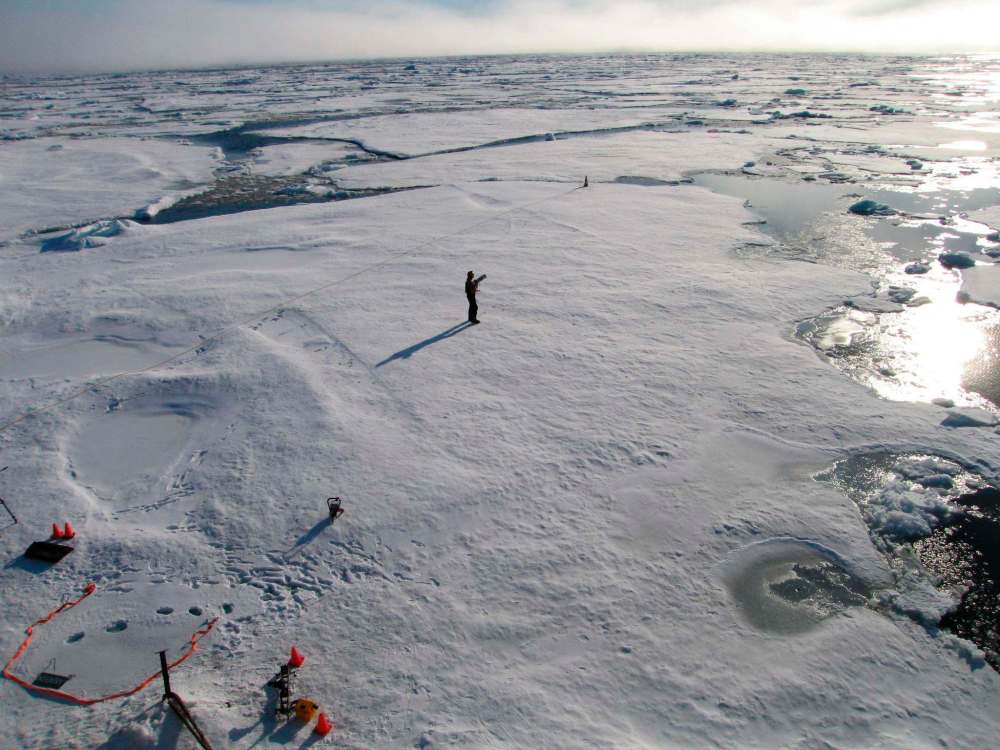
The slowing of glaciers is good news, explained head researcher, Luke Copland, because it allows more time to adapt to rising sea levels. Sea levels are forecast to climb 26 to 82 centimetres by the year 2100, according to the International Panel on Climate Change of the United Nations.
“The basic story is we’re seeing very clear and dramatic loss of ice caps in Canada, but losses primarily from melting of surface ice and not from acceleration of glaciers,” said Copland, University of Ottawa research chair in glaciology.
Glacier speed is measured with GPS receivers placed atop the flowing ice. Glaciers studied in three separate parts of Canada’s Arctic have slowed from 70-100 metres per year 50 years ago, to 35-50 metres per year today.
Copland speculated glaciers in Canada’s High Arctic may be slowing down because they are thinning due to global warming and don’t have the same weight.
One way glaciers move is their weight causes the bottom of the glacier to deform, and thereby lean the glacier forward.
Another way is by lubrication from meltwater or ocean water, which tends to accelerate glaciers. For example, the Trinity Glacier on Ellesmere Island is traveling at a rate of 1.2 kilometres per year.

Canada contributes about a millimetre to sea level rise every five years from its melting glaciers, compared to a millimetre per year each from Greenland and Antarctica.
The Arctic Net conference, with more than 200 scientific presentations in northern studies, demonstrates how much Arctic research has changed, Copland said.
Two decades ago, few people gave a hoot how fast glaciers were traveling in Canada’s Arctic, or about any glaciers for that matter. There were maybe two conferences per year on northern research in the entire world.
Today, the Arctic is recognized as the canary in the coal mine when it comes to climate change, and there are more than two dozen conferences per year around the globe, Copland said.
bill.redekop@freepress.mb.ca
Related Articles
Melting sea ice could brighten Churchill port's future
Advertisement Advertise With Us
Advertisement Advertise With Us
History
Updated on Wednesday, December 7, 2016 7:03 PM CST: changed headline