Extreme heat represents a new threat to trees and plants in the Pacific Northwest
Advertisement
Read this article for free:
or
Already have an account? Log in here »
To continue reading, please subscribe:

Digital Subscription
One year of digital access for only $205*
- Enjoy unlimited reading on winnipegfreepress.com
- Read the E-Edition, our digital replica newspaper
- Access News Break, our award-winning app
- Play interactive puzzles
*First annual payment billed as $205.00 + GST for one year. This annual subscription will automatically renew at $233.00 + GST every 52 weeks (10% off the regular annual price of $259.35). Offer available to new and qualified returning subscribers only. Cancel any time.
To continue reading, please subscribe:
Add Free Press access to your Brandon Sun subscription for only an additional
$1 for the first 4 weeks*
- Enjoy unlimited reading on winnipegfreepress.com
- Read the E-Edition, our digital replica newspaper
- Access News Break, our award-winning app
- Play interactive puzzles
*Your next Brandon Sun subscription payment will increase by $1.00 and you will be charged $17.95 plus GST for four weeks. After four weeks, your payment will increase to $24.95 plus GST every four weeks.
Read unlimited articles for free today:
or
Already have an account? Log in here »
Hey there, time traveller!
This article was published 21/12/2023 (1021 days ago), so information in it may no longer be current.
PORTLAND, Ore. (AP) — From June 25 to July 2, 2021, the Pacific Northwest experienced a record-breaking heat wave that sent the normally temperate region into Death Valley-like extremes that took a heavy toll on trees as well as people.
Seattle and Portland, Ore., recorded their hottest-ever temperatures, reaching 108 degrees Fahrenheit (42.2 Celsius) and 116 Fahrenheit (46.6 Celsius), respectively. In British Columbia, the small town of Lytton reached 121 degrees Fahrenheit (49.6 Celsius).
What become known as the “heat dome” is estimated to have killed hundreds of people in Oregon, Washington and British Columbia.
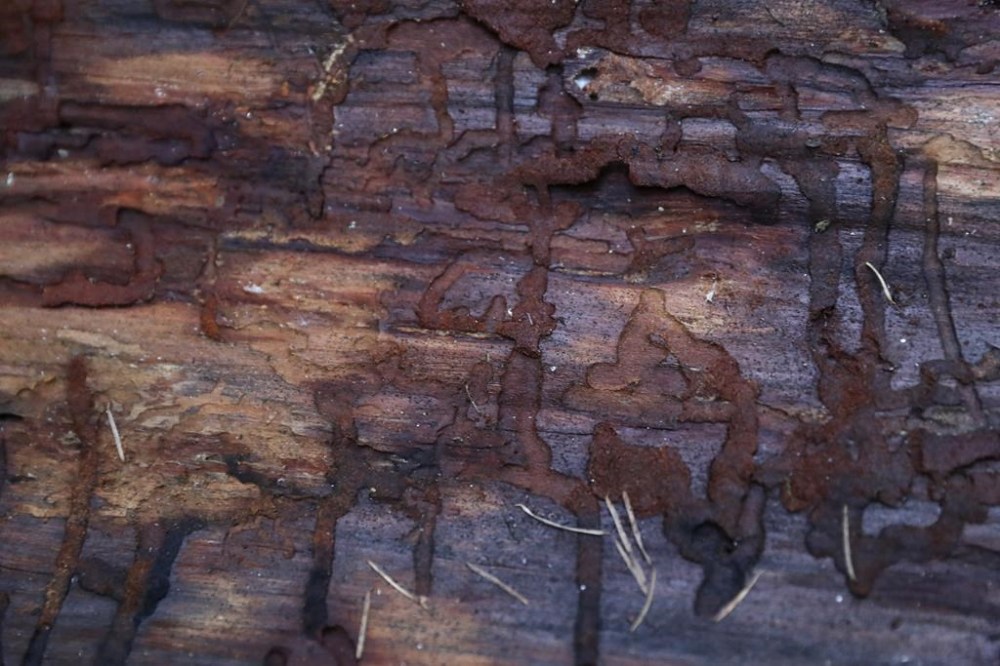
As this human tragedy unfolded, a lesser-known ecological tragedy was happening, one that scientists warn has grim repercussions for the world’s plants and the many animal species that depend on them.
In a matter of a few days, the 2021 heat dome turned many of the green leaves and needles on the region’s trees to orange, red and brown.
But, as recent research suggests, tree foliage didn’t simply dry out in the heat. Instead, it underwent “widespread scorching.”
“A lot of this reddening and browning of leaves was just that the leaves cooked. It really wasn’t a drought story,” said Chris Still, professor at Oregon State University’s College of Forestry and a leading researcher on the effects of heat on trees.
Still is part of a growing number of scientists investigating what they say is a new, woefully underestimated threat to the world’s plants: climate change-driven extreme heat.
——
EDITOR’S NOTE: This story is part of a collaboration between The Associated Press and Columbia Insight, exploring the impact of climate on trees in the Pacific Northwest.
——
In recent years, scientists in the Pacific Northwest have linked the decline of 10 native tree species to drought.
In many cases, conditions that have brought about the decline are known as “hot droughts.”
Driven by above-normal temperatures, hot droughts can be far more damaging to trees than droughts that result simply from a lack of moisture. Hot droughts not only dry out soil; they also dry out the air. This stresses trees, and can cause water-carrying tissues inside them to collapse — a process called “hydraulic failure.”
In a paper earlier this year in the journal Tree Physiology, Still made the case that damage to the region’s trees during the heat dome was triggered primarily by direct damage from heat and solar radiation rather than indirectly by drought caused by the extreme heat.
“I’m not trying to say that drought is not a huge and important factor,” said Still. “But I think with events like the 2021 heat wave becoming more common and intense, it’s important to look at the response of trees and other plants to these events and not just at drought, which has been the dominant paradigm.”
Still’s argument includes the observation that “foliage scorch” was primarily found on the southern and western sides of trees and forests — a pattern that follows the track of the sun across the summer sky.
“Basically, it was like a sunburn across the entire forest. It was quite disturbing,” said co-author Daniel DePinte, U.S. Forest Service aerial survey program manager, who observed the phenomenon from an airplane.
Multiple tree species were scorched, DePinte said, noting that the role played by the sun became clear when the same trees were viewed from an orientation not exposed to direct sunlight.
“It almost appeared as if the forest damage disappeared,” he said.
The paper was written in response to an earlier study published in the same journal that argued a different position: that the heat dome led to widespread drought stress and hydraulic failure in Pacific Northwest trees. “Overall I agree … that heat damage played a big role in the damage caused to trees (during) the 2021 PNW heat wave. But in my view, hydraulic failure was as important, if not more,” wrote that study’s lead author Tamir Klein, professor of plant and environmental sciences at the Weizmann Institute of Science in Rehovot, Israel.
Exactly how hot is too hot for trees and other plants is the research focus of William Hammond, a plant ecophysiologist at the University of Florida.
Hammond called the scientific community’s current understanding of extreme heat’s effect on plants a worrying “blind spot.”
“One thing is for sure, we know a lot more about how dry is too dry for plant survival than we know about how hot is too hot,” he said.
What scientists call “thermal tolerances” have been established for just 1,028, or less than 1%, of the world’s 330,200 recognized land-based plants, according to a frequently cited 2020 paper in The Proceedings of the National Academy of Sciences.
No single thermal limit fits all plant species, but in general extreme damage to plant tissues occurs around 122 degrees Fahrenheit (50 Celsius), Hammond said.
“With those temperatures you might think ‘wow, the air doesn’t get that hot,’ but that’s the temperature of the plant, not the temperature of the air. And those things can be quite different,” he said.
Just how different is something Still has been tracking.
During the heat dome, he and colleagues recorded air temperatures around a Douglas fir tree reaching 112 degrees Fahrenheit (about 44 Celsius), the hottest ever recorded in the forest where the measurements were taken. The needles of the tree, however, reached 124 Fahrenheit (51.1 Celsius) due to exposure to direct sunlight.
Still says observations like this and similar ones in forests around the world dispute a common misconception even among some scientists that plants can withstand extreme temperatures and stay cooler than air around them, especially when given access to water.
“Plants can control their temperature to some degree, but if the heat is extreme enough, some plants won’t be able to get through it even if they have a ton of water,” he said.
Hammond has reached the same conclusion based on work in his lab. “If temperature gets high enough, heat stress can kill living plant tissues even if they have water,” said Hammond.
___

Nathan Gilles is a science writer and journalist based in Vancouver, Washington.
___
Columbia Insight is an Oregon-based nonprofit news website covering environmental issues affecting the Pacific Northwest.
___
Associated Press climate and environmental coverage receives support from several private foundations. See more about AP’s climate initiative here. The AP is solely responsible for all content.