Leaning in to tuning out
Giving up the bargaining, baking and busywork has been an illuminating lesson in acceptance

Advertisement
Read this article for free:
or
Already have an account? Log in here »
To continue reading, please subscribe:

Digital Subscription
One year of digital access for only $205*
- Enjoy unlimited reading on winnipegfreepress.com
- Read the E-Edition, our digital replica newspaper
- Access News Break, our award-winning app
- Play interactive puzzles
*First annual payment billed as $205.00 + GST for one year. This annual subscription will automatically renew at $233.00 + GST every 52 weeks (10% off the regular annual price of $259.35). Offer available to new and qualified returning subscribers only. Cancel any time.
To continue reading, please subscribe:
Add Free Press access to your Brandon Sun subscription for only an additional
$1 for the first 4 weeks*
- Enjoy unlimited reading on winnipegfreepress.com
- Read the E-Edition, our digital replica newspaper
- Access News Break, our award-winning app
- Play interactive puzzles
*Your next Brandon Sun subscription payment will increase by $1.00 and you will be charged $17.95 plus GST for four weeks. After four weeks, your payment will increase to $24.95 plus GST every four weeks.
Read unlimited articles for free today:
or
Already have an account? Log in here »
Hey there, time traveller!
This article was published 27/12/2021 (1688 days ago), so information in it may no longer be current.
This was the year of nothing. And it was absolutely glorious.
While the beginning of the pandemic felt like pulling the brakes on a speeding train — the residual momentum and expectations of “normal” life barrelling along for ages — 2021 was a time of stasis. I stopped trying to cope and settled into an oddly comforting space of liminal nothingness. The desire to stay busy, achieve goals and make personal improvements despite the disruptions of a global health crisis fell far, far away.
Like everyone, I assumed lockdowns, mask mandates and social distancing would be temporary measures. Life was supposed to be back on track by now, especially with the arrival of vaccines. Heading into another wave of restrictions — pandemic 3.0, as some are calling it — and it’s obvious things aren’t going back to normal anytime soon, if ever.
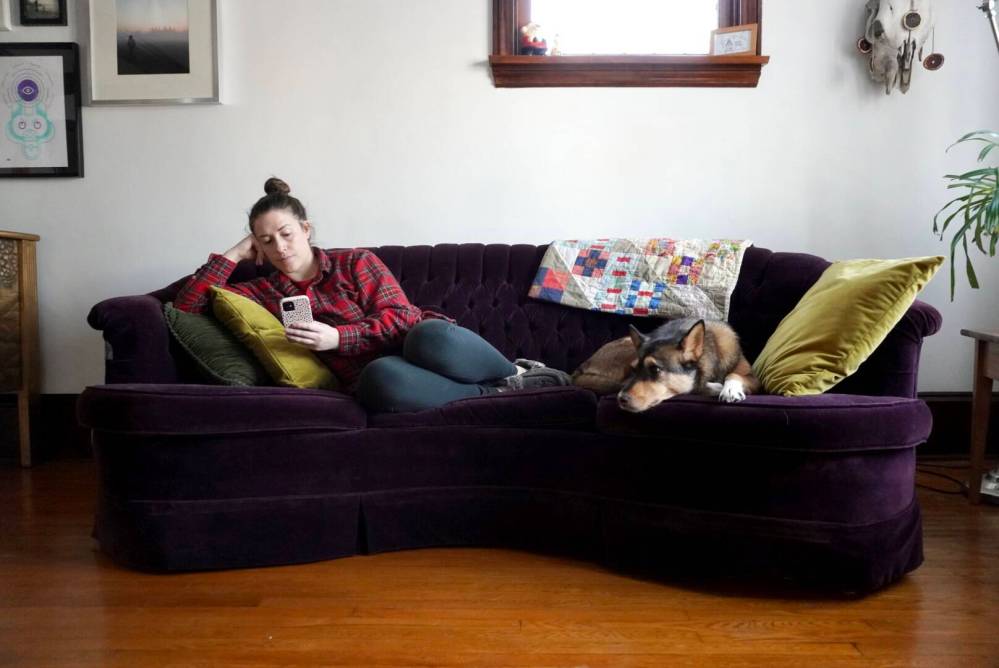
Eva’s favourite things of 2021
Meals: Loaded baked potato gnocchi from Nola, apple fritters from Juneberry, samosas from Bread and Biryani
Mindless rewatch TV shows: Parks and Recreation, Wet Hot American Summer, Workin’ Moms
Podcasts: Storytime with Seth Rogen, How to Save a Planet, Longform
Albums: Grapefruit Season, James Vincent McMorrow; Humor, Russell Louder; Ignorance, The Weather Station
Looking back, I can pinpoint my transitions through the five stages of grief: denial, anger, bargaining, depression and acceptance. Denial was immediate and frantic.
During our first batch of stay-home orders, I test drove every coping strategy and partook in every social media quarantine trend. Blank journals quickly filled with reflections on the province’s daily COVID-19 briefings and my phone’s storage was rearranged to make room for new meditation and fitness apps.
I FaceTimed, Zoomed, Housepartied and Marco Polo-ed daily — I have never in my life been so conversational or connected with friends. I completed dozens of jigsaw puzzles, baked terrible loaves of sourdough bread and attempted to regrow green onions on my window sill.
If everyone else was doing it, these distractions must be making people feel better about our shared dystopian reality, right? Right? Because I only felt more exhausted.
Code red made me angry, a cancelled Christmas saw me bargaining and you better believe depression hit hard during last winter’s endless polar vortex.
Acceptance, however, looks different than I imagined. Or, maybe I’m still depressed. (It’s likely a column A/column B situation, to be honest.)
Instead of dreaming up new, aspirational ways to fill my time, I spent much of this year like Elaine Benes from Seinfeld: I sat and I stared (mostly at my phone, often at the TV). Fittingly, I watched all 180 episodes of Seinfeld, a sitcom famously about nothing, earlier this year.
To recognize that you have no control, and therefore no reason to hold yourself to impossible standards, is a lesson in hubris — and a freeing one at that.
It’s helped me reframe the myth of productivity as an externality — in my personal life, that is; work is an entirely different beast.
It truly doesn’t matter if I cross everything off my to-do list or master a new hobby. The house doesn’t have to be spotless and spending an entire weekend watching janky documentaries about serial killers isn’t necessarily a bad thing. Doing nothing and striving for good enough isn’t shameful. Especially when daily life is so traumatic.
Giving myself a break from expectations and comparison has been a form of self-care. As much as the targeted ads on my Instagram feed would disagree, I don’t need to buy into the latest fashion trends or skin-care routines to validate my worth.
Last year, I bought enough athleisure outfits and anti-aging serums to last a lifetime. This year, the plaid shirt and sweatpants I’ve been wearing every day for the last 21 months are plenty good enough for the nobody I’ve been seeing and the nowhere I’ve been going. Occasionally, I remember to moisturize.
At the same time, I recognize that my ability to do nothing comes with a lot of privilege. I’ve been able to work from home for most of the pandemic and I don’t have kids or dependents to care for. I’m also a card-carrying introvert and have been perfectly unbothered by the lack of socializing.

I also want to be clear: I don’t prefer this to my pre-pandemic life. Acceptance has just been easier to manage than the overwhelming anxiety that came with denial.
A new year is right around the corner and, sadly, it feels like we’re time travelling back to March 2020. It’s a lot to comprehend and it absolutely sucks.
If there’s one positive, however, it’s that we’ve been through this before. I now know that lofty goals and busywork won’t make me feel any better about the scariness of another pandemic wave. So, in lieu of resolutions tied to personal growth, I’m going to continue focusing on the power of nothing and all the kindness, perspective and calm it’s given me this past year.
eva.wasney@freepress.mb.ca
Twitter: @evawasney
Our newsroom depends on a growing audience of readers to power our journalism. If you are not a paid reader, please consider becoming a subscriber.
Our newsroom depends on its audience of readers to power our journalism. Thank you for your support.
Our newsroom depends on a growing audience of readers to power our journalism. If you are not a paid reader, please consider becoming a subscriber.
Our newsroom depends on its audience of readers to power our journalism. Thank you for your support.
Related Articles
Building a new nest, feathered friends included
Advertisement Advertise With Us
Advertisement Advertise With Us