Bridging gaps, helping ease the strain

Advertisement
Read this article for free:
or
Already have an account? Log in here »
To continue reading, please subscribe:
Digital Subscription
One year of digital access for only $1.44 a week*
- Enjoy unlimited reading on winnipegfreepress.com
- Read the E-Edition, our digital replica newspaper
- Access News Break, our award-winning app
- Play interactive puzzles
*Billed as $5.77 plus GST every four weeks. After 52 weeks, price increases to the regular rate of $19.95 plus GST every four weeks. Offer available to new and qualified returning subscribers only. Cancel any time.
To continue reading, please subscribe:
Add Free Press access to your Brandon Sun subscription for only an additional
$1 for the first 4 weeks*
- Enjoy unlimited reading on winnipegfreepress.com
- Read the E-Edition, our digital replica newspaper
- Access News Break, our award-winning app
- Play interactive puzzles
*Your next Brandon Sun subscription payment will increase by $1.00 and you will be charged $17.95 plus GST for four weeks. After four weeks, your payment will increase to $24.95 plus GST every four weeks.
Read unlimited articles for free today:
or
Already have an account? Log in here »
This is not a column about my minor medical woes, but it does begin with one.
In the summer of 2022, I noticed a small lump growing in the middle of my arm. It was the size of a large pea, and hard and uncomfortable to the touch. Thankfully, my general practitioner had good news: the growth was quite benign, just unsightly. He froze it off with liquid nitrogen; it left a small, flat scar.
But three years later, the growth had come back. Early this year, I arranged a referral to a dermatologist for that lump and another concern; I was booked in for six months later. I tacked the appointment letter on my fridge, and checked it almost every day.
Many Canadians are all too familiar with the fear of forgetting a specialist appointment still half-a-year or more away.
When I met with the dermatologist last month, she again confirmed it wasn’t cancer. But it would keep coming back, if not cut out from the root. I asked to go forward with the procedure, expecting another long wait; it’s OK, I would understand, it’s not urgent. Specialists’ time is already burdened treating patients with worse problems.
Still, even small health concerns can make a big impact on lives, and our comfort in our own skin.
To my curiosity, the dermatologist didn’t schedule me for her office. Instead she referred me to a new practice in Winnipeg, called Go Medical Clinic. The clinic called and left a message directing me to book online; I secured an appointment for just over two weeks later.
As I researched the clinic, I was intrigued. Launched in January, Go Medical Clinic is not a typical comprehensive medical practice. It aims to fill a different need. Its co-founders, Dr. Alexei Berdnikov and Dr. Kurtis Carlson, have backgrounds in emergency medicine; in social media posts, they’ve described how they’d noticed a gap in the health-care system.
That problem was, in essence, exactly what I’d experienced with my arm lesion. Across our health-care system, providers bear an incredible weight, especially ERs and specialists. But the concerns they are called upon to treat are not equal: the most urgent health issues, and the merely annoying, are so often jumbled up together.
This is where much of Canadians’ frustration with the health-care system begins. When facing serious medical issues, we almost always get the care we need, when we need it; by necessity the minor things have to wait. We can understand this, and accept it. That doesn’t make it any less demoralizing to spend months navigating the system to deal with it.
(As another example, I have a tiny cyst on my eyelid I’d given up trying to fix, as I was told it would require a referral to an ophthalmologist, which would take over a year. To my lay eyes, it didn’t seem to need a specialist; anyone licensed to wield a pointy object could do it, but the system works how it works.)
Through Go Medical, its co-founders thought they could help ease that strain. The clinic is dedicated to performing minor procedures: removing cysts; taking biopsies; stitching up lacerations; fixing ingrown toenails; cutting out skin lesions like mine. Things that won’t kill you, but sure do dent your quality of life.
These aren’t complex procedures; they don’t require a specialist or an ER. So by launching a clinic to take those procedures out of the waiting rooms and off the appointment books of other providers, Go’s co-founders bet they could offer patients a far quicker and more pleasant route to treatment, while also easing strain elsewhere in the system.
We’re all aware the most pressing problems facing Canada’s health-care system have no easy fix. In these, I’m certainly no expert. Yet even as simply an average patient navigating the system, it’s not difficult to observe where some issues are less about lack of capacity, and more about how and where the existing demand is funnelled.
Perhaps this is a direction we need to focus on more intently. In Manitoba, we already have successful examples of how taking some more straightforward medical concerns off the shoulders of GPs, ERs and specialists can make health-care access even a tiny bit more efficient and satisfying for all patients.
Not so long ago, if women in Manitoba came down with a wildly painful bladder infection, they’d often find themselves waiting long, miserable hours at an ER or walk-in clinic, all too keenly aware there should be a better way to get a basic antibiotic than taking up a spot on a groaning triage list.
That problem was addressed in early 2022 when Manitoba for the first time allowed pharmacists to prescribe antibiotics for uncomplicated UTIs in non-pregnant women. It was an obvious fix, one that immediately saved many women a whole lot of pain and a whole lot of frustration, while also making front-line providers a bit less burdened.
The capacity for better care already existed, it just needed a regulatory adaptation to mobilize that capacity better.
So how else can this mindset, this way of adapting how patients move through the health-care system, be applied? I’ll leave that to the experts, the practitioners and those at the province who manage the system and its regulations. Yet I think most patients can think of times they’ve been frustrated, and see where such opportunities might lie.
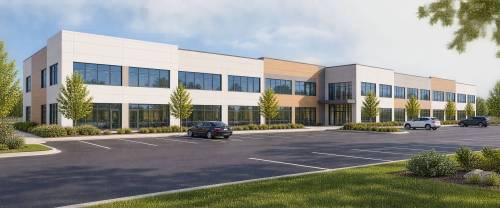
On Tuesday, I strolled to Go Medical’s Broadway location, which opened in May. The doctors were friendly; we chatted amicably while they numbed my arm, sliced out the lump and stitched me up. The procedure was quick: barely 20 minutes later, I was on my way home.
With that, a problem that had bothered me for four years was solved; and an appointment I expected to make with a GP or dermatologist was free for someone else, quite likely with a more pressing issue. It felt liberating, and hopeful. Sometimes, all it takes is a good idea to make our precious health-care system work a little better for everyone.
melissa.martin@freepress.mb.ca
Our newsroom depends on a growing audience of readers to power our journalism. If you are not a paid reader, please consider becoming a subscriber.
Our newsroom depends on its audience of readers to power our journalism. Thank you for your support.
Our newsroom depends on a growing audience of readers to power our journalism. If you are not a paid reader, please consider becoming a subscriber.
Our newsroom depends on its audience of readers to power our journalism. Thank you for your support.
Advertisement Advertise With Us
Advertisement Advertise With Us