WEATHER ALERT

States trashing troves of masks and pandemic gear as huge, costly stockpiles linger and expire

Advertisement

Advertise with us

When the coronavirus pandemic took hold in an unprepared U.S., states scrambled for masks and other protective gear.

Read this article for free:


By clicking the button above, an account will be created and you will begin to receive some of our recommended newsletters. You may opt out of any newsletter by visiting your Email and Communication Preferences page or by clicking "unsubscribe" at the bottom of any email.

or

Already have an account? Log in here »

To continue reading, please subscribe:

Digital Subscription

One year of digital access for only $1.44 a week*

  • Enjoy unlimited reading on winnipegfreepress.com
  • Read the E-Edition, our digital replica newspaper
  • Access News Break, our award-winning app
  • Play interactive puzzles

*Billed as $5.77 plus GST every four weeks. After 52 weeks, price increases to the regular rate of $19.95 plus GST every four weeks. Offer available to new and qualified returning subscribers only. Cancel any time.

To continue reading, please subscribe:

Add Free Press access to your Brandon Sun subscription for only an additional

$1 for the first 4 weeks*

  • Enjoy unlimited reading on winnipegfreepress.com
  • Read the E-Edition, our digital replica newspaper
  • Access News Break, our award-winning app
  • Play interactive puzzles
Start now

*Your next Brandon Sun subscription payment will increase by $1.00 and you will be charged $17.95 plus GST for four weeks. After four weeks, your payment will increase to $24.95 plus GST every four weeks.

Hey there, time traveller!
This article was published 20/12/2023 (1048 days ago), so information in it may no longer be current.

When the coronavirus pandemic took hold in an unprepared U.S., states scrambled for masks and other protective gear.

Three years later, as the grips of the pandemic have loosened, many states are now trying to deal with an excess of protective gear, ditching their supplies in droves.

With expiration dates passing and few requests to tap into its stockpile, Ohio auctioned off 393,000 gowns for just $2,451 and ended up throwing away another 7.2 million, along with expired masks, gloves and other materials. The now expiring supplies had cost about $29 million in federal money.

Boxes of personal protection equipment maintained by the Missouri Department of Health and Senior Services are shown stacked in a warehouse in Jefferson City, Mo., on Dec. 1, 2023. (Brad Bashore/Missouri Department of Health and Senior Services via AP)

A similar reckoning is happening around the country. Items are aging, and as a deadline to allocate federal COVID-19 cash approaches next year, states must decide how much to invest in maintaining warehouses and supply stockpiles.

An Associated Press investigation found that at least 15 states, from Alaska to Vermont, have tossed some of their trove of PPE because of expiration, surpluses and a lack of willing takers.

Into the trash went more than 18 million masks, 22 million gowns, 500,000 gloves, and more. That’s not counting states that didn’t give the AP exact figures or responded in cases or other measures. Rhode Island said it got rid of 829 tons of PPE; Maryland disposed of over $93 million in supplies.

“What a real waste. That’s what happens when you don’t prepare, when you have a bust-and-boom public health system,” where a lack of planning leads to panicked over-purchasing in emergencies, said Dr. Georges Benjamin, executive director of the American Public Health Association. “It shows that we really have to do a better job of managing our stockpiles.”

The AP sent inquiries about PPE stockpiles to all 50 states over the past several months. About half responded.

FILE - New York Gov. Andrew Cuomo, center, speaks while practicing social distancing against a backdrop of medical supplies during a news conference at the Jacob Javits Center that will house a temporary hospital in response to the COVID-19 outbreak, Tuesday, March 24, 2020, in New York. Some states that stockpiled millions of masks and other personal protective equipment during the coronavirus pandemic are now throwing the items away. (AP Photo/John Minchillo, File)

States emphasize that they distributed far more gear than they discarded and have gone to great lengths to donate the leftovers. Washington state sent hundreds of thousands of supplies to the Marshall Islands last year, yet ended up throwing out millions more items after they expired.

Many states are keeping at least a portion, and sometimes all, of their remaining protective gear. Some even plan to update their stockpiles.

But others say the vagaries of the pandemic and the PPE supply left no choice but to acquire the items, and now to throw them out, however reluctantly. Expiration dates are set because materials can degrade and might not work as intended. The Federal Emergency Management Agency has set the fair market value of expired supplies at zero dollars.

“Anytime you’re involved in a situation where you’re recalling how difficult it was to get something in the first place, and then having to watch that go or not be used in the way it was intended to be used, certainly, there’s some frustration in that,” said Louis Eubank, who runs the South Carolina health department’s COVID-19 coordination office. The state has discarded over 650,000 expired masks.

When the virus struck, demand skyrocketed for N95 masks, gloves and gowns. The U.S government’s Strategic National Stockpile was underequipped, and states plunged into global bidding wars.

Boxes of personal protection equipment maintained by the Missouri Department of Health and Senior Services are shown stacked in a warehouse in Jefferson City, Mo., on Dec. 1, 2023. (Brad Bashore/Missouri Department of Health and Senior Services via AP)

The AP found in 2020 that states spent over $7 billion in a few months on PPE, ventilators and some other high-demand medical devices in a seller’s market. Ultimately, the federal government paid for many of the supplies.

“There was no way to know, at the time of purchase, how long the supply deficit would last or what quantities would be needed,” Ohio Department of Health spokesperson Ken Gordon said.

Ohio distributed more than 227 million pieces of protective equipment during the pandemic. But as the supply crunch and the health crisis eased, demand faded, especially for gowns.

Now, “states, hospitals, manufacturers – everybody in the whole system — has extra product,” said Linda Rouse O’Neill of the Health Industry Distributors Association.

Given the glut, stockpiled items are selling for bargain prices, if at all. Vermont got $82.50 for 105,000 boot covers and 29 cents apiece for thousands of safety goggles.

FILE - New York Gov. Andrew Cuomo, center, speaks while practicing social distancing against a backdrop of medical supplies during a news conference at the Jacob Javits Center that will house a temporary hospital in response to the COVID-19 outbreak, Tuesday, March 24, 2020, in New York. Some states that stockpiled millions of masks and other personal protective equipment during the coronavirus pandemic are now throwing the items away. (AP Photo/John Minchillo, File)

Striking a balance between preparedness and surpluses is “a major dilemma” for governments, said Scott Amey of the Project on Government Oversight, a Washington, D.C.-based watchdog group. And while politicians vowed in 2020 never to be caught off guard again, “memories are short, budgets are tight,” Amey noted.

In Wisconsin, a legislative committee axed from the budget $17.2 million that would have funded a warehouse with an ongoing 60-day supply of PPE for two years.

The state Department of Health Services said it is now “demobilizing the warehouse” and trying to donate the supplies. Already, Wisconsin has tossed nearly 1.7 million masks and almost 1 million gowns.

Minnesota’s Department of Health was allocated some money this year for retaining and restocking PPE and is strategizing. For now, emergency response official Deb Radi says the agency expects to dispose of a few expiring gowns.

The Health Industry Distributors Association recommends that product distributors maintain a 60-to-90-day supply to guard against demand spikes. But the group says it’s probably unnecessary for everyone in the system — from manufacturers to doctors’ offices — to have such a large cushion.

Boxes of personal protection equipment maintained by the Missouri Department of Health and Senior Services are shown stacked in a warehouse in Jefferson City, Mo., on Dec. 1, 2023. (Brad Bashore/Missouri Department of Health and Senior Services via AP)

Missouri’s health department has maintained a 90-day supply, keeping even expired materials on the presumption that the federal government will OK their use in an emergency. That happened during COVID-19.

“If you don’t make the investment – and perhaps the investment that is never used – then you may not be prepared to assist the public when it’s needed,” Missouri health director Paula Nickelson said.

Pennsylvania officials, by contrast, are aiming for a 15-day stockpile after frank conversations about what they can afford not only to keep, but to keep replacing as items expire, said Andy Pickett, the Health Department’s emergency preparedness and response director.

And Nevada can’t give its aging PPE away fast enough.

Department of Administration Director Jack Robb said the state is endeavoring to shed the supplies safely and without wasting money but already has discarded some.

FILE - New York Gov. Andrew Cuomo, center, speaks while practicing social distancing against a backdrop of medical supplies during a news conference at the Jacob Javits Center that will house a temporary hospital in response to the COVID-19 outbreak, Tuesday, March 24, 2020, in New York. Some states that stockpiled millions of masks and other personal protective equipment during the coronavirus pandemic are now throwing the items away. (AP Photo/John Minchillo, File)

But Robb said officials “made the best decisions that they could” when confronted with a disease that has killed nearly 7 million people worldwide, including some of his close friends.

“And I hope we never see anything like that again in our lifetime,” he said.

Report Error Submit a Tip

More Stories

Expect a reasonable approach to keep Manitoba’s minimum wage out of cellar

Tom Brodbeck 5 minute read Preview

Expect a reasonable approach to keep Manitoba’s minimum wage out of cellar

Tom Brodbeck 5 minute read Tuesday, May. 31, 2022

The devil will be in the details when it comes to how much the Stefanson government will increase the minimum wage in 2022 under proposed legislation that’s expected to become law this week.

My prediction: government will boost the base wage by at least $1.10 an hour this year.

As expected, the Stefanson government plans to alter its inflation-based formula for setting the minimum wage, which now stands at $11.95 an hour. Normally, the base wage is indexed to the previous year’s rate of inflation. That’s sound policy during normal times. However, with inflation growing at rates not seen in more than 30 years, an immediate adjustment is required to ensure minimum-wage earners don’t lose purchasing power.

Conservative governments in Saskatchewan, Ontario and New Brunswick have all announced significant increases to their base wages in 2022, putting pressure on the Stefanson government to follow suit. Failure to do so would see Manitoba’s minimum wage (previously scheduled to rise 40 cents an hour to $12.35 on Oct. 1) rank lowest in the country.

Read
Tuesday, May. 31, 2022

Third fire hits troubled Manitoba Housing apartment block

Malak Abas 4 minute read Preview

Third fire hits troubled Manitoba Housing apartment block

Malak Abas 4 minute read Yesterday at 3:19 PM EST

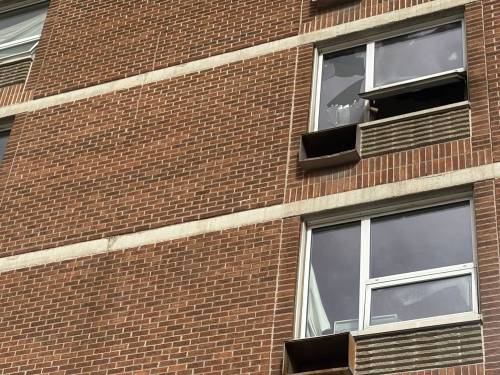
Residents of a North End Manitoba Housing apartment block with a long history of trouble say they’re shaken after the building was hit with its third fire in eight months Friday night.

An apartment complex at 145 Powers St. was evacuated by firefighters after a fire broke out at around 7:45 p.m.

When longtime resident Sharon Markwell heard the fire alarm go off, she chalked it up to a false alarm — kids will get into the building and pull the fire alarm around once or twice a month, she said — until smoke began billowing into the hallway of her fifth-floor apartment.

“Once I realized that I could smell smoke very, very strongly, and the smoke was seeping into my room, into my apartment, I said to myself, ‘This is no false alarm. This is the real thing,’” Markwell, 64, told the Free Press Sunday.

Read
Yesterday at 3:19 PM EST

Comfort, kindness, acceptance and grandpa’s store

Deborah Schnitzer 5 minute read 2:00 AM EST

My grandfather, Ben W. Kert, had a women’s dress shop along Queen Street in Sault Ste. Marie where a number of Jewish men, many of them “Greenies” from the old country, owned and operated women’s haberdasheries with variable success.

Ben had come from Quebec via Northern Manitoba and Fort Frances, a singular man whose French was as good as his English and whose great heart filled my childhood with glory.

Unlike the other Jewish store owners, Ben W. was born in Trois-Rivières, the only male child who survived with five or six sisters born ahead of him.

Legend has it that my grandfather’s arrival and survival were celebrated with the nickname Sonny. When he left home at 15 (rumour claims his stepmother threw him out) and arrived in Montreal, his first employer would not accept the nickname, so my grandfather invented Ben W. on the spot. The W. never stood for anything. When he died, my mother discovered that his first name was actually Harry.

New council, new opportunies for Winnipeg

Brent Bellamy 6 minute read Preview

New council, new opportunies for Winnipeg

Brent Bellamy 6 minute read 2:00 AM EST

Last week, Winnipeg voters returned Mayor Scott Gillingham to city hall for a second term, but the more surprising election storyline is that nine of the 15 councillors surrounding him will be new faces.

One encouraging aspect of the results is the community-building experience several of these new councillors bring to the job. Their backgrounds in urban planning, neighbourhood advocacy and community development offer valuable perspectives as Winnipeg confronts difficult questions about how it grows.

These perspectives will be particularly important because some of the most consequential decisions councillors can make happen when they evaluate residential development proposals at committee meetings. Over the next four years, the 16 people we’ve just elected will bear the enormous responsibility of deciding where and how Winnipeggers live. These choices will have profound implications for quality of life, social opportunity and the economic viability of our city. They will shape not only the Winnipeg we know today, but the city we leave to our children and grandchildren.

At committee meetings, councillors will hear endless arguments about parking, traffic, and protecting “neighbourhood character.”

Read
2:00 AM EST

Performance (ice-cream) art

Maggie Macintosh 5 minute read Preview

Performance (ice-cream) art

Maggie Macintosh 5 minute read Thursday, Jan. 2, 2020

As 2020 resolutions counter temptation, Teri-Lynn Friesen and Élise Page will be waiting to console those who slip — and they’ll have ice-cream scoops at the ready.

Late last year, the creative duo opened Fête — Winnipeg’s newest coffee and ice-cream parlour, offering an ever-changing menu of 16 made-in-house ice-cream flavours, affogato and, if it’s Sunday morning, pancakes.

There’s also no pressure to pick a flavour at first sight; the shop offers unlimited samples.

“If you gave up coffee, we’re here for you when you need to come back. If you gave up sweets, we’re also here for you,” said Friesen, co-owner of the shop at 300 Assiniboine Ave.

Read
Thursday, Jan. 2, 2020

WRHA moves to cut growing echocardiogram wait list

Larry Kusch 6 minute read Preview

WRHA moves to cut growing echocardiogram wait list

Larry Kusch 6 minute read Tuesday, Aug. 21, 2018

Manitobans are waiting a year or more to receive a key test that detects and tracks heart disease.

As of June 15, there were about 6,500 Manitobans on the wait list for an echocardiogram, and the list is growing at a rate of about 265 per month.

Patients facing heart emergencies are receiving tests immediately, while most of those whose conditions are considered urgent or semi-urgent are getting them within established Canadian benchmark times -- about a week, officials say.

However, thousands of patients who are considered candidates for "elective" tests are waiting anywhere from 10 to 15 months, with a median wait of 12 months, according to the Winnipeg Regional Health Authority.

Read
Tuesday, Aug. 21, 2018