
A week into China’s easing, uncertainty over virus direction

Advertisement

Advertise with us

BEIJING (AP) — A week after China dramatically eased some of the world's strictest COVID-19 containment measures, uncertainty remained Thursday over the direction of the pandemic in the world's most populous nation.

Read this article for free:


or

Already have an account? Log in here »

To continue reading, please subscribe:

Subscribe and receive a limited-edition Free Press branded hat or tote.

Digital Subscription

One year of digital access for only $205*

  • Enjoy unlimited reading on winnipegfreepress.com
  • Read the E-Edition, our digital replica newspaper
  • Access News Break, our award-winning app
  • Play interactive puzzles

*First annual payment billed as $205.00 + GST for one year. This annual subscription will automatically renew at $233.00 + GST every 52 weeks (10% off the regular annual price of $259.35). Offer available to new and qualified returning subscribers only. Cancel any time.

To continue reading, please subscribe:

Add Free Press access to your Brandon Sun subscription for only an additional

$1 for the first 4 weeks*

  • Enjoy unlimited reading on winnipegfreepress.com
  • Read the E-Edition, our digital replica newspaper
  • Access News Break, our award-winning app
  • Play interactive puzzles
Start now

*Your next Brandon Sun subscription payment will increase by $1.00 and you will be charged $17.95 plus GST for four weeks. After four weeks, your payment will increase to $24.95 plus GST every four weeks.

Hey there, time traveller!
This article was published 15/12/2022 (1388 days ago), so information in it may no longer be current.

BEIJING (AP) — A week after China dramatically eased some of the world’s strictest COVID-19 containment measures, uncertainty remained Thursday over the direction of the pandemic in the world’s most populous nation.

While there are no official indications yet of the massive surge of critically ill patients some feared, social media posts, business closures and other anecdotal evidence suggest huge numbers of people are being infected. In Beijing and elsewhere, there was a rush on cold medication and testing kits. Some hospital staff are staying home, while others are back to work after being infected.

Meanwhile, as people take to the internet to share dubious “remedies,” various everyday products have seen sales skyrocket. A run on canned yellow peaches, seen as particularly nutritious, prompted one of the largest producers to write on social media that they are not medicine and that there is plenty of supply.
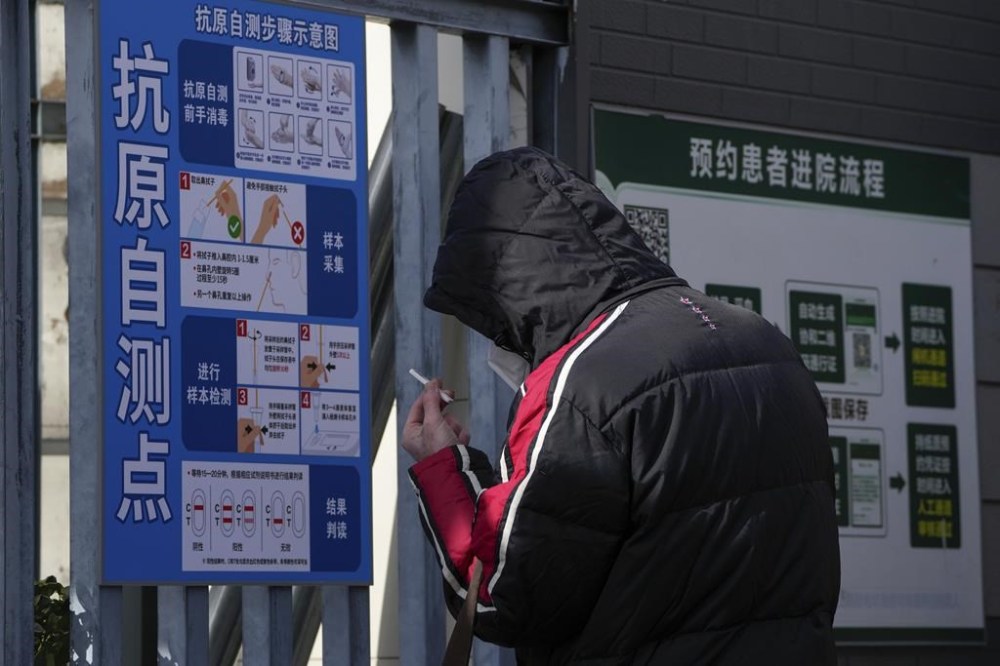
A man looks at his COVID-19 antigen test outside a hospital in Beijing, Thursday, Dec. 15, 2022. China said Wednesday that it would stop reporting asymptomatic COVID-19 cases since they've become impossible to track with mass testing no longer required, another step in the country's departure from some of the world's strictest antivirus policies. (AP Photo/Andy Wong)

After years of trying to track the virus down to every last infection, the government now says that’s essentially impossible — but it’s not clear what that means for reporting the most serious cases.

While major cities such as Beijing, Shanghai and Shenzhen have invested heavily in health care, second- and third-tier cities and communities in the vast rural hinterland have far fewer resources to deal with a major outbreak.

For a variety of economic and cultural reasons, Chinese tend to be more reliant than citizens of other countries on hospitals, even for illnesses that are not severe. The government has asked to those with mild symptoms to recuperate at home, but if they don’t, that could lead to strains, Yale professor of public health Xi Chen said.

“If people do not have such culture to stay at home, to keep those resources for sicker people, then that could easily crash the system,” Chen said.

So far, Beijing has more than tripled the number of fever clinics to over 300, and those visited by Associated Press journalists were generally calm and orderly, with few indications of overcrowding. A children’s hospital had 50 or 60 people waiting in line Wednesday afternoon, but three others had shorter queues. At one clinic in southern Beijing, a few elderly patients were put on IV drips, and one was inhaling pressurized oxygen.

Though the health care system in big cities appears to be holding up so far, Chen cautions that it’s too soon to tell when cases will peak. The January Lunar New Year — when millions of people travel to visit family — is expected to present another challenge, Chen said.

“I’m concerned it could be a super-spreader event,” he said.

Winter is also a tough time to loosen restrictions, Chen said, as the virus circulates more easily.

Other concerns include boosting China’s elderly vaccination rate and bolstering the country’s intensive care capacity. Though most of China’s population is vaccinated, millions of older adults haven’t had a booster shot of the country’s domestically made vaccines. Studies show Chinese vaccines are effective in preventing hospitalization and death, but require at least three doses in order to be fully effective.

China says around 30% of people 60 or older have yet to get three shots. Part of the hesitancy derives from original government directives that discouraged those above 59 from getting vaccinated, but there are also longstanding concerns about the safety of Chinese vaccines.

On Wednesday, the government said it would offer a fourth shot to those in vulnerable groups.
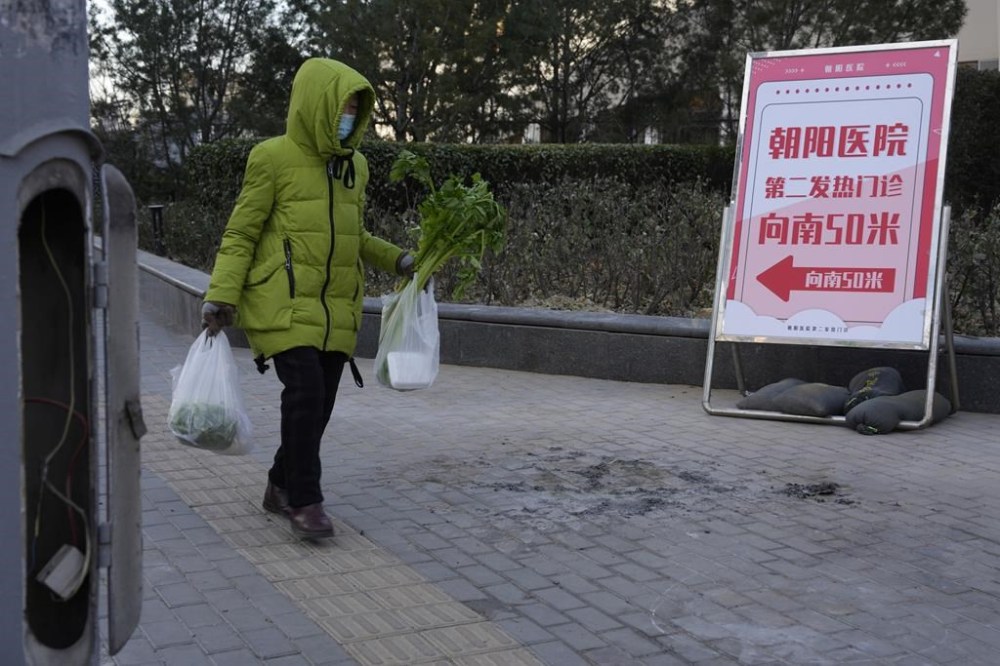
A resident walks with groceries past a sign advertising the newly opened second fever clinic of the Chaoyang Hospital using a gymnasium in Beijing, Thursday, Dec. 15, 2022. A week after China eased some of the world's strictest COVID-19 containment measures, uncertainty remains over the direction of the pandemic in the world's most populous nation. (AP Photo/Ng Han Guan)

Downtown Beijing was largely empty Thursday and those businesses and restaurants that remained open or had not cut back radically on operating hours saw few customers. The empty streets reflected both the fact that many who are sick are staying home but also that others don’t want venture out to avoid getting infected.

Experts have increasingly said China’s “zero-COVID” policy of lockdowns, quarantines and mandatory testing was unsustainable, especially in the face of the more infectious omicron variant that resulted in increasingly harsh restrictions.

Those measures were blamed for hindering the economy and created massive societal stress. The easing began after Beijing and several other cities saw protests over the restrictions that grew into calls for President Xi Jinping and the Communist Party to step down — a level of public dissent not seen in decades.

Though the Dec. 7 relaxation of measures has allowed more avenues for the coronavirus’s spread across the country, the full effects are not yet clear.

In the economy, the news has been mixed. The National Bureau of Statistics on Thursday said China’s value-added industrial output rose a modest 2.2% year-on-year, while the urban unemployment rate rose slightly to 5.7% in November, from 5.5% the month before. China does not survey unemployment outside of major cities.

Meanwhile, the company that assembles Apple’s iPhones announced Wednesday that it would ease restrictions at its largest factory in China that led thousands of workers to quit and drastically slowed production. Foxconn Technology Group said it would end the “closed-loop” system there that required workers to say in their workplaces and dormitories.

Xi’s government is still officially committed to stopping virus transmission. But the latest moves suggest the Communist Party will tolerate more cases without quarantines or shutting down travel or businesses.

Mi Feng, spokesperson for National Health Commission, reiterated that shift in tone on Thursday.

“At present, the focus of epidemic prevention and control has shifted from prevention and control of infection to medical treatment,” Mi said at a briefing.

The task of gauging China’s preparedness is made all the harder by the lack of reliable statistics and projections.
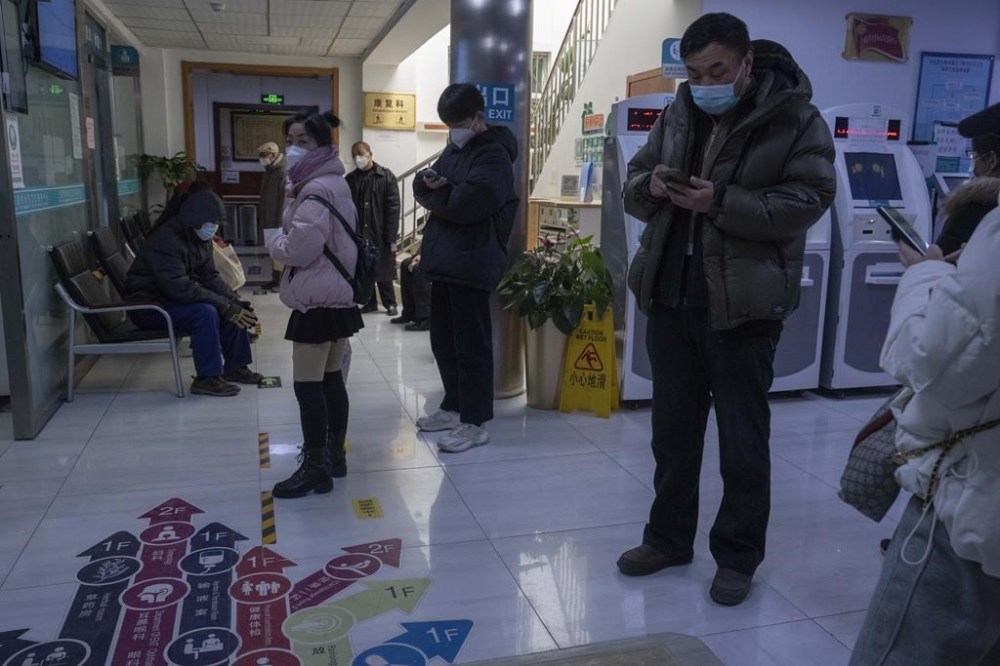
Visitors stand in the waiting area of a community health clinic in Beijing, Thursday, Dec. 15, 2022. A week after China eased some of the world's strictest COVID-19 containment measures, uncertainty remains over the direction of the pandemic in the world's most populous nation. (AP Photo/Ng Han Guan)

The only numbers the National Health Commission is currently reporting are confirmed cases detected in public testing facilities where symptoms are displayed.

The government stopped announcing asymptomatic case totals earlier this week, saying an accurate count was impossible. The results of home tests also won’t be captured.

China’s official death toll remains low, with just 5,235 deaths — compared with 1.1 million in the United States. However, public health experts caution that such statistics can’t be directly compared.

Chinese health authorities count only those who died directly from COVID-19, excluding those whose underlying conditions were worsened by the virus. In many other countries, guidelines stipulate that any death where COVID-19 is a factor or contributor is counted as a COVID-related death.

Experts say this has been the longstanding practice in China, but questions have been raised at times about whether officials have sought to minimize the figures.

___

Associated Press news assistant Caroline Chen and researcher Yu Bing in Beijing, and writer Huizhong Wu in Taipei, Taiwan, contributed to this report.
Report Error Submit a Tip

More Stories

Small businesses outline election priorities

Robin Bezte 5 minute read Yesterday at 2:00 AM CDT

Since moving to Winnipeg earlier this year, I have come to know the city through its small businesses. As a new Exchange District resident, grabbing coffee at Little Sister, walking through The Forks Market and stopping at Pho Hoang for lunch have become part of my routine. These are the places that give Winnipeg’s neighbourhoods their character and have helped make a new city feel like home.

That is why an empty storefront never feels like just vacant real estate. It represents someone’s investment and hope. When a small business disappears, the community loses a piece of itself.

On Oct. 28, Manitobans in most municipalities will choose their next mayors, reeves and councillors. While city councils may not set interest rates or negotiate global trade agreements, they do have some control over many of the barriers entrepreneurs encounter day to day, from property tax bills and permit applications to public safety and construction disruptions.

Ahead of the upcoming elections, the Canadian Federation of Independent Business (CFIB) surveyed Manitoba small business owners to get a sense of their municipal priorities and concerns.

Brandonmeat packer thriving on its own

Abiola Odutola 3 minute read Preview

Brandonmeat packer thriving on its own

Abiola Odutola 3 minute read 2:01 AM CDT

BRANDON — Canada Packers has strengthened its business and laid the foundation for future growth during its first year as an independent company, its president says.

The Brandon-based pork producer, separated from Maple Leaf Foods in October 2025, established its own leadership, strategy, systems, culture and identity while continuing operations across its hog production farms and regional hog barns in southern and eastern Manitoba.

The company’s first year was focused on building a successful standalone business while continuing to serve customers, communities and shareholders, president Dennis Organ said.

“Market conditions over the past year have been more challenging than we anticipated when we became a separate entity,” he said in an email. “Despite that, we continued to execute against our priorities, including increasing processing volumes, maintaining disciplined operations and strengthening the business.”

Read
2:01 AM CDT

China sentences Canadian to death, raises diplomatic tension

The Associated Press 2 minute read Monday, Jan. 14, 2019

BEIJING - A Chinese court sentenced a Canadian man to death Monday in a sudden retrial in a drug smuggling case that is likely to escalate tensions between the countries over the arrest of a top Chinese technology executive.

The court in northeastern Liaoning province announced that it had given Robert Lloyd Schellenberg the death penalty after rejecting his plea of innocence and convicting him of being an accessory to drug smuggling. It gave no indication that the penalty could be commuted, but Schellenberg's fate could become intertwined in diplomatic negotiations over China's demand for the top executive's release.

Schellenberg was detained more than four years ago and initially sentenced to 15 years in prison in 2016. But suddenly last month, an appeals court agreed with prosecutors who said the sentence was too lenient, and scheduled Monday's retrial with just four days' notice.

The Chinese press began publicizing Schellenberg's case in December after Canada detained Meng Wanzhou, chief financial officer of the Chinese telecommunications giant Huawei, on Dec. 1 at the request of the United States.

Letters, Oct. 20

6 minute read Monday, Oct. 20, 2025

Stefanson’s legacy

Re: Is Stefanson’s fine fitting punishment? (Editorial, Oct. 17)

It’s appropriate to thank outgoing politicians for their service. For many reasons, my thanks to former premier Heather Stefanson are highly qualified and grudgingly offered.

The fine that she will pay certainly does not match the gravity of her offence. At the time she remained the caretaker premier, it was on her to behave with integrity and she deliberately chose not to do so. She wasn’t forced into anything; she made a deliberate choice to try to circumvent an important rule.

Letters, Oct. 3

7 minute read 2:01 AM CDT

A morning in the life …

My very first lesson does not start when I walk into that lecture hall, oh no — it starts long before. It begins when I walk to my car, check the estimated arrival time to the University of Manitoba and hope that Winnipeg traffic agrees with it.

A drive that appears completely manageable changes almost immediately when I’m greeted by a tsunami of orange pylons and a line of cars that appears to go on forever. Traffic moves by the inch, lanes magically disappear and the detour I took yesterday now has a detour of its own. These factors make me do a calculation that I have become all too familiar with. How late can I arrive and still find parking, run to my class across campus and get to class with enough time left to make it worth it?

I have grown used to people saying, “Why not just leave earlier?” I do. But when I’m already leaving for my 8:30 a.m. class at 7 a.m., there’s only so much I can do. This drive that some would think is relaxing is one that feels like an assignment that I didn’t know I had to complete and is due at 8:30 a.m.

Tibial tray connected to aerospace sector …

Aaron Epp 6 minute read Preview

Tibial tray connected to aerospace sector …

Aaron Epp 6 minute read Monday, May. 4, 2026

There are thousands — perhaps tens of thousands — of people in the United States who are walking around with Manitoba-made metal parts in their bodies.

After Winnipeg-based manufacturing solutions provider Precision ADM Inc. got started in 2015, one of its first jobs was fabricating U.S. Food and Drug Administration-approved tibial trays — a critical component for knee replacement surgery that transmits loads from the femur to the tibia, ensuring stability, alignment and durability over millions of cycles of use.

Manufacturing the tibial trays for a client in the U.S. stands out as a vivid memory for Martin Petrak, the company’s co-founder and president.

“We made something that could go into a human, that should be there for the rest of their life,” he says. “We thought, we’ve finally done something significant here as an organization, as a company, with staff that believed that we could do this.”

Read
Monday, May. 4, 2026