Quebec public health director expects more COVID cases, says avoid gatherings if sick

Advertisement

Advertise with us

MONTREAL - Ahead of the first holiday season in two years with no restrictions on private gatherings, Quebec's public health director encouraged people to use common sense and avoid parties if they feel sick.

Read this article for free:


By clicking the button above, an account will be created and you will begin to receive some of our recommended newsletters. You may opt out of any newsletter by visiting your Email and Communication Preferences page or by clicking "unsubscribe" at the bottom of any email.

or

Already have an account? Log in here »

To continue reading, please subscribe:

Digital Subscription

One year of digital access for only $1.44 a week*

  • Enjoy unlimited reading on winnipegfreepress.com
  • Read the E-Edition, our digital replica newspaper
  • Access News Break, our award-winning app
  • Play interactive puzzles

*Billed as $5.77 plus GST every four weeks. After 52 weeks, price increases to the regular rate of $19.95 plus GST every four weeks. Offer available to new and qualified returning subscribers only. Cancel any time.

To continue reading, please subscribe:

Add Free Press access to your Brandon Sun subscription for only an additional

$1 for the first 4 weeks*

  • Enjoy unlimited reading on winnipegfreepress.com
  • Read the E-Edition, our digital replica newspaper
  • Access News Break, our award-winning app
  • Play interactive puzzles
Start now

*Your next Brandon Sun subscription payment will increase by $1.00 and you will be charged $17.95 plus GST for four weeks. After four weeks, your payment will increase to $24.95 plus GST every four weeks.

Hey there, time traveller!
This article was published 14/12/2022 (1415 days ago), so information in it may no longer be current.

MONTREAL – Ahead of the first holiday season in two years with no restrictions on private gatherings, Quebec’s public health director encouraged people to use common sense and avoid parties if they feel sick.

Dr. Luc Boileau told reporters in Quebec City that he expects the number of COVID-19 cases in Quebec hospitals to rise as a result of holiday gatherings.

“We expect the COVID situation to get worse than it is right now,” he said. “It’s obvious that there will be more contacts between people during the next couple of weeks.”

An emergency department sign is shown at a hospital in Montreal, Sunday, Jan. 3, 2021.Quebec's Health Department is reporting more than 2,000 hospitalizations linked to COVID-19 and 12 additional deaths linked to the novel coronavirus. THE CANADIAN PRESS/Graham Hughes

The holiday period is particularly risky for the spread of respiratory viruses, Boileau said, because family gatherings often involve multiple generations, including older people and very young children, who are at higher risk of serious illness.

He said he hopes people will be “really careful” and called on Quebecers to avoid gatherings for 10 days if they have flu-like symptoms — even if those symptoms are mild.

Healthy people, Boileau said, who have previously been exposed to COVID-19 or influenza may have few symptoms but could spread the virus to someone more vulnerable. He also called on people not to pass babies around at holiday parties and kiss them like “the Stanley Cup.”

“Please, it’s really important for them, the babies,” he said.

Quebec hospitals have been buffeted by a trio of respiratory viruses in recent weeks — COVID-19, respiratory syncytial virus and influenza — and the situation remains “very difficult in the emergency rooms,” Boileau said.

On Wednesday afternoon, the occupancy rate in Quebec emergency rooms averaged 133 per cent, the sixth time in nine days that average occupancy rates were above 130 per cent.

Boileau said the number of cases of RSV, a disease that can cause serious illness in young children, is declining.

“It’s good news for pediatric units — that’s not to say things are going well for our pediatric hospitals. They continue to be crowded; it’s still demanding for the teams, but at least that virus is on a more reassuring trend,” he said.

However, the province is in the midst of an early flu season, and while it’s possible that the peak of the outbreak has been reached, the number of cases “remains very high,” Boileau said.

Earlier Wednesday, the Health Department said 2,081 people were in hospital with COVID-19, an increase of 60 from the day before. It’s the highest number of COVID-19 hospitalizations in the province since Oct. 19.

The news conference Wednesday took place almost a year after Quebec Premier François Legault announced a series of new restrictions aimed at slowing the spread of the Omicron variant of COVID-19 — including a ban on work parties.

On Dec. 16, 2021, when that announcement was made, fewer than 400 people were in hospital with the disease.

But Boileau said the situation is different this year: people have a high level of protection from the virus because of vaccination and previous infection, and most patients currently in hospital tested positive for COVID-19 after they were admitted for other reasons.

The Health Department said 698 COVID-19 patients — about 33 per cent — were admitted because of the disease.

“It’s not the same picture, so we’re not as worried as we were last year,” Boileau said, adding that he does not plan to recommend the province reintroduce any sort of coercive measures.

This report by The Canadian Press was first published Dec. 14, 2022.
Report Error Submit a Tip

More Stories

Adult education should be the foundation of the North

Jim Silver 5 minute read 2:00 AM CDT

Major economic developments are, we are being told, coming to northern Manitoba, focusing on the port of Churchill and the railway system that leads to it, and the production and export via that port of various commodities. Many challenges, particularly environmental, lie along that path, and they deserve particularly serious consideration if any development is to proceed.

One aspect of northern development about which almost nothing has been said is: “Who will do the work in the north?”

For decades past and still today, great reliance has been placed on bringing skilled tradespeople and other skilled workers to northern Manitoba from the south. The result has been that not only has the bulk of corporate profits been drained south, but so too have wages. As a result, rates of poverty are higher and formal educational levels are lower in the north than elsewhere in Manitoba. This is obviously detrimental to the north and particularly to those who live in the north.

If northerners themselves are to benefit from economic development in the north by forming the skilled labour force that will be needed, then we will need more of those northerners to be educationally prepared to undertake training for skilled employment.

Multi-year budget to force councillors, bureaucrats to focus on the big picture

Aldo Santin 12 minute read Preview

Multi-year budget to force councillors, bureaucrats to focus on the big picture

Aldo Santin 12 minute read Tuesday, Feb. 26, 2019

City hall is putting the final touches on the 2019 preliminary budget -- but the real tough job will start after that.

The city is committed to developing a four-year budget beginning with 2020, and having it in place by the end of this year.

It's a process that is filled with uncertainties, trying to balance four successive annual budgets at the same time, using assumptions on revenues and expenses that can change without notice: a provincial government that has frozen funding to city hall at 2016 levels and is reluctant to disclose annual funding commitments or share in unexpected revenues; erratic fuel prices; a possible change in government in Ottawa, which could bring new spending priorities. And in the middle of that four-year span, another civic election where new members of council may have other priorities than those laid out by the current crop of office holders.

Municipal governments across Manitoba are required to approve their annual operating and capital budgets by the end of March each year. But the criticism of decision-making at city hall has been that all the decisions are made on a year-to-year basis, keeping voters happy with an eye on the next election.

Read
Tuesday, Feb. 26, 2019

Carrying a torch for tiki

Eva Wasney 5 minute read Preview

Carrying a torch for tiki

Eva Wasney 5 minute read Monday, Nov. 15, 2021

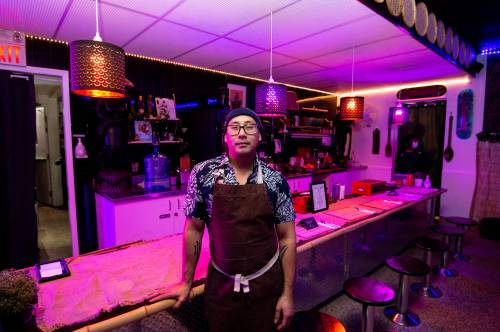
A paper tiki mask is the only indication that the door it’s affixed to leads somewhere other than a dive bar. Ring the doorbell and walk through the kitchen, however, and you’ll be transported to an island-themed lounge that’s equal parts kitschy and comfortable.

“This is just from people’s houses, like my mom’s,” says Allan Pineda, pointing to the wood carvings, water-buffalo horns and rattan furniture decorating the room. “A lot of the stuff you see in here, you’d see in a Filipino’s house back in the day — like second-wave immigrants in the ‘60s and ‘70s, they’d bring this stuff home (from the Philippines).”

Pineda is a local chef and part of the team behind the Bahay Kubo Tiki Bar, a pop-up Filipino drinking and dining experience hosted weekly at an undisclosed Winnipeg establishment.

The details are hush-hush because the temporary eatery is meant to operate like a speakeasy. The dinners are an offshoot of Baon Manila Nights, which Pineda started as a way to highlight Winnipeg’s Filipino culinary scene.

Read
Monday, Nov. 15, 2021

Prairie opportunists are knocking and prime minister should answer the door

Dan Lett 6 minute read Preview

Prairie opportunists are knocking and prime minister should answer the door

Dan Lett 6 minute read Tuesday, Oct. 29, 2019

In preparation for Halloween, Alberta Premier Jason Kenney and Saskatchewan Premier Scott Moe have spent an inordinate amount of time rattling their chains and howling like indignant spirits about the raw deal they are getting from the rest of the country.

In the wake of a federal election in which the governing Liberals failed to elect a MP in either province, Kenney and Moe are summoning apocalyptic visions of secession. We've heard a lot of that before but Western separatists, inspired by the Alberta and Saskatchewan first ministers, are warning everyone that this time it's serious.

Now, before anyone gets too spooked, it's important to remember that a good politician is — first and foremost — an opportunist. These are the folks with the pure political instinct to recognize a moment in which they can gain the upper hand and then seize on it like a ravenous dog on a bone. Imagine that, and you'll have a pretty clear picture of what Kenney and Moe are up to.

In short, the two premiers want two big-ticket items from Ottawa.

Read
Tuesday, Oct. 29, 2019

World Indigenous Business Forum comes home to Winnipeg for first time, ponders questions for future prosperity

Aaron Epp 5 minute read Preview

World Indigenous Business Forum comes home to Winnipeg for first time, ponders questions for future prosperity

Aaron Epp 5 minute read Tuesday, Oct. 27, 2026

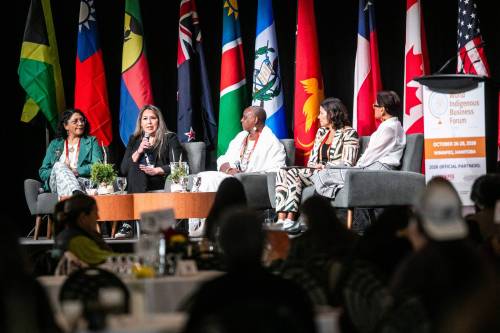
When Nicola Shirley-Phillips imagines what the Indigenous economy in her country might look like 100 years from now, she doesn’t mention social media or artificial intelligence. Instead, she envisions a holistic way of life where people work alongside each other in a way that cares for the planet.

“I see community (and) I see us being more respectful of all the energies around us — our water energy, our climate (and) the soil,” she said. “In all of that, there are opportunities for us to create businesses and opportunities to provide our services.”

Shirley-Phillips, a serial entrepreneur, organic farmer and community economic development specialist from Jamaica, shared her vision Tuesday morning during a panel discussion focused on Indigenous women and prosperity.

The discussion was one of the first items on the schedule during the first full day of the World Indigenous Business Forum at the RBC Convention Centre in Winnipeg.

Read
Tuesday, Oct. 27, 2026

Indigenous-, newcomer-focused job fair puts opportunity in spotlight

Gabrielle Piché 3 minute read Tuesday, Oct. 27, 2026

Canadian Armed Forces pamphlets grazed the side of Serena Valiquette’s ribbon skirt, as the Grade 9 student clutched the handouts tight.

“When I get to age, I’ll probably apply,” said Serena, 14, joining pockets of students hopping from booth to booth — City of Winnipeg here, Manitoba Public Insurance there — at a job fair in Winnipeg on Tuesday.

The job seekers, present and future, were largely Indigenous and newcomers. It was the demographic organizer Clayton Sandy aimed to attract.

“We have the ability to open doors for young people,” Sandy said. “This is one of the ways we use.”