As COVID-19 becomes routine, Africa readies for next crisis

Advertisement

Advertise with us

ABUJA, Nigeria (AP) — Building on the experience of battling the COVID-19 pandemic, African countries are strengthening health systems to prepare for the next health crisis, the World Health Organization’s Africa director said Thursday.

Read this article for free:


By clicking the button above, an account will be created and you will begin to receive some of our recommended newsletters. You may opt out of any newsletter by visiting your Email and Communication Preferences page or by clicking "unsubscribe" at the bottom of any email.

or

Already have an account? Log in here »

To continue reading, please subscribe:

Digital Subscription

One year of digital access for only $1.44 a week*

  • Enjoy unlimited reading on winnipegfreepress.com
  • Read the E-Edition, our digital replica newspaper
  • Access News Break, our award-winning app
  • Play interactive puzzles

*Billed as $5.77 plus GST every four weeks. After 52 weeks, price increases to the regular rate of $19.95 plus GST every four weeks. Offer available to new and qualified returning subscribers only. Cancel any time.

To continue reading, please subscribe:

Add Free Press access to your Brandon Sun subscription for only an additional

$1 for the first 4 weeks*

  • Enjoy unlimited reading on winnipegfreepress.com
  • Read the E-Edition, our digital replica newspaper
  • Access News Break, our award-winning app
  • Play interactive puzzles
Start now

*Your next Brandon Sun subscription payment will increase by $1.00 and you will be charged $17.95 plus GST for four weeks. After four weeks, your payment will increase to $24.95 plus GST every four weeks.

Hey there, time traveller!
This article was published 08/12/2022 (1422 days ago), so information in it may no longer be current.

ABUJA, Nigeria (AP) — Building on the experience of battling the COVID-19 pandemic, African countries are strengthening health systems to prepare for the next health crisis, the World Health Organization’s Africa director said Thursday.

At the onset of the pandemic in early 2020, some of the 54 countries in the continent of 1.3 billion people lacked the facilities or trained health workers to respond adequately to the health crisis, with some struggling to provide hospital isolation wards and intensive care units, Matshidiso Moeti, the World Health Organization’s Africa regional director, said at an online briefing Thursday.

However, over the course of three years, African countries have ramped up investments in health infrastructure in the race against the pandemic with support from global donors, she said.
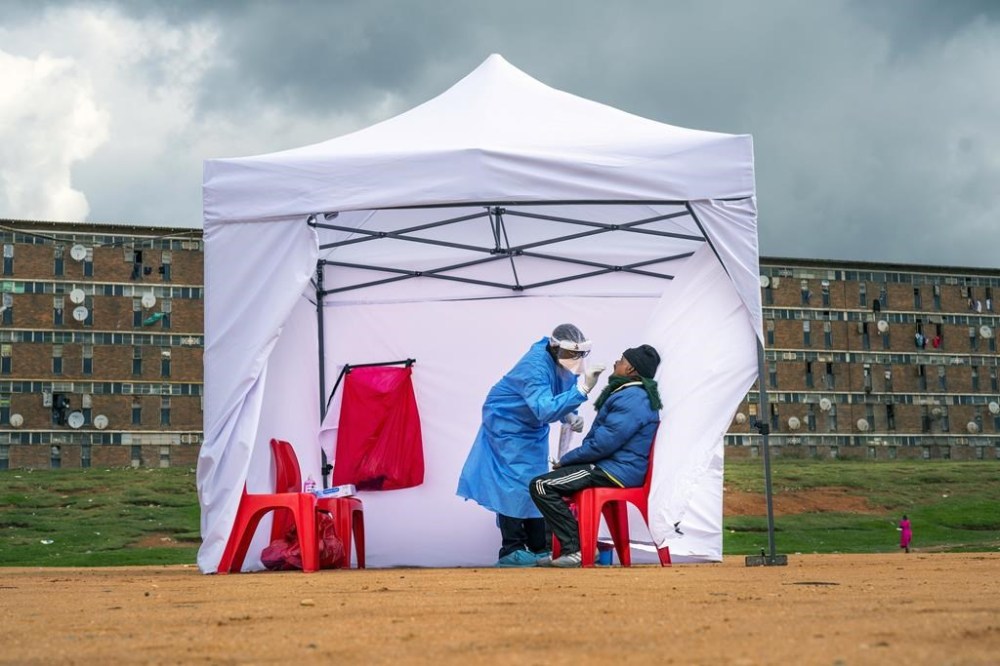
FILE - A resident from the Alexandra township gets tested for COVID-19 in Johannesburg, South Africa, April 29, 2020. The World Health Organization's Africa director said Thursday Dec. 8, 2022 that the continent is preparing for the next health crisis by strengthening gaps in health systems found in the continent's response to the COVID-19 pandemic. (AP Photo/Jerome Delay, File)

“The future, however difficult the past couple of years have been, will find us in a much better situation in terms of our strategies, our investments and our capacities to confront public health threats,” said Moeti.

“We know now what we need to do to be able to make sure that our systems are resilient to the impact of a shock like an outbreak,” she said.

Across the continent, she said, WHO is working with countries to reinforce their capacities by training first responders while work is also ongoing to strengthen public health institutions and emergency operations.

One of the “most exciting outcomes of the struggle” Africa faced in getting COVID-19 vaccines is that some countries in the continent are now developing their capacities to produce those key tools locally, Moeti added.

“Whatever happens in the future, the next pandemic will find the world and Africa much readier” in its response, she said, optimistic about “important partnerships” and African institutions being established “to take the lead to work in the area of preparedness and also in primary healthcare.”

In Gambia, as in many countries across Africa, the pandemic was “very difficult” for many health systems but it was “an eye-opener for all of us to know where the gaps have been,” said Ahmadou Lamin Samateh, Gambia’s minister of health.

Samateh called for a global support system that offers more assistance and resources to countries experiencing challenges.

“National governments have roles to play but international communities have important roles to play as well,” he said. “We’ve seen in the COVID-19 pandemic that one problem in one part of the world is a problem for the entire world.”

And even with Africa still facing gaps in COVID-19 vaccinations, Moeti, director of WHO’s Africa regional office, warned that more work needs to be done to sustain the gains from the pandemic response.

“As we move into 2023, it’s time to bring COVID-19 out of emergency response mode integrate it into routine health care,” Moeti said.

Report Error Submit a Tip

More Stories

Moving past the Indian Act will take time and trust

Niigaan Sinclair 5 minute read Preview

Moving past the Indian Act will take time and trust

Niigaan Sinclair 5 minute read Yesterday at 4:52 PM CDT

If I had a dime for every time a politician has called for the “abolishment”of the Indian Act, I’d be a rich man.

OK, maybe I’d have enough coins to jingle loudly in my pocket.

My point: a Canadian leader calling for the end of the race-based law passed in 1867 that is designed to give the federal government broad and brutal control over First Nations governments, membership, and reserve land is nothing new.

Premier Wab Kinew became the latest to advocate for this, during the First Nations-first ministers meeting in Ottawa this week.

Read
Yesterday at 4:52 PM CDT

Cabbie, passenger dead after Salter Street collision

Free Press staff 2 minute read Preview

Cabbie, passenger dead after Salter Street collision

Free Press staff 2 minute read Updated: Yesterday at 5:46 PM CDT

Two men died in a Wednesday morning collision between a taxi and a sedan on Salter Street near Aberdeen Avenue, police said Thursday.

Winnipeg Police Service officers were sent to the intersection at about 6:30 a.m., where they found the cab driver, a man in his 40s, and his passenger, a man in his 50s, in critical condition. Paramedics took the men to hospital, where they later died.

The sedan driver, a woman in her late teens, and an adult passenger, had minor injuries.

Traffic investigators believe the sedan was travelling west on Aberdeen when it collided with the cab that was southbound on Salter.

Read
Updated: Yesterday at 5:46 PM CDT

Brian Bowman wins mayoral battle

Aldo Santin and Mary Agnes Welch 6 minute read Preview

Brian Bowman wins mayoral battle

Aldo Santin and Mary Agnes Welch 6 minute read Thursday, Oct. 23, 2014

In the end, it wasn’t even close.

A mayoral race that was supposed to be a head-to-head battle between privacy lawyer Brian Bowman and former NDP MP and MLA Judy Wasylycia-Leis turned into a rout on election night. Wasylycia-Leis, the experienced politician, had held what looked like an unassailable lead for months, but Bowman, the outsider who promised Winnipeggers a better, prosperous future, chipped doggedly away at it.

“I’m excited to tell you that positive change is coming to city hall,” Bowman told roaring supporters at the Inn At The Forks after making his way into the small ballroom accompanied by his wife and two young sons.

He said he hadn’t expecting such a landslide victory, but had believed that the campaign was building momentum.

Read
Thursday, Oct. 23, 2014

Pair preps for weekend test in Kelowna

Laurie Nealin 5 minute read Preview

Pair preps for weekend test in Kelowna

Laurie Nealin 5 minute read Yesterday at 6:40 PM CDT

KELOWNA, B.C. — Their first spin around the ice at Skate Canada International on Thursday was a mix of business and pleasure for Winnipeg pair skaters Ava Kemp and Yohnatan Elizarov.

Job one for the practice session was to get accustomed to the size and feel of the ice surface at Propsera Place while test-driving the lifts, throws and jumps they’ll perform Friday in their senior ISU Grand Prix competition debut.

“The big thing is the patterns (skating into elements) because these boards are very narrow but very long — it’s NHL size — so when you’re setting up elements you need to make sure you’re using the full length or else you’re going to run into the boards,” Elizarov explained in a post-skate chat with media.

“The second thing is the ice which is sometimes really soft or really hard. This ice is really soft.”

Read
Yesterday at 6:40 PM CDT

‘All females are at risk’: serial sex offender released from prison

Erik Pindera 4 minute read Preview

‘All females are at risk’: serial sex offender released from prison

Erik Pindera 4 minute read Yesterday at 1:43 PM CDT

Law enforcement are warning the public that a dangerous sex offender with a lengthy history of abusing women is expected to live in Winnipeg after his release from prison.

Douglas Wayne Bowman, 62, left prison on Thursday after serving a lengthy sentence for two sexual assaults he committed at knifepoint, said the Manitoba Integrated High Risk Sex Offender Unit, a joint force of the Winnipeg Police Service and RCMP that keeps an eye on certain sex criminals.

Bowman was handed the 14-year sentence in 2018, less six years time served, and designated a dangerous offender. Criminals deemed dangerous offenders are given indefinite federal sentences until parole officials decide it is safe enough to release them.

Now that he’s leaving prison, Bowman will be subject to a 10-year long-term supervision order, which allows corrections and parole officials to continue to monitor him in the community even though his sentence is complete.

Read
Yesterday at 1:43 PM CDT

Security tightens at downtown library

Aldo Santin 5 minute read Preview

Security tightens at downtown library

Aldo Santin 5 minute read Saturday, Feb. 16, 2019

Users of the downtown Millennium Library will be subject to several new security screening measures, more commonly seen at airports and sporting facilities.

City hall announced Friday that effective Feb. 25, all visitors to the Donald Street library will undergo bag checks and be subjected to a hand-held metal detector sweep for alcohol and prohibited weapons. Visitors who refuse to participate will be barred from entering the library.

“The number of incidents (has) increased in the past four to five years, incidences involving violence, threats, alcohol, substance abuse and it was concerning. We met with police and our security contractor. After discussing, we came up with this course of action,” Ed Cuddy, manager of library services, told reporters. “We feel it’s a big change, but we feel it’s justified based on the kind of incidents we’ve been experiencing recently.”

Cuddy wouldn’t elaborate on the nature of the incidents, but did say library workers have not been the victims.

Read
Saturday, Feb. 16, 2019