China eases controls, gives no sign when ‘zero COVID’ ends

Advertisement

Advertise with us

BEIJING (AP) — China is easing some of the world’s most stringent anti-virus controls and authorities say new variants are weaker. But they have yet to say when they might end a “zero-COVID” strategy that confines millions of people to their homes and set off protests and demands for President Xi Jinping to resign.

Read this article for free:


By clicking the button above, an account will be created and you will begin to receive some of our recommended newsletters. You may opt out of any newsletter by visiting your Email and Communication Preferences page or by clicking "unsubscribe" at the bottom of any email.

or

Already have an account? Log in here »

To continue reading, please subscribe:

Digital Subscription

One year of digital access for only $1.44 a week*

  • Enjoy unlimited reading on winnipegfreepress.com
  • Read the E-Edition, our digital replica newspaper
  • Access News Break, our award-winning app
  • Play interactive puzzles

*Billed as $5.77 plus GST every four weeks. After 52 weeks, price increases to the regular rate of $19.95 plus GST every four weeks. Offer available to new and qualified returning subscribers only. Cancel any time.

To continue reading, please subscribe:

Add Free Press access to your Brandon Sun subscription for only an additional

$1 for the first 4 weeks*

  • Enjoy unlimited reading on winnipegfreepress.com
  • Read the E-Edition, our digital replica newspaper
  • Access News Break, our award-winning app
  • Play interactive puzzles
Start now

*Your next Brandon Sun subscription payment will increase by $1.00 and you will be charged $17.95 plus GST for four weeks. After four weeks, your payment will increase to $24.95 plus GST every four weeks.

Hey there, time traveller!
This article was published 05/12/2022 (1423 days ago), so information in it may no longer be current.

BEIJING (AP) — China is easing some of the world’s most stringent anti-virus controls and authorities say new variants are weaker. But they have yet to say when they might end a “zero-COVID” strategy that confines millions of people to their homes and set off protests and demands for President Xi Jinping to resign.

On Monday, commuters in Beijing and at least 16 other cities were allowed to board buses and subways without a virus test in the previous 48 hours for the first time in months. Industrial centers including Guangzhou near Hong Kong have reopened markets and businesses and lifted most curbs on movement while keeping restrictions on neighborhoods with infections.

The government announced plans last week to vaccinate millions of people in their 70s and 80s, a condition for ending “zero-COVID” restrictions that keep most visitors out of China and have disrupted manufacturing and global trade.
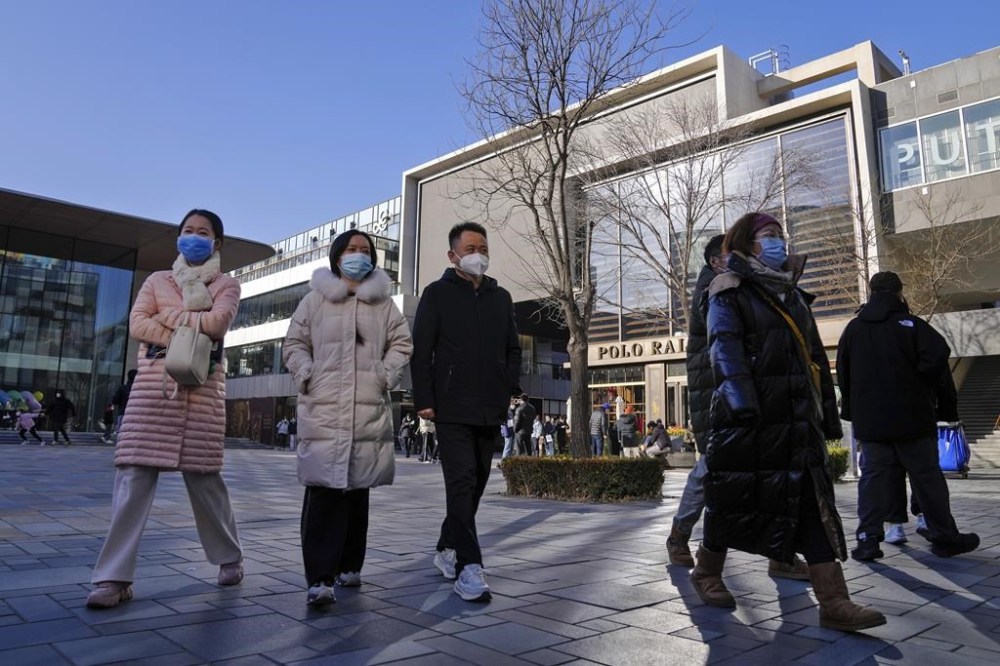
People wearing face masks walk through a reopened open air shopping mall in Beijing, Sunday, Dec. 4, 2022. China on Sunday reported two additional deaths from COVID-19 as some cities move cautiously to ease anti-pandemic restrictions amid increasingly vocal public frustration over the measures. (AP Photo/Andy Wong)

That spurred hopes for a quick end to “zero COVID.” But health experts and economists warn it will be mid-2023 and possibly 2024 before vaccination rates are high enough and hospitals are prepared to handle a possible rash of infections.

“China is not ready for a fast reopening yet,” Morgan Stanley economists said in a report Monday. “We expect lingering containment measures. … Restrictions could still tighten dynamically in lower-tier cities should hospitalizations surge.”

The changes follow protests demanding an end to “zero COVID” but are in line with Communist Party promises earlier to reduce disruption by easing quarantine and other restrictions. The changes have been highly publicized in a possible effort to mollify public anger, but there is no indication whether any might have been made in response to protests in Shanghai and other cities.

China is the only major country still trying to stamp out transmission while the United States and others relax restrictions and try to live with the virus that has killed at least 6.6 million people and infected almost 650 million.

The protests began Nov. 25 after at least 10 people died in a fire in an apartment building in Urumqi in the northwest. Authorities denied suggestions firefighters or victims were blocked by locked doors or other anti-virus controls. But the disaster became a focus for public frustration.

Ahead of the protests, the Communist Party promised to make “zero COVID” less costly and disruptive but said it was sticking to the overall containment strategy.

The party earlier announced updates to the strategy to make it more focused. Authorities began suspending access to buildings or neighborhoods with an infection instead of whole cities. But a spike in cases starting in October prompted areas across China to close schools and confine families to cramped apartments for weeks at a time.

Authorities say they are “further optimizing” controls and warn the country needs to stay alert.
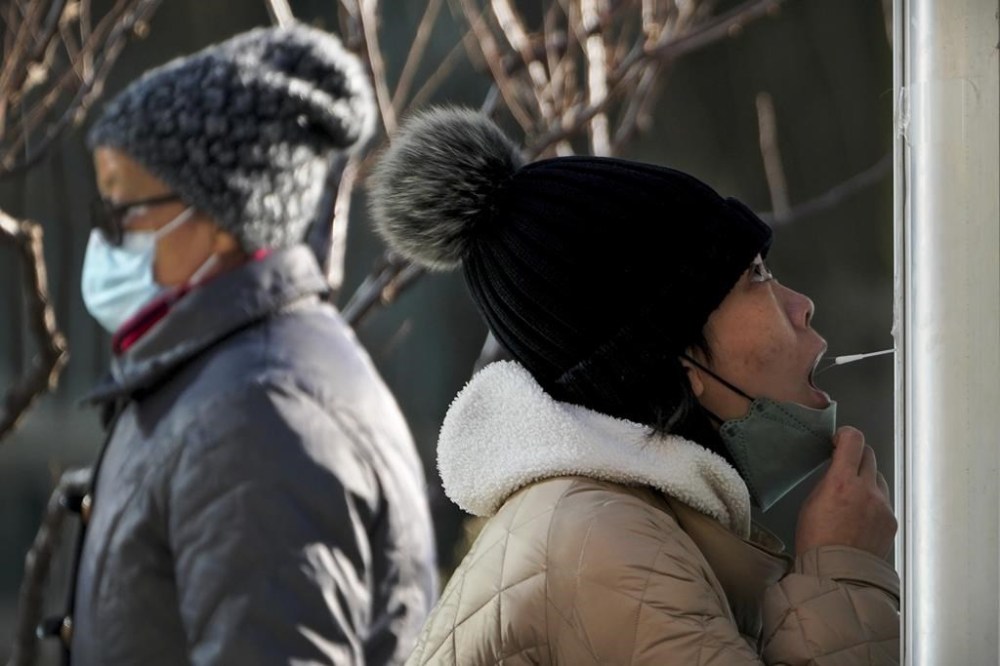
A woman has her routine COVID-19 throat swab at a coronavirus testing site in Beijing, Monday, Dec. 5, 2022. China is easing some of the world's most stringent anti-virus controls and authorities say new variants are weaker. But they have yet to say when they might end a
A woman has her routine COVID-19 throat swab at a coronavirus testing site in Beijing, Monday, Dec. 5, 2022. China is easing some of the world's most stringent anti-virus controls and authorities say new variants are weaker. But they have yet to say when they might end a "zero-COVID" strategy that confines millions of people to their homes and set off protests and demands for President Xi Jinping to resign. (AP Photo/Andy Wong)

China faces “new situations and tasks” due to the “weakening of the pathogenicity” of the latest omicron variant, a deputy premier in charge of the anti-virus campaign, Sun Chunlan, said last week. She said China has “effective diagnosis and treatment” and has vaccinated more than 90% of its people.

The government of Shanghai, the country’s financial capital, announced visitors to most sites will require only a negative virus test in the past week, instead of the previous two days. Schools, hospitals and bars still will require a test within the past 48 hours.

Despite the changes, Beijing and other cities are telling some residents to stay home or enforcing other restrictions on neighborhoods with infections.

Travelers at the Chinese capital’s train stations and three airports are required to show a negative virus test within the previous 48 hours. Elsewhere, Guangzhou and other cities said areas deemed at high-risk for infection still face additional curbs.

A negative virus test within the past 72 hours still is required to enter public buildings in vast metropolis of Chongqing in the southwest, a hotspot in the latest infection spike. Dining in restaurants in some parts of Beijing still is prohibited.

A newspaper reported last week that some Beijing residents who have mild or asymptomatic COVID-19 cases would be allowed for the first time to isolate themselves at home instead of going to one of China’s sprawling quarantine centers. The government has yet to confirm that.

Forecasters say the struggling economy, already under pressure from weak demand for Chinese exports and a government crackdown on debt in the real estate industry, might be contracting this quarter.

Regulators have responded by freeing up more money for lending and are trying to encourage private investment in infrastructure projects. They have eased some financial controls on real estate developers to reverse a slump in one of China’s biggest industries.
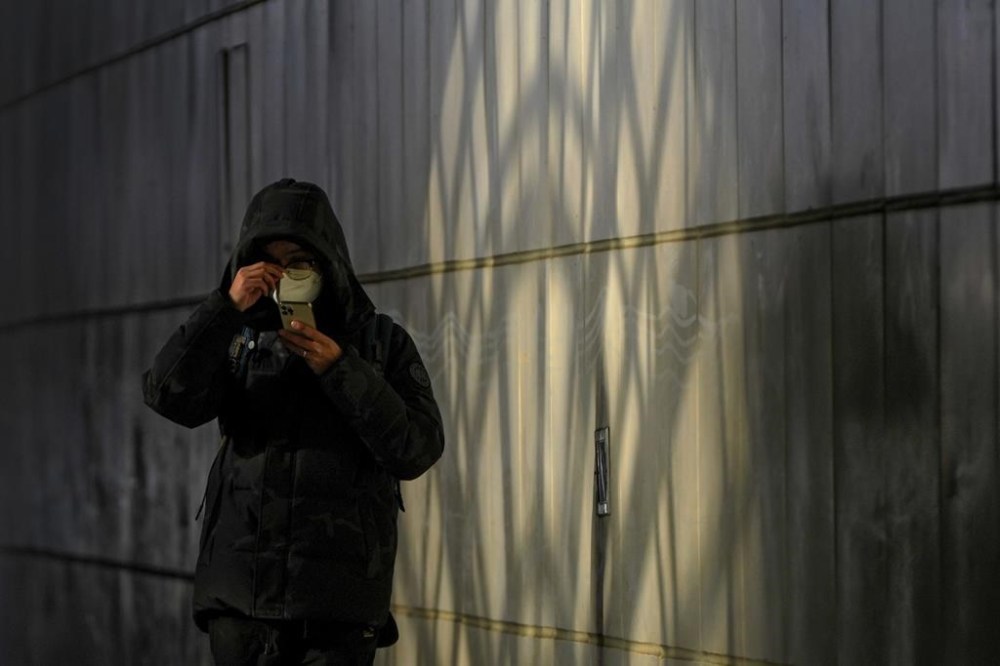
A resident adjusts her face mask as she walks by a tunnel in Beijing, Monday, Dec. 5, 2022. China is easing some of the world's most stringent anti-virus controls and authorities say new variants are weaker. But they have yet to say when they might end a
A resident adjusts her face mask as she walks by a tunnel in Beijing, Monday, Dec. 5, 2022. China is easing some of the world's most stringent anti-virus controls and authorities say new variants are weaker. But they have yet to say when they might end a "zero-COVID" strategy that confines millions of people to their homes and set off protests and demands for President Xi Jinping to resign. (AP Photo/Andy Wong)

“Policymakers are focusing their efforts on spurring growth,” Eurasia Group analysts said in a report. “However, even if China’s transition away from a strict zero-COVID policy is more decisive and accelerated, meeting public health milestones like increasing elderly vaccination will take months.”

On Monday, the government reported 30,014 new cases, including 25,696 without symptoms. That was down from last week’s daily peak above 40,000 but still close to record daily highs for China.

Xi’s government has held up “zero COVID” as proof of the superiority of China’s system compared with the United States and Western countries. China’s official death toll stands at 5,235 since the start of the pandemic versus a U.S. count of 1.1 million.

China also has suffered a possible rise in fatalities among people with cancer, heart disease and other conditions who struggled to get care while hospitals focused on treating virus cases. Data on those deaths haven’t been reported.

Report Error Submit a Tip

More Stories

Letters, Oct. 28

7 minute read 2:00 AM CDT

Vote, people!

Re: Get out and exercise your franchise (Editorial, Oct. 24)

I’m now in the autumn of my life but have voted in every single election since I was first eligible, which at that time was the age of 21. This was impressed upon me at a very young age by my father, who said it was every citizen’s duty to vote.

The apathy with regard to voting these days is appalling. And I know that some of the people who do the most complaining about how things are being done are those who don’t bother to vote. Perhaps to overcome this, Canada should look at doing what Australia and several countries in Europe and Latin America have done, which is to make voting compulsory.

Seniors should never be homeless

Jon Gerrard 4 minute read Yesterday at 2:00 AM CDT

There is much attention paid to helping those who become homeless, but all too little attention given to preventing homelessness in the first place.

About one quarter of all the people experiencing homelessness are seniors, according to the most recent End Homelessness Winnipeg report. This represents a fundamental failure of our province to prevent homelessness.

Ending homelessness where it has become chronic should not be considered the end point in addressing homelessness. It is like trying to solve the problem of water on your kitchen floor by mopping it up, without considering the importance of turning off the tap so that water does not continue flowing over the edge of the sink.

Preventing homelessness in seniors is achievable. We have many resources and many organizations which support seniors, but they are fragmented, poorly co-ordinated, inadequately, funded in some cases, and have not sufficiently focused their efforts on preventing homelessness in seniors. Too many seniors are falling through the cracks.

Director Schrader returns to silver screen with complex view of religion and belief

Alison Gillmor 4 minute read Preview

Director Schrader returns to silver screen with complex view of religion and belief

Alison Gillmor 4 minute read Thursday, Jun. 14, 2018

Bleak, wintry and rigorously controlled — until it’s not — this Book of Job-like drama from American filmmaker Paul Schrader looks at the challenges of faith.

The 71-year-old Schrader, known for scripting four Martin Scorsese films (including Taxi Driver and Raging Bull) and for directing his own (including American Gigolo, Affliction and Auto Focus), grew up in a strict Calvinist home — he famously did not see a film until he was 17 — and has always been drawn to stories of agonizing and uncertain redemption.

As the Rev. Toller (Ethan Hawke) wrestles with what it means to lead a righteous life in our badly broken world, his spiritual fate remains in doubt. It is certain, however, that First Reformed marks a cinematic rebirth for Schrader after recent disasters like The Canyons and Dog Eat Dog. Serious, complex and moving, this is not a perfect film, but even its flaws are powerful.

Toller is a solitary man who has come to the ministry late in life, after a family tragedy and a failed marriage. First Reformed, a historic church in upstate New York that was once a stop on the Underground Railroad, has since been reduced to an austerely beautiful tourist shop, more of a museum than a place of worship.

Read
Thursday, Jun. 14, 2018

Man accused of assaulting unconscious woman has lengthy record of abuse

Erik Pindera 5 minute read Preview

Man accused of assaulting unconscious woman has lengthy record of abuse

Erik Pindera 5 minute read Yesterday at 2:01 AM CDT

A convicted sex offender accused of sexually assaulting an unconscious woman last week — only to be stopped in the process by police officers — has a lengthy history of abusing vulnerable victims.

Harley Aaron Okemow, 34, was arrested Oct. 21 on Stanley Street, near Henry Avenue, and charged with sexual assault causing bodily harm.

He had been released from provincial jail in mid-September, with a sentence of two years of supervised probation plus the time he served behind bars awaiting court, after pleading guilty to several breaches of court orders committed earlier this year.

“Mr. Okemow … does have a serious record … that includes sexually offending against six different victims, five of which were children,” said Crown prosecutor Katie Dojack at Okemow’s sentencing last month.

Read
Yesterday at 2:01 AM CDT

Wheat City mayoral candidates hit streets

Alex Lambert 4 minute read Preview

Wheat City mayoral candidates hit streets

Alex Lambert 4 minute read Updated: 7:31 AM CDT

BRANDON — The two mayoral candidates made their final pushes Tuesday to woo voters in Manitoba’s second-largest city.

Incumbent Jeff Fawcett said he and his team have been to nearly every doorstep in the city, while challenger Len Isleifson, a former Tory MLA, said he has covered most parts of Brandon and was even on a second go-round in some areas.

“I’m working my tail off to try to make sure that people do get out to vote, and the people I speak to, I feel fairly optimistic,” said Fawcett, who is running for his second term. “But people have to vote.”

The Brandon Sun joined both Fawcett and Isleifson as they went door knocking one day before Manitoba’s elect new municipal councils.

Read
Updated: 7:31 AM CDT

All election results for Councillors and Mayor

Staff 1 minute read Monday, Oct. 26, 2026

This is the Mayor results.

These are all the Councillors.

Councillor for Charleswood – Tuxedo – Westwood

Councillor for Daniel McIntyre