China eases virus controls amid effort to head off protests

Advertisement

Advertise with us

BEIJING (AP) — More Chinese cities eased anti-virus restrictions and police patrolled their streets Thursday as the government tried to defuse public anger over some of the world’s most stringent COVID measures and head off more protests.

Read this article for free:


By clicking the button above, an account will be created and you will begin to receive some of our recommended newsletters. You may opt out of any newsletter by visiting your Email and Communication Preferences page or by clicking "unsubscribe" at the bottom of any email.

or

Already have an account? Log in here »

To continue reading, please subscribe:

Digital Subscription

One year of digital access for only $1.44 a week*

  • Enjoy unlimited reading on winnipegfreepress.com
  • Read the E-Edition, our digital replica newspaper
  • Access News Break, our award-winning app
  • Play interactive puzzles

*Billed as $5.77 plus GST every four weeks. After 52 weeks, price increases to the regular rate of $19.95 plus GST every four weeks. Offer available to new and qualified returning subscribers only. Cancel any time.

To continue reading, please subscribe:

Add Free Press access to your Brandon Sun subscription for only an additional

$1 for the first 4 weeks*

  • Enjoy unlimited reading on winnipegfreepress.com
  • Read the E-Edition, our digital replica newspaper
  • Access News Break, our award-winning app
  • Play interactive puzzles
Start now

*Your next Brandon Sun subscription payment will increase by $1.00 and you will be charged $17.95 plus GST for four weeks. After four weeks, your payment will increase to $24.95 plus GST every four weeks.

Hey there, time traveller!
This article was published 01/12/2022 (1428 days ago), so information in it may no longer be current.

BEIJING (AP) — More Chinese cities eased anti-virus restrictions and police patrolled their streets Thursday as the government tried to defuse public anger over some of the world’s most stringent COVID measures and head off more protests.

Following weekend demonstrations at which some crowds made the politically explosive demand that leader Xi Jinping resign, the streets of major cities have been quiet in the face of a crackdown that has been largely out of sight.

Guangzhou in the south, Shijiazhuang in the north, Chengdu in the southwest and other major cities announced they were easing testing requirements and controls on movement. In some areas, markets and bus service reopened. A newspaper reported Beijing, the capital, has begun allowing some people with the virus to isolate at home, avoiding crowded quarantine centers that have prompted complaints. The government didn’t immediately respond to a request for confirmation.
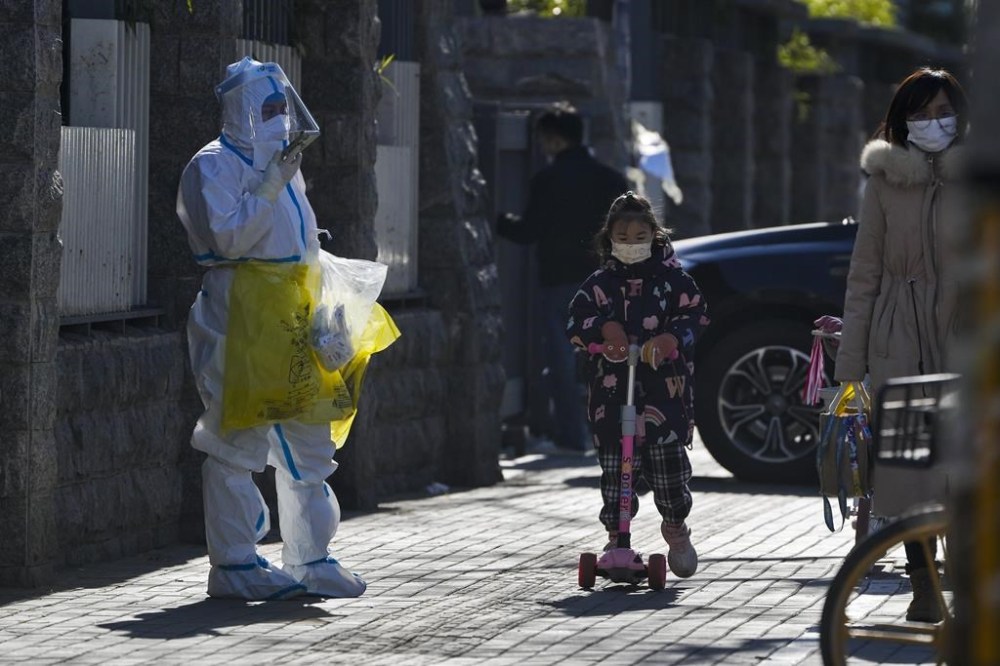
A child wearing a face mask and riding on a scooter passes by a worker in protective suit on his way to collect COVID samples from the lockdown residents in Beijing, Thursday, Dec. 1, 2022. More cities eased anti-virus restrictions as Chinese police tried to head off protests Thursday while the ruling Communist Party prepared for the high-profile funeral of the late leader Jiang Zemin. (AP Photo/Andy Wong)

But many of the rules that brought people into the streets of Shanghai, Beijing and at least six other cities remain in force. The death of former leader Jiang Zemin this week could provide another opportunity for crowds to gather and potentially protest.

The announcements easing restrictions didn’t mention last weekend’s protests of the human cost of anti-virus measures that confine millions of people to their homes. But the timing and publicity suggested Xi’s government was trying to mollify public anger.

While experts say Beijing’s policies are unsustainable, they warn it can’t relax controls that keep most travelers out of China until tens of millions of older people are vaccinated. They say that means “zero COVID” might stay in place for as much as another year.

With a heavy police presence, there was no indication of protests Thursday. Notes on social media complained people were being stopped at random for police to check smartphones, possibly looking for prohibited apps such as Twitter, in what they said was a violation of China’s Constitution.

“I am especially afraid of becoming the ‘Xinjiang model’ and being searched on the excuse of walking around,” said a posting signed Qi Xiaojin on the popular Sina Weibo platform, referring to the northwestern region where Uyghur and other Muslim minorities are under intense surveillance.

Protesters have publicized protests on Twitter and other foreign social media that the Communist Party tries to block access to, while videos and photos are deleted from services within China. But police appeared to be trying to keep their crackdown out of sight, possibly to avoid encouraging others by drawing attention to the scale of the protests.

On Thursday, the government reported 36,061 new coronavirus cases in the past 24 hours, including 31,911 without symptoms.

The industrial centers of Shenyang and Harbin in the northeast announced that students who attend school online and other people who have minimal interaction with others would no longer be required to take virus tests that have been administered as often as once a day.

In Beijing, some neighborhoods have begun allowing people with mild or asymptomatic COVID-19 cases to isolate at home, the newspaper Yicai reported on its website. The anti-epidemic agency didn’t respond to questions sent to its office by fax.

The report gave no details, but a post on the social media account of the district government of Gaobeidian on Thursday said people there who test positive can stay at home. It was later deleted.

Meanwhile, state TV announced the funeral for Jiang, who was ruling party leader until 2002 and president until the following year, will be held Tuesday at the Great Hall of the People, the seat of China’s ceremonial legislature in central Beijing. Jiang died Wednesday at 96.
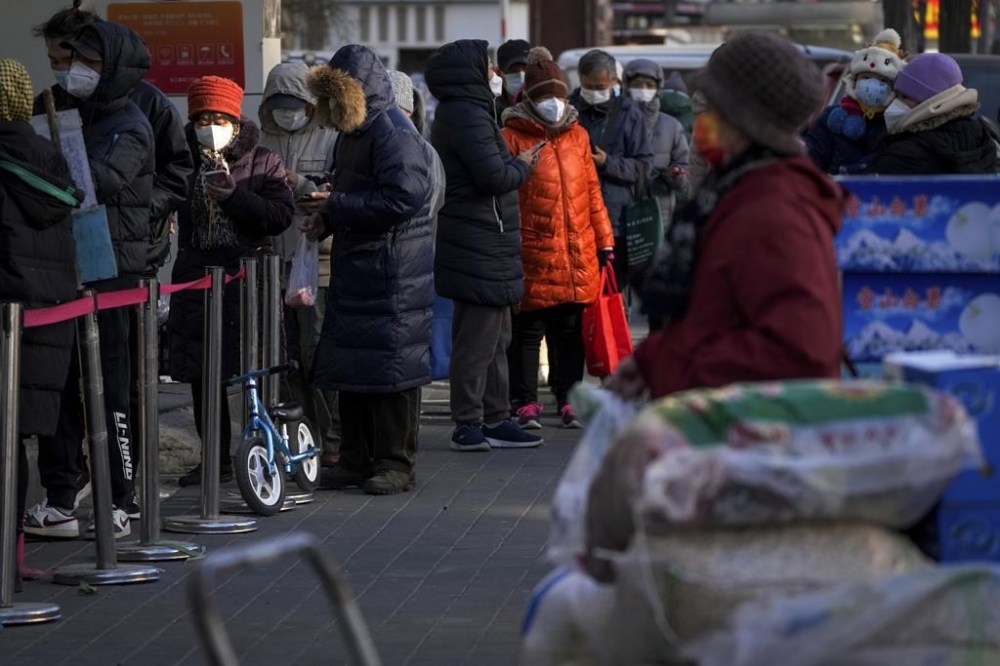
Residents wearing face masks stand in line to enter a supermarket stack with goods in Beijing, Thursday, Dec. 1, 2022. More cities eased anti-virus restrictions as Chinese police tried to head off protests Thursday while the ruling Communist Party prepared for the high-profile funeral of the late leader Jiang Zemin. (AP Photo/Andy Wong)

No foreign dignitaries will be invited in line with Chinese tradition, the party announced. It said there would be no “body farewell ceremony,” possibly due to anti-virus controls.

Washington is watching the “very heavy security” in Beijing and other cities with “great care and great attention,” Ambassador Nicholas Burns said in an online appearance to an audience in Chicago. He gave no indication the Biden administration was taking any action.

The Chinese Ministry of Foreign Affairs defended its virus response and dismissed U.S. criticism.

“Facts have proven that China’s epidemic response measures are science-based, correct and effective,” said a ministry spokesman, Zhao Lijian. Noting the U.S. death toll, he said the country “is in no position to point fingers at China’s COVID response.”

Xi’s government has promised to reduce the disruption of its “zero COVID” strategy by shortening quarantines and making other changes. But it says it will stick to restrictions that have repeatedly shut down schools and businesses and suspended access to neighborhoods.

Protests of the rules began Friday after at least 10 people were killed in a fire in an apartment building in Urumqi in Xinjiang. That prompted questions about whether firefighters or victims trying to escape were blocked by locked doors or other controls. Authorities denied that, but the deaths became a focus for public frustration.

The government says it is making restrictions more targeted and flexible, but a spike in infections since October has prompted local officials who are threatened with the loss of their jobs if an outbreak occurs to impose controls that some residents say are excessive and destructive.
Report Error Submit a Tip

More Stories

Opera singer David Daniels no longer in singers’ union following sexual assault guilty plea

The Associated Press 2 minute read Preview

Opera singer David Daniels no longer in singers’ union following sexual assault guilty plea

The Associated Press 2 minute read Thursday, Dec. 21, 2023

NEW YORK (AP) — Countertenor David Daniels is no longer a member of the union for singers following his guilty plea to a charge of sexual assault.

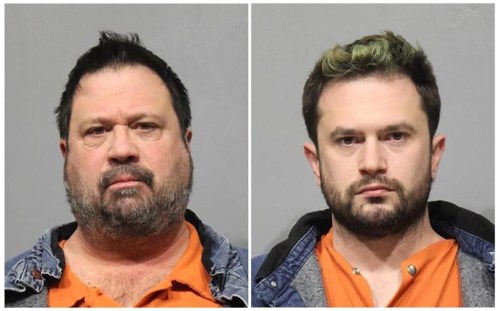
The 57-year-old and his husband, Scott Walters, pleaded guilty to sexual assault of an adult, a second-degree felony, in Houston's Harris County District Court on Aug. 4. Their accuser was aspiring opera singer Sam Schultz.

They both were sentenced to eight years’ probation and required to register as sex offenders.

American Guild of Musical Artists spokesperson Alicia Cook said Wednesday that Daniels is no longer a member of the union.

Read
Thursday, Dec. 21, 2023

Waiting for Cormier verdict the ‘calm before the storm’

Katie May 6 minute read Preview

Waiting for Cormier verdict the ‘calm before the storm’

Katie May 6 minute read Thursday, Feb. 22, 2018

As the jury room door closed behind the seven women and four men who are now deliberating on the evidence against Tina Fontaine’s accused killer, Thelma Favel rose from the chair she’s occupied for most of Raymond Cormier’s second-degree murder trial.

Almost every day over the past three weeks, Favel, the woman who raised 15-year-old Tina, has sat right up front, directly across from the jury box, listening, sobbing and soaking in disturbing details of the teen’s last days that have come to light over the course of Cormier’s second-degree murder trial.

On Wednesday afternoon, after Court of Queen’s Bench Chief Justice Glenn Joyal instructed the jury and sent them off to be sequestered until they decide whether 56-year-old Raymond Cormier is guilty of killing Tina, Favel got up and hugged Crown prosecutor Breta Passler. It was one of many moments, this one shielded from jurors, that have long since proven the emotional impact of the case and the lasting power of Tina’s legacy.

Tina’s death sparked a public outcry that renewed calls for a national inquiry into disproportionately high rates of missing and murdered Indigenous women and girls across Canada, and the criminal trial for the man accused of killing her hasn’t happened in a vacuum.

Read
Thursday, Feb. 22, 2018

Shared Health, heal thyself

Editorial 4 minute read Preview

Shared Health, heal thyself

Editorial 4 minute read 2:00 AM CDT

Doctors are trained to seek out the causes of illness, not just to treat the symptoms.

That is, perhaps, a style of examination that the government of Premier Wab Kinew should be following with the health-care system as a whole.

Because the symptoms are looking a little dire.

Last week, provincial chief medical officer Dr. José François announced he would be leaving his position in January 2027. That means he will be leaving a position he has only held since April 2024 — less than three years.

Read
2:00 AM CDT

Indigenous-, newcomer-focused job fair puts opportunity in spotlight

Gabrielle Piché 3 minute read Tuesday, Oct. 27, 2026

Canadian Armed Forces pamphlets grazed the side of Serena Valiquette’s ribbon skirt, as the Grade 9 student clutched the handouts tight.

“When I get to age, I’ll probably apply,” said Serena, 14, joining pockets of students hopping from booth to booth — City of Winnipeg here, Manitoba Public Insurance there — at a job fair in Winnipeg on Tuesday.

The job seekers, present and future, were largely Indigenous and newcomers. It was the demographic organizer Clayton Sandy aimed to attract.

“We have the ability to open doors for young people,” Sandy said. “This is one of the ways we use.”

Fact Check

1 minute read Thursday, Nov. 30, 2023

Fact Check

Having problems with the form?Contact Us Directly |

Prairie opportunists are knocking and prime minister should answer the door

Dan Lett 6 minute read Preview

Prairie opportunists are knocking and prime minister should answer the door

Dan Lett 6 minute read Tuesday, Oct. 29, 2019

In preparation for Halloween, Alberta Premier Jason Kenney and Saskatchewan Premier Scott Moe have spent an inordinate amount of time rattling their chains and howling like indignant spirits about the raw deal they are getting from the rest of the country.

In the wake of a federal election in which the governing Liberals failed to elect a MP in either province, Kenney and Moe are summoning apocalyptic visions of secession. We've heard a lot of that before but Western separatists, inspired by the Alberta and Saskatchewan first ministers, are warning everyone that this time it's serious.

Now, before anyone gets too spooked, it's important to remember that a good politician is — first and foremost — an opportunist. These are the folks with the pure political instinct to recognize a moment in which they can gain the upper hand and then seize on it like a ravenous dog on a bone. Imagine that, and you'll have a pretty clear picture of what Kenney and Moe are up to.

In short, the two premiers want two big-ticket items from Ottawa.

Read
Tuesday, Oct. 29, 2019