Twitter ends enforcement of COVID misinformation policy

Advertisement

Advertise with us

Twitter will no longer enforce its policy against COVID-19 misinformation, raising concerns among public health experts that the change could have serious consequences if it discourages vaccination and other efforts to combat the still-spreading virus.

Read this article for free:


By clicking the button above, an account will be created and you will begin to receive some of our recommended newsletters. You may opt out of any newsletter by visiting your Email and Communication Preferences page or by clicking "unsubscribe" at the bottom of any email.

or

Already have an account? Log in here »

To continue reading, please subscribe:

Digital Subscription

One year of digital access for only $1.44 a week*

  • Enjoy unlimited reading on winnipegfreepress.com
  • Read the E-Edition, our digital replica newspaper
  • Access News Break, our award-winning app
  • Play interactive puzzles

*Billed as $5.77 plus GST every four weeks. After 52 weeks, price increases to the regular rate of $19.95 plus GST every four weeks. Offer available to new and qualified returning subscribers only. Cancel any time.

To continue reading, please subscribe:

Add Free Press access to your Brandon Sun subscription for only an additional

$1 for the first 4 weeks*

  • Enjoy unlimited reading on winnipegfreepress.com
  • Read the E-Edition, our digital replica newspaper
  • Access News Break, our award-winning app
  • Play interactive puzzles
Start now

*Your next Brandon Sun subscription payment will increase by $1.00 and you will be charged $17.95 plus GST for four weeks. After four weeks, your payment will increase to $24.95 plus GST every four weeks.

Hey there, time traveller!
This article was published 29/11/2022 (1431 days ago), so information in it may no longer be current.

Twitter will no longer enforce its policy against COVID-19 misinformation, raising concerns among public health experts that the change could have serious consequences if it discourages vaccination and other efforts to combat the still-spreading virus.

Eagle-eyed users spotted the change Monday night, noting that a one-sentence update had been made to Twitter’s online rules: “Effective November 23, 2022, Twitter is no longer enforcing the COVID-19 misleading information policy.”

By Tuesday, some Twitter accounts were testing the new boundaries and celebrating the platform’s hands-off approach, which comes after Twitter was purchased by Elon Musk.
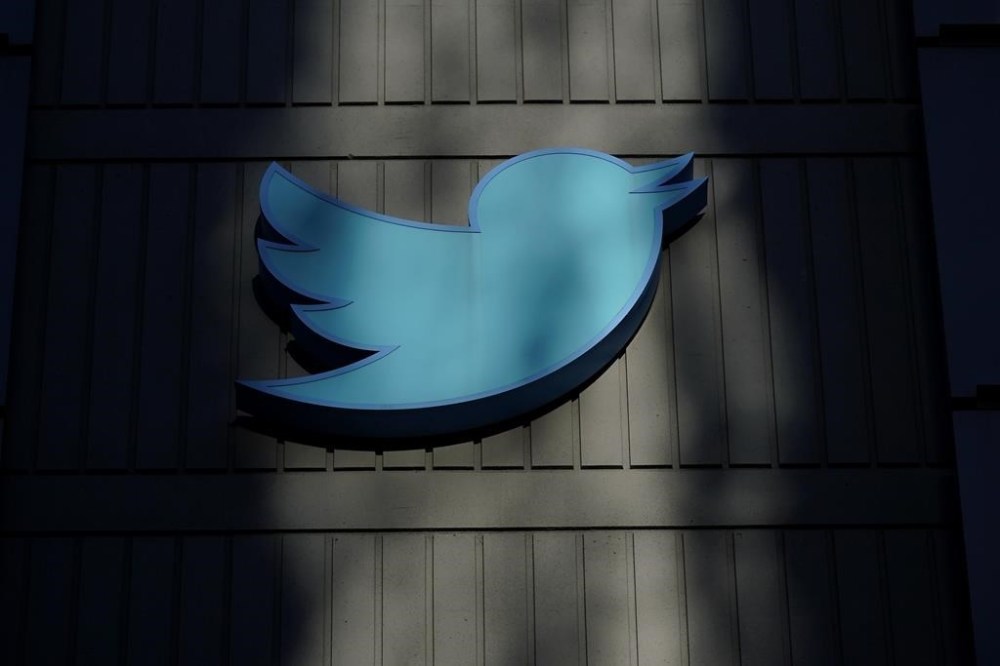
A sign at Twitter headquarters is shown in San Francisco, Friday, Nov. 18, 2022. (AP Photo/Jeff Chiu)

“This policy was used to silence people across the world who questioned the media narrative surrounding the virus and treatment options,” tweeted Dr. Simone Gold, a physician and leading purveyor of COVID-19 misinformation. “A win for free speech and medical freedom!”

Twitter’s decision to no longer remove false claims about the safety of COVID-19 vaccines disappointed many public health officials, however, who said it could lead to more false claims about the virus, or the safety and effectiveness of vaccines.

“Bad news,” tweeted epidemiologist Eric Feigl-Ding, who urged people not to flee Twitter but to stay and stand up for accurate information about the virus. “Stay folks — do NOT cede the town square to them!”

The virus, meanwhile, continues to spread. Nationally, new COVID cases averaged nearly 38,800 a day as of Monday, according to data from Johns Hopkins University — far lower than last winter but a vast undercount because of reduced testing and reporting. About 28,100 people with COVID were hospitalized daily and about 313 died, according to the most recent federal daily averages.

Cases and deaths were up from two weeks earlier. Yet a fifth of the U.S. population hasn’t been vaccinated, most Americans haven’t gotten the latest boosters, and many have stopped wearing masks.

Musk, who has himself spread COVID misinformation on Twitter, has signaled an interest in rolling back many of the platform’s previous rules meant to combat misinformation.

Last week, Musk said he would grant “amnesty” to account holders who had been kicked off Twitter. He’s also reinstated the accounts for several people who spread COVID misinformation, including that of Rep. Marjorie Taylor Greene, whose personal account was suspended this year for repeatedly violating Twitter’s COVID rules.

Greene’s most recent tweets include ones questioning the effectiveness of masks and making baseless claims about the safety of COVID vaccines.

Since the pandemic began, platforms like Twitter and Facebook have struggled to respond to a torrent of misinformation about the virus, its origins and the response to it.

Under the policy enacted in January 2020, Twitter prohibited false claims about COVID-19 that the platform determined could lead to real-world harms. More than 11,000 accounts were suspended for violating the rules, and nearly 100,000 pieces of content were removed from the platform, according to Twitter’s latest numbers.

Despite its rules prohibiting COVID misinformation, Twitter has struggled with enforcement. Posts making bogus claims about home remedies or vaccines could still be found, and it was difficult on Tuesday to identify exactly how the platform’s rules may have changed.

Messages left with San Francisco-based Twitter seeking more information about its policy on COVID-19 misinformation were not immediately returned Tuesday.

A search for common terms associated with COVID misinformation yielded lots of misleading content, but also automatic links to helpful resources about the virus as well as authoritative sources like the Centers for Disease Control and Prevention.

Dr. Ashish Jha, the White House COVID-19 coordinator, said Tuesday that the problem of COVID-19 misinformation is far larger than one platform, and that policies prohibiting COVID misinformation weren’t the best solution anyway.

Speaking at a Knight Foundation forum Tuesday, Jha said misinformation about the virus spread for a number of reasons, including legitimate uncertainty about a deadly illness. Simply prohibiting certain kinds of content isn’t going to help people find good information, or make them feel more confident about what they’re hearing from their medical providers, he said.

“I think we all have a collective responsibility,” Jha said of combating misinformation about COVID. “The consequences of not getting this right — of spreading that misinformation — is literally tens of thousands of people dying unnecessarily.”
Report Error Submit a Tip

More Stories

One-on-one Journalism Training

0 minute read Wednesday, Jun. 18, 2025

A timeline of the WE Charity controversy

The Canadian Press 9 minute read Wednesday, Aug. 19, 2020

OTTAWA - A timeline of events regarding the Canada Student Service Grant program, based on public documents, events and statements from cabinet ministers, government officials, and WE Charity:

March 6, 2020: WE Charity staff prepare a concept paper on service learning for public servants at Employment and Social Development Canada.

April 5: Finance Minister Bill Morneau and Prime Minister Justin Trudeau talk over the phone about how to help students whose summer job and volunteer opportunities were vanishing due to the COVID-19 pandemic. Finance Department officials are tasked with considering options the next morning.

April 7: Small Business Minister Mary Ng and WE co-founder Craig Kielburger have an introductory phone call in which Ng asks WE to send what it calls a ``pre-established proposal'' to help young people launch businesses.

Waiting for Cormier verdict the ‘calm before the storm’

Katie May 6 minute read Preview

Waiting for Cormier verdict the ‘calm before the storm’

Katie May 6 minute read Thursday, Feb. 22, 2018

As the jury room door closed behind the seven women and four men who are now deliberating on the evidence against Tina Fontaine’s accused killer, Thelma Favel rose from the chair she’s occupied for most of Raymond Cormier’s second-degree murder trial.

Almost every day over the past three weeks, Favel, the woman who raised 15-year-old Tina, has sat right up front, directly across from the jury box, listening, sobbing and soaking in disturbing details of the teen’s last days that have come to light over the course of Cormier’s second-degree murder trial.

On Wednesday afternoon, after Court of Queen’s Bench Chief Justice Glenn Joyal instructed the jury and sent them off to be sequestered until they decide whether 56-year-old Raymond Cormier is guilty of killing Tina, Favel got up and hugged Crown prosecutor Breta Passler. It was one of many moments, this one shielded from jurors, that have long since proven the emotional impact of the case and the lasting power of Tina’s legacy.

Tina’s death sparked a public outcry that renewed calls for a national inquiry into disproportionately high rates of missing and murdered Indigenous women and girls across Canada, and the criminal trial for the man accused of killing her hasn’t happened in a vacuum.

Read
Thursday, Feb. 22, 2018

Trump touts USMCA win in state of the union

James McCarten, The Canadian Press 6 minute read Preview

Trump touts USMCA win in state of the union

James McCarten, The Canadian Press 6 minute read Tuesday, Feb. 4, 2020

WASHINGTON - President Donald Trump declared his scorched-earth political style an unmitigated success Tuesday in a fiercely partisan, made-for-TV state of the union speech that made it clear he expects to be back in the White House next year on the strength of the U.S. economy and his trade deals with Canada, Mexico and China.

Trump, addressing a joint session of Congress in the very chamber where House Democrats voted to impeach him less than two months ago, became only the second president in American history — Bill Clinton was the first — to deliver a state of the union while standing trial in the Senate.

Unrepentant, he pointedly refused to shake the offered hand of House Speaker Nancy Pelosi on the dais before singing the praises of what he billed as "the great American comeback," pointing to strong job growth, a soaring stock market and low unemployment as evidence of his leadership. And when he was done, Pelosi ripped up the speech in full view of the television cameras.

"America's enemies are on the run, America's fortunes are on the rise, and America's future is blazing bright. The years of economic decay are over," Trump declared, taking full credit for the country's "roaring economy," including what he billed as seven million new jobs and the lowest jobless rate in half a century — a "blue-collar boom" that he's counting on to help his re-election chances in November.

Read
Tuesday, Feb. 4, 2020

Just say no (to deficits during good economic times)

Tom Brodbeck 5 minute read Preview

Just say no (to deficits during good economic times)

Tom Brodbeck 5 minute read Wednesday, Oct. 2, 2019

When a political party pledges to run small, “manageable” deficits if elected, it almost always means it will go deeper into the red if it wins government.

It’s human nature.

After all, as a government, if you get the blessing of the public to spend beyond your means, what’s a few billion more a year in overspending?

The problem is, it doesn’t usually end there. When those same politicians seek re-election, they often want permission to post even larger deficits. In some cases, they’ve abandoned the idea of balancing the books altogether, arguing perpetual deficit financing is acceptable, as long as the debt doesn’t exceed a certain percentage of the economy.

Read
Wednesday, Oct. 2, 2019

Kinew will listen to city request for new taxes — but no promises

Nicole Buffie 5 minute read Preview

Kinew will listen to city request for new taxes — but no promises

Nicole Buffie 5 minute read Friday, Nov. 1, 2024

Premier Wab Kinew remained coy about whether he would support a new municipal tax in Winnipeg as the city struggles to maintain services.

Kinew dodged questions on the matter Friday afternoon.

“We want to see services strong, we want to see roads getting fixed,” Kinew said. “Affordability is really top of mind … we got to keep life affordable for the average person out there.”

Some of the items being considered for a new tax are: alcohol, online deliveries, vehicle registration, vacant homes, commercial parking and land transfers with an exemption for first-time homebuyers.

Read
Friday, Nov. 1, 2024