Saskatchewan’s top doctor not recommending mask as respiratory virus rates rise
Advertisement
Read this article for free:
or
Already have an account? Log in here »
To continue reading, please subscribe:
Digital Subscription
One year of digital access for only $1.44 a week*
- Enjoy unlimited reading on winnipegfreepress.com
- Read the E-Edition, our digital replica newspaper
- Access News Break, our award-winning app
- Play interactive puzzles
*Billed as $5.77 plus GST every four weeks. After 52 weeks, price increases to the regular rate of $19.95 plus GST every four weeks. Offer available to new and qualified returning subscribers only. Cancel any time.
To continue reading, please subscribe:
Add Free Press access to your Brandon Sun subscription for only an additional
$1 for the first 4 weeks*
- Enjoy unlimited reading on winnipegfreepress.com
- Read the E-Edition, our digital replica newspaper
- Access News Break, our award-winning app
- Play interactive puzzles
*Your next Brandon Sun subscription payment will increase by $1.00 and you will be charged $17.95 plus GST for four weeks. After four weeks, your payment will increase to $24.95 plus GST every four weeks.
Read unlimited articles for free today:
or
Already have an account? Log in here »
Hey there, time traveller!
This article was published 15/11/2022 (1445 days ago), so information in it may no longer be current.
REGINA – Saskatchewan’s chief medical health officer is not recommending masks as the province deals with a trifecta of respiratory viruses.
Dr. Saqib Shahab said coughs and colds are returning after a two-year hiatus, and that people can expect to get sick two to four times a year.
“Ultimately, it’s your personal choice to wear a mask,” Shahab said Tuesday.
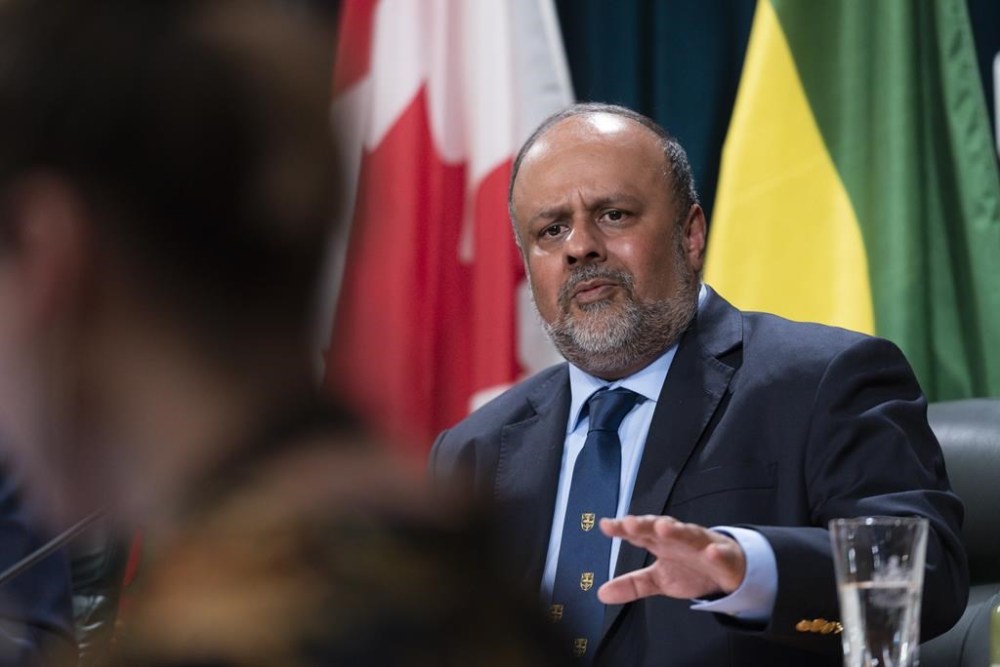
Instead of recommending everyone wear masks in public settings, Shahab said people need to do their own risk assessment and stay home when sick.
He said the flu and respiratory syncytial virus are more prominent in the province, with COVID-19 having hit a plateau.
Saskatchewan’s latest respiratory illness surveillance report shows the influenza test positivity rate is nearly 22 per cent, with RSV having a test positivity of about two per cent.
COVID-19 has a test positivity rate of about 10 per cent, while other respiratory illnesses have a test positivity rate of nearly 32 per cent.
The report says COVID-19 hospitalizations in the province have plateaued since August, with about 176 people being admitted every week.
“We knew that as fall comes, and as we move indoors, we will see the usual respiratory viruses that we always used to see and didn’t see the last couple of years come up,” Shahab said. “Now we have respiratory season plus COVID.”
He said the best way people can prevent the health-care system from getting overburdened is by getting vaccinated against the flu and COVID-19.
Unlike Ontario, where some health-care services have been put on hold, Saskatchewan Minister Health Minister Paul Merriman said so far no procedures have been cancelled due to increased pressures on hospitals.
However, the triple threat of viruseshasaffected schools.
Shahab said absenteeism rates in some classrooms show about 50 to 60 per cent of students out sick, while other classrooms have a lower rate.
“I don’t get concerned when I hear of high absenteeism,” Shahab said. “I’d be more concerned ifthere arelots of viruses going around and there’s low absenteeism because that means kids are going to school sick.”

Shahab said there is no plan to bring back a mask mandate in schools to address the rise in children getting sick, adding that most of the illnesses are mild and can be treated with rest and plenty of fluids.
He said a mask mandate in schools may not be helpful because children are involved in after-school activities, social events and sleepovers — where viruses are known to spread the most in close-knit indoor settings.
“Mandate — it requires everyone wearing masks. I don’t think schools or medical health officers will like to go there,” Shahab said.
“I never say never to anything … but (we’re) probably not going towards a mask mandate at this point.”
This report by The Canadian Press was first published Nov. 15, 2022.
Related Articles
Manitoba not looking at mandating masks: Roussin
Advertisement Advertise With Us
Advertisement Advertise With Us