Panel looks at ways to detect COVID-19 at airports ahead of winter travel season
Advertisement
Read this article for free:
or
Already have an account? Log in here »
To continue reading, please subscribe:
Digital Subscription
One year of digital access for only $1.44 a week*
- Enjoy unlimited reading on winnipegfreepress.com
- Read the E-Edition, our digital replica newspaper
- Access News Break, our award-winning app
- Play interactive puzzles
*Billed as $5.77 plus GST every four weeks. After 52 weeks, price increases to the regular rate of $19.95 plus GST every four weeks. Offer available to new and qualified returning subscribers only. Cancel any time.
To continue reading, please subscribe:
Add Free Press access to your Brandon Sun subscription for only an additional
$1 for the first 4 weeks*
- Enjoy unlimited reading on winnipegfreepress.com
- Read the E-Edition, our digital replica newspaper
- Access News Break, our award-winning app
- Play interactive puzzles
*Your next Brandon Sun subscription payment will increase by $1.00 and you will be charged $17.95 plus GST for four weeks. After four weeks, your payment will increase to $24.95 plus GST every four weeks.
Read unlimited articles for free today:
or
Already have an account? Log in here »
Hey there, time traveller!
This article was published 09/11/2022 (1454 days ago), so information in it may no longer be current.
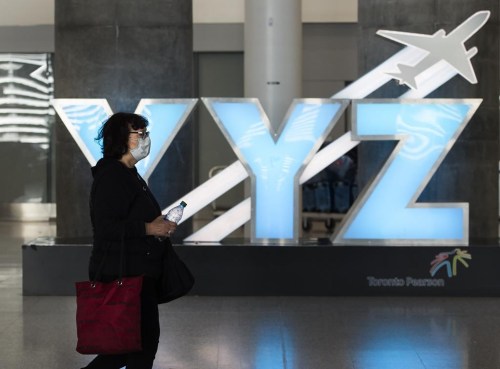
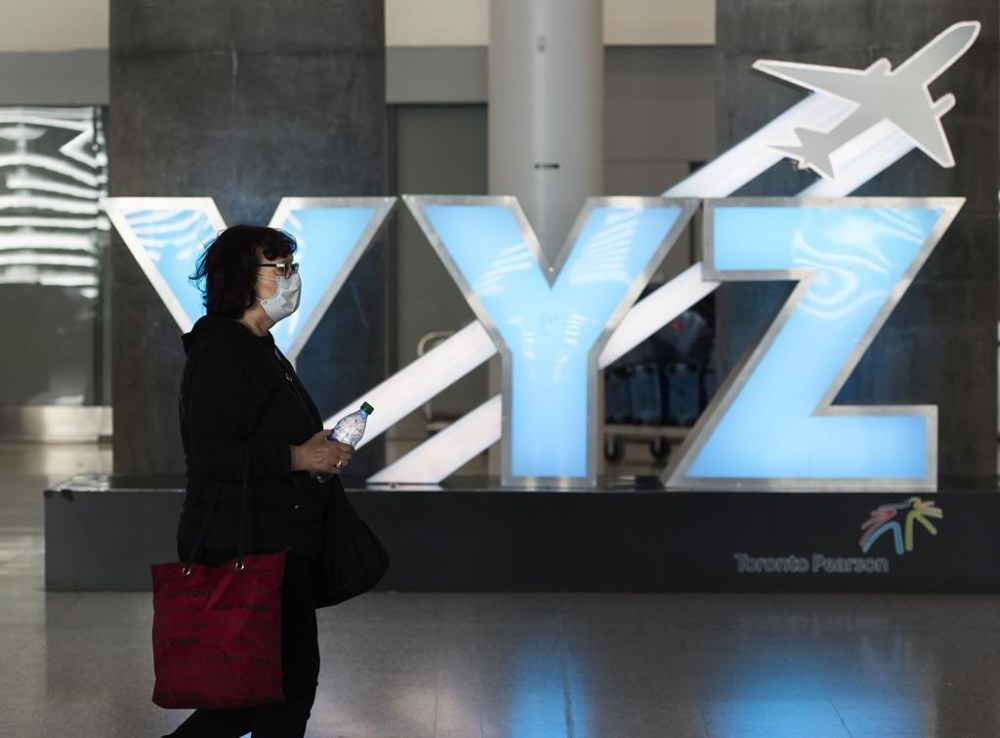
TORONTO – As the busy winter travel season approaches, researchers are looking to use artificial intelligence and surveillance technologies at Canada’s airports to help curb the spread of COVID-19.
Nearly six weeks ago, the Canadian government lifted pandemic travel restrictions, removing vaccine and mask mandates.
However, as flu season begins to ramp up and the BQ1.1 variant of COVID-19 spreads, the question of how to limit transmission throughout airports remains as the holiday travel season nears.
The Innovation Economy Council attempts to answer this question in its latest report and discussed its findings at a panel Wednesday.
Members of the panel spoke about the use of wastewater surveillance to rapidly test for viruses, including the BQ 1.1 variant and monkeypox.
Wastewater detection has become a key way to track the spread of COVID-19 over the course of the pandemic and has been underway as part of a trial program by the Greater Toronto Airports Authority (GTAA) since January.
The pilot project collects sewage samples from planes that land at Pearson International Airport to help experts look for new strains of COVID-19, identifying the spread earlier than with traditional testing.
One of the biggest benefits of wastewater surveillance is that it is economical and it can test for specific variants of COVID-19, said Robert Delatolla, a University of Ottawa environmental engineering professor.
At the panel, Dwayne Macintosh, director of safety and security for Pearson, also discussed Spotlight 19, a technology that uses infrared light through the fingertip to tell whether someone is infected with COVID-19.
Spotlight 19, developed by ISBRG, a Toronto-based data analytics company, is still awaiting approval from Health Canada and would be used if mandatory COVID-19 testing were to return, said the GTAA.

“Imagine being able to test for COVID-19 and finding a result within 10 to 20 seconds,” said Macintosh.
Kamran Kahn, chief executive officer of BlueDot, said in the report that any new approaches to detecting or monitoring for COVID-19 or other microbes must be closely and constantly assessed to ensure the ends justify the means.
He said that measures are easy to take, but tougher to abandon.
Ultimately it will take a layered approach from physical distancing to continued research into solutions to prevent the continued spread of viruses like COVID-19, said Macintosh.
This report by The Canadian Press was first published Nov. 9, 2022.