Quebec allowing four people per room in care homes, against coroner’s recommendations

Advertisement

Advertise with us

MONTREAL - Quebec's decision allowing long-term care centres to house up to four residents per room will put people at risk without freeing up hospital beds, according to a patients rights advocate.

Read this article for free:


By clicking the button above, an account will be created and you will begin to receive some of our recommended newsletters. You may opt out of any newsletter by visiting your Email and Communication Preferences page or by clicking "unsubscribe" at the bottom of any email.

or

Already have an account? Log in here »

To continue reading, please subscribe:

Digital Subscription

One year of digital access for only $1.44 a week*

  • Enjoy unlimited reading on winnipegfreepress.com
  • Read the E-Edition, our digital replica newspaper
  • Access News Break, our award-winning app
  • Play interactive puzzles

*Billed as $5.77 plus GST every four weeks. After 52 weeks, price increases to the regular rate of $19.95 plus GST every four weeks. Offer available to new and qualified returning subscribers only. Cancel any time.

To continue reading, please subscribe:

Add Free Press access to your Brandon Sun subscription for only an additional

$1 for the first 4 weeks*

  • Enjoy unlimited reading on winnipegfreepress.com
  • Read the E-Edition, our digital replica newspaper
  • Access News Break, our award-winning app
  • Play interactive puzzles
Start now

*Your next Brandon Sun subscription payment will increase by $1.00 and you will be charged $17.95 plus GST for four weeks. After four weeks, your payment will increase to $24.95 plus GST every four weeks.

Hey there, time traveller!
This article was published 22/08/2022 (1534 days ago), so information in it may no longer be current.

MONTREAL – Quebec’s decision allowing long-term care centres to house up to four residents per room will put people at risk without freeing up hospital beds, according to a patients rights advocate.

The Health Department’s new directive is meant to reduce long-term care wait lists and ease pressure on hospitals. But Paul Brunet, president of the Conseil pour la protection des malades, says housing up to four residents per room will increase their risk of catching COVID-19 and other diseases, such as C. difficile, and he says it would make it more likely that residents would need to be hospitalized.

As well, he says he’s worried COVID-19 outbreaks will lead to a rise in lockdowns of long-term care homes.
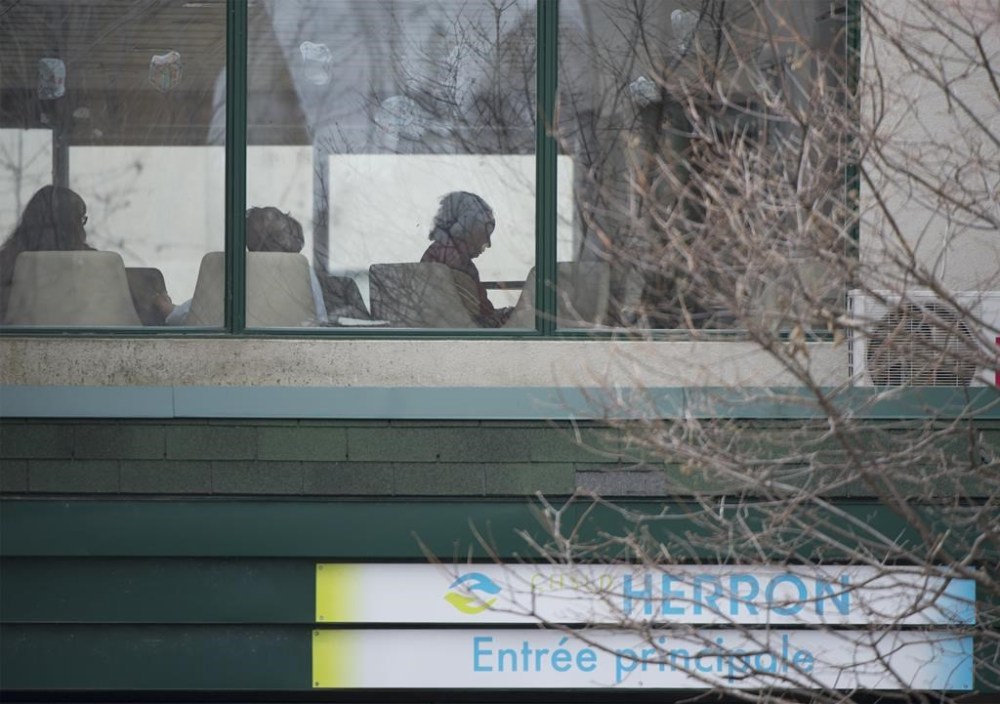
People are shown inside Maison Herron, a long-term care home in the Montreal suburb of Dorval, Que., on Saturday, April 11, 2020. Quebec's Health Department is allowing long-term care centres to house up to four residents in the same room, against the recommendations of a coroner’s investigation into COVID-19 deaths in care homes. THE CANADIAN PRESS/Graham Hughes

“We’re going to lose people with different infections and we’re going to lose them psychologically because we’re going to go back to isolation, which was a tragedy for a lot of elders,” he said in an interview Monday.

In a July 21 letter to long-term care facilities, the Health Department told managers they could reopen beds that were closed during the COVID-19 pandemic — as an “exceptional” measure — in rooms that have sufficient space and contain a washroom.

Dr. Sophie Zhang, who co-chairs an association of doctors who practise in long-term care centres, said that Quebec has been encouraging care homes to transform rooms with three or four patients to single or double occupancy since 2017. She said she hasn’t heard of any long-term care facilities housing more than two people in a room since the beginning of the pandemic.

While she said most local long-term care centre managers have not started reopening rooms to more than two people, the new directive comes with risks.

“There are several studies on long-term care that have shown that it’s associated with increased infection rates,” she said in an interview Monday. “That’s definitely the biggest risk, but there’s also obviously other issues.”

Having more than one person in a room reduces privacy and makes it difficult for loved ones and caregivers to visit, said Zhang, who also oversees long-term care centres at a regional health authority in Montreal.

Zhang said she’s hopeful the measure will be temporary, adding that the policy increases the risk of COVID-19 outbreaks in long-term care centres, which would further exacerbate the shortage of staff at those facilities.

The directive goes against recommendations made last spring by coroner Géhane Kamel, who investigated the high death toll in the province’s long-term care homes during the first wave of the pandemic. Kamel said in her final report that Quebec should ensure that residential-care facilities are able to offer single rooms to patients to prevent the transmission of COVID-19 and other diseases.

Brunet says the Health Department’s new policy is also in conflict with national standards and with recommendations made by the province’s public health department more than a decade ago. Both called for long-term care homes to have single-occupancy rooms.

Jean-Charles Del Duchetto, a spokesman for the province’s seniors minister, said Monday that almost 4,300 people are waiting for spots in long-term care facilities. Many of those people are waiting in hospitals, he said.

“We have to allow these people to receive the care and services that they need,” he wrote in an email. “(Long-term care centres) are better suited than hospitals in this regard. While this is not ideal, the reopening of multiple-occupancy rooms … under certain conditions is an avenue to consider under the circumstances.”

Del Duchetto said the Quebec government is working to eliminate multiple-occupancy rooms in long-term care centres, but he said that will take time. About 2,600 additional beds will be added to the system this fall, he said.

Brunet said many seniors who are in Quebec hospitals could be treated at home if the province put more resources into home care. “You have not solved the problem of patients going to the hospital and packing the emergency wards because they have no other alternatives.”

The Health Department said the policy is a temporary measure. In the letter to long-term care managers, the department said the policy will be in effect until it is superseded by a new directive.

This report by The Canadian Press was first published Aug. 22, 2022.

Report Error Submit a Tip

More Stories

Fact Check

1 minute read Thursday, Nov. 30, 2023

Fact Check

Having problems with the form?Contact Us Directly |

NDP should heed own advice, bring back 50-50 funding

Mark Hudson 5 minute read 2:01 AM EST

Transit riders have a love-hate relationship with our “people’s limousine.” For many, it’s their only means of mobility. Others ride because they believe urban life is better when people use public transit rather than choking the roads with single-occupancy cars.

At the same time, one of life’s mid-sized stressors is peering into the distance on a cold, snowy Winnipeg morning to see whether your late bus is yet on the horizon and, when it appears, whether it’s full to capacity and going to roll past. It’s the kind of thing that pushes you back into the car, if you have access to one.

We could make a big dent in this daily anxiety, help pay transit workers fairly and do our part to stave off climate disaster by restoring a tried-and-true funding scheme: the 50-50 model. This shared-cost model, in which the provincial government pays half of transit operating costs over and above service revenues, was brought in when I was a kid waiting to board the bus with my parents in the 1970s.

The Progressive Conservative government of Gary Filmon initially ditched it in 1993. New Democrats reinstalled it in 2007, with then-Lt.-Gov. John Harvard announcing in the 2006 throne speech: “Manitoba is committed to increased provincial funding for transit operating costs in Thompson, Flin Flon, Brandon and Winnipeg, restoring the 50-50 funding partnership that was in place prior to the cutbacks of the 1990s.”

City plans renos, repairs on underused, money-losing office tower next to police HQ

Joyanne Pursaga 4 minute read Preview

City plans renos, repairs on underused, money-losing office tower next to police HQ

Joyanne Pursaga 4 minute read 2:01 AM EST

The city is preparing to repair two floors of the mostly vacant office tower linked to the Winnipeg Police Service headquarters that has cost taxpayers hundreds of thousands of dollars more each year than it earns.

The plan is to renovate the second and third floors of the 11-storey former Canada Post tower at 266 Graham Ave, including some repairs needed to meet current building codes, notes a tendering document seeking a contractor to do the work.

In 2009, the city spent $29 million to buy the Canada Post warehouse and the tower, as part of the scandal-plagued police HQ project. Police now work out of the former warehouse and utilize some space in the tower.

The repair work will include interior demolition, asbestos abatement, several fire safety and smoke detection upgrades and some replacement of partitions, doors, hardware and ceilings. The winning bidder will also complete electrical, mechanical and lighting upgrades.

Read
2:01 AM EST

New artistic director ready to get to work at Sick + Twisted

Ben Waldman 5 minute read Preview

New artistic director ready to get to work at Sick + Twisted

Ben Waldman 5 minute read 2:01 AM EST

After a months-long national search for its next artistic director, Winnipeg’s Sick + Twisted Theatre has found who it’s been looking for in Mandy E. MacLean.

A Maritimer who studied theatre and performance at the University of New Brunswick and at Toronto’s Humber College, MacLean has served in recent years as the artistic and access producer for Toronto’s Crossroads Theatre — a low-barrier, youth-focused company — and as accessibility producer for Ontario’s renowned SummerWorks Festival.

MacLean, who arrived in Winnipeg last month, has long appreciated Sick + Twisted’s core philosophy, developed by former artistic director Debbie Patterson and a strong community of advisers and fellow artists. The company’s overarching goals include changing the way we think about disability in society and to create safe, supportive environments for artists to bring their “full selves” to the work.

MacLean, who was chosen by Sick + Twisted’s selection committee from a field of over 30 applicants, says the new position was intriguing, especially since she worked as an assistant director on the company’s 2025 production of Neither Here nor There, a personal, group-devised exploration of ability and difference that blended mythology, fantasy and reality.

Read
2:01 AM EST

Sarault wins silver medal in 1,000-metre

The Canadian Press 2 minute read Saturday, Feb. 8, 2020

DRESDEN, Germany - Canadian Courtney Sarault won a silver medal in the women's 1,000-metre event at the ISU short track World Cup on Saturday.

Sarault, from Moncton, N.B., took second place with a time of 1:55.143 — finishing behind South Korea's Kim Ji Yoo (1:54.955) and ahead of World Cup overall standings leader Suzanne Schulting of the Netherlands. (1:55.167).

"Going into the final, I didn't feel amazing, but I was trying to stay positive, and hoping to come out of it with a podium," said Sarault.

Meanwhile, Canada's Kim Boutin had her string of podium results come to an end at eight events.

iPhone started fire, Winnipegger says

Kevin Rollason 3 minute read Preview

iPhone started fire, Winnipegger says

Kevin Rollason 3 minute read Tuesday, Nov. 26, 2019

The iPhone has long been a hot item, but for one Winnipeg family, it got too hot.

Wally Hill says earlier this month, he, along with his wife and daughter, were watching television, with his daughter's iPhone 6 sitting unplugged on the cushion between them, when the smartphone set the couch on fire.

"It was frightening," Hill said. "It didn't explode... it fizzled and popped open at the back, and then smoke and flames came out the back. It then ignited the cushion."

Hill said he quickly picked up the entire couch cushion, with the burning phone still on it, to move the device to a tile floor in his residence.

Read
Tuesday, Nov. 26, 2019