Wastewater monkeypox testing underway across Canada

Advertisement
Read this article for free:
or
Already have an account? Log in here »
To continue reading, please subscribe:
Digital Subscription
One year of digital access for only $1.44 a week*
- Enjoy unlimited reading on winnipegfreepress.com
- Read the E-Edition, our digital replica newspaper
- Access News Break, our award-winning app
- Play interactive puzzles
*Billed as $5.77 plus GST every four weeks. After 52 weeks, price increases to the regular rate of $19.95 plus GST every four weeks. Offer available to new and qualified returning subscribers only. Cancel any time.
To continue reading, please subscribe:
Add Free Press access to your Brandon Sun subscription for only an additional
$1 for the first 4 weeks*
- Enjoy unlimited reading on winnipegfreepress.com
- Read the E-Edition, our digital replica newspaper
- Access News Break, our award-winning app
- Play interactive puzzles
*Your next Brandon Sun subscription payment will increase by $1.00 and you will be charged $17.95 plus GST for four weeks. After four weeks, your payment will increase to $24.95 plus GST every four weeks.
Read unlimited articles for free today:
or
Already have an account? Log in here »
Hey there, time traveller!
This article was published 15/08/2022 (1530 days ago), so information in it may no longer be current.
Wastewater testing to detect the monkeypox virus has begun in Winnipeg and 12 other Canadian cities as scientists work to determine how accurate the tests are.
Three types of tests, including one developed in Winnipeg at the National Microbiology Lab, are now being used to measure rates of monkeypox in municipal wastewater, the Public Health Agency of Canada confirmed. The Canadian-developed test could make genomic sequencing easier, meaning if the test is accurate, it would make it much simpler to detect the monkeypox virus in sewage.
The evaluation of the test is nearly complete, a PHAC spokesperson stated.

MIKE DEAL / FREE PRESS FILES
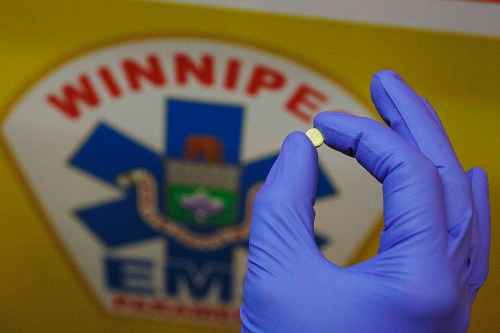
Three types of tests, including one developed in Winnipeg at the National Microbiology Lab, are now being used to measure rates of monkeypox in municipal wastewater, the Public Health Agency of Canada confirmed.
“It is unique because it allows for easy genomic sequence confirmation. This means that it may be easier to verify if the monkeypox virus is present in a community,” the statement reads.
“Since the NML test is new, more information will be available once scientists have confirmed its accuracy. However, early data demonstrates that the NML test (as well as the externally developed tests) are generating positive results in the wastewater of communities where there are known monkeypox cases. NML scientists are also taking the previously confirmed tests and comparing them against a family of orthopoxvirus (the group of viruses to which monkeypox belongs to). At this time, the previously confirmed tests are successfully demonstrating they can detect the monkeypox virus.”
Using wastewater to monitor levels of monkeypox is new, and scientists around the world are still working on setting standards for this kind of analysis. The surveillance of COVID-19 levels in wastewater paved the way for monitoring other viruses. A global outbreak of monkeypox, which causes rash and flu-like symptoms, is ongoing. No cases have been detected in Manitoba.
The public-health agency has also recently announced plans to use wastewater surveillance to track levels of polio in Canada, as is being done in the U.K. and in the U.S., even though it’s been nearly 20 years since a case of polio was recorded in Canada. Canada’s chief public health officer, Dr. Theresa Tam, said on Aug. 12 that the public health agency has been looking into using wastewater to track antimicrobial resistant organisms and monitor the growth of bacteria that don’t respond to antibiotics.

“That is a key area of exploration as well, going forwards,” Tam said.
katie.may@winnipegfreepress.com
Katie May is a general-assignment reporter for the Free Press.
Our newsroom depends on a growing audience of readers to power our journalism. If you are not a paid reader, please consider becoming a subscriber.
Our newsroom depends on its audience of readers to power our journalism. Thank you for your support.
Advertisement Advertise With Us
Advertisement Advertise With Us