Wartime birth amid the air raid sirens in Ukraine hospital

Advertisement

Advertise with us

LVIV, Ukraine (AP) — It's easy to tell the delivery room from the rest of the main maternity hospital in Ukraine’s western city of Lviv, even from the outside. Its exterior wall is piled high with sandbags.

Read this article for free:


By clicking the button above, an account will be created and you will begin to receive some of our recommended newsletters. You may opt out of any newsletter by visiting your Email and Communication Preferences page or by clicking "unsubscribe" at the bottom of any email.

or

Already have an account? Log in here »

To continue reading, please subscribe:

Digital Subscription

One year of digital access for only $1.44 a week*

  • Enjoy unlimited reading on winnipegfreepress.com
  • Read the E-Edition, our digital replica newspaper
  • Access News Break, our award-winning app
  • Play interactive puzzles

*Billed as $5.77 plus GST every four weeks. After 52 weeks, price increases to the regular rate of $19.95 plus GST every four weeks. Offer available to new and qualified returning subscribers only. Cancel any time.

To continue reading, please subscribe:

Add Free Press access to your Brandon Sun subscription for only an additional

$1 for the first 4 weeks*

  • Enjoy unlimited reading on winnipegfreepress.com
  • Read the E-Edition, our digital replica newspaper
  • Access News Break, our award-winning app
  • Play interactive puzzles
Start now

*Your next Brandon Sun subscription payment will increase by $1.00 and you will be charged $17.95 plus GST for four weeks. After four weeks, your payment will increase to $24.95 plus GST every four weeks.

Hey there, time traveller!
This article was published 11/05/2022 (1633 days ago), so information in it may no longer be current.

LVIV, Ukraine (AP) — It’s easy to tell the delivery room from the rest of the main maternity hospital in Ukraine’s western city of Lviv, even from the outside. Its exterior wall is piled high with sandbags.

In the dim basement, where heavily pregnant women must bend low to avoid the water pipes, there is a delivery table in case the baby comes amid the air raid sirens.

Stress is part of childbirth, but it’s not meant to be like this.

The Lviv state regional perinatal center, western Ukraine, Friday, April 1, 2022. About 200 pregnant women displaced by Russia's invasion have come to the hospital in Lviv since the war began. More than 100 have given birth. (AP Photo/Nariman El-Mofty)

At least 49 attacks have targeted medical facilities in Ukraine since the Feb. 24 Russian invasion, including a maternity hospital bombed in March in Mariupol, where Associated Press images of a wounded pregnant woman being rushed from the rubble on a stretcher were seen around the world, personifying the horror of the attack on civilians. The woman and her baby later died.

About 200 pregnant women displaced by Russia’s invasion have come to the hospital in Lviv since the war began. More than 100 have given birth, said Maria Malachynska, director of the Lviv state regional perinatal center. They come from some of the communities the world now knows by name: Mariupol, Kharkiv, Donetsk, Kyiv.

“This stress which women have, in times of war, it influences a lot and we see a lot of complications,” Malachynska said.

Lilia Myronovich, who heads the natal department at another hospital, Lviv municipal maternity, said she also has seen more premature births than normal. “The women are stressed,” she said. “Especially ladies who come from other districts.”

One woman from Mariupol at the Lviv state perinatal center cries all the time, traumatized after making it out of the besieged city. “They were starving,” Malachynska said. “We are even helping them with clothes, with prams, because they don’t have anything to give to their children.”

Outside the director’s window, a new shelter was being dug. It will be large enough to hold the incubators needed for babies born prematurely.

Upstairs, expectant mother Kateryna Galmalova fled Mykolaiv, a city now occupied by Russian forces, with her husband as tanks were approaching and after three nights sleeping in the hallway amid explosions.

“I had high blood pressure the first few days from this news” of the war, she said. “Because you don’t understand what to do next, where to go, where and how to give birth.”

She fled Mykolaiv with just her documents, spare underwear and the clothes she wore. She was overwhelmed by the kindness she found in Lviv, where she has no family, she said, and which quickly became a haven for hundreds of thousands of people displaced from more threatened parts of Ukraine.

Suddenly a siren sounded, sending patients and staff to the basement until the alert was lifted half an hour later.

“I do not want children to be born in war,” Galmalova said as she waited underground scrolling through social media on her phone, where she learned of a woman forced to give birth in a bunker. “And I don’t want to give birth in a basement or a bunker. I do not want any child to be born in such a place.”

Another expectant mother, Yana Tananakina, fled from the capital, Kyiv, and wants to return. “Life goes on,” said her husband, Oleksander. “Every war ends. And this one will end, too.” He was so pleasantly surprised by the Lviv maternity hospital that the couple is now considering having their next child there, too.

In a bright and quiet room, Natalya Suhotsha beamed at her newborn twins, Zlata and Sophia. She fled Hostomel, on the outskirts of Kyiv, in the early days of the war when the Russians began to bombard a nearby airport. Her husband gave her five minutes to gather things and go.

She grabbed the baby clothes and little else before escaping to Lviv, where she was born and where her family has a home.

Now, looking at her baby girls makes her forget about the war. She wishes the same happy distraction for every woman.

“We just talk about pretty babies,” the 24-year-old said of her conversations with other displaced new mothers at the hospital. “We don’t talk about the war. Every time you talk about the war, you stress.”

Her mother, a nurse, had promised to be there for the twins’ birth. But she remained in Hostomel as the others fled. Natalya said she hopes to return to her mother soon. Her work in real estate is also waiting.

“My work was about the future,” she said. “It was for new families. And it’s all crushed.”

Now it’s time to rebuild, she said.

___

Associated Press photojournalist Nariman El-Mofty contributed to this report.

——

Follow the AP’s coverage of the war at https://apnews.com/hub/russia-ukraine

Report Error Submit a Tip

More Stories

Security tightens at downtown library

Aldo Santin 5 minute read Preview

Security tightens at downtown library

Aldo Santin 5 minute read Saturday, Feb. 16, 2019

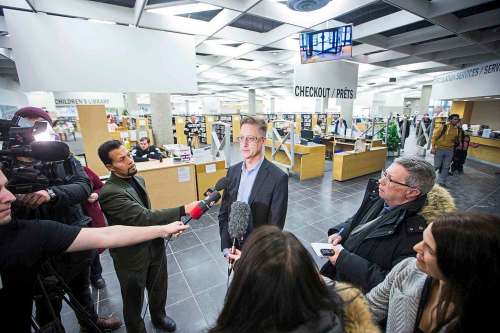
Users of the downtown Millennium Library will be subject to several new security screening measures, more commonly seen at airports and sporting facilities.

City hall announced Friday that effective Feb. 25, all visitors to the Donald Street library will undergo bag checks and be subjected to a hand-held metal detector sweep for alcohol and prohibited weapons. Visitors who refuse to participate will be barred from entering the library.

“The number of incidents (has) increased in the past four to five years, incidences involving violence, threats, alcohol, substance abuse and it was concerning. We met with police and our security contractor. After discussing, we came up with this course of action,” Ed Cuddy, manager of library services, told reporters. “We feel it’s a big change, but we feel it’s justified based on the kind of incidents we’ve been experiencing recently.”

Cuddy wouldn’t elaborate on the nature of the incidents, but did say library workers have not been the victims.

Read
Saturday, Feb. 16, 2019

Is Canada headed for time chaos this weekend?

Michelle Bastian 5 minute read 2:00 AM CDT

When Manitoba Premier Wab Kinew declared Sept. 17 that the province would remain on permanent daylight time, he suggested it was a historical moment people would share with their “great-great-grandkids.” But, while Sunday, Nov. 1 has been heralded as the date many Canadians will stop changing their clocks, there are rumblings behind the scenes suggesting this will actually cause more trouble than ever before.

There are, of course, the warnings from chrono-biologists and sleep scientists about the damage permanent daylight time will do. The lighter evenings will mean many more dark mornings. But there is another set of problems in the offing in the critical infrastructure that underpins our digital lives.

While it used to be common to spend the Sunday morning after a time change going around our homes updating the clocks, we now wake up to devices that have already adjusted to the new time. These automatic updates occur regularly for daylight time, as well as when we travel to new time zones.

Our clocks are able to change by themselves owing to the hard work of a group of volunteers who were recently named in a list of the people who hold up the internet. This group, led by Paul Eggert, a computer scientist at UCLA, maintains a little-known tool called the Time Zone Database. Since the 1980s, it has kept track of regional, national and international debates about clock time and provided an up-to-date table of what time it should be on our walls.

Wife’s witchy wonderment won’t spell trouble

Maureen Scurfield 6 minute read 2:00 AM CDT

DEAR MISS LONELYHEARTS: My wife believes in magic potions, which used to make me laugh. But since Halloween season started this year, she’s been acting in a way that frightens me. She seems to think she’s a modern-day “witch.” Give me a break!

Now she has three friends who think they are really casting spells when they get together! And this year on Halloween night she’s being formally accepted into their little witchy group meeting at one of their homes, and is getting a new sorceress name. It’s creepy! How do I cope? I’ve had enough of this.

— Seriously Upset, South St. Vital

Dear Upset: Don’t buy into the hocus pocus by being afraid of it and expressing any trepidation to your wife. She needs you to be strong, so she knows she has a solid anchor and can drop out of this witchy group if it becomes too scary or silly for her.

Trump touts USMCA win in state of the union

James McCarten, The Canadian Press 6 minute read Preview

Trump touts USMCA win in state of the union

James McCarten, The Canadian Press 6 minute read Tuesday, Feb. 4, 2020

WASHINGTON - President Donald Trump declared his scorched-earth political style an unmitigated success Tuesday in a fiercely partisan, made-for-TV state of the union speech that made it clear he expects to be back in the White House next year on the strength of the U.S. economy and his trade deals with Canada, Mexico and China.

Trump, addressing a joint session of Congress in the very chamber where House Democrats voted to impeach him less than two months ago, became only the second president in American history — Bill Clinton was the first — to deliver a state of the union while standing trial in the Senate.

Unrepentant, he pointedly refused to shake the offered hand of House Speaker Nancy Pelosi on the dais before singing the praises of what he billed as "the great American comeback," pointing to strong job growth, a soaring stock market and low unemployment as evidence of his leadership. And when he was done, Pelosi ripped up the speech in full view of the television cameras.

"America's enemies are on the run, America's fortunes are on the rise, and America's future is blazing bright. The years of economic decay are over," Trump declared, taking full credit for the country's "roaring economy," including what he billed as seven million new jobs and the lowest jobless rate in half a century — a "blue-collar boom" that he's counting on to help his re-election chances in November.

Read
Tuesday, Feb. 4, 2020

Shooting, stand off net nine year prison sentence

Dean Pritchard 4 minute read Preview

Shooting, stand off net nine year prison sentence

Dean Pritchard 4 minute read 2:00 AM CDT

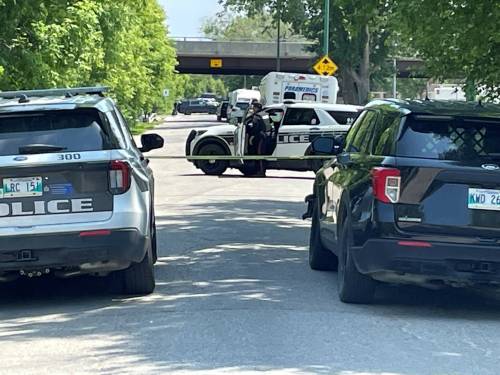
Daniel Larsen had been out of prison just five days when he shot up a Point Douglas house and sparked a 10-hour armed standoff with police that shut down a portion of the Disraeli Freeway.

Larsen, sentenced last week to nine years in prison, believed residents of the Grove Street home had sold fentanyl to his son, court heard.

“The speed with which Mr. Larsen was able to obtain a firearm, formulate a plan and become criminally involved is… horrifying from a public safety standpoint,” Crown attorney Amy Wood told provincial court Judge Malcolm McDonald.

Larsen, 37, pleaded guilty to reckless discharge of a firearm for the June 14, 2025, incident and two related weapons offences.

Read
2:00 AM CDT

Must-see Folk Fest workshops

16 minute read Preview

Must-see Folk Fest workshops

16 minute read Thursday, Jul. 5, 2018

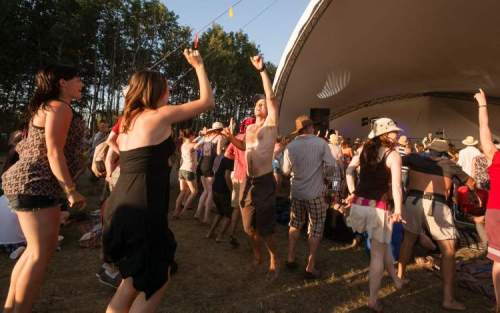
Workshops have always been an integral part of the Winnipeg Folk Festival.

They are magic-moment makers; a curated group of musicians — sometimes friends, sometimes strangers — on one stage playing together, supporting each other, creating something that will only exist for an hour or two. No one knows what will come out of the collaboration, but usually it’s something special.

When the Free Press spoke to Winnipeg Folk Festival artistic director Chris Frayer ahead of the lineup release in early March, he noted he would be paying some extra attention to workshops this year, as some of the special projects occurring during the past couple of festivals had pulled some of his attention away.

And with 37 workshops on the books, it would seem he followed through on his promise.

Read
Thursday, Jul. 5, 2018