With abortion in jeopardy, minority women have most to lose

Advertisement

Advertise with us

JACKSON, Miss. (AP) — If you are Black or Hispanic in a conservative state that already limits access to abortions, you are far more likely than a white woman to have one.

Read this article for free:


By clicking the button above, an account will be created and you will begin to receive some of our recommended newsletters. You may opt out of any newsletter by visiting your Email and Communication Preferences page or by clicking "unsubscribe" at the bottom of any email.

or

Already have an account? Log in here »

To continue reading, please subscribe:

Digital Subscription

One year of digital access for only $1.44 a week*

  • Enjoy unlimited reading on winnipegfreepress.com
  • Read the E-Edition, our digital replica newspaper
  • Access News Break, our award-winning app
  • Play interactive puzzles

*Billed as $5.77 plus GST every four weeks. After 52 weeks, price increases to the regular rate of $19.95 plus GST every four weeks. Offer available to new and qualified returning subscribers only. Cancel any time.

To continue reading, please subscribe:

Add Free Press access to your Brandon Sun subscription for only an additional

$1 for the first 4 weeks*

  • Enjoy unlimited reading on winnipegfreepress.com
  • Read the E-Edition, our digital replica newspaper
  • Access News Break, our award-winning app
  • Play interactive puzzles
Start now

*Your next Brandon Sun subscription payment will increase by $1.00 and you will be charged $17.95 plus GST for four weeks. After four weeks, your payment will increase to $24.95 plus GST every four weeks.

Hey there, time traveller!
This article was published 04/05/2022 (1640 days ago), so information in it may no longer be current.

JACKSON, Miss. (AP) — If you are Black or Hispanic in a conservative state that already limits access to abortions, you are far more likely than a white woman to have one.

And if the U.S. Supreme Court allows states to further restrict or even ban abortions, minority women who already face limited access to health care will bear the brunt of it, according to statistics analyzed by The Associated Press.

The potential impact on minority women became all the more clear on Monday with the leak of a draft Supreme Court opinion suggesting the court’s conservative majority is poised to overturn the landmark 1973 decision legalizing abortion.

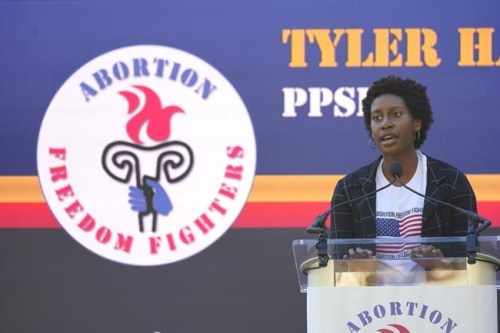
FILE - The Mississippi director for Planned Parenthood Southeast, Tyler Harden, tells an audience of reproductive rights supporters that efforts to limit abortion access are
FILE - The Mississippi director for Planned Parenthood Southeast, Tyler Harden, tells an audience of reproductive rights supporters that efforts to limit abortion access are "just another form of oppression" for women of color, at a rally in Smith Park Jackson, Miss., on Dec. 1, 2021. (AP Photo/Rogelio V. Solis, File)

___

EDITOR’S NOTE — This is an updated version of a story released earlier this year.

___

When it comes to the effect on minority women, the numbers are unambiguous. In Mississippi, people of color comprise 44% of the population but 81% of women receiving abortions, according to the Kaiser Family Foundation, which tracks health statistics.

In Texas, they’re 59% of the population and 74% of those receiving abortions. The numbers in Alabama are 35% and 69%. In Louisiana, people of color represent 42% of the population, according to the state Health Department, and about 72% of those receiving abortions.

“Abortion restrictions are racist,” said Cathy Torres, an organizing manager with Frontera Fund, a Texas organization that helps women pay for abortions. “They directly impact people of color, Black, brown, Indigenous people … people who are trying to make ends meet.”

FILE - Mississippi Republican Attorney General Lynn Fitch speaks to an audience in Philadelphia, Miss., on July 29, 2021. Fitch supports abortion restrictions, including the state law that would ban most abortions after 15 weeks — the one the state used before the United States Supreme Court, to challenge Roe v. Wade. If you are Black or Hispanic in a state that already limits access to abortions, you are far more likely than a white woman to have one. And according to statistics analyzed by The Associated Press, if the U.S. Supreme Court allows states to further restrict or even ban abortions, minority women will bear the brunt of it. (AP Photo/Rogelio V. Solis, File)

Why the great disparities? Laurie Bertram Roberts, executive director of the Alabama-based Yellowhammer Fund, which provides financial support for women seeking abortion, said women of color in states with restrictive abortion laws often have limited access to health care and a lack of choices for effective birth control. Schools often have ineffective or inadequate sex education.

If abortions are outlawed, those same women — often poor — will likely have the hardest time traveling to distant parts of the country to terminate pregnancies or raising children they might struggle to afford, said Roberts, who is Black and once volunteered at Mississippi’s only abortion clinic.

“We’re talking about folks who are already marginalized,” Roberts said.

Regardless of what legislators say, Torres insisted, the intent is to target women of color, to control their bodies: “They know who these restrictions are going to affect. They know that, but they don’t care.”

But Andy Gipson, a former member of the Mississippi Legislature who is now the state’s agriculture and commerce commissioner, said race had nothing to do with passage of Mississippi’s law against abortion after the 15th week, which is now before the Supreme Court.

“It’s about saving lives of the unborn and the lives and health of the mother, regardless of what color they are,” said Gipson, a white Republican who is also a Baptist minister.

FILE - State Rep. Zakiya Summers, D-Jackson, speaks in the House Chamber at the Capitol in Jackson, Miss., on March 30, 2021. Summers, a mother herself, said it would be a
FILE - State Rep. Zakiya Summers, D-Jackson, speaks in the House Chamber at the Capitol in Jackson, Miss., on March 30, 2021. Summers, a mother herself, said it would be a "travesty for women," especially for low-income women of color, if access to legal abortion were to disappear. (AP Photo/Rogelio V. Solis, File)

To those who say that forcing women to have babies will subject them to hardships, Mississippi Attorney General Lynn Fitch, a white Republican, said it is “easier for working mothers to balance professional success and family life” than it was 49 years ago when Roe was decided.

Fitch, who is divorced, often points to her own experience of working outside the home while raising three children. But Fitch grew up in an affluent family and has worked in the legal profession — both factors that can give working women the means and the flexibility to get help raising children.

That’s not the case for many minority women in Mississippi or elsewhere. Advocates say in many places where abortion services are being curtailed, there’s little support for women who carry a baby to term.

Across the country, U.S. Census Bureau information analyzed by the AP shows fewer Black and Hispanic women have health insurance, especially in states with tight abortion restrictions. For example, in Texas, Mississippi and Georgia, at least 16% of Black women and 36% of Latinas were uninsured in 2019, some of the highest such rates in the country.

Problems are compounded in states without effective education programs about reproduction. Mississippi law says sex education in public schools must emphasize abstinence to avoid pregnancy and sexually transmitted diseases. Discussion of abortion is forbidden, and instructors may not demonstrate how to use condoms or other contraception.

The Mississippi director for Planned Parenthood Southeast, Tyler Harden, is a 26-year-old Black woman who had an abortion about five years ago, an experience that drove her to a career supporting pregnant women and preserving abortion rights.

FILE - Getty Israel stands in the Sisters in Birth clinic in Jackson, Miss., on Dec. 17, 2021. Israel, founder of the clinic that serves pregnant women, believes if lawmakers want to prevent abortions, they should eliminate risk factors that lead women to end pregnancies — low-wage jobs and lack of access to healthcare, higher education and transportation. (AP Photo/Rogelio V. Solis, File)

She said when she was attending public school in rural Mississippi, she didn’t learn about birth control. When she became pregnant at 21, she knew she wanted an abortion. Her mother was battling cancer and Harden was in her last semester of college without a job or a place to live after graduation.

She said she was made to feel fear and shame, just as she had during sex ed classes. When she went to the clinic, she said protesters told her she was “‘killing the most precious gift’” from God and that she was ”`killing a Black baby, playing into what white supremacists want.’”

Tanya Britton, a former president of Pro-Life Mississippi, often drives three hours from her home in the northern part of the state to pray outside the abortion clinic in Jackson. Britton is Black, and she said it’s a tragedy that the number of Black babies aborted since Roe would equal the population of several large cities. She also said people are too casual about terminating pregnancies.

“You just can’t take the life of someone because this is not convenient — ‘I want to finish my education,’” Britton said. “You wouldn’t kill your 2-year-old because you were in graduate school.”

But state Rep. Zakiya Summers of Jackson, who is Black and a mother, suggested there’s nothing casual about what poor women are doing. Receiving little support, they sometimes must make hard decisions.

“Women are just out here trying to survive, you know?” she said. “And Mississippi doesn’t make it any easier.”

FILE - The Jackson Women's Health Organization clinic, a state-licensed abortion clinic in Jackson, Miss., is seen on May 19, 2021. Also known as
FILE - The Jackson Women's Health Organization clinic, a state-licensed abortion clinic in Jackson, Miss., is seen on May 19, 2021. Also known as "The Pink House," it is shrouded with a black tarp so that its clients may enter in privacy. If you are Black or Hispanic in a state that already limits access to abortions, you are far more likely than a white woman to have one. And according to statistics analyzed by The Associated Press, if the U.S. Supreme Court allows states to further restrict or even ban abortions, minority women will bear the brunt of it. (AP Photo/Rogelio V. Solis, File)

____

Associated Press reporters Noreen Nasir in Jackson, Mississippi, and Jasen Lo in Chicago contributed to this report.

Report Error Submit a Tip

More Stories

Notable quotes from 2020 Tokyo Olympics

The Canadian Press 4 minute read Sunday, Jul. 25, 2021

Correctional Services Canada is reopening prison farms. But in B.C., where it has no such programs, a wife and her late husband, who killed a man in a botched holdup, started Emma’s Acres, a unique prison farm she hopes to see expanded.

Three’s company for new netminder Daws

Mike McIntyre 7 minute read Preview

Three’s company for new netminder Daws

Mike McIntyre 7 minute read Yesterday at 5:09 PM CDT

TAMPA — Nico Daws is still trying to catch his breath.

An unexpected piece of the Connor Hellebuyck blockbuster. A chaotic crash course in his latest hockey home. Joining a fragile club mired in a prolonged losing streak. And now, hitting the road for four tough tests, including one where he will find himself as the last line of defence.

It’s been quite the ride for the newest Winnipeg Jets netminder, who took some time Thursday morning to reflect on the experience.

“A whirlwind of a week. I haven’t even really had time to sit down and digest it,” said Daws.

Read
Yesterday at 5:09 PM CDT

Cabbie, passenger dead after Salter Street collision

Free Press staff 2 minute read Preview

Cabbie, passenger dead after Salter Street collision

Free Press staff 2 minute read Updated: Yesterday at 5:46 PM CDT

Two men died in a Wednesday morning collision between a taxi and a sedan on Salter Street near Aberdeen Avenue, police said Thursday.

Winnipeg Police Service officers were sent to the intersection at about 6:30 a.m., where they found the cab driver, a man in his 40s, and his passenger, a man in his 50s, in critical condition. Paramedics took the men to hospital, where they later died.

The sedan driver, a woman in her late teens, and an adult passenger, had minor injuries.

Traffic investigators believe the sedan was travelling west on Aberdeen when it collided with the cab that was southbound on Salter.

Read
Updated: Yesterday at 5:46 PM CDT

Brian Bowman wins mayoral battle

Aldo Santin and Mary Agnes Welch 6 minute read Preview

Brian Bowman wins mayoral battle

Aldo Santin and Mary Agnes Welch 6 minute read Thursday, Oct. 23, 2014

In the end, it wasn’t even close.

A mayoral race that was supposed to be a head-to-head battle between privacy lawyer Brian Bowman and former NDP MP and MLA Judy Wasylycia-Leis turned into a rout on election night. Wasylycia-Leis, the experienced politician, had held what looked like an unassailable lead for months, but Bowman, the outsider who promised Winnipeggers a better, prosperous future, chipped doggedly away at it.

“I’m excited to tell you that positive change is coming to city hall,” Bowman told roaring supporters at the Inn At The Forks after making his way into the small ballroom accompanied by his wife and two young sons.

He said he hadn’t expecting such a landslide victory, but had believed that the campaign was building momentum.

Read
Thursday, Oct. 23, 2014

Two government bills left on table as NDP ends third year of term

Carol Sanders 4 minute read Preview

Two government bills left on table as NDP ends third year of term

Carol Sanders 4 minute read Yesterday at 6:59 PM CDT

Year 3 of the NDP government’s four-year mandate ended Thursday with more than 50 bills expected to become law and two that didn’t make it to the finish line.

“We’re on the final stages of passing 52 amazing bills,” government house leader Nahanni Fontaine said after the final question period of the 43rd legislature.

Most were passed before the house rose for the summer break, including getting rid of the provincial sales tax on pop, chips and packaged foods that took effect July 1. A handful of health-care bills that aim to restrict mandatory overtime, create a patient safety charter, establish nurse-to-patient ratios and do away with sick-note requirements for employees — unless they miss more than seven consecutive days or 10 in a year — were also passed.

Under rules of the legislature, the Progressive Conservatives held back three government bills until the fall session to allow for further debate before passage by the NDP majority Thursday. The most contentious was Bill 13, the Residential Tenancies Amendment Act, that aims to strengthen renter protections and increase maximum fines for landlords in breach of the act.

Read
Yesterday at 6:59 PM CDT

With abortion in jeopardy, minority women have most to lose

Emily Wagster Pettus And Leah Willingham, The Associated Press 8 minute read Preview

With abortion in jeopardy, minority women have most to lose

Emily Wagster Pettus And Leah Willingham, The Associated Press 8 minute read Wednesday, May. 4, 2022

Toronto didn’t just beat Tampa Bay on the ice — they beat them in the alley as well, Dave Feschuk writes. But expect the defending champs to come out swinging on Wednesday.

Read
Wednesday, May. 4, 2022