Biden seeks $10B for aid to Ukraine, $22.5B for coronavirus

Advertisement

Advertise with us

The Biden administration is seeking another $10 billion to help protect Ukraine against the Russian invasion and $22.5 billion more to cover pandemic-related expenses, two major additions to budget talks already underway.

Read this article for free:


or

Already have an account? Log in here »

To continue reading, please subscribe:

Subscribe and receive a limited-edition Free Press branded hat or tote.

Digital Subscription

One year of digital access for only $205*

  • Enjoy unlimited reading on winnipegfreepress.com
  • Read the E-Edition, our digital replica newspaper
  • Access News Break, our award-winning app
  • Play interactive puzzles

*First annual payment billed as $205.00 + GST for one year. This annual subscription will automatically renew at $233.00 + GST every 52 weeks (10% off the regular annual price of $259.35). Offer available to new and qualified returning subscribers only. Cancel any time.

To continue reading, please subscribe:

Add Free Press access to your Brandon Sun subscription for only an additional

$1 for the first 4 weeks*

  • Enjoy unlimited reading on winnipegfreepress.com
  • Read the E-Edition, our digital replica newspaper
  • Access News Break, our award-winning app
  • Play interactive puzzles
Start now

*Your next Brandon Sun subscription payment will increase by $1.00 and you will be charged $17.95 plus GST for four weeks. After four weeks, your payment will increase to $24.95 plus GST every four weeks.

Hey there, time traveller!
This article was published 03/03/2022 (1676 days ago), so information in it may no longer be current.

The Biden administration is seeking another $10 billion to help protect Ukraine against the Russian invasion and $22.5 billion more to cover pandemic-related expenses, two major additions to budget talks already underway.

The acting director of the White House Office of Management and Budget, Shalanda Young, laid out the requests for the supplemental funding in a Thursday blog post. They would be additions to a planned budget agreement that Congress is trying to finish before a March 11 deadline.

Young said in the blog post that the money was urgently needed. The $10 billion to Ukraine would be a rapid escalation of the $1.4 billion provided by the United States since 2021, a reflection of the crisis caused by the Russian offensive that began last month. Young said the money would cover “additional humanitarian, security and economic assistance in Ukraine and the neighboring region in the coming days and weeks.”

Last week, Biden administration officials told congressional aides that their requests would include $3.5 billion for the Pentagon and $2.9 billion for humanitarian aid as Russia’s invasion has caused more than a million Ukrainian refugees to flee their country.

The $22.5 billion tied to the coronavirus would pay for testing, treatments and vaccines as well as investments in research and efforts to increase vaccinations worldwide. There had been expectations that the request was going to be for as much as $30 billion, after lawmakers and the Biden and Trump administrations previously committed a combined $5.8 trillion on the pandemic, according to the nonpartisan Committee for a Responsible Federal Budget.

The requested Ukraine assistance seems sure to win broad bipartisan support in Congress, and the proposed additional COVID-19 spending has won strong backing from Democrats.

“The $22 billion for COVID is absolutely necessary. In fact we’ll probably need more,” said House Speaker Nancy Pelosi, D-Calif.

“To keep schools open, to keep life as normal as it can be, we need additional COVID investments now, not after a possible new variant arrives,” Senate Majority Leader Chuck Schumer, D-N.Y., said Wednesday.

Republicans have balked at the request for added COVID-19 funds. But if that money is included in a single, mammoth package also financing government agencies and helping Ukraine and NATO allies, that would be a tough bill to vote against.

Sen. Mitt Romney, R-Utah, and 35 other GOP senators wrote Biden on Tuesday that before supporting new money, they want “a full accounting” of how the government has spent funds already provided.

The COVID-19 relief bills enacted since the pandemic began have contained $370 billion for public health programs including vaccines and other medical supplies, testing, research and reimbursing providers, according to a Department of Health and Human Services table obtained by The Associated Press.

Of that amount, $355 billion is currently being spent, has been spent or has been committed to contracts, the charts state.

Those tables have been distributed to many members of Congress from both parties, said an administration official. But Romney tweeted Wednesday that he remains “eager to receive” details of the COVID money.

White House COVID-19 coordinator Jeff Zients said on a call with reporters on Wednesday that the plan to address the pandemic is “robust and comprehensive,” which is why it requires additional funding for immediate and longer-term priorities.

The federal government spent $6.8 trillion last fiscal year, due in large part to the emergency measures tied to the coronavirus that included President Joe Biden’s $1.9 trillion relief package. Before the COVID-19 pandemic, the federal budget was about $4.4 trillion, according to the Congressional Budget Office.

___

AP reporter Alan Fram contributed to this report.

Report Error Submit a Tip

More Stories

Letters, Oct. 20

6 minute read Monday, Oct. 20, 2025

Stefanson’s legacy

Re: Is Stefanson’s fine fitting punishment? (Editorial, Oct. 17)

It’s appropriate to thank outgoing politicians for their service. For many reasons, my thanks to former premier Heather Stefanson are highly qualified and grudgingly offered.

The fine that she will pay certainly does not match the gravity of her offence. At the time she remained the caretaker premier, it was on her to behave with integrity and she deliberately chose not to do so. She wasn’t forced into anything; she made a deliberate choice to try to circumvent an important rule.

Safety upgrades completed at Whiteshell park falls where brothers drowned

Free Press staff 2 minute read Preview

Safety upgrades completed at Whiteshell park falls where brothers drowned

Free Press staff 2 minute read Updated: Yesterday at 2:54 PM CDT

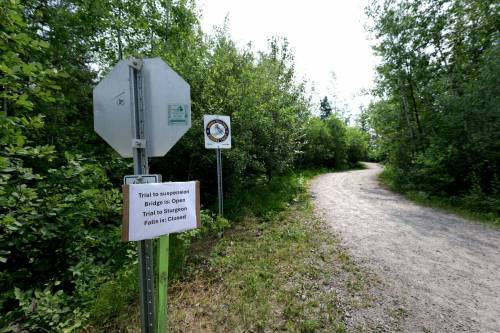
Safety improvements have been completed at Sturgeon Falls in Whiteshell Provincial Park, where two brothers from Winnipeg drowned in July, the province announced Friday.

The Sturgeon Falls trail was closed for upgrades after Maximo Au Ramirez, 10, and Aaron Au Ramirez, 13, disappeared in the fast-moving rapids. Their bodies were recovered days later.

The trail and viewing areas have reopened. Viewing areas are now fenced to prevent people from walking onto hazardous slippery rocks. Signs were installed to warn visitors of drowning hazards.

A new portage gives canoeists and kayakers access to and from safe shoreline areas adjacent to the falls, the province said.

Read
Updated: Yesterday at 2:54 PM CDT

Free Press staff 1 minute read 2:01 AM CDT

Advance voting for civic and school board elections begins next week.

Voters can cast early ballots for the Oct. 28 election in certain locations from Monday through Oct. 23.

Eligible voters can use their address to search for a convenient location.

Early votes can be cast at the council building at city hall (510 Main St.) every day, except weekends and Thanksgiving, from Monday to Oct. 23.

Manitoba marks end of sending simple workplace problems to doctor’s office

Tory McNally 7 minute read Preview

Manitoba marks end of sending simple workplace problems to doctor’s office

Tory McNally 7 minute read 2:01 AM CDT

There are some changes in the workplace that make you think: “Well, it’s about time.”

This is one of them.

Starting Oct. 1, Manitoba changed the rules around sick notes. I think it is going to be a wonderful change — not just for doctors and patients, but for employers, employees and the way we think about accountability at work.

The change comes from Bill 11, the Employment Standards Code Amendment Act (Sick Notes for Employee Absences), which received royal assent on June 1 and came into force Thursday. Under the new rules, employers generally cannot require a sick note for an illness or injury unless the employee is away for more than one week or has been absent because of illness or injury for more than 10 scheduled workdays in the calendar year.

Read
2:01 AM CDT

Small businesses outline election priorities

Robin Bezte 5 minute read Yesterday at 2:00 AM CDT

Since moving to Winnipeg earlier this year, I have come to know the city through its small businesses. As a new Exchange District resident, grabbing coffee at Little Sister, walking through The Forks Market and stopping at Pho Hoang for lunch have become part of my routine. These are the places that give Winnipeg’s neighbourhoods their character and have helped make a new city feel like home.

That is why an empty storefront never feels like just vacant real estate. It represents someone’s investment and hope. When a small business disappears, the community loses a piece of itself.

On Oct. 28, Manitobans in most municipalities will choose their next mayors, reeves and councillors. While city councils may not set interest rates or negotiate global trade agreements, they do have some control over many of the barriers entrepreneurs encounter day to day, from property tax bills and permit applications to public safety and construction disruptions.

Ahead of the upcoming elections, the Canadian Federation of Independent Business (CFIB) surveyed Manitoba small business owners to get a sense of their municipal priorities and concerns.

What’s luck got to do with it?

Tim Kist 5 minute read 2:01 AM CDT

We all seek certainty in our daily lives. We expect if we make a decision, the outcome will be just as we planned: a direct correlation between the decision and result.

You, as a business leader, seek the same certainty from the decisions you make. And sometimes, the result is what was expected. Sometimes, it isn’t.

The big question is: why is it so difficult to achieve the business results you expect when you carefully craft your plans and seemingly make good decisions?

The truth is we cannot predict the future. This means we almost never know precisely how customers will respond to a sales quote, what competitors are planning, and a myriad of other external variables at play.