Canada’s PM Justin Trudeau invokes Emergencies Act for ‘illegal’ blockades
Advertisement
Read this article for free:
or
Already have an account? Log in here »
To continue reading, please subscribe:
Digital Subscription
One year of digital access for only $1.44 a week*
- Enjoy unlimited reading on winnipegfreepress.com
- Read the E-Edition, our digital replica newspaper
- Access News Break, our award-winning app
- Play interactive puzzles
*Billed as $5.77 plus GST every four weeks. After 52 weeks, price increases to the regular rate of $19.95 plus GST every four weeks. Offer available to new and qualified returning subscribers only. Cancel any time.
To continue reading, please subscribe:
Add Free Press access to your Brandon Sun subscription for only an additional
$1 for the first 4 weeks*
- Enjoy unlimited reading on winnipegfreepress.com
- Read the E-Edition, our digital replica newspaper
- Access News Break, our award-winning app
- Play interactive puzzles
*Your next Brandon Sun subscription payment will increase by $1.00 and you will be charged $17.95 plus GST for four weeks. After four weeks, your payment will increase to $24.95 plus GST every four weeks.
Read unlimited articles for free today:
or
Already have an account? Log in here »
Hey there, time traveller!
This article was published 14/02/2022 (1723 days ago), so information in it may no longer be current.
OTTAWA – Prime Minister Justin Trudeau on Monday invoked the national Emergencies Act to bring to an end the antigovernment blockades he describes as illegal and not about peaceful protest.
The government will use the act to force towing companies to remove big rigs and other vehicles that are blocking highways and other critical infrastructure, establish zones where public assembly is not allowed, and require banks to suspend or freeze accounts suspected of supporting the blockades, including those belonging to companies whose trucks are part of the convoy.
Deputy Prime Minister Chrystia Freeland said the government is “serving notice” to trucking companies with vehicles involved in any of the blockades that they will have their corporate accounts frozen and lose their insurance.

“Consider yourselves warned,” she said. “Send your semi-trailers home. The Canadian economy needs them to be doing legitimate work, not to be illegally making us all poorer.”
Freeland said every day the Ambassador Bridge was closed $390 million worth of trade was halted. Every day the border remains closed in Coutts, Alta., she said it affects $48 million of trade, and in Emerson, Man., $73 million a day.
The government is invoking the act under the public order section, meaning they believe the blockades are a threat to national security. As such the act will apply across the country, including in provinces where premiers said Monday they did not think it was needed.
Trudeau however said the orders would only target specific places that are being blockaded. He spoke to premiers by phone Monday morning, following an urgent cabinet meeting Sunday night. He also briefed the Liberal caucus first thing Monday.
“I want to be very clear: the scope of these measures will be time-limited, geographically targeted, as well as reasonable and proportionate to the threats they are meant to address,” Trudeau said at a news conference late in the afternoon.
He said it does not involve bringing in the military, or suspending fundamental rights under the Charter of Rights and Freedoms.
In a statement issued late Monday, federal Agriculture Minister Marie-Claude said the border blockades are affecting the safe movement of livestock, feed and goods and is adversely impacting Canada’s food supply chain.
Bibeau said she met with meat industry representatives from across Canada on Monday to discuss the impact of the border blockades on the transportation of live animals and beef exports, the movement of feed for livestock and the overall food supply for Canadians.
“They told me that the blockade is having a significant impact on the livelihood of Canadian farm families and businesses who cannot sustain any more delays. I also heard that shipments of animals are being delayed and cancelled, which is creating serious risks to animal welfare. We must ensure that animals, feed and ingredients can flow smoothly across the border. This is essential to support producers and protect the welfare of animals travelling between Canada and the U.S.”
The premiers in Quebec, Alberta, Saskatchewan and Manitoba all said they didn’t want the act used in their provinces, but didn’t oppose it being used elsewhere, particularly Ontario.
“In my view, the sweeping effects and signals associated with the never-before-used Emergencies Act are not constructive here in Manitoba, where caution must be taken against overreach and unintended negative consequences,” Manitoba Premier Heather Stefanson said.
British Columbia’s solicitor general, Mike Farnworth, said his province supports Trudeau’s use of the act “to deal with this situation back east.” A blockade has also limited or closed access to the U.S. border crossing at Surrey, B.C., for several days now.
Alberta Premier Jason Kenney said invoking it for his province could actually inflame tensions. He called on Trudeau instead to work with U.S. President Joe Biden to lift vaccine mandates at the border.
Federal Conservative interim leader Candice Bergen said Monday the party still had to study the orders the Liberals are making but she said she had some serious concerns.
Earlier Monday, the Liberals and New Democrats joined to defeat a Conservative motion, supported by the Bloc Québécois, asking the federal government for a plan to lift remaining COVID-19 restrictions.
“Send your semi-trailers home. The Canadian economy needs them to be doing legitimate work, not to be illegally making us all poorer.”–Chrystia Freeland
Police in Windsor, Ont., managed to clear a weeklong blockade at the Ambassador Bridge Sunday, resulting in 25 to 30 arrests and the seizing of many vehicles. In Coutts, Alta., a blockade that began Jan. 29 continues but RCMP Monday arrested 11 people at the site and seized 13 long guns, handguns, body armour, a machete, a large quantity of ammunition and high-capacity magazines.
Trudeau said police have been doing what they can but there are serious challenges that require the use of the Emergencies Act. It comes after multiple court injunctions against noise and blockades in Ottawa and Windsor, including a new one Monday from an Ontario judge to enforce Ottawa bylaws against noise, idling, open fires and setting off fireworks.
Still the blockade in Ottawa, which is now well into its third week, continued unabated Monday and many trucks returned to blasting their horns, a week after a provincial judge issued an injunction against the noise that seemed to temporarily quiet them.
Protesters were dancing, eating and even lifting weights at an outdoor gym set up using red plastic jerry cans to hold the weight bar, beside a sign designating the space “Muscle Beach.”
Banners waving on ropes tied to the gates around Parliament Hill claimed Ottawa residents needed to remember this is “also our home” and welcomed people to the “segregated citizens zone” of the “Freedom Convoy Communauty” (sic).
Many were not moved at all by the Emergencies Act invocation.
Mike Wassilyn. 72, from Toronto said he’d been there for 10 days and had no plans to leave. He said Trudeau needed to “come on out on the front steps or to the world and repent for the lies and the evil you’ve done.”
“This time he’s taking on God. Let’s see how that works out for him,” he said.
Some trucks moved from residential side streets to Wellington Street right in front of Parliament Monday, with a police escort. But Peter Unger, on his 17th day demonstrating in Ottawa, said he hadn’t been told to move from his spot several blocks from Parliament Hill and had no plans to.
“There is no emergency here. All (Trudeau) needs is to come out and talk to us. We’re willing to listen,” Unger said.
Justice Minister David Lametti said invoking the Emergencies Act will allow cabinet to regulate and prohibit public gatherings in specific places, such as at borders, on roads leading to and from those borders or to other critical infrastructure such as airports, and in Ottawa.
It will also allow cabinet to designate towing companies as essential services to compel them to remove big rigs and other vehicles from the blockades. That is something many companies have refused to do for fear of reprisal from the truckers and others involved in the convoys. Trudeau said clearing trucks at the Ambassador Bridge in Windsor, Ont., on the weekend happened only because of the co-operation of American towing companies.
The city of Ottawa said Monday it would deploy some of the big towing rigs used by the city’s public transit system.
The orders will heavily target the financing for the convoy, which has in large part come from foreign sources using crowdfunding platforms and cryptocurrencies. One of the temporary measures includes adding those entities to Canada’s anti-money laundering and terrorist financing laws, but Freeland said legislation to make that change permanent will eventually be introduced.
It means platforms like GoFundMe will need to register with Canada’s finance intelligence service known as Fintrac and report all large or suspicious transactions.
“It’s all about following the money.”–Chrystia Freeland
“It’s all about following the money,” Freeland said. “It’s about putting an end to the funding of these illegal blockades.”
GoFundMe cancelled a convoy fundraiser that had raised about $10 million, saying it violated its terms of service and is refunding the money. The convoy leaders then turned to U.S. Christian funding platform GiveSendGo, which collected about $9 million. That platform was down on Monday after it was apparently hacked and donor info was leaked.
Some convoy operators were also discussing raising money using cryptocurrencies such as Bitcoin.
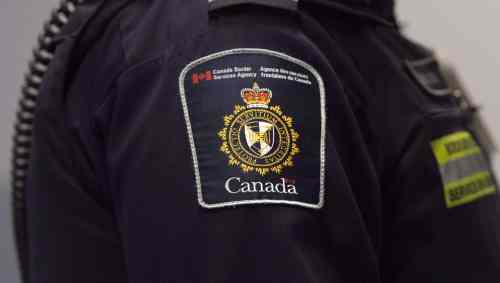
Trudeau also said the Canada Border Services Agency has been turning away non-Canadians who are trying to get into the country to take part in the protests, which he noted is a separate issue from the Emergencies Act.
Trudeau and Freeland made clear that they believe the protests threaten Canada’s economic security and its reputation internationally.
“International confidence towards Canada as a good place to invest and do business has been shaken,” Freeland said.

Biden said last week he expected Canada to solve the crisis that was affecting trade at the border.
The act can only be invoked for 30 days but Lametti said he’s hoping it won’t take that long to bring things under control.
This is the first time the Emergencies Act has been invoked since it came into force in 1988.
This report by The Canadian Press was first published Feb. 14, 2022.
— With files from Marie Woolf in Ottawa, Colette Derworiz and Dean Bennett in Edmonton, Kevin Ward in Vancouver and Jacob Serebrin in Montreal.
Premier cautions against use of Emergencies Act

Posted:
Premier Heather Stefanson has called for an end to anti-mandate protests in Manitoba, but says she’s opposed to invoking the federal Emergencies Act to deal with them.
Related Articles
RCMP clear protest blocking B.C. border crossing


Advertisement Advertise With Us
Advertisement Advertise With Us