Police clear out border blockade as Ottawa seeks deal with convoy to start rolling

Advertisement

Advertise with us

Protesters decrying COVID-19 restrictions and the federal government itself were moved from the mouth of a crucial trade route with the United States on Sunday, while confusion reigned over whether a group stationed in Ottawa would reduce their footprint in the capital's core.

Read this article for free:


By clicking the button above, an account will be created and you will begin to receive some of our recommended newsletters. You may opt out of any newsletter by visiting your Email and Communication Preferences page or by clicking "unsubscribe" at the bottom of any email.

or

Already have an account? Log in here »

To continue reading, please subscribe:

Digital Subscription

One year of digital access for only $1.44 a week*

  • Enjoy unlimited reading on winnipegfreepress.com
  • Read the E-Edition, our digital replica newspaper
  • Access News Break, our award-winning app
  • Play interactive puzzles

*Billed as $5.77 plus GST every four weeks. After 52 weeks, price increases to the regular rate of $19.95 plus GST every four weeks. Offer available to new and qualified returning subscribers only. Cancel any time.

To continue reading, please subscribe:

Add Free Press access to your Brandon Sun subscription for only an additional

$1 for the first 4 weeks*

  • Enjoy unlimited reading on winnipegfreepress.com
  • Read the E-Edition, our digital replica newspaper
  • Access News Break, our award-winning app
  • Play interactive puzzles
Start now

*Your next Brandon Sun subscription payment will increase by $1.00 and you will be charged $17.95 plus GST for four weeks. After four weeks, your payment will increase to $24.95 plus GST every four weeks.

Hey there, time traveller!
This article was published 13/02/2022 (1722 days ago), so information in it may no longer be current.

Protesters decrying COVID-19 restrictions and the federal government itself were moved from the mouth of a crucial trade route with the United States on Sunday, while confusion reigned over whether a group stationed in Ottawa would reduce their footprint in the capital’s core.

Officers in Windsor, Ont., arrested some two dozen protesters and moved others from the busy Ambassador Bridge spanning the Detroit River, towing five vehicles on Sunday at the site where protesters brought traffic to a halt for nearly a week and barring others from arriving on scene.

Windsor Police Chief Pamela Mizuno said officers are working to reopen roadways, but did not provide a timeline as to when that would occur. The reopening would allow the resumption of hundreds of millions of dollars in daily cross-border trade between Canada and the United States.

Police walk the line to remove all truckers and supporters after a court injunction gave police the power to enforce the law after protesters blocked the access leading from the Ambassador Bridge, linking Detroit and Windsor, as truckers and their supporters continue to protest against COVID-19 vaccine mandates and restrictions, in Windsor, Ont., Sunday, Feb. 13, 2022. THE CANADIAN PRESS/Nathan Denette

But despite the show of force as a line of officers marched on demonstrators who had clogged traffic on the key trade corridor, protesters opposed to COVID-19 restrictions and the government of Prime Minister Justin Trudeau continued to wave Canadian flags and holler the word “freedom,” with one shouting into a megaphone, “This is a peaceful protest.”

Wearing a Canadian flag around her shoulders, Windsor resident Karen Parrinello said she’s been coming out to demonstrate since Thursday evening and plans to be there for the long haul.

“As long as it takes, I’ll keep coming back. I can’t stay here all day, but I’ll come back here a couple hours a time every day until it’s better, until all the mandates are gone and we have our freedoms back,” she said.

Police in Windsor had negotiated with protesters over the weekend to get them to leave, warning of arrests if they kept bridge traffic at a standstill.

Police said between 25 and 30 people were arrested, many of whom are now facing mischief charges. Mizuno said roughly a dozen vehicles were also seized or towed over the weekend.

“There are steps we need to take in order to open the roadways so that we don’t encounter the same issues,” she said at an afternoon news conference. “Please note we are moving as fast as we can, however, we need to make sure this is a safe and sustainable solution.”

While Windsor Mayor Drew Dilkens expressed his thanks to police, he issued a similar statement to residents of his border city who “respected the process needed to find a resolution.”

“Canada is a nation that believes in the right to freedom of speech and expression, but we are also bound by the rule of law,” Dilkens said in a statement.

Hours later, his counterpart in Ottawa, Mayor Jim Watson, released letters he said were between himself and organizers of the so-called Freedom Convoy about a deal to move some of the 400 vehicles encamped downtown to Parliament Hill and away from residential neighbourhoods.

The correspondence between the two sides suggested convoy organizers agreed to start moving trucks to Wellington Street, which runs in front of Parliament Hill, as well as a host of parliamentary buildings including the Prime Minister’s Office. Those moves, according to the letter, will get underway Monday.

If moves happen before the noon deadline Watson set in his letter, Ottawa’s mayor agreed to meet with the protesters who, on Sunday, turned intersections once busy with traffic into dance floors with loudspeakers and draped themselves in the Canadian flag as they wandered downtown streets amid idling vehicles and semis.

In a note to city councillors, Watson’s office said any movement of trucks wouldn’t be “a long-term solution to the occupation,” but a step to reduce the impact on those who live in the area.

On Sunday night, convoy board president Tamara Lich tweeted that plans to relocate trucks would go ahead on Monday, posting the note hours after denying any deal and vowing to stay downtown until federal vaccine mandates are eliminated.

Residents who have become frustrated with a lack of movement on the situation joined with a local city councillor and provincial politician to block a convoy on its way to join up with demonstrators downtown.

Sean Burgess said the spontaneous counter-protest, organized late Saturday evening, should be a clear signal to federal, provincial and local leaders about ending what even Watson has described as an illegal occupation of the capital’s core.

“Ottawa is not the dull city all of Canada thinks, but it’s certainly not a city of people who get out in the street and become activists, particularly spontaneously,” Burgess said by the line of counter-protesters.

“So when you see people in a neighborhood like Old Ottawa South, who would rather complain, and litigate, so to speak, rather than take direct action on the streets, standing in front of trucks saying to the cops, ‘fine, arrest me,’ then you know that something has gone really too far.”

In a statement, Ontario Premier Doug Ford called anew on protesters in Ottawa to leave, while praising the Windsor police, Ontario Provincial Police and RCMP officers who worked to reopen the Ambassador Bridge.

The developments in Ontario came as protests continued around the country in support of the convoys that set up camp in Ottawa.

Police contended with demonstrations at other border crossings, including in British Columbia where four people were arrested near the border crossing in Surrey. That crossing remained open as of Sunday, the Canada Border Services Agency said.

The ongoing protests spurred Trudeau to meet with senior officials and cabinet members. He said in a late night tweet that his “incident response group” covered further actions the federal government can take.

“We’ll keep working urgently on this – to protect jobs, public safety, our neighbourhoods, and our economy,” the tweet said.

Trudeau was also to invite premiers to a meeting Monday about the protests, according to a government source, who was not authorized to speak publicly about the matter.

This report by The Canadian Press was first published Feb. 13, 2022.

– With files from Justin Tang and Marie Woolf in Ottawa, and Brieanna Charlebois in Vancouver.

Report Error Submit a Tip

More Stories

The new normal in Canadian politics

David McLaughlin 5 minute read Preview

The new normal in Canadian politics

David McLaughlin 5 minute read Yesterday at 2:01 AM CDT

“Nothing happening, all at once.”

Welcome to the new normal of Canadian politics, where normality is the new normal. Routine and stable are in; disruptive and excessive are out. Exhibits A and B are the Alberta referendum and the British Columbia election. Voters opted for stability over volatility.

The opposite of being normal is being different from the norm. In politics that means different from where we’ve been and what we’ve come to expect. Two competing trends have dominated our politics for the past decade and a half — progressivism and populism. Think Justin Trudeau and liberal, progressive identity politics in Canada, and Donald Trump and conservative, populist MAGA politics in America. We are now experiencing a swing away from both those trends.

Representing this “new normal” are Prime Minister Mark Carney, for one, and newly elected British Columbia premier, Lorne Doerksen, for another. Both are considered normal because they talk and act like adults in a childish political world. Their political flair is to not have any political flair. They stand out for not standing out.

Read
Yesterday at 2:01 AM CDT

Walkout creates chaos at St. James Smitty’s

Morgan Modjeski 3 minute read Preview

Walkout creates chaos at St. James Smitty’s

Morgan Modjeski 3 minute read Yesterday at 2:01 AM CDT

Gordon Sharpe wanted to eat a meal at the St. James Smitty’s Wednesday, but he got a helping of bad news instead.

He saw several workers walk out of the restaurant, at 1017 St. James St.

“(The waiter) came back about 10 minutes later and stood over the table, looking a little distraught and said, ‘I’m quitting right now and so is everybody else,’” Sharpe said. “He said, ‘This is my last time serving you,’ and he was quite choked up.”

“I’ve never seen anything like it,” he said, adding that the managers scrambled to serve patrons.

Read
Yesterday at 2:01 AM CDT

Sharpton decries 'stench of racism' in Daunte Wright's death

Aaron Morrison, Tim Sullivan And Tammy Webber, The Associated Press 5 minute read Friday, Apr. 23, 2021

MINNEAPOLIS - Daunte Wright, the young Black man shot by an officer during a traffic stop in suburban Minneapolis, was not “just some kid with an air freshener,” but a “prince” whose life ended too soon at the hands of police, the Rev. Al Sharpton said Thursday during an emotional funeral.

Hundreds of people wearing COVID-19 masks packed into Shiloh Temple International Ministries to remember Wright, a 20-year-old father of one who was shot by a white police officer on April 11 in the small city of Brooklyn Center. The funeral was held just two days after former Minneapolis police Officer Derek Chauvin was convicted in the death of George Floyd and amid a national reckoning on racism and policing.

“The absence of justice is the absence of peace,” Sharpton said. “You can’t tell us to shut up and suffer. We must speak up when there is an injustice.”

The civil rights leader's thundering eulogy included a stinging rebuke of the possibility that Wright was pulled over for having air fresheners dangling from his mirror. Wright’s mother has said her son called her after he was stopped and told her that was the reason. Police said it was for expired registration.

Province changes Thompson ‘Vaxport’ plan

Carol Sanders 5 minute read Preview

Province changes Thompson ‘Vaxport’ plan

Carol Sanders 5 minute read Thursday, Jan. 14, 2021

The Manitoba government has changed its plans for a vaccination "super site" for the North — just days after it was announced — after local officials argued the original proposal was unworkable.

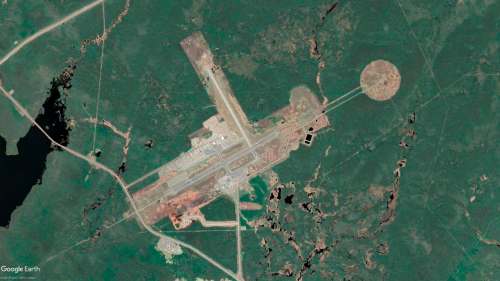
Some northern residents will still get their COVID-19 shots at Thompson's airport, but "Vaxport" will be less super than originally planned, providing injections only to residents of fly-in communities.

Most northern residents will get their shots at the Thompson Community Recreation Centre, which is centrally located in the city of about 13,000.

"This makes much more sense logistically, and for the citizens of Thompson," Mayor Colleen Smook said Thursday after touring the airport site, which is located 10 kilometres from the city and isn't serviced by public transportation.

Read
Thursday, Jan. 14, 2021

The long and winding road

Editorial 4 minute read Preview

The long and winding road

Editorial 4 minute read Yesterday at 2:01 AM CDT

As theatre goes, it sent a strong message.

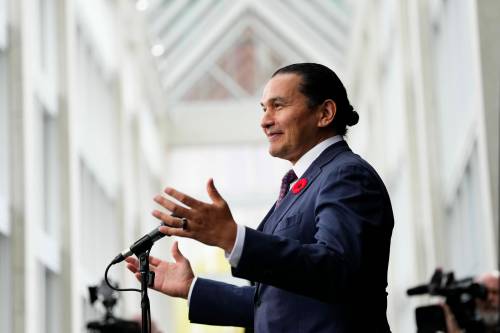
Manitoba Premier Wab Kinew, standing in front of microphones and television cameras, holding up his Indigenous status card and saying that he didn’t feel Canada should have “a race-based form of identification in this country, but that is a reality,” adding that it was time to abolish the Indian Act.

“I think it’s time to abolish the Indian Act, get rid of the Indian Act, move past the Indian Act, and it needs to be done with First Nations people and First Nations governments, of course. I think it’s long overdue that we have a relationship with Indigenous Peoples in Canada that reflects who we are as Canadians today,” he said.

The Indian Act — the name alone suggests how out-dated and out of place the law has become. Originally dating from 1876, the law was put in place to “amend and consolidate the laws respecting Indians” and gave the Minister of the Interior the responsibility to “control and management of the reserves, lands, moneys and property of Indians in Canada.”

Read
Yesterday at 2:01 AM CDT

Colorado low blow: flood fears rise as Manitoba faces yet another weather warning

Chris Kitching 5 minute read Preview

Colorado low blow: flood fears rise as Manitoba faces yet another weather warning

Chris Kitching 5 minute read Thursday, Apr. 28, 2022

Forecasters are saying with certainty another Colorado low will hit southern Manitoba this weekend, putting flood-hit municipalities — including four already in local states of emergency — on high alert.

The third such event in as many weeks is set to arrive Friday and linger through Sunday, with the bulk of the rain falling Saturday, said Natalie Hasell, warning preparedness meteorologist with Environment and Climate Change Canada.

“There is agreement to the point where, yes, a Colorado low is coming, but exactly what it will mean for southern Manitoba is unclear,” she said Wednesday. “I hope people are prepared for another uncomfortable weekend.”

As municipalities filled sandbags and pumped standing water, weather models still disagreed on the storm’s track.

Read
Thursday, Apr. 28, 2022