Parents, teachers in four provinces prepare to return to class as Omicron spreads
Advertisement
Read this article for free:
or
Already have an account? Log in here »
To continue reading, please subscribe:

Digital Subscription
One year of digital access for only $205*
- Enjoy unlimited reading on winnipegfreepress.com
- Read the E-Edition, our digital replica newspaper
- Access News Break, our award-winning app
- Play interactive puzzles
*First annual payment billed as $205.00 + GST for one year. This annual subscription will automatically renew at $233.00 + GST every 52 weeks (10% off the regular annual price of $259.35). Offer available to new and qualified returning subscribers only. Cancel any time.
To continue reading, please subscribe:
Add Free Press access to your Brandon Sun subscription for only an additional
$1 for the first 4 weeks*
- Enjoy unlimited reading on winnipegfreepress.com
- Read the E-Edition, our digital replica newspaper
- Access News Break, our award-winning app
- Play interactive puzzles
*Your next Brandon Sun subscription payment will increase by $1.00 and you will be charged $17.95 plus GST for four weeks. After four weeks, your payment will increase to $24.95 plus GST every four weeks.
Read unlimited articles for free today:
or
Already have an account? Log in here »
Hey there, time traveller!
This article was published 16/01/2022 (1723 days ago), so information in it may no longer be current.
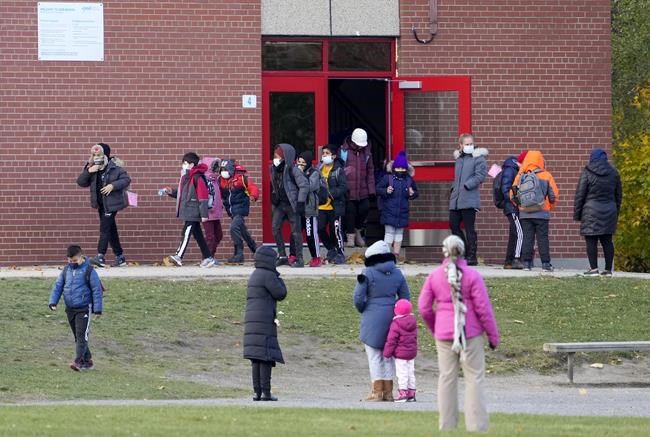
OTTAWA – Parents and teachers in four provinces are bracing for students to return to the classroom Monday as the Omicron variant-fuelled wave of COVID-19 continues to spread and questions remain about how prepared schools really are for a full-scale return.
Kids in Ontario and Quebec, Canada’s largest provinces, are to resume in-person learning after their governments delayed their return in the face of record-setting case numbers over the holidays.
While public health experts, parents and officials agree that in-person learning is best for children, school boards, families and unions say they’re preparing for an increase in staff absences because of the virus, with some worried that the contingency plans touted by provincial governments may not be enough to keep schools operating safely.
In a letter to members over the weekend, Elementary Teachers’ Federation of Ontario President Karen Brown said educators from across the province have expressed a range of emotions about heading back to class during this fifth wave of the pandemic, driven by the highly contagious Omicron variant of COVID-19.
“Some members are enthusiastic and feel safe, others are cautiously optimistic, and some are anxious,” reads the letter to the union’s roughly 83,000 members.
Ontario reported there were 3,595 patients hospitalized with COVID-19 on Sunday, with 579 in intensive care.
The latest figures represent a drop from the day before, but Health Minister Christine Elliott noted that not all hospitals report their COVID-19 numbers over the weekend.
Quebec, meanwhile, said hospitalizations rose by 105 over the past 24 hours, bringing the total number of patients to 3,300.
Manitoba and Nova Scotia will also send kids back to the classroom on Monday, with Nova Scotia being the only province in the Atlantic region to do so.
That province reported 68 people were admitted to hospital because of COVID-19 on Sunday, 10 more than the previous day, with 10 receiving intensive care.
In neighbouring New Brunswick, where schools won’t return until Jan. 31 and residents are back under a 16-day lockdown, officials reported there were 113 patients hospitalized because of COVID-19. Officials in Newfoundland and Labrador, meanwhile, logged 384 new infections and one additional virus-related death.
Nova Scotia Teachers Union President Paul Wozney cast doubt on whether schools will be able to stay open for the week, pointing out that kids had to be sent home earlier than hoped for before the Christmas break because of staffing levels — and that was when caseloads were lower than they are today.
“The pressure that Omicron presents hasn’t lessened, it’s gotten worse.”
Rather than send students back to school on Monday, Wozney suggested the province should have taken a more cautious approach as its neighbours have done until COVID-19 case levels become more manageable.
One of the problems, he says, is the dwindling list of available substitute teachers, which is even more of an issue in rural areas than in the provincial capital of Halifax.
“We do not have the people to sustain in-person learning for any prolonged period of time,” he said. “We’ve made that abundantly clear to the (education) department.”
School boards in Ontario have also warned parents to expect possible returns to remote learning as they try to manage both infection and staffing levels in classrooms.
To keep schools open, Ontario and Nova Scotia plan to supply students with rapid antigen tests. The move comes at a time when Ottawa tries to ensure the 140 million it promised to send provinces this month arrive on schedule, as it works with 14 different suppliers and battles supply issues as demand for the tests have soared.
Manitoba’s Progressive Conservative government also plans to rely on rapid testing to keep students in school and says it’s still working on ventilation upgrades at many buildings.
Improved air quality and access to better masks were chief among the concerns parents, educators and doctors wanted governments to address before kids went back to class.
In Quebec, for example — where updated guidelines say schools won’t need to shut down in the event of an outbreak but can move online if more than 60 per cent of students are isolating — some parents have denounced the fact N95 masks are being reserved for “specialized schools.”
“We know surgical masks aren’t as protective, so … by magic, the children will be protected here in Quebec and aren’t going to get COVID?” said Cheryl Cooperman, a Montreal mother of two who penned an open letter decrying what it calls inconsistencies in Quebec’s approach.
Contact tracing also remains an issue. In Manitoba, those infected in schools will not be able to count on officials to notify their close contacts. Dr. Brent Roussin, the province’s top doctor, said at a briefing last week that the virus is simply spreading too fast.

He also stated the risk of children becoming severely ill from the Omicron variant is low.
The mass return to in-person learning comes after Health Canada reported less than four per cent of children in the country aged 5-11 were fully vaccinated against COVID-19 as of Friday, with nearly 50 per cent having received at least one dose.
At the same time, the country boasts that nearly 90 per cent of people 12 and older are fully vaccinated while provinces race to get booster shots into as many arms as possible to battle the current surge.
This report by The Canadian Press was first published Jan. 16, 2022.
-With files from Keith Doucette in Halifax and Virginie Ann in Montreal.
Related Articles
Fingers crossed as children return to school
Advertisement Advertise With Us
Advertisement Advertise With Us