WEATHER ALERT

G7 health ministers closely monitoring new Omicron variant of COVID-19

Advertisement

Advertise with us

OTTAWA - Health Minister Jean-Yves Duclos and his counterparts from other G7 countries agreed Monday to closely monitor and share information about the highly mutated Omicron variant of COVID-19.

Read this article for free:


By clicking the button above, an account will be created and you will begin to receive some of our recommended newsletters. You may opt out of any newsletter by visiting your Email and Communication Preferences page or by clicking "unsubscribe" at the bottom of any email.

or

Already have an account? Log in here »

To continue reading, please subscribe:

Digital Subscription

One year of digital access for only $1.44 a week*

  • Enjoy unlimited reading on winnipegfreepress.com
  • Read the E-Edition, our digital replica newspaper
  • Access News Break, our award-winning app
  • Play interactive puzzles

*Billed as $5.77 plus GST every four weeks. After 52 weeks, price increases to the regular rate of $19.95 plus GST every four weeks. Offer available to new and qualified returning subscribers only. Cancel any time.

To continue reading, please subscribe:

Add Free Press access to your Brandon Sun subscription for only an additional

$1 for the first 4 weeks*

  • Enjoy unlimited reading on winnipegfreepress.com
  • Read the E-Edition, our digital replica newspaper
  • Access News Break, our award-winning app
  • Play interactive puzzles
Start now

*Your next Brandon Sun subscription payment will increase by $1.00 and you will be charged $17.95 plus GST for four weeks. After four weeks, your payment will increase to $24.95 plus GST every four weeks.

Hey there, time traveller!
This article was published 29/11/2021 (1799 days ago), so information in it may no longer be current.

OTTAWA – Health Minister Jean-Yves Duclos and his counterparts from other G7 countries agreed Monday to closely monitor and share information about the highly mutated Omicron variant of COVID-19.

The new variant emerged in South Africa, coinciding with an increase in COVID-19 cases in the region.

Its appearance prompted border closures as well as screening measures in Canada and around the world.

Health Minister Jean-Yves Duclos responds to a question during a news conference by video conference, in Ottawa, Friday, Nov. 26, 2021. Duclos says Canada supports the development of a new global convention on pandemic preparedness and response that will be debated at a special meeting of the World Health Assembly Monday. THE CANADIAN PRESS/Adrian Wyld

“The overall risk related to Omicron is considered very high for a number of reasons,” the World Health Organization warned.

“There is concerning preliminary evidence on Omicron suggesting, in contrast to previous (variants of concern), both potential immune escape and higher transmissibility that could lead to further surges with severe consequences.”

Four cases of the Omicron variant have been discovered in Ottawa, and public-health workers are doing contact tracing in an attempt to stamp out transmission. A confirmed case was also announced Monday in Quebec.

Officials warn more cases are likely to be found within Canada in coming days.

The G7 health ministers met virtually to discuss the new threat, underscoring the importance of ensuring all countries have access to COVID-19 vaccines and the needed supports to get them into arms.

They also expressed strong backing for an international pathogen surveillance network within the WHO, said a joint statement issued after the meeting.

The ministers agreed to reconvene next month.

The developments came as countries debated a new global convention on pandemic preparedness and response at a special meeting of the World Health Assembly on Monday.

It is only the second time the group has held an emergency summit of this kind.

If member countries agree, the assembly would begin developing what would essentially serve as an international treaty on pandemic readiness.

“Global health security is too important to be left to chance, or goodwill, or shifting geopolitical currents, or the vested interests of companies and shareholders,” World Health Organization director Dr. Tedros Adhanom Ghebreyesus said at the outset of the summit.

“The best way we can address them is with a legally binding agreement between nations: an accord forged from the recognition that we have no future but a common future.”

He said the emergence of the Omicron variant underlines the perilous and precarious nature of the global situation.

“Indeed, Omicron demonstrates just why the world needs a new accord on pandemics. Our current system disincentives countries from alerting others to threats that will inevitably land on their shores,” he said.

The idea is to prevent another global crisis like the one posed by COVID-19 and its new, potentially more transmissible variants.

“Our position has always been that we are stronger when we work together,” Duclos said Friday in support of a new convention.

A binding international agreement would help countries to collaborate and would allow Canada to more easily share its expertise on the world stage, Duclos said.

“That level of policy and scientific leadership is a sign that we can do even better in the future as we collaborate with WHO and other organization in order to prevent the incidents of future pandemics and protect Canadians against such things.”

The WHO working group on the file says governments should look to develop the convention in tandem with efforts to strengthen existing international health regulations.

The working group’s priorities include a focus on global equity, rapid risk detection and assessment, a global approach to misinformation and the sharing of pathogens, genetic information and biological samples.

This report by The Canadian Press was first published Nov. 29, 2021.

Report Error Submit a Tip

More Stories

Third fire hits troubled Manitoba Housing apartment block

Malak Abas 4 minute read Preview

Third fire hits troubled Manitoba Housing apartment block

Malak Abas 4 minute read 3:19 PM EST

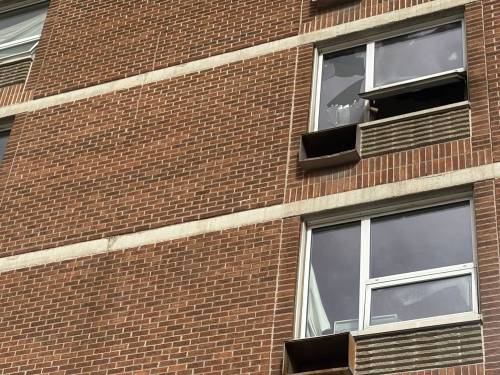
Residents of a North End Manitoba Housing apartment block with a long history of trouble say they’re shaken after the building was hit with its third fire in eight months Friday night.

An apartment complex at 145 Powers St. was evacuated by firefighters after a fire broke out at around 7:45 p.m.

When longtime resident Sharon Markwell heard the fire alarm go off, she chalked it up to a false alarm — kids will get into the building and pull the fire alarm around once or twice a month, she said — until smoke began billowing into the hallway of her fifth-floor apartment.

“Once I realized that I could smell smoke very, very strongly, and the smoke was seeping into my room, into my apartment, I said to myself, ‘This is no false alarm. This is the real thing,’” Markwell, 64, told the Free Press Sunday.

Read
3:19 PM EST

Go with the snow

Eva Wasney 6 minute read Preview

Go with the snow

Eva Wasney 6 minute read Tuesday, Feb. 8, 2022

Wearing a dusty pink snowsuit and a face mask emblazoned with colourful Dala horses, Sonja Lundstrom is excited.

“This is going to be my 80th birthday present to myself,” she says, pointing to a nearby wooden kicksled poised for takeoff. “My grandma had one of these and my dad made me one out of hockey sticks for all my children… but these are the new modern ones and I haven’t had one of those.”

But today’s frosty jaunt is less of a test drive and more of a diplomatic adventure. Lundstrom is the president of the Swedish Cultural Association of Manitoba and is at The Forks to give Urban Ahlin, the Swedish Ambassador to Canada, a little taste of home.

“In my part of Sweden we use the (kicksleds) when we go out on the ice for ice fishing,” says Ahlin, who was in town recently with several other Nordic ambassadors to meet with the premier. “This is a very climate-friendly means of transportation and you can use it for lots of different reasons… it’s actually pretty fun to ride as well.”

Read
Tuesday, Feb. 8, 2022

The new normal in Canadian politics

David McLaughlin 5 minute read Preview

The new normal in Canadian politics

David McLaughlin 5 minute read Yesterday at 2:01 AM CDT

“Nothing happening, all at once.”

Welcome to the new normal of Canadian politics, where normality is the new normal. Routine and stable are in; disruptive and excessive are out. Exhibits A and B are the Alberta referendum and the British Columbia election. Voters opted for stability over volatility.

The opposite of being normal is being different from the norm. In politics that means different from where we’ve been and what we’ve come to expect. Two competing trends have dominated our politics for the past decade and a half — progressivism and populism. Think Justin Trudeau and liberal, progressive identity politics in Canada, and Donald Trump and conservative, populist MAGA politics in America. We are now experiencing a swing away from both those trends.

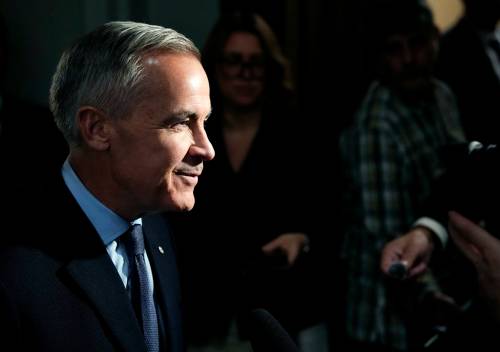
Representing this “new normal” are Prime Minister Mark Carney, for one, and newly elected British Columbia premier, Lorne Doerksen, for another. Both are considered normal because they talk and act like adults in a childish political world. Their political flair is to not have any political flair. They stand out for not standing out.

Read
Yesterday at 2:01 AM CDT

Imperialist crusades: 21st-century style

John R. Wiens 5 minute read Preview

Imperialist crusades: 21st-century style

John R. Wiens 5 minute read Wednesday, Jul. 8, 2026

In the 11th century and lasting into the 13th, the papacy launched a series of at least eight military campaigns we now refer to as the Crusades, or Holy Wars. They were an imperialistic call to arms for Christians to retake Jerusalem, which was at the time under Muslim rule.

Spiritual rewards for participation were implied, and other incentives offered, to dull the extra taxation demanded to fund the campaigns. Over time, the “crusades” morphed to become massacres of not only Muslims but also Jews and Christian dissidents — in other words, any enemies of the papacy. If today’s news sounds like déjà vu all over again, it probably should.

The stories keep repeating themselves in many forms. We now know that two 20th century world wars, global in scope, were caused by imperialistic ambitions, changes in the balance of international powers and corresponding arms races. The first was attributed to the assassination of the heir to the Austro-Hungarian throne by a Bosnian Serb, a kind of “regime change” initiative. The second resulted from rising tensions between Allied and Axis powers, triggered by the rise of European fascism and Japanese militarism. The human toll of both was unimaginable.

In the First World War, 15 to 22 million people, including soldiers and civilians, were killed and another 23 million were wounded. These numbers do not account for those otherwise affected — victims of chemical warfare whose compromised health shortened their lives; of the subsequent Spanish flu epidemic amplified by the displacement of peoples; others who died from other diseases caused by war conditions; and those who were malnourished or starved. Nor do they account for the ongoing trauma and resentments passed on intergenerationally to this day.

Read
Wednesday, Jul. 8, 2026

Taxi and ride-hailing services receive 58 complaints since March

Jessica Botelho-Urbanski 5 minute read Preview

Taxi and ride-hailing services receive 58 complaints since March

Jessica Botelho-Urbanski 5 minute read Friday, Aug. 17, 2018

The City of Winnipeg has fielded 58 formal complaints about vehicle-for-hire operations since taking over industry oversight from the province in March.

According to freedom of information request results, the city mostly received complaints about taxi operations, and the two largest companies – Duffy’s Taxi and Unicity Taxi – were the main culprits.

From March 1, 2018 to July 13, 2018, the Winnipeg Parking Authority received 20 complaints about Duffy’s, mostly to do with driver road habits (five complaints), driver conduct (three), service refusal (three) or poor service (three), among other issues.

During the same period, Unicity had 19 complaints, five of them related to poor service and three about driver conduct, plus other misdeeds.

Read
Friday, Aug. 17, 2018

US rolls to women's hoops gold medal in Bird's last Olympics

Doug Feinberg, The Associated Press 6 minute read Preview

US rolls to women's hoops gold medal in Bird's last Olympics

Doug Feinberg, The Associated Press 6 minute read Sunday, Aug. 8, 2021

SAITAMA, Japan (AP) — Sue Bird and Diana Taurasi walked off the basketball court together, arm-in-arm, one last time at the Tokyo Games.

They started their journey together five Olympics ago and ended it in the same fashion as always — with gold medals hanging around their necks.

“All of what we’ve done for USA Basketball, we’ve done together. It’s fitting,” Bird said after the 90-75 win over Japan on Sunday.

And now it's over — at least for the 40-year-old Bird.

Read
Sunday, Aug. 8, 2021