B.C. outlines plan to end COVID-19 restrictions; eyes September return to normal

Advertisement

Advertise with us

VICTORIA - A four-step plan in British Columbia to ease out of the COVID-19 pandemic could mean people can attend live concerts, watch sports in person and choose whether to wear a mask by Sept. 7.

Read this article for free:


or

Already have an account? Log in here »

To continue reading, please subscribe:

Subscribe and receive a limited-edition Free Press branded hat or tote.

Digital Subscription

One year of digital access for only $205*

  • Enjoy unlimited reading on winnipegfreepress.com
  • Read the E-Edition, our digital replica newspaper
  • Access News Break, our award-winning app
  • Play interactive puzzles

*First annual payment billed as $205.00 + GST for one year. This annual subscription will automatically renew at $233.00 + GST every 52 weeks (10% off the regular annual price of $259.35). Offer available to new and qualified returning subscribers only. Cancel any time.

To continue reading, please subscribe:

Add Free Press access to your Brandon Sun subscription for only an additional

$1 for the first 4 weeks*

  • Enjoy unlimited reading on winnipegfreepress.com
  • Read the E-Edition, our digital replica newspaper
  • Access News Break, our award-winning app
  • Play interactive puzzles
Start now

*Your next Brandon Sun subscription payment will increase by $1.00 and you will be charged $17.95 plus GST for four weeks. After four weeks, your payment will increase to $24.95 plus GST every four weeks.

Hey there, time traveller!
This article was published 25/05/2021 (1961 days ago), so information in it may no longer be current.

VICTORIA – A four-step plan in British Columbia to ease out of the COVID-19 pandemic could mean people can attend live concerts, watch sports in person and choose whether to wear a mask by Sept. 7.

The launch of the restart program Tuesday began with the relaxing of some restrictions on gatherings, sports events and dining, both indoors and outdoors.

Premier John Horgan said B.C.’s strong immunization rate allows the province to slowly bring people back together, with a target date for the final phase of the plan to be implemented the day after Labour Day.
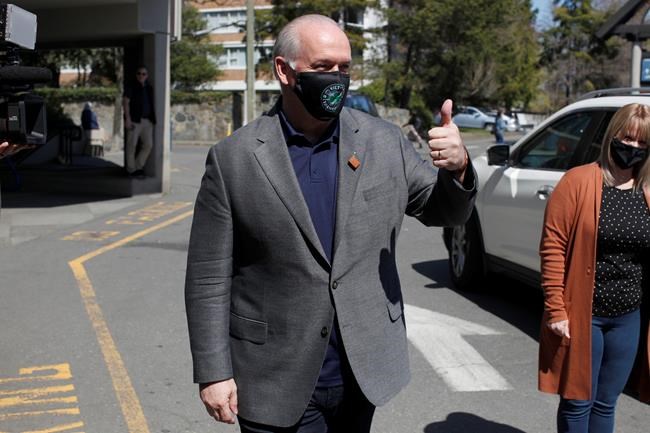
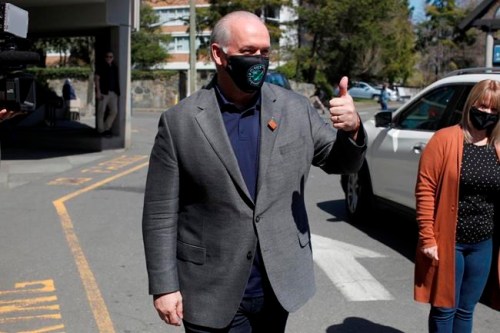
Premier John Horgan arrives to receive a dose of the AstraZeneca COVID-19 vaccine at the pharmacy in James Bay Thrifty's Foods in Victoria, B.C., on Friday, April 16, 2021. British Columbia's plans to restart the province with the methodical lifting of strict COVID-19 health restrictions are set to be announced today. THE CANADIAN PRESS/Chad Hipolito

“It’s an exciting day for all of us,” said Horgan at a news conference. “We’ve made extraordinary sacrifices as a province and a people over the past 15 months.”

But he said the success of the rollout will depend on the province’s progress to reduce COVID-19 infection rates.

Health officials will be watching COVID-19 case counts and possible transmission events to ensure the province can meet the plan’s progressive targets set for June, July and September, Horgan said.

“The way we do that is we make sure our vaccination rates continue to go up,” he said. “I’m very confident, but if there’s anything we’ve learned from COVID-19 is to expect the unexpected. Going forward and slamming back again is not what we want to do.”

Almost three million of the more than four million people eligible to receive COVID-19 immunization in B.C. have had their first shot.

The changes in restrictions will depend on the number of people being vaccinated and as that number rises, more limits will be removed, Horgan said.

The earliest the public health emergency and provincial state of emergency could be lifted would be July 1, he said.

Provincial health officer Dr. Bonnie Henry said the restrictions removed Tuesday include allowing indoor and outdoor dining for up to six people, indoor gatherings with five personal visitors and in-person faith-based gatherings, at reduced capacity.

She said to prevent potential COVID-19 spread in communities, provincial travel restrictions will not be lifted until June 15 at the earliest, with recreational travel permitted only within residents’ regions.

A spokesman for an organization representing Canada’s largest airlines said in a statement B.C.’s plan gives clarity to the industry and consumers.

“The plan provides criteria for the phased reopening of the economy, including regional and domestic travel,” said Mike McNaney, National Airlines Council of Canada president.

The Surrey Board of Trade said timely communication gives businesses a chance to prepare for the staff and supplies they will need in the near future.

“We need to ensure that the majority of British Columbians who are eligible for vaccinations are vaccinated,” said Anita Huberman, president of the Surrey Board of Trade in a statement. “That’s the only way to reach Step 4 of the plan.”

Henry said the province will continue to monitor case counts and the condition of the virus, but expressed confidence vaccines are limiting spread.

“I don’t see a situation where we are going backwards unless things change drastically,” she said. “We’ll be staying flexible because we know this virus still has some tricks up its sleeve.”

On Tuesday, health officials reported 289 new cases of COVID-19, the lowest daily count since late October. One death was also reported, bringing B.C.’s total number of COVID-19 deaths to 1,680 people.

B.C. imposed restrictions at the end of March on indoor restaurant dining and group fitness, while reversing a plan to allow indoor faith services as COVID-19 case numbers soared to new highs.

COVID-19 case counts increased rapidly as variants of the virus began to dominate. Infection rates peaked in early April, while hospital admissions increased and intensive care units filled with patients.

The number of hospitalizations prompted the government to cancel non-urgent surgeries in the Fraser and Vancouver Coastal health regions.

The restrictions were supposed to last until April 19 but were extended as more restrictions on travel were introduced.

This report by The Canadian Press was first published May 25, 2021.

Report Error Submit a Tip

More Stories

Corporate declaration of action takes flight

Gabrielle Piché 4 minute read Preview

Corporate declaration of action takes flight

Gabrielle Piché 4 minute read 2:01 AM CDT

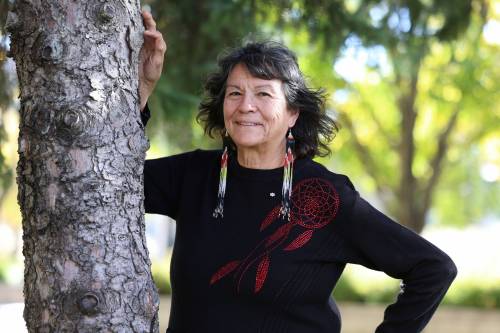
Businesses pledging to support reconciliation will meet in Assiniboine Park today as a national project launches.

Victoria Grant plans to attend. She’s been working on this nationwide corporate declaration of action for years — skipping Wednesday morning’s event in Winnipeg means missing launch time.

The private-sector-led declaration will gain its first signees during a ceremony, running from 10 a.m. to noon in the Pavilion.

Signatories agree to learn about the past, build cultural awareness, support Indigenous entrepreneurs and incorporate reconciliation into their corporate policies, among other things.

Read
2:01 AM CDT

Youth centre library cancellation baffles

Editorial 4 minute read Preview

Youth centre library cancellation baffles

Editorial 4 minute read 2:00 AM CDT

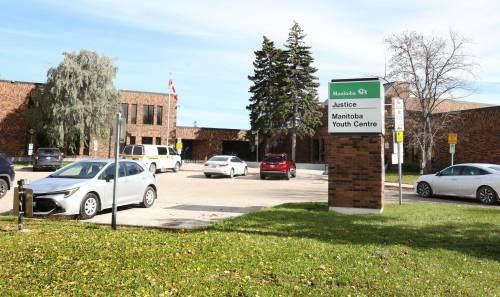
It’s difficult to understand why Manitoba Corrections would shut down a library program that cost taxpayers nothing, was popular with young inmates and was designed to help them learn.

But that is what happened at the Manitoba Youth Centre, where a volunteer-run pop-up library has been cancelled by the province.

The Prison Libraries Committee, part of the Manitoba Library Association, provided the program at no cost to Corrections. Once a month, volunteer librarians brought books into the youth centre, helped young people find reading material, assisted with school research and provided something that can be in short supply in a correctional institution — positive interaction with people from outside its walls.

The program became so popular that the youth centre asked for it to be offered more frequently.

Read
2:00 AM CDT

Reopen plan for B.C. may mean normal life by Sept.

Dirk Meissner, The Canadian Press 4 minute read Preview

Reopen plan for B.C. may mean normal life by Sept.

Dirk Meissner, The Canadian Press 4 minute read Tuesday, May. 25, 2021

VICTORIA - A four-step plan in British Columbia to ease out of the COVID-19 pandemic could mean people can attend live concerts, watch sports in person and choose whether to wear a mask by Sept. 7.

The launch of the restart program Tuesday began with the relaxing of some restrictions on gatherings, sports events and dining, both indoors and outdoors.

Premier John Horgan said B.C.'s strong immunization rate allows the province to slowly bring people back together, with a target date for the final phase of the plan to be implemented the day after Labour Day.

“It’s an exciting day for all of us,” said Horgan at a news conference. "We’ve made extraordinary sacrifices as a province and a people over the past 15 months."

Read
Tuesday, May. 25, 2021

Letters, Oct. 7

6 minute read 2:01 AM CDT

On diet and humanity

Re: “Maybe ASI will need us” (Letters, Oct. 5)

Mr. Martin, humans eating animals is not part of the circle of life. Many cultures with abundant plant resources, or for religious beliefs, have historically subsisted on largely or strictly vegetarian diets. Likewise, in extreme environments such as the Arctic, Inuit rely heavily on animal products due to the near-absence of arable land. Humans adapt locally to their environments and do not have a single ancestral diet.

Clearly vegetarian or vegan diets are not fringe, as evidenced by plant-based products on main-stream grocery store shelves. To suggest the Free Press is morally endorsing a fringe diet is rubbish, (the newspaper) merely gives the public a platform for diverse opinions, thus generating individual, thought-provoking ideas and conversations — a practice that is desperately needed these days.

Uber bans city driver facing sexual assault charge

Matthew Frank 2 minute read 12:43 PM CDT

A Winnipeg Uber driver has been permanently banned from the platform after police charged the man for allegedly sexually assaulting a passenger last month.

A woman reported that she used the ride service on Sept. 27 and the 27-year-old driver sexually assaulted her once the vehicle reached its destination in the Weston neighbourhood, the Winnipeg Police Service said in a news release.

Police said the woman was able to escape and get to safe place. The driver was arrested on Sept. 28 at an apartment complex on Kennedy Street. He was later released with conditions.

An Uber spokesperson said the driver is permanently banned, and the company is assisting police with the investigation.

Town of Churchill aims to protect both citizens and polar bears from harm

Clive Jackson 5 minute read Preview

Town of Churchill aims to protect both citizens and polar bears from harm

Clive Jackson 5 minute read Saturday, Nov. 23, 2024

Virtually every city in the world has a problem with car theft and vandalism.

But there is one exception.

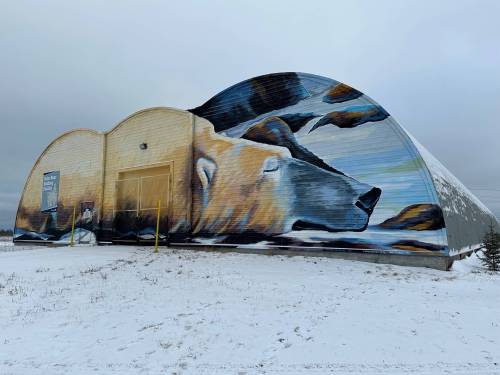
Churchill, Man,, population 995.

There, citizens are encouraged to leave their car doors unlocked, as well as the front doors of their homes and offices.

Read
Saturday, Nov. 23, 2024