Military to provide medical personnel to help Ontario

Advertisement

Advertise with us

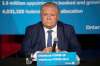
OTTAWA - The federal government is deploying military medical personnel to help Ontario's beleaguered health-care system with a deadly third wave of COVID-19.

Read this article for free:


By clicking the button above, an account will be created and you will begin to receive some of our recommended newsletters. You may opt out of any newsletter by visiting your Email and Communication Preferences page or by clicking "unsubscribe" at the bottom of any email.

or

Already have an account? Log in here »

To continue reading, please subscribe:

Digital Subscription

One year of digital access for only $1.44 a week*

  • Enjoy unlimited reading on winnipegfreepress.com
  • Read the E-Edition, our digital replica newspaper
  • Access News Break, our award-winning app
  • Play interactive puzzles

*Billed as $5.77 plus GST every four weeks. After 52 weeks, price increases to the regular rate of $19.95 plus GST every four weeks. Offer available to new and qualified returning subscribers only. Cancel any time.

To continue reading, please subscribe:

Add Free Press access to your Brandon Sun subscription for only an additional

$1 for the first 4 weeks*

  • Enjoy unlimited reading on winnipegfreepress.com
  • Read the E-Edition, our digital replica newspaper
  • Access News Break, our award-winning app
  • Play interactive puzzles
Start now

*Your next Brandon Sun subscription payment will increase by $1.00 and you will be charged $17.95 plus GST for four weeks. After four weeks, your payment will increase to $24.95 plus GST every four weeks.

Hey there, time traveller!
This article was published 26/04/2021 (2017 days ago), so information in it may no longer be current.

OTTAWA – The federal government is deploying military medical personnel to help Ontario’s beleaguered health-care system with a deadly third wave of COVID-19.

The government said Monday Ottawa has approved a request for assistance from Ontario to provide support to the province as it struggles with high rates of infections.

In a statement, it said the Canadian Armed Forces are preparing to deploy up to three multi-purpose medical assistance teams of nurses and medical technicians to hospitals and other facilities struggling to keep up with a spike of new infections.

Canadian Armed Forces personnel arrive at the Villa Val des Arbes seniors residence, Monday, April 20, 2020 in Laval, Quebec. The federal government will announce this afternoon the provision of military medical personnel to help Ontario's beleaguered health-care system with a third wave of COVID-19. THE CANADIAN PRESS/Ryan Remiorz

Such teams were deployed into long-term care facilities in Ontario and Quebec last spring as the first wave of COVID-19 swept across the country.

Reconnaissance teams are expected to hit the ground on Tuesday to start assessing the specific needs at different health-care facilities as the federal and Ontario government iron out the final details.

“The Canadian Armed Forces will be there for Ontarians in their time of need alongside our partners,” Defence Minister Harjit Sajjan said.

“We are ready, willing and able to help Ontarians through this tough time.”

The government said it is prepared to deploy federal health human resources and fund the redeployment of the Canadian Red Cross to augment or relieve staff within Ontario’s medical care facilities.

It also said the Royal Canadian Air Force personnel will be flying medical personnel from Newfoundland and Labrador to Toronto Tuesday to help in Ontario medical facilities.

Military aircraft are also being made available to fly medical professionals from other provinces to Ontario to help with the pandemic, with expectations that the first group will arrive on Tuesday from Newfoundland and Labrador.

Newfoundland Premier Andrew Furey announced on Monday that nine health-care workers are being sent to work in downtown Toronto, including three doctors, a nurse practitioner and five nurses.

Furey, whose wife Dr. Allison Furey works in pediatric emergency care and is among those heading to Ontario, has said the health-care workers are volunteers drawn from areas of Newfoundland and Labrador where there are adequate staffing levels.

Monday’s announcement followed a formal request from Queen’s Park for military and Canadian Red Cross assistance.

“We have been working with the federal government to identify health human resources located across various federal agencies who might be suitable for deployment to assist with the critical care surge in Ontario,” said Stephen Warner, spokesman for Ontario Solicitor General Sylvia Jones, in a statement.

“At the conclusion of that process, we have made a request for the assistance of those identified resources, many of whom reside, for example, within the Canadian Armed Forces and Canadian Red Cross organizations. In addition to health human resources, we are requesting logistical and operational support as we seek to augment our response to COVID-19.”

On the weekend, Ontario Premier Doug Ford said the province’s intensive care capacity “has been stretched to its limits by the U.K. variant” of the virus that causes COVID-19.

Intergovernmental Affairs Minister Dominic Leblanc first announced last week that the military would fly medical personnel from other provinces and territories to Ontario, and that Ottawa would cover the transportation costs.

Leblanc said at the time that Newfoundland and Labrador, Nova Scotia and Prince Edward Island had indicated a willingness to help Canada’s most populous province.

Ontario reported 3,510 new cases of COVID-19 Monday and 24 more deaths linked to the virus. Of the new cases, 1,015 were in Toronto, 909 in Peel Region, and 391 in York Region.

The Ministry of Health reported that 2,271 people are in hospital with COVID-19, but noted that more than 10 per cent of hospitals did not submit data over the weekend and that number will likely go up when those reports are received.

There are 877 people in intensive care because of the virus and 605 on ventilator.

A total 4,696,211 vaccine doses have been given in the province so far.

This report by The Canadian Press was first published Apr. 26, 2021.

— with files from Paola Loriggio in Toronto and Maan Alhmidi in Ottawa

Report Error Submit a Tip

More Stories

Submit a news tip

1 minute read Monday, Mar. 16, 2026

Submit a news tip

Sarault wins silver medal in 1,000-metre

The Canadian Press 2 minute read Saturday, Feb. 8, 2020

DRESDEN, Germany - Canadian Courtney Sarault won a silver medal in the women's 1,000-metre event at the ISU short track World Cup on Saturday.

Sarault, from Moncton, N.B., took second place with a time of 1:55.143 — finishing behind South Korea's Kim Ji Yoo (1:54.955) and ahead of World Cup overall standings leader Suzanne Schulting of the Netherlands. (1:55.167).

"Going into the final, I didn't feel amazing, but I was trying to stay positive, and hoping to come out of it with a podium," said Sarault.

Meanwhile, Canada's Kim Boutin had her string of podium results come to an end at eight events.

Tools, technology required to retain doctors

4 minute read Preview

Tools, technology required to retain doctors

4 minute read 2:01 AM EST

Manitoba has made some encouraging progress in addressing its doctor shortage. But attracting more physicians to the province will accomplish only so much if the health-care system can’t give them the tools, technology and working conditions they need to do their jobs.

A new report from Doctors Manitoba suggests the province is making progress in growing its physician workforce. But serious gaps remain.

The organization’s annual Physicians in Manitoba report contains some welcome news. The province now has a record number of physicians practising here, with 235 doctors per 100,000 residents. That’s getting closer to the national average of 245.

The overall physician shortage has also been cut nearly in half from its peak three years ago, when Manitoba needed 445 additional doctors to reach the national average. It now needs 229.

Read
2:01 AM EST

TV that makes the cut

Denise Duguay 3 minute read Preview

TV that makes the cut

Denise Duguay 3 minute read 2:01 AM EST

Ambition is a great motivator in fields as diverse as professional boxing, high-school dance team, photography, animal wrangling and even — stay with me here — bank robbery and alien-summoning?

Sure, some of these are more relatable than others, but the solutions, and the series and movie that contain them, are intriguing. Press play to become a better you.

● The Greatest (docudrama series premières Wednesday, Nov. 4 on Prime Video)

This dramatization of the life of acclaimed boxer and activist Muhammad Ali is billed as the first authorized scripted series on the subject. Its executive producers include his widow, Lonnie Ali, as well as serious name brands Jay-Z and Michael B. Jordan. Newcomer Jaalen Best plays the title role, supported by Giovanni Ribisi (American Hostage) playing Angelo Dundee and Michael Ealy (The Following) as Malcolm X.

Read
2:01 AM EST

City plans renos, repairs on underused, money-losing office tower next to police HQ

Joyanne Pursaga 4 minute read Preview

City plans renos, repairs on underused, money-losing office tower next to police HQ

Joyanne Pursaga 4 minute read 2:01 AM EST

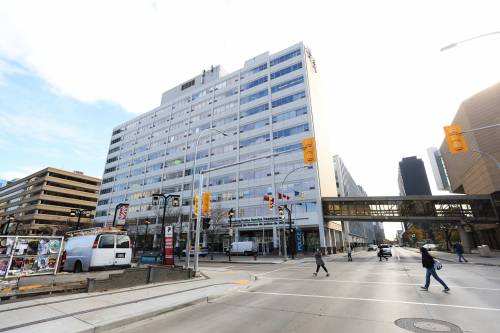
The city is preparing to repair two floors of the mostly vacant office tower linked to the Winnipeg Police Service headquarters that has cost taxpayers hundreds of thousands of dollars more each year than it earns.

The plan is to renovate the second and third floors of the 11-storey former Canada Post tower at 266 Graham Ave, including some repairs needed to meet current building codes, notes a tendering document seeking a contractor to do the work.

In 2009, the city spent $29 million to buy the Canada Post warehouse and the tower, as part of the scandal-plagued police HQ project. Police now work out of the former warehouse and utilize some space in the tower.

The repair work will include interior demolition, asbestos abatement, several fire safety and smoke detection upgrades and some replacement of partitions, doors, hardware and ceilings. The winning bidder will also complete electrical, mechanical and lighting upgrades.

Read
2:01 AM EST

NDP should heed own advice, bring back 50-50 funding

Mark Hudson 5 minute read 2:01 AM EST

Transit riders have a love-hate relationship with our “people’s limousine.” For many, it’s their only means of mobility. Others ride because they believe urban life is better when people use public transit rather than choking the roads with single-occupancy cars.

At the same time, one of life’s mid-sized stressors is peering into the distance on a cold, snowy Winnipeg morning to see whether your late bus is yet on the horizon and, when it appears, whether it’s full to capacity and going to roll past. It’s the kind of thing that pushes you back into the car, if you have access to one.

We could make a big dent in this daily anxiety, help pay transit workers fairly and do our part to stave off climate disaster by restoring a tried-and-true funding scheme: the 50-50 model. This shared-cost model, in which the provincial government pays half of transit operating costs over and above service revenues, was brought in when I was a kid waiting to board the bus with my parents in the 1970s.

The Progressive Conservative government of Gary Filmon initially ditched it in 1993. New Democrats reinstalled it in 2007, with then-Lt.-Gov. John Harvard announcing in the 2006 throne speech: “Manitoba is committed to increased provincial funding for transit operating costs in Thompson, Flin Flon, Brandon and Winnipeg, restoring the 50-50 funding partnership that was in place prior to the cutbacks of the 1990s.”