Opioid deaths highlight need to decriminalize hard-drug possession, police chiefs say

Advertisement

Advertise with us

TORONTO - The scourge of overdose deaths underscores the need for Canada to decriminalize simple possession of hard drugs, the head of the national chiefs of police association said on Thursday.

Read this article for free:


By clicking the button above, an account will be created and you will begin to receive some of our recommended newsletters. You may opt out of any newsletter by visiting your Email and Communication Preferences page or by clicking "unsubscribe" at the bottom of any email.

or

Already have an account? Log in here »

To continue reading, please subscribe:

Digital Subscription

One year of digital access for only $1.44 a week*

  • Enjoy unlimited reading on winnipegfreepress.com
  • Read the E-Edition, our digital replica newspaper
  • Access News Break, our award-winning app
  • Play interactive puzzles

*Billed as $5.77 plus GST every four weeks. After 52 weeks, price increases to the regular rate of $19.95 plus GST every four weeks. Offer available to new and qualified returning subscribers only. Cancel any time.

To continue reading, please subscribe:

Add Free Press access to your Brandon Sun subscription for only an additional

$1 for the first 4 weeks*

  • Enjoy unlimited reading on winnipegfreepress.com
  • Read the E-Edition, our digital replica newspaper
  • Access News Break, our award-winning app
  • Play interactive puzzles
Start now

*Your next Brandon Sun subscription payment will increase by $1.00 and you will be charged $17.95 plus GST for four weeks. After four weeks, your payment will increase to $24.95 plus GST every four weeks.

Hey there, time traveller!
This article was published 28/01/2021 (2101 days ago), so information in it may no longer be current.

TORONTO – The scourge of overdose deaths underscores the need for Canada to decriminalize simple possession of hard drugs, the head of the national chiefs of police association said on Thursday.

In urging action, Bryan Larkin noted that overdose deaths are outpacing those from the COVID-19 pandemic and homicides in British Columbia and likely Ontario.

“Over the last six years, 18,000 Canadians have lost their lives to drug addiction,” Larkin said. “If 18,000 people lost their lives in traffic collisions, our country and our communities would not accept that. There would be outcry.”

Needles are seen on the ground in Oppenheimer park in Vancouver's downtown eastside on March 17, 2020. The scourge of overdose deaths underscores the need for Canada to decriminalize simple possession of hard drugs, the head of the national chiefs of police association said on Thursday. In urging action, Bryan Larkin noted that overdose deaths are outpacing those from the pandemic and homicides in British Columbia and likely Ontario. THE CANADIAN PRESS/Jonathan Hayward

Larkin, president of the Canadian Association of Chiefs of Police, made his comments at a virtual forum called “Policing 2021.” The issue of decriminalization — as was the case with cannabis — is “polarizing” both within society and within police ranks, he said.

Like many others, Larkin said he was raised to believe “drugs are bad and people who use drugs are criminals.” But criminalization, he said, has disproportionately affected the marginalized and people of colour, and there’s now an awareness that addictions are a mental health issue.

“Nobody wakes up wanting actually to have an addiction,” said Larkin, chief of Waterloo Regional Police Service. “The opioid overdose crisis in Canada doesn’t discriminate.”

Antje McNeely, who is Larkin’s Ontario counterpart, said that changing the mindset of police officers when it comes to dealing with drug abusers was also important.

“We’ve been hard-wired,” said McNeely, police chief in Kingston, Ont. “It is a mind change for the front line and the rest of us as well.”

The national chiefs association raised eyebrows last year when it first began advocating for decriminalization of possession. Discussions on the topic were spurred by the legalization of cannabis and the mounting opioid death toll now exacerbated by the pandemic.

In response, the federal government has been looking at Canada’s drug policy, with a view to reducing opioid-related deaths during the pandemic. Prosecutors were instructed last year to prosecute only the most serious drug-possession offences.

Larkin, who said he has been encouraged by Ottawa’s response, noted the nexus between addictions and mental health, saying more than 10 people kill themselves each day in Canada. That is not something police can fix, he said.

Peter Sloly, chief of the Ottawa Police Service, agreed police need to become a “diminishing” element when it comes to dealing with people in mental health crises.

While police will always have some role in such responses, there needs to be a different model that takes in social services, education and the health-care sector, he said.

“We’ve been not just the last resort, but often the first resort on these types of incidents,” Sloly told the forum. “We’ve become a bit of a Swiss Army knife.”

Sloly cited a program in Eugene, Ore., where up to 90 per cent of mental health calls are handled without hard police intervention. Such changes take years to implement successfully and he warned against moving too quickly.

“There’s a group of people out there who believe that police should have nothing to do with mental health services,” Sloley said. “I just don’t think it is practical.”

The chiefs also acknowledged systemic racism in policing but said the issue was no longer being swept under the rug. At the same time, Sloly said simply addressing the issue within police services won’t fix the wider problem.

“We’re still going to have the conditions that produce crime and victimization, marginalization and discrimination,” he said.

This report by The Canadian Press was first published Jan. 28, 2021

Report Error Submit a Tip

More Stories

Trump touts USMCA win in state of the union

James McCarten, The Canadian Press 6 minute read Preview

Trump touts USMCA win in state of the union

James McCarten, The Canadian Press 6 minute read Tuesday, Feb. 4, 2020

WASHINGTON - President Donald Trump declared his scorched-earth political style an unmitigated success Tuesday in a fiercely partisan, made-for-TV state of the union speech that made it clear he expects to be back in the White House next year on the strength of the U.S. economy and his trade deals with Canada, Mexico and China.

Trump, addressing a joint session of Congress in the very chamber where House Democrats voted to impeach him less than two months ago, became only the second president in American history — Bill Clinton was the first — to deliver a state of the union while standing trial in the Senate.

Unrepentant, he pointedly refused to shake the offered hand of House Speaker Nancy Pelosi on the dais before singing the praises of what he billed as "the great American comeback," pointing to strong job growth, a soaring stock market and low unemployment as evidence of his leadership. And when he was done, Pelosi ripped up the speech in full view of the television cameras.

"America's enemies are on the run, America's fortunes are on the rise, and America's future is blazing bright. The years of economic decay are over," Trump declared, taking full credit for the country's "roaring economy," including what he billed as seven million new jobs and the lowest jobless rate in half a century — a "blue-collar boom" that he's counting on to help his re-election chances in November.

Read
Tuesday, Feb. 4, 2020

Opera singer David Daniels no longer in singers’ union following sexual assault guilty plea

The Associated Press 2 minute read Preview

Opera singer David Daniels no longer in singers’ union following sexual assault guilty plea

The Associated Press 2 minute read Thursday, Dec. 21, 2023

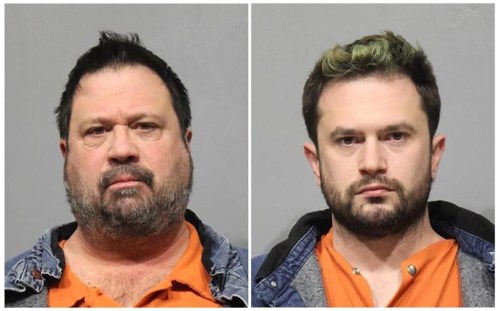
NEW YORK (AP) — Countertenor David Daniels is no longer a member of the union for singers following his guilty plea to a charge of sexual assault.

The 57-year-old and his husband, Scott Walters, pleaded guilty to sexual assault of an adult, a second-degree felony, in Houston's Harris County District Court on Aug. 4. Their accuser was aspiring opera singer Sam Schultz.

They both were sentenced to eight years’ probation and required to register as sex offenders.

American Guild of Musical Artists spokesperson Alicia Cook said Wednesday that Daniels is no longer a member of the union.

Read
Thursday, Dec. 21, 2023

Neo-Nazi group members plotted to kill Free Press reporter

5 minute read Preview

Neo-Nazi group members plotted to kill Free Press reporter

5 minute read Wednesday, Aug. 10, 2022

Disturbing details of a plan to kill a Free Press reporter who had infiltrated a white nationalist hate group were revealed for the first time Wednesday.

Read
Wednesday, Aug. 10, 2022

Notable quotes from 2020 Tokyo Olympics

The Canadian Press 4 minute read Sunday, Jul. 25, 2021

Correctional Services Canada is reopening prison farms. But in B.C., where it has no such programs, a wife and her late husband, who killed a man in a botched holdup, started Emma’s Acres, a unique prison farm she hopes to see expanded.

‘All females are at risk’: serial sex offender released from prison

Erik Pindera 4 minute read Preview

‘All females are at risk’: serial sex offender released from prison

Erik Pindera 4 minute read Yesterday at 1:43 PM CDT

Law enforcement are warning the public that a dangerous sex offender with a lengthy history of abusing women is expected to live in Winnipeg after his release from prison.

Douglas Wayne Bowman, 62, left prison on Thursday after serving a lengthy sentence for two sexual assaults he committed at knifepoint, said the Manitoba Integrated High Risk Sex Offender Unit, a joint force of the Winnipeg Police Service and RCMP that keeps an eye on certain sex criminals.

Bowman was handed the 14-year sentence in 2018, less six years time served, and designated a dangerous offender. Criminals deemed dangerous offenders are given indefinite federal sentences until parole officials decide it is safe enough to release them.

Now that he’s leaving prison, Bowman will be subject to a 10-year long-term supervision order, which allows corrections and parole officials to continue to monitor him in the community even though his sentence is complete.

Read
Yesterday at 1:43 PM CDT

Meteorologist behind Rob’s Obs is moving weather station to Ontario

Ben Waldman 7 minute read Preview

Meteorologist behind Rob’s Obs is moving weather station to Ontario

Ben Waldman 7 minute read Monday, Jun. 13, 2022

In a Winnipeg winter, there are always at least two certainties: it will be cold, and it will snow. A third certainty: the people will talk endlessly about how frigid the temperature is, and argue about how much snow is cloaking their driveways. Is it colder than it ever has been? Is there more snow today than the same time last year?

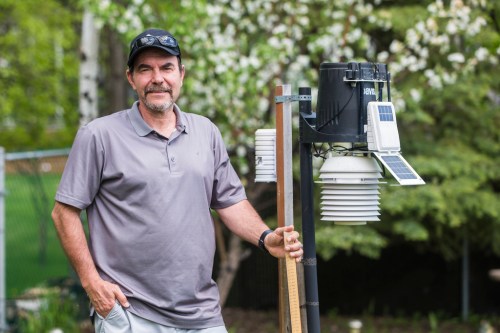
Rob Paola likely knows the answers to those questions.

Paola possesses no super powers. He is but a man with a metre stick and 40 years of professional meteorological experience, in the midst of a lifelong love affair with Mother Nature, a most turbulent mistress who rarely, if ever, reciprocates.

Each year when snow begins to fall, Paola heads outside his Charleswood home to figure out how much. He sticks his ruler in the ground, grabs his clipboard, and clicks his pen. In neat script, he records the temperature, what time precipitation began, how deep the powder is stacked. Then, he shares his data and insights online with thousands of followers who want a clear answer to the eternal questions: Why is this happening? When will it stop? How much snow has fallen in the city of Winnipeg?

Read
Monday, Jun. 13, 2022