Advocates share fear of worsening overdose crisis in 2021, want national safe supply

Advertisement

Advertise with us

VANCOUVER - With overdose deaths rising across Canada, advocates for drug users are calling for the implementation of a national safe supply program as part of an effort to save lives.

Read this article for free:


By clicking the button above, an account will be created and you will begin to receive some of our recommended newsletters. You may opt out of any newsletter by visiting your Email and Communication Preferences page or by clicking "unsubscribe" at the bottom of any email.

or

Already have an account? Log in here »

To continue reading, please subscribe:

Digital Subscription

One year of digital access for only $1.44 a week*

  • Enjoy unlimited reading on winnipegfreepress.com
  • Read the E-Edition, our digital replica newspaper
  • Access News Break, our award-winning app
  • Play interactive puzzles

*Billed as $5.77 plus GST every four weeks. After 52 weeks, price increases to the regular rate of $19.95 plus GST every four weeks. Offer available to new and qualified returning subscribers only. Cancel any time.

To continue reading, please subscribe:

Add Free Press access to your Brandon Sun subscription for only an additional

$1 for the first 4 weeks*

  • Enjoy unlimited reading on winnipegfreepress.com
  • Read the E-Edition, our digital replica newspaper
  • Access News Break, our award-winning app
  • Play interactive puzzles
Start now

*Your next Brandon Sun subscription payment will increase by $1.00 and you will be charged $17.95 plus GST for four weeks. After four weeks, your payment will increase to $24.95 plus GST every four weeks.

Hey there, time traveller!
This article was published 17/12/2020 (2144 days ago), so information in it may no longer be current.

VANCOUVER – With overdose deaths rising across Canada, advocates for drug users are calling for the implementation of a national safe supply program as part of an effort to save lives.

Failing to do so, they say, will lead to more deaths from overdoses across the country.

A public health emergency was declared in 2016, a year that saw 991 deaths. More than 1,500 people have died in British Columbia from illicit drug overdoses in 2020.

Shoes are hung on the Burrard Bridge in remembrance of victims of illicit drug overdose deaths on International Overdose Awareness Day, in Vancouver, on Monday, August 31, 2020. With overdose deaths rising across Canada, advocates for drug users are calling for the implementation of a national safe supply program as part of an effort to save lives. Failing to do so, they say, will lead to more deaths from overdoses across the country. THE CANADIAN PRESS/Darryl Dyck

Ontario’s chief coroner’s office estimates 50 to 80 people per week are dying of overdoses.

British Columbia’s government created a safe supply program in March, allowing doctors and nurses to prescribe pharmaceutical alternatives to illicit drugs.

Karen Ward, a drug policy and poverty reduction consultant with the City of Vancouver, said the concept of the program needs to be expanded across the country.

“It’s like you’re struggling to tread water in a tsunami,” she said in an interview, referring to the number of overdoses in B.C.

Experts say COVID-19 has exacerbated the situation as the supply of illicit drugs became more toxic when the border was closed and more drugs were made or altered in Canada. The pandemic has also impeded access to key harm reduction services, such as supervised consumption sites.

The federal government issued data on Wednesday showing 17,602 people have died from opioid overdoses between January 2016 and June 2020.

Between January and June of this year, 86 per cent of all opioid overdose deaths occurred in British Columbia, Alberta or Ontario.

“It will get worse. It will, definitely. Unless we stop talking and do some very specific things,” said Ward. “Let’s do safe supply. Nothing is perfect, but let’s find ways to prescribe in your community, in your area, right away. Or it will get worse.”

Along with a national safe supply program, Ward argues decriminalization is something governments should be considering.

It would mean police wouldn’t charge someone caught with a small amount of drugs and they would not seize the substance.

She is also critical of the scope of B.C.’s safe supply program, arguing health professionals need to be more willing to prescribe pharmaceutical alternatives.

“We need a variety of ways to access the health benefits that we have decided are necessary,” Ward said.

The federal government announced $9.5 million in funding for four safe supply pilot projects in Ontario in September, but advocates say that the small size of the project doesn’t do enough.

Last month, Vancouver council voted unanimously to ask the federal government to decriminalize small amounts of illicit drugs for personal use.

Federal Health Minister Patty Hajdu was unavailable for an interview, but her office sent a statement saying it is reviewing Vancouver’s proposal.

“The COVID-19 pandemic has worsened the ongoing opioid crisis. We have lost too many Canadians to overdose and all levels of government must redouble our efforts to save lives,” she said in the statement.

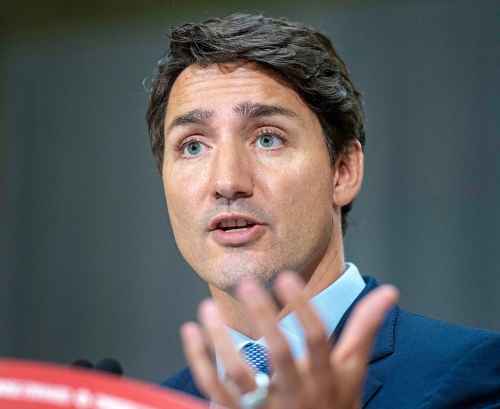
Prime Minister Justin Trudeau said in September that he supported safe supply but maintained his stance against drug decriminalization.

Dr. Mark Tyndall, a professor at the school of population and public health at the University of British Columbia, said more support is needed for safe supply programs and decriminalization efforts.

“Safe supply, to me, is the only real practical thing to do,” he said in an interview.

It’s frustrating to see governments and public health agencies not put as much effort as they could into saving the lives of drug users, said Tyndall, who used to head B.C.’s Centre for Disease Control and worked to launch an opioid vending machine in Vancouver’s Downtown Eastside.

“I’m pretty pessimistic,” he said on what the next year holds for drug users. “The chance of you overdosing from street drugs are probably higher than they were five years ago … we haven’t really made any significant changes that have made people safer.”

Zoe Dodd, a co-organizer with the Toronto Overdose Prevention Society, said governments need to understand the wider impact that overdoses are having.

“If we don’t seriously address the overdose crisis, we will lose a workforce,” she said.

Along with safe supply and decriminalization, more support is needed for people who work and volunteer at overdose prevention sites.

Safe supply, combined with drug decriminalization, is needed to truly make a difference, Dodd said.

This report by The Canadian Press was first published Dec. 17, 2020.

Report Error Submit a Tip

More Stories

Just say no (to deficits during good economic times)

Tom Brodbeck 5 minute read Preview

Just say no (to deficits during good economic times)

Tom Brodbeck 5 minute read Wednesday, Oct. 2, 2019

When a political party pledges to run small, “manageable” deficits if elected, it almost always means it will go deeper into the red if it wins government.

It’s human nature.

After all, as a government, if you get the blessing of the public to spend beyond your means, what’s a few billion more a year in overspending?

The problem is, it doesn’t usually end there. When those same politicians seek re-election, they often want permission to post even larger deficits. In some cases, they’ve abandoned the idea of balancing the books altogether, arguing perpetual deficit financing is acceptable, as long as the debt doesn’t exceed a certain percentage of the economy.

Read
Wednesday, Oct. 2, 2019

City rec facilities crumbling

Ryan Thorpe 6 minute read Preview

City rec facilities crumbling

Ryan Thorpe 6 minute read Monday, Oct. 22, 2018

Throughout Winnipeg, decades-old community assets — pools, arenas and recreation and leisure centres — are deteriorating so quickly that service disruptions are inevitable.

Meanwhile, the city’s community services department, which is responsible for managing those assets, operates with an annual deficit of roughly $80 million, meaning there are scant resources to do little more than bail water on a sinking ship.

Soon, Winnipeggers will have a choice: fewer community services or higher costs.

“It poses a huge challenge because we have very limited dollars that we have to invest in our existing facilities. We also have growing demands for new amenities in new areas. We have to be very strategic,” said Ken McKim, manager of asset management for the department.

Read
Monday, Oct. 22, 2018

Trump touts USMCA win in state of the union

James McCarten, The Canadian Press 6 minute read Preview

Trump touts USMCA win in state of the union

James McCarten, The Canadian Press 6 minute read Tuesday, Feb. 4, 2020

WASHINGTON - President Donald Trump declared his scorched-earth political style an unmitigated success Tuesday in a fiercely partisan, made-for-TV state of the union speech that made it clear he expects to be back in the White House next year on the strength of the U.S. economy and his trade deals with Canada, Mexico and China.

Trump, addressing a joint session of Congress in the very chamber where House Democrats voted to impeach him less than two months ago, became only the second president in American history — Bill Clinton was the first — to deliver a state of the union while standing trial in the Senate.

Unrepentant, he pointedly refused to shake the offered hand of House Speaker Nancy Pelosi on the dais before singing the praises of what he billed as "the great American comeback," pointing to strong job growth, a soaring stock market and low unemployment as evidence of his leadership. And when he was done, Pelosi ripped up the speech in full view of the television cameras.

"America's enemies are on the run, America's fortunes are on the rise, and America's future is blazing bright. The years of economic decay are over," Trump declared, taking full credit for the country's "roaring economy," including what he billed as seven million new jobs and the lowest jobless rate in half a century — a "blue-collar boom" that he's counting on to help his re-election chances in November.

Read
Tuesday, Feb. 4, 2020

Incoming councillor calls for safety improvements on Main Street

Morgan Modjeski 3 minute read Preview

Incoming councillor calls for safety improvements on Main Street

Morgan Modjeski 3 minute read Updated: 8:00 PM CDT

A newly elected city councillor has called for improvements to Main Street after a man in his 60s was hit and killed while in a crosswalk at Main and Jarvis Avenue.

Natalie Smith, who was elected Wednesday to represent the Mynarski ward, attended a small vigil at the site Friday afternoon.

“I walk through here, I bike through here and I have to drive through here. I know at this intersection, I have seen so many close calls,” she said, calling the area, which is north of an underpass, “poorly designed.”

She promised to ask city administration to look into ways to slow down traffic flow on Main Street.

Read
Updated: 8:00 PM CDT

Science-art collaboration injects dose of emotion into cold, hard truths

Sarah Lawrynuik 5 minute read Preview

Science-art collaboration injects dose of emotion into cold, hard truths

Sarah Lawrynuik 5 minute read Wednesday, Apr. 28, 2021

Looking at spreadsheets and map plots of trees is far beyond Rhian Brynjolson’s typical day as a visual artist, but she became entranced and inspired by data collected by Canadian scientists for a new art project.

Her hope is to try and bring the numbers, map dots and statistics to life in a new way to help the public better connect to climate science.

Falcon Lake’s Brynjolson is one of 12 Canadian artists who participated in an art-science collaboration exhibit, co-ordinated by the Global Water Futures program out of the University of Saskatchewan. The project saw the artists paired with researchers and scientists across the country who then engaged in conversations to try to inspire a new angle to their art.

“The whole idea behind it is: water is life,” says Louise Arnal, the project lead, and a post-doctoral fellow at the Centre for Hydrology and Coldwater Laboratory.

Read
Wednesday, Apr. 28, 2021

Wife’s witchy wonderment won’t spell trouble

Maureen Scurfield 6 minute read 2:00 AM CDT

DEAR MISS LONELYHEARTS: My wife believes in magic potions, which used to make me laugh. But since Halloween season started this year, she’s been acting in a way that frightens me. She seems to think she’s a modern-day “witch.” Give me a break!

Now she has three friends who think they are really casting spells when they get together! And this year on Halloween night she’s being formally accepted into their little witchy group meeting at one of their homes, and is getting a new sorceress name. It’s creepy! How do I cope? I’ve had enough of this.

— Seriously Upset, South St. Vital

Dear Upset: Don’t buy into the hocus pocus by being afraid of it and expressing any trepidation to your wife. She needs you to be strong, so she knows she has a solid anchor and can drop out of this witchy group if it becomes too scary or silly for her.