Spending too little worse than spending too much, Freeland says in fall update

Advertisement

Advertise with us

OTTAWA - Finance Minister Chrystia Freeland's first fall mini-budget finds new funds for families and businesses and scratches a longtime provincial itch over transfer payments as she tries to find a delicate balance between pandemic anxiety and political prudence.

Read this article for free:


or

Already have an account? Log in here »

To continue reading, please subscribe:

Subscribe and receive a limited-edition Free Press branded hat or tote.

Digital Subscription

One year of digital access for only $205*

  • Enjoy unlimited reading on winnipegfreepress.com
  • Read the E-Edition, our digital replica newspaper
  • Access News Break, our award-winning app
  • Play interactive puzzles

*First annual payment billed as $205.00 + GST for one year. This annual subscription will automatically renew at $233.00 + GST every 52 weeks (10% off the regular annual price of $259.35). Offer available to new and qualified returning subscribers only. Cancel any time.

To continue reading, please subscribe:

Add Free Press access to your Brandon Sun subscription for only an additional

$1 for the first 4 weeks*

  • Enjoy unlimited reading on winnipegfreepress.com
  • Read the E-Edition, our digital replica newspaper
  • Access News Break, our award-winning app
  • Play interactive puzzles
Start now

*Your next Brandon Sun subscription payment will increase by $1.00 and you will be charged $17.95 plus GST for four weeks. After four weeks, your payment will increase to $24.95 plus GST every four weeks.

Hey there, time traveller!
This article was published 30/11/2020 (2134 days ago), so information in it may no longer be current.

OTTAWA – Finance Minister Chrystia Freeland’s first fall mini-budget finds new funds for families and businesses and scratches a longtime provincial itch over transfer payments as she tries to find a delicate balance between pandemic anxiety and political prudence.

Freeland defended the federal government’s record deficit of more than $381 billion as affordable — given low interest rates — and necessary and accused the former Conservative government of withdrawing stimulus too quickly after the last recession 12 years ago.

“As we have learned from previous recessions, the risk of providing too little support now outweighs that of providing too much,” Freeland said.
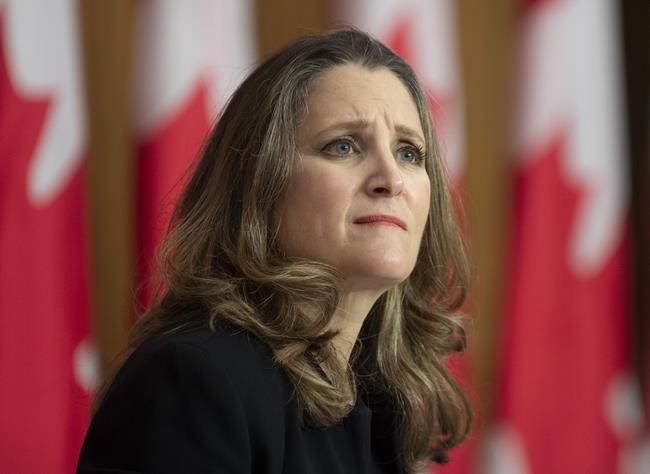
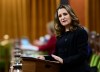
Deputy Prime Minister and Minister of Finance Chrystia Freeland listens to a question from a reporter on the phone during a news conference in Ottawa, Monday, Nov. 30, 2020. THE CANADIAN PRESS/Adrian Wyld

“We will not repeat the mistakes of the years following the Great Recession of 2008.”

However Freeland responded to calls for some sense of when the federal largesse will end only by promising what she calls “fiscal guardrails” based on employment numbers, to guide when post-pandemic federal stimulus will start to be phased out.

“These data-driven triggers will tell us when the job of building back from the COVID-19 recession is accomplished, and we can bring one-off stimulus spending to an end,” Freeland said.

But as far as opposition parties are concerned, Freeland’s plan is a pie-in-the-sky effort that does not answer the main concern Canadians have about ending the pandemic: when and how they will be getting a COVID-19 vaccine.

“Canadians want their lives back,” said Conservative Leader Erin O’Toole.

Prime Minister Justin Trudeau said almost a week ago that while Canada has contracts for more than $1 billion in vaccines for COVID-19, because we aren’t producing any of the front runners here, we won’t be first in line to get them.

Opposition parties have pounced on the revelation. The Conservatives have gone as far as to suggest Canadians could be waiting until 2023, though the first vaccines are expected to arrive in Canada in January.

The government has been trying hard to repair the damage from Trudeau’s statement and fend off the opposition attack, prompting Freeland to mention vaccines no fewer than nine times in her speech Monday.

“Safe, effective and plentiful vaccines are on the way,” Freeland said.

The 223-page fiscal update plan includes not just once, but twice, a chart that shows Canada has procured more doses per person (nearly 11, if every vaccine on the list is approved) than any other country in the world.

But there was no new information in the economic update on when or how those doses will be available to Canadians.

O’Toole said without a plan for a vaccine there is no plan to save the economy.

NDP Leader Jagmeet Singh said the plan provides too little to directly help people, and without a solid plan for a vaccine rollout, that kind of help is even more critical.

“That light at the end of the tunnel now feels like a longer, darker tunnel,” he said.

Freeland’s plan does include billions in new spending to try to bridge people and companies through until vaccines can end the pandemic. That includes some new aid for hard-hit sectors like tourism and entertainment, a simplified tax credit for Canadians now working at home, and another $1 billion to help provinces with the long-term care homes that have left our oldest citizens tragically vulnerable to COVID-19.

Opposition parties were quick to take credit for some of it. O’Toole said a $1,200 payment next year for parents with kids under six was taken right out of his leadership campaign platform.

Singh said the Liberals have added many measures because of his party’s efforts, including paid sick leave. While the plan promises to cancel interest payments on federal student loans next year, Singh said that stops short of the NDP motion all parties backed last week to restore the moratorium on all loan repayments until May.

The Liberals had stopped requiring Canada Student Loans to be repaid in April but that holiday ended Oct. 1.

Freeland also threw out another olive branch in Ottawa’s often difficult relationship with provincial premiers by promising to answer their years-long call to overhaul the fiscal stabilization fund that sends federal cash to provinces facing serious drops in revenue.

The premiers joined forces to demand the fund be overhauled a year ago, and Freeland has now complied, nearly tripling the amount of money available, and pledging some changes to how much provincial revenues must fall before they can be eligible for it.

This report by The Canadian Press was first published Nov. 30, 2020.

Note to readers: This is a corrected story. A previous version suggested an NDP motion on student loans only asked for interest payments to be deferred until May. The motion wanted all loan repayments, including interest, to be deferred.

Report Error Submit a Tip

More Stories

International flavour: Canadian investors may want to make like Ottawa, diversify beyond U.S.

Joel Schlesinger 6 minute read Preview

International flavour: Canadian investors may want to make like Ottawa, diversify beyond U.S.

Joel Schlesinger 6 minute read Yesterday at 2:01 AM CDT

Canada is learning the hard way about the dangers of putting too many eggs in its U.S. economic basket.

Much has been made about the need to diversify our economy away from the United States.

Diversification is understandably beneficial. The more varied streams of revenue a nation has, the less affected the economy will be when one of those sources is interrupted.

The same can be said about investment portfolios.

Read
Yesterday at 2:01 AM CDT

The idea of Alberta separation viewed through a faith lens shows further fracture lines

Josiah Neufeld 10 minute read Preview

The idea of Alberta separation viewed through a faith lens shows further fracture lines

Josiah Neufeld 10 minute read Yesterday at 2:01 AM CDT

CALGARY — One morning in May, John Pentland, a minister at Hillhurst United Church in Calgary, opened his newspaper and read about a group of Albertans who were trying to divide his country.

Something inside of him felt like it cracked open. He started to weep.

“I couldn’t stop, I couldn’t breathe,” he said. He called a friend and told him: “I think I’m losing my mind.”

Pentland has always believed in Canada — flawed as it might be — as a nation gifted with diversity and welcoming of asylum seekers, refugees and immigrants. But recently that belief has been shaken as he’s witnessed right-wing ideologies charged with anti-immigrant sentiment take root in his province. It makes him angry and embarrassed for the country he loves.

Read
Yesterday at 2:01 AM CDT

Transit driver stabbed with syringe by passenger

Tyler Searle 3 minute read Preview

Transit driver stabbed with syringe by passenger

Tyler Searle 3 minute read Wednesday, Aug. 5, 2026

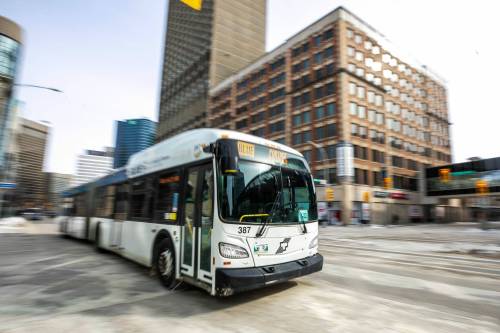
A Winnipeg Transit driver is recovering in hospital after a passenger stabbed him in the leg with a syringe while riding the bus early Wednesday, the Amalgamated Transit Union says.

The union said the incident occurred shortly before 1 a.m. while the operator was stopped in the northbound lanes of Isabel Street, near William Avenue. A female passenger reached around the driver’s safety shield and stabbed the driver twice before getting off the bus.

The driver was taken to the Seven Oaks Hospital in stable condition, where he is undergoing treatment and further testing, union president James Van Gerwin said in an interview.

“We spoke to the member. He is doing OK, but he is still in the hospital and he is scared — as anybody would be,” Van Gerwin said.

Read
Wednesday, Aug. 5, 2026

Giant Tiger decision creates giant void for desperate population

Niigaan Sinclair 5 minute read Preview

Giant Tiger decision creates giant void for desperate population

Niigaan Sinclair 5 minute read Friday, Jul. 31, 2026

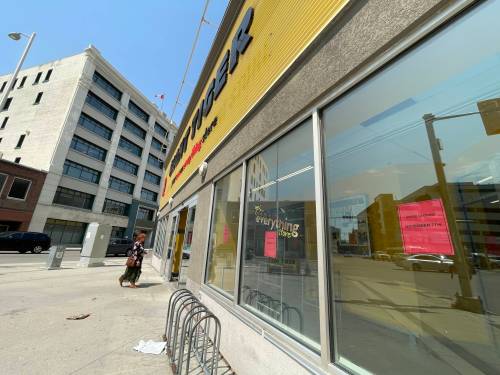
A lot of Winnipeggers may shrug, but the end of Giant Tiger’s downtown store is a giant problem for many of the people living in the centre of the city.

It would have been difficult for anyone going into or passing by the Canadian discount chain’s Donald Street and Ellice Avenue location Thursday to miss the red notices posted on the store’s windows advising it will close on Nov. 7.

According to a 2024 Downtown Winnipeg BIZ report, about 18,000 people live in Winnipeg’s downtown.

More than 60,000 people work there, and some days — when there’s a big concert or the Jets play at Canada Life Centre, for example — the number of people spending time in the area increases significantly.

Read
Friday, Jul. 31, 2026

Broadening prediction-market gambling a bad idea

Editorial 4 minute read Preview

Broadening prediction-market gambling a bad idea

Editorial 4 minute read Yesterday at 2:01 AM CDT

Let’s make a prediction: sooner or later, when Canadian governments find a way to take their own cut of the action, prediction-contract gambling on everything from sports to entertainment to political decisions is going to come to Canada.

And that’s a horrible, dangerous, pernicious idea.

Unless you have particular access to information — either inside information or strategic information based on skills or education — you’re not likely to make money at it. In fact, structurally, you’re likely to lose. In prediction markets, you basically pay an amount, plus fees from the company involved, to bet on whether something will or will not happen within a certain time frame. The amount you pay for your contract depends on how other people are also betting.

As Wealthsimple describes it, “You buy whichever side you think is right. Prices move with demand, so if the market leans towards one outcome, the more that side costs. If a lot of people are backing the TSX to finish above 38,000, yes gets more expensive and no gets cheaper.”

Read
Yesterday at 2:01 AM CDT

What’s luck got to do with it?

Tim Kist 5 minute read Yesterday at 2:01 AM CDT

We all seek certainty in our daily lives. We expect if we make a decision, the outcome will be just as we planned: a direct correlation between the decision and result.

You, as a business leader, seek the same certainty from the decisions you make. And sometimes, the result is what was expected. Sometimes, it isn’t.

The big question is: why is it so difficult to achieve the business results you expect when you carefully craft your plans and seemingly make good decisions?

The truth is we cannot predict the future. This means we almost never know precisely how customers will respond to a sales quote, what competitors are planning, and a myriad of other external variables at play.