Officials plead with Quebecers to cancel plans as COVID-19 cases continue to rise

Advertisement

Advertise with us

MONTREAL - Quebec's health minister called on Quebecers Friday to avoid all non-essential gatherings with friends and family for 28 days as authorities reported 637 new cases of COVID-19, the highest single-day total since May.

Read this article for free:


By clicking the button above, an account will be created and you will begin to receive some of our recommended newsletters. You may opt out of any newsletter by visiting your Email and Communication Preferences page or by clicking "unsubscribe" at the bottom of any email.

or

Already have an account? Log in here »

To continue reading, please subscribe:

Digital Subscription

One year of digital access for only $1.44 a week*

  • Enjoy unlimited reading on winnipegfreepress.com
  • Read the E-Edition, our digital replica newspaper
  • Access News Break, our award-winning app
  • Play interactive puzzles

*Billed as $5.77 plus GST every four weeks. After 52 weeks, price increases to the regular rate of $19.95 plus GST every four weeks. Offer available to new and qualified returning subscribers only. Cancel any time.

To continue reading, please subscribe:

Add Free Press access to your Brandon Sun subscription for only an additional

$1 for the first 4 weeks*

  • Enjoy unlimited reading on winnipegfreepress.com
  • Read the E-Edition, our digital replica newspaper
  • Access News Break, our award-winning app
  • Play interactive puzzles
Start now

*Your next Brandon Sun subscription payment will increase by $1.00 and you will be charged $17.95 plus GST for four weeks. After four weeks, your payment will increase to $24.95 plus GST every four weeks.

Hey there, time traveller!
This article was published 25/09/2020 (2227 days ago), so information in it may no longer be current.

MONTREAL – Quebec’s health minister called on Quebecers Friday to avoid all non-essential gatherings with friends and family for 28 days as authorities reported 637 new cases of COVID-19, the highest single-day total since May.

“We’re asking for a month of effort to break the second wave,” Christian Dube told reporters in Quebec City.

Dr. Horacio Arruda, Quebec’s public health director, told Quebecers not to go to parties or to dinners. “If someone invites you for dinner, it’s very nice,” Arruda said, “but in the context of COVID-19, it’s not the time.”

People wear face masks as they wait to cross a street in Montreal, Monday, September 21, 2020, as the COVID-19 pandemic continues in Canada and around the world. THE CANADIAN PRESS/Graham Hughes

Authorities reported four new deaths attributed to the novel coronavirus Friday, which they said occurred between Sept. 18-23. Hospitalizations increased compared with the prior day by 15, for a total of 199, with 33 patients in intensive care, an increase of two.

Dube said it’s important for Quebecers to realize the province is at the beginning of the second wave of the pandemic and that people’s actions can make a difference.

He pleaded with Quebecers to pick up the phone when health officials call. Health Department employees who are trying to reach people who have been in contact with positive COVID-19 cases have lamented over the past couple of weeks that their calls were often not being answered.

“Please answer the call,” Dube said.

Arruda said the province is increasing the number of contact tracers in Montreal and Quebec City.

There were 229 new cases reported in the Montreal area Friday, bringing the total number of cases in that region to 32,292. The entire Montreal region has now moved into the “orange” alert level — the second highest level in the province’s COVID-19 alert system.

The Quebec City region reported 132 new cases, for a total of 3,483.

Arruda said despite his call for Quebecers to limit their social gatherings, bars and restaurants will stay open — for now. Bars and restaurants aren’t driving the second wave of the contagion, he said.

Dube added that if the government orders bars to close, that decision may incentivize people to gather indoors in private settings, making contact tracing more difficult. Authorities are trying to find a balance, Dube said, that will help contain the virus and allow people to maintain a sense of normalcy.

Quebec continues to increase COVID-19 testing, with 36,060 tests administered on Wednesday, the last day for which testing data is available.

The province has reported a total of 70,307 COVID-19 infections and 5,814 deaths attributed to the virus since the beginning of the pandemic.

This report by The Canadian Press was first published Sept. 25, 2020.

___

This story was produced with the financial assistance of the Facebook and Canadian Press News Fellowship.

Report Error Submit a Tip

More Stories

Building healthier Canadians

Jason M. Sutherland 4 minute read 2:00 AM CDT

Ottawa is betting that billions of taxpayer dollars spent on steel, asphalt and concrete will secure Canada’s economic future and prosperity. Through the $51 billion Build Communities Strong fund, the federal government is paying for roads, bridges, water systems and transit to boost productivity and attract capital from Europe and Asia.

As the shovels hit the ground from Halifax to Vancouver, Canadians should be asking themselves: What good does it do to build a stronger country if we are not building healthier Canadians?

The fund’s $5 billion allocation for health infrastructure is welcome news, as many of our hospitals and long-term care homes across the country are showing severe signs of aging, and modern care centres are much needed. But pouring concrete for new facilities is not the same as building a healthy population.

A ribbon-cutting at a modern hospital does not guarantee you see a family doctor when you need one, keep a rural emergency department open overnight, or shorten the wait for a knee replacement keeping someone off the job or robbing a retiree of independence.

Notable quotes from 2020 Tokyo Olympics

The Canadian Press 4 minute read Sunday, Jul. 25, 2021

Correctional Services Canada is reopening prison farms. But in B.C., where it has no such programs, a wife and her late husband, who killed a man in a botched holdup, started Emma’s Acres, a unique prison farm she hopes to see expanded.

Regulator urged to force MPI to lower rates, tackle claims costs

Nicole Buffie 4 minute read Preview

Regulator urged to force MPI to lower rates, tackle claims costs

Nicole Buffie 4 minute read Updated: 5:01 PM CDT

A citizen-led coalition has urged the Public Utilities Board to order Manitoba Public Insurance to lower its rates, which it says would force the Crown corporation to tackle rising claims costs.

The Consumers Coalition described MPI as “risk-averse,” at a hearing this week to discuss its application for a rate increase.

“The last three (general rate applications) have demonstrated that the corporation is running out of ideas and tools to mitigate rate increases and are executing a strategic plan grounded in their legacy business model,” said Katrine Dilay, a lawyer for the Public Interest Law Centre who spoke on behalf of the coalition.

Dilay said the coalition believes MPI is riding out the cost pressures and passing them on to ratepayers rather than preparing for the future.

Read
Updated: 5:01 PM CDT

Just say no (to deficits during good economic times)

Tom Brodbeck 5 minute read Preview

Just say no (to deficits during good economic times)

Tom Brodbeck 5 minute read Wednesday, Oct. 2, 2019

When a political party pledges to run small, “manageable” deficits if elected, it almost always means it will go deeper into the red if it wins government.

It’s human nature.

After all, as a government, if you get the blessing of the public to spend beyond your means, what’s a few billion more a year in overspending?

The problem is, it doesn’t usually end there. When those same politicians seek re-election, they often want permission to post even larger deficits. In some cases, they’ve abandoned the idea of balancing the books altogether, arguing perpetual deficit financing is acceptable, as long as the debt doesn’t exceed a certain percentage of the economy.

Read
Wednesday, Oct. 2, 2019

Security tightens at downtown library

Aldo Santin 5 minute read Preview

Security tightens at downtown library

Aldo Santin 5 minute read Saturday, Feb. 16, 2019

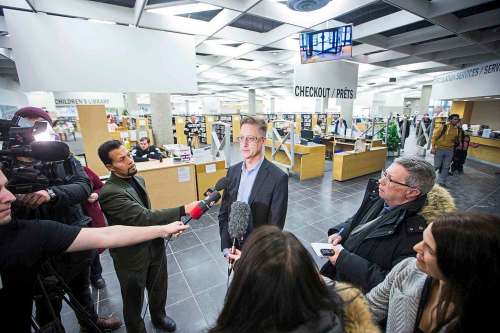
Users of the downtown Millennium Library will be subject to several new security screening measures, more commonly seen at airports and sporting facilities.

City hall announced Friday that effective Feb. 25, all visitors to the Donald Street library will undergo bag checks and be subjected to a hand-held metal detector sweep for alcohol and prohibited weapons. Visitors who refuse to participate will be barred from entering the library.

“The number of incidents (has) increased in the past four to five years, incidences involving violence, threats, alcohol, substance abuse and it was concerning. We met with police and our security contractor. After discussing, we came up with this course of action,” Ed Cuddy, manager of library services, told reporters. “We feel it’s a big change, but we feel it’s justified based on the kind of incidents we’ve been experiencing recently.”

Cuddy wouldn’t elaborate on the nature of the incidents, but did say library workers have not been the victims.

Read
Saturday, Feb. 16, 2019

Science-art collaboration injects dose of emotion into cold, hard truths

Sarah Lawrynuik 5 minute read Preview

Science-art collaboration injects dose of emotion into cold, hard truths

Sarah Lawrynuik 5 minute read Wednesday, Apr. 28, 2021

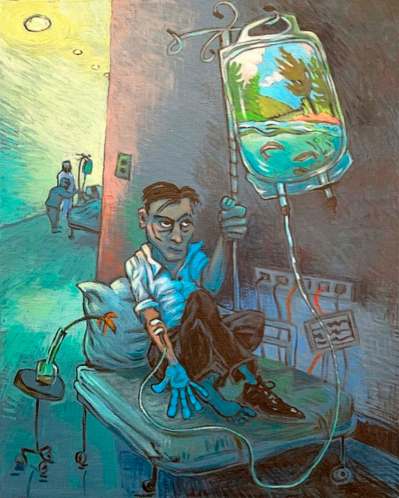
Looking at spreadsheets and map plots of trees is far beyond Rhian Brynjolson’s typical day as a visual artist, but she became entranced and inspired by data collected by Canadian scientists for a new art project.

Her hope is to try and bring the numbers, map dots and statistics to life in a new way to help the public better connect to climate science.

Falcon Lake’s Brynjolson is one of 12 Canadian artists who participated in an art-science collaboration exhibit, co-ordinated by the Global Water Futures program out of the University of Saskatchewan. The project saw the artists paired with researchers and scientists across the country who then engaged in conversations to try to inspire a new angle to their art.

“The whole idea behind it is: water is life,” says Louise Arnal, the project lead, and a post-doctoral fellow at the Centre for Hydrology and Coldwater Laboratory.

Read
Wednesday, Apr. 28, 2021