Number of people in hospital with COVID-19 goes up in Saskatchewan

Advertisement

Advertise with us

REGINA - The Saskatchewan government is reporting 13 new cases of COVID-19 and adds the number of people in hospital with the illness has increased to a dozen.

Read this article for free:


By clicking the button above, an account will be created and you will begin to receive some of our recommended newsletters. You may opt out of any newsletter by visiting your Email and Communication Preferences page or by clicking "unsubscribe" at the bottom of any email.

or

Already have an account? Log in here »

To continue reading, please subscribe:

Digital Subscription

One year of digital access for only $1.44 a week*

  • Enjoy unlimited reading on winnipegfreepress.com
  • Read the E-Edition, our digital replica newspaper
  • Access News Break, our award-winning app
  • Play interactive puzzles

*Billed as $5.77 plus GST every four weeks. After 52 weeks, price increases to the regular rate of $19.95 plus GST every four weeks. Offer available to new and qualified returning subscribers only. Cancel any time.

To continue reading, please subscribe:

Add Free Press access to your Brandon Sun subscription for only an additional

$1 for the first 4 weeks*

  • Enjoy unlimited reading on winnipegfreepress.com
  • Read the E-Edition, our digital replica newspaper
  • Access News Break, our award-winning app
  • Play interactive puzzles
Start now

*Your next Brandon Sun subscription payment will increase by $1.00 and you will be charged $17.95 plus GST for four weeks. After four weeks, your payment will increase to $24.95 plus GST every four weeks.

Hey there, time traveller!
This article was published 17/07/2020 (2298 days ago), so information in it may no longer be current.

REGINA – The Saskatchewan government is reporting 13 new cases of COVID-19 and adds the number of people in hospital with the illness has increased to a dozen.

That compares with three hospitalizations on Monday.

The new cases include eight in the central region, two in the Regina area and one each in the far north, north and south.

The Saskatchewan government is reporting 13 new cases of COVID-19 and adds the number of people in hospital with the illness has increased to a dozen. The Saskatchewan Legislative Building at Wascana Centre in Regina, Saturday, May 30, 2020. THE CANADIAN PRESS/Mark Taylor

They bring the total number in Saskatchewan since the pandemic began to 936 with 15 of those infected dying.

There now are 128 active cases and 793 recoveries.

The government says three cases that were previously reported as recovered have been put back on the active list.

“This can happen if public health determines an individual has relapsed or developed additional symptoms,” the province said Friday.

Meanwhile, a northern Dene community hit hardest by COVID-19 has declared itself free of the illness.

La Loche says its last active case was deemed recovered on Wednesday.

“It has been a long haul, but it’s a welcome relief to know working together we can accomplish such a feat,” said Mayor Robert St. Pierre. “To get to zero is a huge milestone.”

The village and Clearwater Dene First Nation have accounted for almost one-third of the province’s cases to date. Of the 282 infected people in the area, five died.

The first confirmed case was on April 15 and the novel coronavirus quickly spread.

The community’s response included closing the local liquor store and launching a managed alcohol program by the Saskatchewan Health Authority.

St. Pierre said the biggest challenge was persuading residents that the virus was a real threat. He said continuing that education will be key in preventing another outbreak.

While restrictions have been eased, the community is not letting up.

“We are still practising precautions. We are still wearing our masks when we go shopping and out in public,” St. Pierre said.

“We have learned to readjust our lives.”

This report by The Canadian Press was first published July 17, 2020

— With files from CJME

Report Error Submit a Tip

More Stories

Listening after decades of hearing

Melissa Martin 7 minute read Preview

Listening after decades of hearing

Melissa Martin 7 minute read Friday, Oct. 1, 2021

It seemed that all of Canada glowed orange, in act or in mind. On the streets of Winnipeg, a sea of people marched in orange shirts, carrying orange signs. On social media, people shared text posts on orange backgrounds, urging more attention to the Truth and Reconciliation Commission's 94 calls to action.

Even city buses — though not orange — marked the day on their digital signs.

If you'd come to me 10 years ago and told me this week would happen, I wouldn't have believed you. If you'd told me that on the last day of September 2021, everything from a cocktail bar to a Botox clinic would close to remember the children and survivors of residential schools, I would have said you were telling me about a dream.

Not the kind we seek to create, but the kind that disintegrates upon waking.

Read
Friday, Oct. 1, 2021

Imperialist crusades: 21st-century style

John R. Wiens 5 minute read Preview

Imperialist crusades: 21st-century style

John R. Wiens 5 minute read Wednesday, Jul. 8, 2026

In the 11th century and lasting into the 13th, the papacy launched a series of at least eight military campaigns we now refer to as the Crusades, or Holy Wars. They were an imperialistic call to arms for Christians to retake Jerusalem, which was at the time under Muslim rule.

Spiritual rewards for participation were implied, and other incentives offered, to dull the extra taxation demanded to fund the campaigns. Over time, the “crusades” morphed to become massacres of not only Muslims but also Jews and Christian dissidents — in other words, any enemies of the papacy. If today’s news sounds like déjà vu all over again, it probably should.

The stories keep repeating themselves in many forms. We now know that two 20th century world wars, global in scope, were caused by imperialistic ambitions, changes in the balance of international powers and corresponding arms races. The first was attributed to the assassination of the heir to the Austro-Hungarian throne by a Bosnian Serb, a kind of “regime change” initiative. The second resulted from rising tensions between Allied and Axis powers, triggered by the rise of European fascism and Japanese militarism. The human toll of both was unimaginable.

In the First World War, 15 to 22 million people, including soldiers and civilians, were killed and another 23 million were wounded. These numbers do not account for those otherwise affected — victims of chemical warfare whose compromised health shortened their lives; of the subsequent Spanish flu epidemic amplified by the displacement of peoples; others who died from other diseases caused by war conditions; and those who were malnourished or starved. Nor do they account for the ongoing trauma and resentments passed on intergenerationally to this day.

Read
Wednesday, Jul. 8, 2026

The new normal in Canadian politics

David McLaughlin 5 minute read Preview

The new normal in Canadian politics

David McLaughlin 5 minute read Yesterday at 2:01 AM CDT

“Nothing happening, all at once.”

Welcome to the new normal of Canadian politics, where normality is the new normal. Routine and stable are in; disruptive and excessive are out. Exhibits A and B are the Alberta referendum and the British Columbia election. Voters opted for stability over volatility.

The opposite of being normal is being different from the norm. In politics that means different from where we’ve been and what we’ve come to expect. Two competing trends have dominated our politics for the past decade and a half — progressivism and populism. Think Justin Trudeau and liberal, progressive identity politics in Canada, and Donald Trump and conservative, populist MAGA politics in America. We are now experiencing a swing away from both those trends.

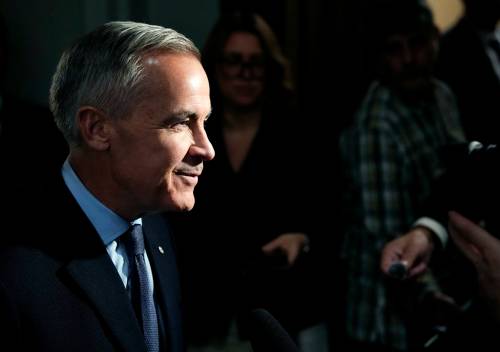
Representing this “new normal” are Prime Minister Mark Carney, for one, and newly elected British Columbia premier, Lorne Doerksen, for another. Both are considered normal because they talk and act like adults in a childish political world. Their political flair is to not have any political flair. They stand out for not standing out.

Read
Yesterday at 2:01 AM CDT

Province changes Thompson ‘Vaxport’ plan

Carol Sanders 5 minute read Preview

Province changes Thompson ‘Vaxport’ plan

Carol Sanders 5 minute read Thursday, Jan. 14, 2021

The Manitoba government has changed its plans for a vaccination "super site" for the North — just days after it was announced — after local officials argued the original proposal was unworkable.

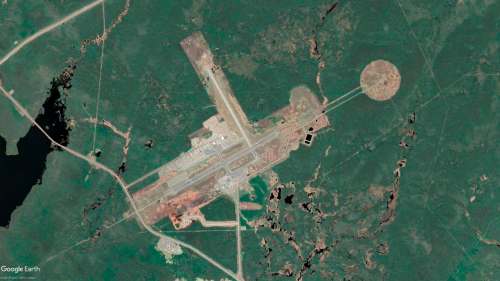
Some northern residents will still get their COVID-19 shots at Thompson's airport, but "Vaxport" will be less super than originally planned, providing injections only to residents of fly-in communities.

Most northern residents will get their shots at the Thompson Community Recreation Centre, which is centrally located in the city of about 13,000.

"This makes much more sense logistically, and for the citizens of Thompson," Mayor Colleen Smook said Thursday after touring the airport site, which is located 10 kilometres from the city and isn't serviced by public transportation.

Read
Thursday, Jan. 14, 2021

A little toponder, a lot to celebrate

Erna Buffie 5 minute read Yesterday at 2:01 AM CDT

Well, another civic election season has come and gone, and I have to say it was a doozy. The most surprising event was the steady climb in support for young mayoral candidate Noah Redden, who started out with just four per cent public support in September but had reached a solid 14 per cent support in October.

On election day, Redden nearly came in second, less than one percentage point behind Kevin Klein, an experienced politician.

Indeed, the 27-year-old’s accomplishment was nothing short of astonishing. Particularly given that his shoestring campaign was given very little coverage — largely, according to one pundit, because he didn’t send out any press releases.

This when Redden’s unwritten press releases were there for everyone to see on Instagram, as he popped up in locations across the city, posting videos about what he hoped to achieve as mayor.

The long and winding road

Editorial 4 minute read Preview

The long and winding road

Editorial 4 minute read Yesterday at 2:01 AM CDT

As theatre goes, it sent a strong message.

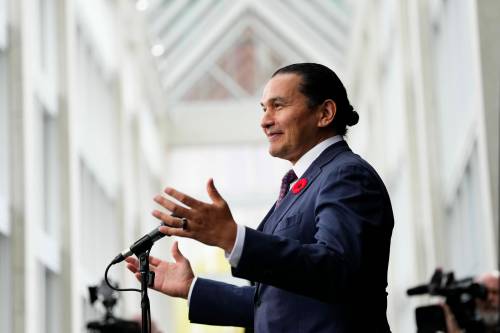
Manitoba Premier Wab Kinew, standing in front of microphones and television cameras, holding up his Indigenous status card and saying that he didn’t feel Canada should have “a race-based form of identification in this country, but that is a reality,” adding that it was time to abolish the Indian Act.

“I think it’s time to abolish the Indian Act, get rid of the Indian Act, move past the Indian Act, and it needs to be done with First Nations people and First Nations governments, of course. I think it’s long overdue that we have a relationship with Indigenous Peoples in Canada that reflects who we are as Canadians today,” he said.

The Indian Act — the name alone suggests how out-dated and out of place the law has become. Originally dating from 1876, the law was put in place to “amend and consolidate the laws respecting Indians” and gave the Minister of the Interior the responsibility to “control and management of the reserves, lands, moneys and property of Indians in Canada.”

Read
Yesterday at 2:01 AM CDT