Trudeau says air, train travel to be denied for anyone with COVID-19 symptoms
Advertisement
Read this article for free:
or
Already have an account? Log in here »
To continue reading, please subscribe:
Digital Subscription
One year of digital access for only $1.44 a week*
- Enjoy unlimited reading on winnipegfreepress.com
- Read the E-Edition, our digital replica newspaper
- Access News Break, our award-winning app
- Play interactive puzzles
*Billed as $5.77 plus GST every four weeks. After 52 weeks, price increases to the regular rate of $19.95 plus GST every four weeks. Offer available to new and qualified returning subscribers only. Cancel any time.
To continue reading, please subscribe:
Add Free Press access to your Brandon Sun subscription for only an additional
$1 for the first 4 weeks*
- Enjoy unlimited reading on winnipegfreepress.com
- Read the E-Edition, our digital replica newspaper
- Access News Break, our award-winning app
- Play interactive puzzles
*Your next Brandon Sun subscription payment will increase by $1.00 and you will be charged $17.95 plus GST for four weeks. After four weeks, your payment will increase to $24.95 plus GST every four weeks.
Read unlimited articles for free today:
or
Already have an account? Log in here »
Hey there, time traveller!
This article was published 28/03/2020 (2410 days ago), so information in it may no longer be current.
OTTAWA – Beginning at noon Monday, anyone in Canada showing symptoms related to COVID-19 will be barred from boarding domestic flights and trains, Prime Minister Justin Trudeau announced Saturday.
While most Canadians are heeding the advice of government and public health officials asking them to stay home and not travel, especially if they are feeling ill, additional measures are needed to stop the spread of the virus within Canada, Trudeau said.
“We are giving further tools to airlines and rail companies to ensure that anyone exhibiting COVID-19 symptoms does not travel,” he said from outside his home at Rideau Cottage.
Under the Transport Canada interim order, air operators and intercity passenger rail companies will be required to do a health check of all passengers to screen for symptoms. Company representatives will ask simple health questions, look for visible signs of illness prior to boarding and recommend that passengers follow guidance from local health authorities.
Companies will be required to bar anyone showing symptoms of the virus from boarding trains and planes, and this denial will remain in effect for 14 days or until a medical certificate is presented that confirms the traveller’s symptoms are not related to COVID-19.
These measures will not apply to buses or commuter trains, as they are not federally regulated.
Canada’s deputy chief public health officer Dr. Howard Njoo said more details on enforcement will be announced in the coming days, but he acknowledged that even with these new screening measures, sick travellers could still end up on trains and planes.
“There is no guarantee. People can always hide symptoms, take Tylenol,” he said. “So I think at the end of the day it comes down to our collective understanding and our collective motivation and approach to do the right thing — if you’re sick, don’t travel.”
Also on Saturday, Quebec’s deputy premier Genevieve Guilbault announced a rollout of police checkpoints, essentially sealing off eight remote regions of the province. The only exceptions will be for people who are providing essential services or travelling for health or humanitarian reasons.
Several other provinces have imposed screening measures for travellers at their provincial boundaries and are imposing 14-day self-isolation for anyone coming from other provinces, while Nunavut has banned most non-residents from entering its territory.
Despite these tightening travel rules within Canada, Trudeau says provincial borders will remain open for now.
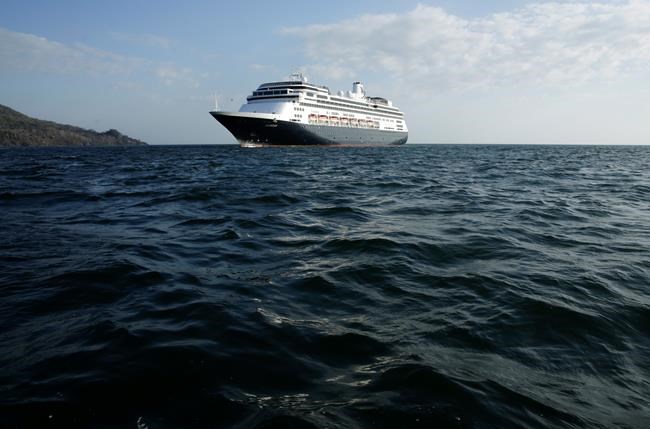
Trudeau also addressed the situation of the 248 Canadians stranded on a cruise ship off the coast of Panama, where some passengers have tested positive for COVID-19 and four people have died.
The federal government is working with the Panamanian government and Holland America, which operates the Zaandam, in an effort to get the Canadians home.
The work appears to have paid off, with Foreign Affairs Minister Francois-Philippe Champagne tweeting on Saturday night that his Panamanian counterpart would allow the ship passage through the Panama Canal and on to its final destination of Fort Lauderdale, Fla.
The efforts are part of the “herculean task” being undertaken to repatriate stranded Canadians around the world — work that is the focus of all Global Affairs Canada employees right now, Trudeau said.
Ottawa residents Catherine McLeod and Paul Innes, retired teachers, are among those trapped on the Zaandam. They boarded the cruise in early March, before the spread of novel coronavirus became a global pandemic.
In an email to The Canadian Press, McLeod said what had been a mostly enjoyable trip was turned on its head last weekend.
“The boom hit last Sunday when we were asked to return to our staterooms and not exit,” McLeod recounted. They learned that many passengers and crew members had reported to sick bay with flu-like symptoms.
“I just hope and pray that no others die and that someone lets us dock and we can board a plane ASAP,” she said.
In a statement, Global Affairs Canada said none of the passengers who died is Canadian. It said it is in contact with passengers, and those without symptoms are being transferred to another ship expected to dock at a U.S. port in the coming days.
The department also confirmed Saturday that a Canadian citizen who was on a separate cruise has died from complications related to COVID-19 in Brazil.
Meanwhile in Ontario, Premier Doug Ford limited gatherings to no more than five people and has committed to imposing steep fines and possible jail time against corporations involved in price gouging amid the COVID-19 crisis.
Canada’s chief public health officer Dr. Theresa Tam said the latest data shows about seven per cent of COVID-19 cases in the country have resulted in hospitalization, three per cent have required critical care and about one per cent have been fatal.
The Public Health Agency of Canada says that 12 per cent of people hospitalized are aged 40 and under.
“We continue to keep a close eye on the severity of the disease, because although there will be day-to-day fluctuation, a sustained trend of increased severity could point to a higher rate of infection in vulnerable populations or that the health system is being overwhelmed,” Tam told a news conference.
But she also noted “signs of hope” from British Columbia, where data indicates the province’s COVID-19 experience will likely resemble South Korea’s rather than brutally hit Italy.
Tam noted that B.C. was the first area of Canada to experience community transmission. “It is too early to know for sure, but after weeks of public health interventions, the rate of growth appears to be slowing,” she said.
She also warned this good news should not be taken as a sign that physical distancing and self-isolation measures should be relaxed.

“Our key message is to double down, absolutely double down,” Tam said.
“Right now is an absolutely critical time …. We’re definitely not out of the woods, we’ve got to keep going.”
This report by The Canadian Press was first published March 28, 2020.
— With files from Sidhartha Banerjee, Salmaan Farooqui and Liam Casey
Note to readers: This is a corrected story. A previous version cited Tam saying 30 per cent of those hospitalized were under age 40. The Public Health Agency of Canada has since corrected itself, saying the figure is 12 per cent.
Related Articles
Manitoba's COVID-19 count grows to 72 cases

Advertisement Advertise With Us
Advertisement Advertise With Us