Feds plan $30M ad buy to help media deal with COVID-19 fallout

Advertisement

Advertise with us

OTTAWA - The federal government announced Wednesday that it is planning a $30-million COVID-19 awareness advertising campaign and moving closer to implementing long-promised tax credits for newspapers as it seeks to support Canada's struggling media industry during the pandemic.

Read this article for free:


By clicking the button above, an account will be created and you will begin to receive some of our recommended newsletters. You may opt out of any newsletter by visiting your Email and Communication Preferences page or by clicking "unsubscribe" at the bottom of any email.

or

Already have an account? Log in here »

To continue reading, please subscribe:

Digital Subscription

One year of digital access for only $1.44 a week*

  • Enjoy unlimited reading on winnipegfreepress.com
  • Read the E-Edition, our digital replica newspaper
  • Access News Break, our award-winning app
  • Play interactive puzzles

*Billed as $5.77 plus GST every four weeks. After 52 weeks, price increases to the regular rate of $19.95 plus GST every four weeks. Offer available to new and qualified returning subscribers only. Cancel any time.

To continue reading, please subscribe:

Add Free Press access to your Brandon Sun subscription for only an additional

$1 for the first 4 weeks*

  • Enjoy unlimited reading on winnipegfreepress.com
  • Read the E-Edition, our digital replica newspaper
  • Access News Break, our award-winning app
  • Play interactive puzzles
Start now

*Your next Brandon Sun subscription payment will increase by $1.00 and you will be charged $17.95 plus GST for four weeks. After four weeks, your payment will increase to $24.95 plus GST every four weeks.

Hey there, time traveller!
This article was published 25/03/2020 (2411 days ago), so information in it may no longer be current.

OTTAWA – The federal government announced Wednesday that it is planning a $30-million COVID-19 awareness advertising campaign and moving closer to implementing long-promised tax credits for newspapers as it seeks to support Canada’s struggling media industry during the pandemic.

Yet the measures were immediately deemed by some as insufficient to deal with the financial pinch that newspapers, broadcasters and other media organizations, many of which were struggling even before COVID-19, are now facing as their advertising revenues evaporate.

Several media organizations have blamed that collapse in revenue for their decision this week to lay off hundreds of journalists and support workers, and shift their operations by closing or combining publications and ending print editions during the week.

Prime Minister Justin Trudeau addresses Canadians on the COVID-19 situation from Rideau Cottage in Ottawa on Wednesday, March 25, 2020. THE CANADIAN PRESS/Sean Kilpatrick

Prime Minister Justin Trudeau previewed the coming support during his daily appearance outside his Ottawa residence, where he emphasized the importance of Canadians having accurate information while thanking journalists for doing their jobs.

“Right now, it is more important than ever that Canadians have access to the latest news and information,” Trudeau said. “To ensure that journalists can continue to do this vital work, our government is announcing new measures to support them.”

Heritage Minister Steven Guilbeault later announced the government plans to spend $30 million on an advertising campaign to raise awareness about COVID-19 — money that he promised would go primarily to Canadian media organizations.

Those include Canadian newspapers, magazines, television stations and online publications, Guilbeault said, “so the revenues generated by this campaign can breathe new life into our media.”

The federal government has spent on average about $39 million per year on advertising since the Liberals came to power in 2016, according to official figures. That represented just more than half what it spent each year between 2010 and 2015 when the Conservatives were in government.

Those increasingly scarce advertising dollars have also shifted more and more away from newspapers, radio and television toward online platforms such as Facebook, Twitter and Instagram, which are not Canadian-owned.

Guilbeault also said the government has finished putting together a panel tasked with assessing whether media organizations qualify for three different tax measures that were first promised last year.

The most significant is a tax credit that qualified newspapers can claim on up to 25 per cent of the wages or salaries they pay to their journalists or other eligible employees. The credit, which is not available to broadcasters, is retroactive to salaries that were paid starting on Jan. 1, 2019.

“It is essential that Canadians can obtain authoritative, well-sourced and factual information related to COVID-19,” Guilbeault said. “This is why the government of Canada is taking immediate action so Canadians can continue to access diverse and reliable sources of news.”

The measures were widely criticized as too little to make a real difference, including by the head of one large newspaper chain in Atlantic Canada that laid off 240 employees — or about 40 per cent of its workforce — on Tuesday and shuttered several of its publications.

“This is not going to help us,” said SaltWire Network president Mark Lever. “Our business, we see two-thirds of our revenue at risk here. I mean it went away overnight with cancellations and businesses shuttered.”

Lever was skeptical newspapers would get very much of the promised new advertising money, suggesting broadcasters and online platforms would see the lion’s share. And he said newspapers were already working the tax credits into their business models before COVID-19.

“It’s money due to us that’s been frankly already spent,” he said. “So it’s a shame to see that the aid package is repurposing money already committed.”

Bob Cox, publisher of the Winnipeg Free Press and chair of News Media Canada, bluntly accused Trudeau of lying when he spoke of new measures to support journalism.

All the government has done is re-announce measures “that were first announced a year ago that have been mismanaged and delayed and to date have provided zero dollars to news outlets,” Cox said in an opinion piece to be published Thursday in some newspapers.

SaltWire wasn’t the only newspaper group to lay off staff this week. More than 140 employees of a co-operative that owns six daily newspapers outside Montreal were also temporarily laid off on Monday and the organization said it was ceasing print editions during the week.

Lever said what news organizations really need is more liquidity to be able to ride out the precipitous drop in revenue until after COVID-19. That and for the government to finally take action against foreign social-media sites that circulate news content for free while stealing ad revenue.

Daniel Bernhard, executive director of Friends of Canadian Broadcasting, echoed that assessment, noting Facebook, Twitter and other sites continue to benefit from Canadian journalism while being free of having to pay any corporate tax.

Bernhard was also skeptical that the measures announced on Wednesday would make a huge difference to media organizations, adding he was worried the government would be slow in approving tax credits or other assistance at a time when it is facing so many other challenges.

“Not only are these measures small and were probably insufficient when times were normal, I’m not confident that they’ll be able to get this package out the door with enough time to be helpful,” he said.

This report by The Canadian Press was first published March 25, 2020.

Report Error Submit a Tip

More Stories

Has the political wind changed?

Gwynne Dyer 5 minute read 2:01 AM CDT

It has been quite a week. First we had “Lula” – Luiz Inácio da Silva (as nobody but his mother ever called him) – defying everybody’s expectations. After winding up two million votes behind his challenger, Flávio Bolsonaro, in the first round of the Brazilian presidential election, he made a “miraculous” comeback in the second.

It was like a man going into a revolving door behind you and coming out in front. At the end of the first round, Lula was two million votes behind; at the end of the second round on Oct. 25 he was four million votes ahead. So how did he win a fourth term without cheating?

That’s what Bolsonaro claims he did, having fled to the United States; Trump, Flávio’s mentor, hints at the same. But Lula’s victory was not miraculous. He only learned to read when he was 10, and at 80 he still refused to have a mobile phone. His team finally made him get one and use it.

He wouldn’t do social media videos, so they created a WhatsApp channel called Lula’s Army, and made him appear on it at least daily. The channel went from zero to 10.8 million viewers in two weeks, and Lula won.

Actor-director Cooper takes new approach to familiar tale

Randall King 4 minute read Preview

Actor-director Cooper takes new approach to familiar tale

Randall King 4 minute read Thursday, Oct. 4, 2018

TORONTO — In his self-directed version of A Star Is Born, Bradley Cooper plays a rock star named Jackson Maine.

Note the name: it marks the character as a member of a cinematic lineage that descends all the way to 1937.

That year, the first A Star Is Born was made, with Frederick March in the role of alcoholic actor Norman Maine. The name stayed in 1954, when James Mason took over the role of an actor who first nurtures the career of Judy Garland’s up-and-coming star Vicki Lester before his drunken shenanigans threaten to derail it. By 1976, Kris Kristofferson played the role of musician John Norman Howard, a rock singer with a musical stake in the ascent of Barbra Streisand’s Esther Hoffman.

Cooper, 43, remembered the Maine name, but also brought his own vision as a first-time feature filmmaker to the new version, which opens Thursday, Oct. 4, opposite Lady Gaga after the originally designated director, Clint Eastwood, dropped out. While actors might not want to see different interpretations of a role, Cooper embraced the opportunity to see all the past iterations.

Read
Thursday, Oct. 4, 2018

Defunding police ‘illogical step’: Pallister

Carol Sanders 5 minute read Preview

Defunding police ‘illogical step’: Pallister

Carol Sanders 5 minute read Tuesday, Jun. 9, 2020

Manitoba Premier Brian Pallister says he’s open to channelling justice funding to preventive programs, but questions whether defunding police is the best approach — warning there will always be criminals taking advantage of vulnerable people.

“I think the motivation that lies in frustrations of the actions of some police services — not necessarily here in Winnipeg exclusively, but elsewhere — is justifiable and understandable, and I get it,” Pallister said Tuesday, when asked to comment on the 30,000 signatures collected for a Justice 4 Black Lives Winnipeg petition calling for the abolition of the city police.

“But then moving to defunding police is, to me, an illogical step from that one. Don’t let your frustration lose your common sense... There’s a lot of people out there in vulnerable communities who depend on the police to protect them and make sure they’re safe from the action of criminals.”

There has been a widespread call to restructure police funding in the wake of George Floyd’s death May 25 in Minneapolis.

Read
Tuesday, Jun. 9, 2020

The long and winding road

Editorial 4 minute read Preview

The long and winding road

Editorial 4 minute read 2:01 AM CDT

As theatre goes, it sent a strong message.

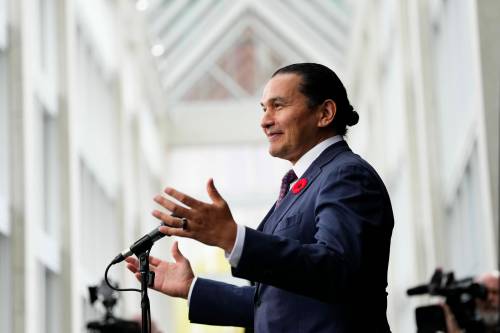
Manitoba Premier Wab Kinew, standing in front of microphones and television cameras, holding up his Indigenous status card and saying that he didn’t feel Canada should have “a race-based form of identification in this country, but that is a reality,” adding that it was time to abolish the Indian Act.

“I think it’s time to abolish the Indian Act, get rid of the Indian Act, move past the Indian Act, and it needs to be done with First Nations people and First Nations governments, of course. I think it’s long overdue that we have a relationship with Indigenous Peoples in Canada that reflects who we are as Canadians today,” he said.

The Indian Act — the name alone suggests how out-dated and out of place the law has become. Originally dating from 1876, the law was put in place to “amend and consolidate the laws respecting Indians” and gave the Minister of the Interior the responsibility to “control and management of the reserves, lands, moneys and property of Indians in Canada.”

Read
2:01 AM CDT

Human rights museum responds to reopening backlash

Julia-Simone Rutgers 4 minute read Preview

Human rights museum responds to reopening backlash

Julia-Simone Rutgers 4 minute read Thursday, Jul. 29, 2021

The Canadian Museum for Human Rights reopened to fully vaccinated members of the public this week, drawing cries of discrimination from those who have chosen not to get vaccinated against COVID-19.

While the some of the backlash has been “disturbing,” museum CEO Isha Khan said the conflict has opened room for a conversation about human rights during the pandemic.

“We made the decision to open in compliance with that law, really because we’re a public institution and we saw it as our responsibility to open as soon as we could to the public — within the restrictions as they currently are,” Khan said Thursday.

“But it’s really important to us, as the Canadian Museum for Human Rights we have a mandate for human rights education, that we’re trying to ground the conversation in human rights principles.”

Read
Thursday, Jul. 29, 2021

The new normal in Canadian politics

David McLaughlin 5 minute read Preview

The new normal in Canadian politics

David McLaughlin 5 minute read 2:01 AM CDT

“Nothing happening, all at once.”

Welcome to the new normal of Canadian politics, where normality is the new normal. Routine and stable are in; disruptive and excessive are out. Exhibits A and B are the Alberta referendum and the British Columbia election. Voters opted for stability over volatility.

The opposite of being normal is being different from the norm. In politics that means different from where we’ve been and what we’ve come to expect. Two competing trends have dominated our politics for the past decade and a half — progressivism and populism. Think Justin Trudeau and liberal, progressive identity politics in Canada, and Donald Trump and conservative, populist MAGA politics in America. We are now experiencing a swing away from both those trends.

Representing this “new normal” are Prime Minister Mark Carney, for one, and newly elected British Columbia premier, Lorne Doerksen, for another. Both are considered normal because they talk and act like adults in a childish political world. Their political flair is to not have any political flair. They stand out for not standing out.

Read
2:01 AM CDT