Ontario doctor rigs up solution to double ventilator capacity in rural hospital

Advertisement

Advertise with us

OTTAWA - A doctor in Ontario has improvised a way to double his small hospital's ventilator capacity in preparation for a possible COVID-19 outbreak.

Read this article for free:


By clicking the button above, an account will be created and you will begin to receive some of our recommended newsletters. You may opt out of any newsletter by visiting your Email and Communication Preferences page or by clicking "unsubscribe" at the bottom of any email.

or

Already have an account? Log in here »

To continue reading, please subscribe:

Digital Subscription

One year of digital access for only $1.44 a week*

  • Enjoy unlimited reading on winnipegfreepress.com
  • Read the E-Edition, our digital replica newspaper
  • Access News Break, our award-winning app
  • Play interactive puzzles

*Billed as $5.77 plus GST every four weeks. After 52 weeks, price increases to the regular rate of $19.95 plus GST every four weeks. Offer available to new and qualified returning subscribers only. Cancel any time.

To continue reading, please subscribe:

Add Free Press access to your Brandon Sun subscription for only an additional

$1 for the first 4 weeks*

  • Enjoy unlimited reading on winnipegfreepress.com
  • Read the E-Edition, our digital replica newspaper
  • Access News Break, our award-winning app
  • Play interactive puzzles
Start now

*Your next Brandon Sun subscription payment will increase by $1.00 and you will be charged $17.95 plus GST for four weeks. After four weeks, your payment will increase to $24.95 plus GST every four weeks.

Hey there, time traveller!
This article was published 18/03/2020 (2417 days ago), so information in it may no longer be current.

OTTAWA – A doctor in Ontario has improvised a way to double his small hospital’s ventilator capacity in preparation for a possible COVID-19 outbreak.

Anesthetist Dr. Alain Gauthier, who has a PhD in respiratory mechanics and works in Perth, west of Ottawa, spotted the idea in a YouTube video.

In basic terms, the rig involves running two hoses from one ventilator and doubling the power.

Dr Alain Gauthier is shown in a handout photo. Gauthier has improvised a way to double his rural hospital's ventilator capacity in preparation for a possible COVID-19 outbreak. THE CANADIAN PRESS/HO-Alian Gauthier MANDATORY CREDIT

In just ten minutes with the help of some extra tubing, Gauthier made it possible to double the number of patients ventilated in the hospital at once, if needed.

But there’s a catch: the two patients attached to the same ventilator need to be of similar size and lung capacity. And if one patient declines things will need to be adjusted.

It’s not perfect, but as Gauthier put it, “if it comes to last resort, I’m prepared to use it.”

Gauthier said the population the Perth and Smiths Falls District Hospital serves may be at greater risk if hit with the COVID-19 outbreak. Many of the 60,000 people in the region are older, with underlying health conditions like diabetes and chronic pulmonary disease.

His hospital recently received four new ventilators, and keeps four old ones in reserve that are still functioning, but can’t be repaired if they break down.

In a rural health-care setting, the hospital’s ability to increase its surge capacity may be limited in the event of a widespread outbreak.

The idea to double up patients on a single ventilator was studied in theory by American Drs. Greg Neyman and Charlene Babcock in 2006. It was tried once, successfully, in the aftermath of the 2017 mass shooting of the Route 91 harvest music festival in Las Vegas.

Babcock, an emergency physician in Michigan, created a how-to video on YouTube to help doctors around the world respond to COVID-19. That’s where Gauthier got the idea.

The goal, Gauthier said, is to avoid the kinds of difficult ethical decisions facing Italian physicians who have had to choose which critical patients should get a ventilator, because there aren’t enough to go around.

His efforts speak to the lengths doctors across the country are going to prepare their hospitals and staff for the worst-case scenario, a sudden onslaught of COVID-19 cases, he said.

“We are concerned, we’re trying to get ready as much as possible,” he said.

His colleagues were incredibly enthusiastic about his ability to potentially double the ventilator capacity of the hospital, he said.

Dr. Alan Drummond, an emergency physician at the hospital, said he even broke social distancing protocol to give Gauthier a hug.

But Gauthier said he wants no credit.

He said he’s only doing what every Canadian health care worker is doing right now: trying to brace for what’s to come.

“A lot of work is being done by pretty much everyone,” he said.

The federal government is also ordering additional ventilators, which will be distributed to provincial and territorial health authorities.

This report by The Canadian Press was first published March 18, 2020.

Report Error Submit a Tip

More Stories

Today’s horoscope

Georgia Nicols 4 minute read Preview

Today’s horoscope

Georgia Nicols 4 minute read 2:00 AM CDT

MOON ALERT: There are no restrictions to shopping or important decisions today. The moon is in Cancer.

ARIES (March 21-April 19)

Avoid heated discussions regarding kids, social plans, shared expenses or dealing with authority figures. (This covers a wide swath.) People are touchy! Pull in your reins and tread carefully. You don’t have to be right. You don’t even have to be wrong.

TAURUS (April 20-May 20)

Read
2:00 AM CDT

Heg

Rylee Gerrard 5 minute read Preview

Heg

Rylee Gerrard 5 minute read 2:01 AM CDT

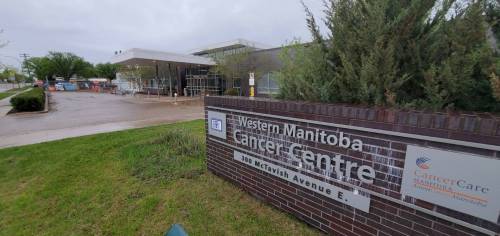
BRANDON — Western Manitoba is about to lose its only medical oncologist, leaving just 22 in the province — all of whom are in Winnipeg.

Brandon West MLA Wayne Balcaen raised the issue during question period Thursday, saying the departure of Dr. Brady Anderson will be a “major loss” for the region.

After four years working out of the Western Manitoba Cancer Centre in Brandon, Anderson’s last day will be Nov. 13.

“He literally sees hundreds of patients within the Westman area, and now those individuals will have to travel to Winnipeg to get that personal service,” Balcaen said, calling Anderson’s impending departure “catastrophic.”

Read
2:01 AM CDT

Must-see Folk Fest workshops

16 minute read Preview

Must-see Folk Fest workshops

16 minute read Thursday, Jul. 5, 2018

Workshops have always been an integral part of the Winnipeg Folk Festival.

They are magic-moment makers; a curated group of musicians — sometimes friends, sometimes strangers — on one stage playing together, supporting each other, creating something that will only exist for an hour or two. No one knows what will come out of the collaboration, but usually it’s something special.

When the Free Press spoke to Winnipeg Folk Festival artistic director Chris Frayer ahead of the lineup release in early March, he noted he would be paying some extra attention to workshops this year, as some of the special projects occurring during the past couple of festivals had pulled some of his attention away.

And with 37 workshops on the books, it would seem he followed through on his promise.

Read
Thursday, Jul. 5, 2018

Building healthier Canadians

Jason M. Sutherland 4 minute read 2:00 AM CDT

Ottawa is betting that billions of taxpayer dollars spent on steel, asphalt and concrete will secure Canada’s economic future and prosperity. Through the $51 billion Build Communities Strong fund, the federal government is paying for roads, bridges, water systems and transit to boost productivity and attract capital from Europe and Asia.

As the shovels hit the ground from Halifax to Vancouver, Canadians should be asking themselves: What good does it do to build a stronger country if we are not building healthier Canadians?

The fund’s $5 billion allocation for health infrastructure is welcome news, as many of our hospitals and long-term care homes across the country are showing severe signs of aging, and modern care centres are much needed. But pouring concrete for new facilities is not the same as building a healthy population.

A ribbon-cutting at a modern hospital does not guarantee you see a family doctor when you need one, keep a rural emergency department open overnight, or shorten the wait for a knee replacement keeping someone off the job or robbing a retiree of independence.

Kinew will listen to city request for new taxes — but no promises

Nicole Buffie 5 minute read Preview

Kinew will listen to city request for new taxes — but no promises

Nicole Buffie 5 minute read Friday, Nov. 1, 2024

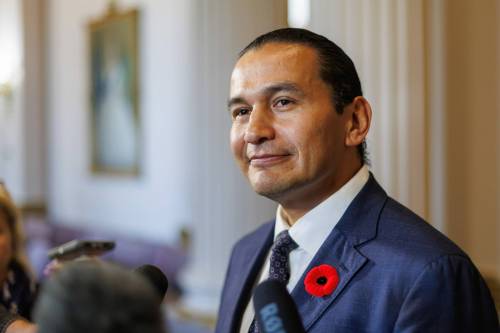
Premier Wab Kinew remained coy about whether he would support a new municipal tax in Winnipeg as the city struggles to maintain services.

Kinew dodged questions on the matter Friday afternoon.

“We want to see services strong, we want to see roads getting fixed,” Kinew said. “Affordability is really top of mind … we got to keep life affordable for the average person out there.”

Some of the items being considered for a new tax are: alcohol, online deliveries, vehicle registration, vacant homes, commercial parking and land transfers with an exemption for first-time homebuyers.

Read
Friday, Nov. 1, 2024

Letters, Oct. 30

7 minute read 2:00 AM CDT

Embarrassed by turnout

I am ashamed by the poor turnout of voters in the recent municipal election in Winnipeg. Just 38 per cent of eligible voters is a disgrace to the thousands of men and women who gave their lives in past wars, where they were defending democracy and the right to vote.

My grandfather was an infantry soldier in the First World War, and my father-in-law flew in Avro Lancasters in the Second World War. For both I am grateful.

Maybe the 62 per cent that had a flimsy excuse for not voting will keep this mind for the next election. People died for our right to vote.