Coronavirus fallout: Handwashing jumps in Canada, new poll indicates

Advertisement

Advertise with us

TORONTO - Growing concern about contracting or spreading the new coronavirus has so far prompted Canadians to make relatively modest changes to protect themselves and others, a poll released on Wednesday indicates.

Read this article for free:


or

Already have an account? Log in here »

To continue reading, please subscribe:

Subscribe and receive a limited-edition Free Press branded hat or tote.

Digital Subscription

One year of digital access for only $205*

  • Enjoy unlimited reading on winnipegfreepress.com
  • Read the E-Edition, our digital replica newspaper
  • Access News Break, our award-winning app
  • Play interactive puzzles

*First annual payment billed as $205.00 + GST for one year. This annual subscription will automatically renew at $233.00 + GST every 52 weeks (10% off the regular annual price of $259.35). Offer available to new and qualified returning subscribers only. Cancel any time.

To continue reading, please subscribe:

Add Free Press access to your Brandon Sun subscription for only an additional

$1 for the first 4 weeks*

  • Enjoy unlimited reading on winnipegfreepress.com
  • Read the E-Edition, our digital replica newspaper
  • Access News Break, our award-winning app
  • Play interactive puzzles
Start now

*Your next Brandon Sun subscription payment will increase by $1.00 and you will be charged $17.95 plus GST for four weeks. After four weeks, your payment will increase to $24.95 plus GST every four weeks.

Hey there, time traveller!
This article was published 11/03/2020 (2393 days ago), so information in it may no longer be current.

TORONTO – Growing concern about contracting or spreading the new coronavirus has so far prompted Canadians to make relatively modest changes to protect themselves and others, a poll released on Wednesday indicates.

The most dramatic impact, according to the Angus Reid Institute survey, is a noticeable increase in hand washing.

Of those surveyed, 57 per cent reported in the first week of March that they were washing their hands more often. That’s a 16-point increase from a month earlier.

About 17 per cent said they were trying to avoid public spaces, while a similar number said they had been stocking up on extra supplies of food and household items. Five per cent were staying away from public transit, while just four per cent said they had bought some form of protective mask.

Still, more than a quarter surveyed said they would cancel international trips they had already booked, even if it meant losing their money, while three quarters said they would go anyway, but take precautions.

The virus has caused illness and deaths in countries around the world, notably China, Iran, South Korea and Italy, which has locked down almost the entire country. Experts say the virus is highly contagious but, in general, the risk of becoming seriously ill or dying is low.

Canada has seen more than 100 confirmed cases, with one death reported — an elderly nursing home resident in British Columbia.

The tracking survey indicates a sharp increase over the past month in the number of Canadians concerned about the threat posed by the coronavirus. About 42% of Canadians now view the risk as “real and serious,” up from around 30 per cent at the beginning of February, the poll finds.

In all, about 40 per cent of those surveyed last week said they worried about becoming sick themselves, up from 30 per cent last month. At the same time, the number of Canadians who saw the situation as “overblown” has fallen.

“This certainly represents a hardening and an increase in concern and anxiety that is correlated to the number of cases that we’re starting to see and the level of proximity,” Shachi Kurl, the institute’s executive director, said in an interview. “A month ago, this was still very much a situation that was affecting people in other countries; now it’s coming home.”

In hopes of avoiding illness, 30 per cent said they would not go to concerts or sporting events, and would stay away from airports.

Despite the fears, roughly half of those polled expressed confidence in how the Liberal government of Justin Trudeau has been handling the crisis. Similarly, people in British Columbia and Ontario — the provinces hit hardest — are mostly confident in their provincial government’s response.

One of the biggest concerns, according to the poll, relates to the effects on the economy and the potential impact on personal finances. To mitigate the economic fallout, Trudeau on Wednesday said the federal government was spending $1 billion to help provinces respond to the novel coronavirus.

The Angus Reid Institute bills itself as a national, not-for-profit, non-partisan public opinion research foundation. The online survey took in a representative randomized sample of 1,512 Canadian adults.

The polling industry’s professional body, the Marketing Research and Intelligence Association, says online surveys cannot be assigned a margin of error because they do not randomly sample the population.

This report by The Canadian Press was first published March 11, 2020.

Note to readers: This is a corrected story. A previous version gave an incorrect day of the week for the release of the poll and Trudeau’s announcement.

Report Error Submit a Tip

More Stories

Pronounced need in this season of giving

Editorial 4 minute read Preview

Pronounced need in this season of giving

Editorial 4 minute read Thursday, Dec. 1, 2022

As we flip to the final page of the 2022 calendar, our thoughts turn to what’s commonly referred to as the season of giving.

Read
Thursday, Dec. 1, 2022

Ledohowski among new entrants to Manitoba Business Hall of Fame

Gabrielle Piché 3 minute read Preview

Ledohowski among new entrants to Manitoba Business Hall of Fame

Gabrielle Piché 3 minute read Friday, Sep. 25, 2026

The late Canad Inns founder will join the ranks of Manitoba Business Hall of Fame members next year.

Leo Ledohowski is one of three honourees to receive the prestigious title. Mark Evans, the executive chair of Conquest Planning, and Michael Pyle, Exchange Income Corporation’s chief executive, are also slated to be inducted next year.

“Each of their stories is very unique,” said Greg Leipsic, president of JA Manitoba.

The non-profit oversees the hall of fame; its board chooses new faces annually. The incoming businessmen will be honoured at an April 6 gala at the Victoria Inn Hotel.

Read
Friday, Sep. 25, 2026

Author’s grandson aims to set the record straight about literary lightning rod

Reviewed by Chris Smith 5 minute read Preview

Author’s grandson aims to set the record straight about literary lightning rod

Reviewed by Chris Smith 5 minute read Saturday, Apr. 25, 2026

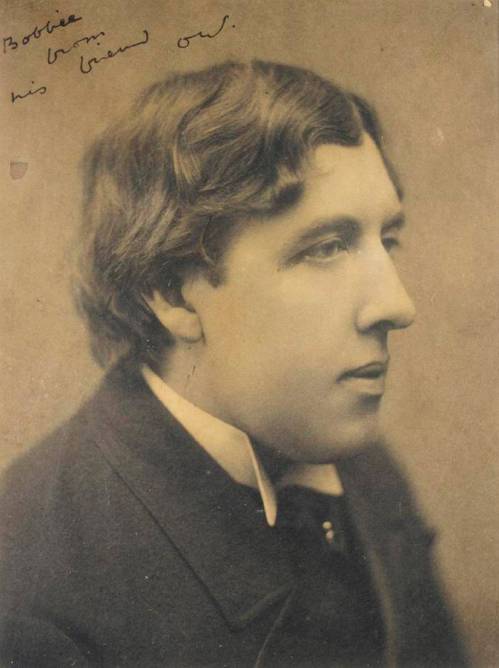
“This is a book of revelations,” writes Merlin Holland as he begins his extensive account of the downfall and subsequent decades-long hypocritical attacks on his grandfather, playwright and poet Oscar Wilde, who became the poster boy of sexual misconduct (a homosexual affair) and subversive behaviour for attacking Victorian morals.

Despite some rehabilitation of Wilde’s life and actions, “I have no doubt that Oscar will go on inspiring hypocrisy in various forms for decades to come,” Holland says.

Many of the people who attacked Wilde or unduly benefited from his work (or their descendants) will feel uncomfortable by the revelations in this book, he writes, and if that sounds simply like historical payback, it is not. The author’s research draws a clear picture of the vicious attacks on Wilde’s character and writing, and on those who monetarily benefited from it.

But first: the scandal took place in 1895; Wilde was convicted of gross indecency and sentenced to two years’ hard labour for an affair with Lord Alfred (Bosie) Douglas, son of the Marquess of Queensberry. The marquess accused Wilde of being a sodomite, and Wilde sued for libel, goaded by Bosie, who loathed his father. Wilde withdrew his suit, and was charged and convicted in criminal court.

Read
Saturday, Apr. 25, 2026

Enlist landlord to turn down neighbours’ volume

Maureen Scurfield Miss Lonelyhearts 3 minute read Tuesday, Apr. 19, 2022

DEAR MISS LONELYHEARTS: My side-by-side duplex neighbour sings loud, horrible duets with his girlfriend. She sings in a screechy soprano, and he bangs on the piano, and attempts to “harmonize” with her.

It’s just painful. We can hear them clearly through our cheap walls. For some reason, they get inspired late at night. Then they can go for up to an hour “singing” together. It’s endless when you’re trying to go to sleep and have to work in the morning. We figure they must be hitting the bottle.

I end up having to bang on the wall and swear at the top of my lungs to shut them up. Last night the guy banged back, and yelled through the wall, “What’s your problem, you idiot? Why don’t you come over here!”

Should I go see them? My girlfriend wants me to shut down their singing for good, no matter what it takes.

AI data centres and public benefit

David Clement 4 minute read Wednesday, Jun. 10, 2026

Manitoba Premier Wab Kinew recently rejected a proposed AI data centre near Winnipeg, citing concerns over water use, noise, and a perceived lack of public benefit.

The instinct to protect communities from unwanted development is understandable. But when the objections collapse under scrutiny, and when the stakes include Canada’s standing in the global AI economy, the decision deserves a harder look.

Critics of data centres frequently invoke water consumption, and there is genuine nuance worth discussing.

Large facilities do use water for evaporative cooling. But comparison matters. A typical 18-hole golf course uses approximately 300,000 gallons of water per day during summer months.

Flop wedge needed at Phantom Lake Golf Club

Ryan Desjarlais 4 minute read Preview

Flop wedge needed at Phantom Lake Golf Club

Ryan Desjarlais 4 minute read Friday, Sep. 25, 2026

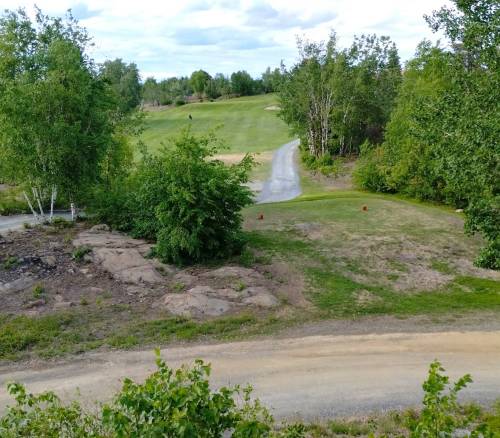
In a remote land of spruce, ptarmigan and rock, Flintabbatey Flonatin — an adventurer exploring the depths of Phantom Lake with his little submarine — discovered an underwater treasure trove of minerals. Once word spread among the prospecting community, the miners came, and the head frame of Flin Flon was born.

Now, that’s not exactly how The Sunless City novel reads, and Phantom Lake is actually in Saskatchewan, but my re-interpretation connects the dots enough to introducing Flin Flon’s links.

Phantom Lake Golf Club does not technically reside in Flin Flon, but rather in its twin community, Creighton, Sask. Indeed, as soon as you cross the border, you immediately turn south for a couple of clicks to the shores of Phantom Lake.

The very old river-stone clubhouse is up the hill from the parking lot. Folks with movement challenges might want to send the young bucks ahead to get the rental cart and bring it back to the parking lot to collect you and your sticks.

Read
Friday, Sep. 25, 2026