What the WHO learned about COVID-19 on its research mission to China

Advertisement

Advertise with us

OTTAWA - Renowned Canadian epidemiologist Dr. Bruce Aylward led a team of researchers into China earlier this month to study the novel coronavirus on behalf of the World Health Organization. Here's what you need to know about their newly released discoveries:

Read this article for free:


By clicking the button above, an account will be created and you will begin to receive some of our recommended newsletters. You may opt out of any newsletter by visiting your Email and Communication Preferences page or by clicking "unsubscribe" at the bottom of any email.

or

Already have an account? Log in here »

To continue reading, please subscribe:

Digital Subscription

One year of digital access for only $1.44 a week*

  • Enjoy unlimited reading on winnipegfreepress.com
  • Read the E-Edition, our digital replica newspaper
  • Access News Break, our award-winning app
  • Play interactive puzzles

*Billed as $5.77 plus GST every four weeks. After 52 weeks, price increases to the regular rate of $19.95 plus GST every four weeks. Offer available to new and qualified returning subscribers only. Cancel any time.

To continue reading, please subscribe:

Add Free Press access to your Brandon Sun subscription for only an additional

$1 for the first 4 weeks*

  • Enjoy unlimited reading on winnipegfreepress.com
  • Read the E-Edition, our digital replica newspaper
  • Access News Break, our award-winning app
  • Play interactive puzzles
Start now

*Your next Brandon Sun subscription payment will increase by $1.00 and you will be charged $17.95 plus GST for four weeks. After four weeks, your payment will increase to $24.95 plus GST every four weeks.

Hey there, time traveller!
This article was published 28/02/2020 (2435 days ago), so information in it may no longer be current.

OTTAWA – Renowned Canadian epidemiologist Dr. Bruce Aylward led a team of researchers into China earlier this month to study the novel coronavirus on behalf of the World Health Organization. Here’s what you need to know about their newly released discoveries:

What are the symptoms?

The novel coronavirus can cause a respiratory illness, called COVID-19, that can present very differently from person to person. Some show no symptoms at all, while others have developed severe pneumonia and even died. So far the disease has killed 2,800 people worldwide. The most common symptoms are fever and a dry cough. Less commonly, people with the disease showed signs of shortness of breath (less than 20 per cent of cases) or a sore throat (less than 14 per cent). Only five per cent of cases showed symptoms of nausea. Nasal congestion was even less common.

Bruce Aylward, Team Lead WHO-China joint mission on COVID-19, speaks to the media about the COVID-19 after returning from China, during a press conference, at the World Health Organization, WHO, headquarters in Geneva, Switzerland, Tuesday, Feb. 25, 2020. THE CANADIAN PRESS/AP-Salvatore Di Nolfi/Keystone via AP

How will it affect your kids?

There are still many unanswered questions about how the virus affects children, including whether they are less susceptible or if they present with different or milder symptoms. Researchers did learn the attack rate in China appeared lower in people 18 and younger, representing only 2.4 per cent of the total number of cases. They also noted no one they interviewed could recall a situation when an adult was infected by a child. Usually, cases of the virus in children were discovered by testing the close contacts of infected adults. Only a very small percentage of people younger than 19 who contracted the disease developed a severe or critical case.

Who is most at risk?

Because there’s no known pre-existing immunity to the virus in humans, everyone is assumed to be susceptible. Most people who are infected will only get a mild or moderate case, which may or may not include a pneumonia, but in China about six per cent of cases were considered critical. The people at highest risk for severe disease and death are those over 60, and people with underlying health conditions like hypertension, diabetes, cardiovascular disease, chronic respiratory disease and cancer. Health-care workers have also been impacted by the virus, especially in the central Chinese city of Wuhan, where the outbreak began. Most cases happened early on, before there was much experience with the disease.

How is it transmitted?

In China, transmission is largely happening in families. Community transmission has been very limited. The researchers found the virus is transmitted mainly through droplets from coughing or sneezing, though more study is needed about the potential for airborne transmission outside of hospitals. The virus has also been found in fecal matter. That’s not been driving transmission in China, the researchers said, but it’s role and significance for COVID-19 remains to be determined. During the 2003 SARS outbreak, the WHO says officials found the virus spread to residents of a Hong Kong apartment building called through faulty plumbing.

What is the incubation period?

People generally develop symptoms within five to six says of being infected, but researchers said it can range from one to 14 days. That is why the government has quarantined people returning from places with high concentrations of the virus for two weeks. Asymptomatic cases have been reported, but most went on to develop the disease after they were tested. Among patients who died, it took from two to eight weeks from the time their symptoms emerged.

This report by The Canadian Press was first published Feb. 28, 2020.

Report Error Submit a Tip

More Stories

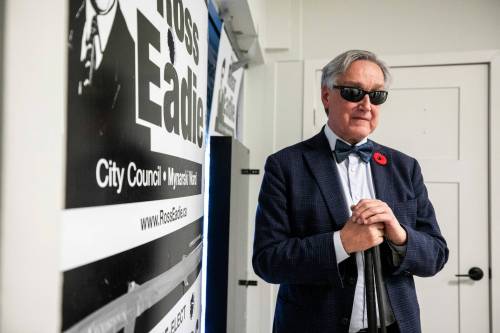
Longtime councillor Eadie ‘knew it was going to be close,’ but expected to finish on top in Mynarski

Scott Billeck 5 minute read Preview

Longtime councillor Eadie ‘knew it was going to be close,’ but expected to finish on top in Mynarski

Scott Billeck 5 minute read Updated: 1:56 PM CDT

Ross Eadie knew his re-election bid would be close, but he didn’t anticipate losing in the neighbourhoods where he grew up.

The 16-year Mynarski councillor, who was defeated Wednesday by political newcomer Natalie Smith, said Thursday the result was difficult to accept because some of his strongest losses were in Luxton, St. John’s Park and surrounding neighbourhoods.

“I knew it was going to be close,” Eadie said. “But I thought it was going to be close with me in first place.”

“I really lost it where I live. So that’s the worst part of it.”

Read
Updated: 1:56 PM CDT

Three in-custody fatalities trigger inquests

Free Press staff 2 minute read Preview

Three in-custody fatalities trigger inquests

Free Press staff 2 minute read 1:50 PM CDT

The province’s chief medical examiner has called inquests into the deaths of three men, including two who died by suicide in correctional facilities earlier this year.

Craig Flett, 32, was found hanging in his cell in the Stony Mountain Institution prison on Feb. 10 this year.

Corrections officers were able to cut him down and tried to resuscitate him, but he later died of a brain injury. Flett was serving a life sentence at the time.

Sebastian Atkinson, a 25-year-old inmate at the Winnipeg Remand Centre, was found hanging in his cell by a linen sheet tied to a metal bar about five feet from the floor.

Read
1:50 PM CDT

Three’s company for new netminder Daws

Mike McIntyre 6 minute read Preview

Three’s company for new netminder Daws

Mike McIntyre 6 minute read 5:09 PM CDT

TAMPA — Nico Daws is still trying to catch his breath.

An unexpected piece of the Connor Hellebuyck blockbuster. A chaotic crash course in his latest hockey home. Joining a fragile club mired in a prolonged losing streak. And now, hitting the road for four tough tests, including one where he will find himself as the last line of defence.

It’s been quite the ride for the newest Winnipeg Jets netminder, who took some time Thursday morning to reflect on the experience.

“A whirlwind of a week. I haven’t even really had time to sit down and digest it,” said Daws.

Read
5:09 PM CDT

Submit a news tip

1 minute read Monday, Mar. 16, 2026

Submit a news tip

World Indigenous Business Forum comes home to Winnipeg for first time, ponders questions for future prosperity

Aaron Epp 5 minute read Preview

World Indigenous Business Forum comes home to Winnipeg for first time, ponders questions for future prosperity

Aaron Epp 5 minute read Tuesday, Oct. 27, 2026

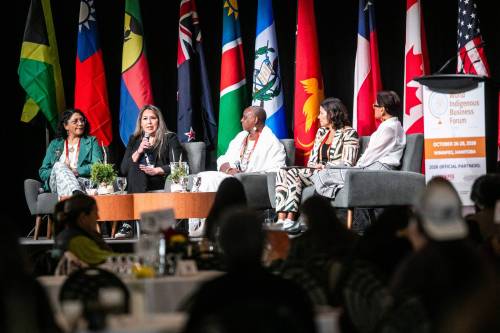
When Nicola Shirley-Phillips imagines what the Indigenous economy in her country might look like 100 years from now, she doesn’t mention social media or artificial intelligence. Instead, she envisions a holistic way of life where people work alongside each other in a way that cares for the planet.

“I see community (and) I see us being more respectful of all the energies around us — our water energy, our climate (and) the soil,” she said. “In all of that, there are opportunities for us to create businesses and opportunities to provide our services.”

Shirley-Phillips, a serial entrepreneur, organic farmer and community economic development specialist from Jamaica, shared her vision Tuesday morning during a panel discussion focused on Indigenous women and prosperity.

The discussion was one of the first items on the schedule during the first full day of the World Indigenous Business Forum at the RBC Convention Centre in Winnipeg.

Read
Tuesday, Oct. 27, 2026

Opera singer David Daniels no longer in singers’ union following sexual assault guilty plea

The Associated Press 2 minute read Preview

Opera singer David Daniels no longer in singers’ union following sexual assault guilty plea

The Associated Press 2 minute read Thursday, Dec. 21, 2023

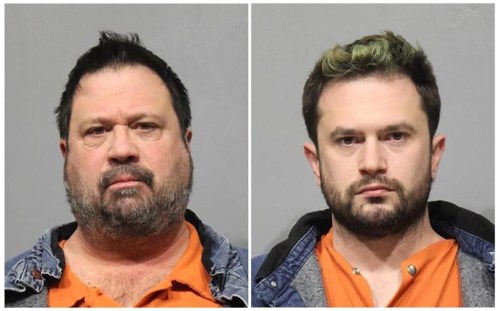
NEW YORK (AP) — Countertenor David Daniels is no longer a member of the union for singers following his guilty plea to a charge of sexual assault.

The 57-year-old and his husband, Scott Walters, pleaded guilty to sexual assault of an adult, a second-degree felony, in Houston's Harris County District Court on Aug. 4. Their accuser was aspiring opera singer Sam Schultz.

They both were sentenced to eight years’ probation and required to register as sex offenders.

American Guild of Musical Artists spokesperson Alicia Cook said Wednesday that Daniels is no longer a member of the union.

Read
Thursday, Dec. 21, 2023