Measles risk elevated in some neighbourhoods 

Immunization gap hurts all of us

Advertisement

Advertise with us

Recent reports of measles outbreaks on Vancouver Island, Montreal, Ottawa and New York may have many Winnipeg parents and health-care providers wondering: could the same thing happen here?

Read this article for free:


or

Already have an account? Log in here »

To continue reading, please subscribe:

Subscribe and receive a limited-edition Free Press branded hat or tote.

Digital Subscription

One year of digital access for only $205*

  • Enjoy unlimited reading on winnipegfreepress.com
  • Read the E-Edition, our digital replica newspaper
  • Access News Break, our award-winning app
  • Play interactive puzzles

*First annual payment billed as $205.00 + GST for one year. This annual subscription will automatically renew at $233.00 + GST every 52 weeks (10% off the regular annual price of $259.35). Offer available to new and qualified returning subscribers only. Cancel any time.

To continue reading, please subscribe:

Add Free Press access to your Brandon Sun subscription for only an additional

$1 for the first 4 weeks*

  • Enjoy unlimited reading on winnipegfreepress.com
  • Read the E-Edition, our digital replica newspaper
  • Access News Break, our award-winning app
  • Play interactive puzzles
Start now

*Your next Brandon Sun subscription payment will increase by $1.00 and you will be charged $17.95 plus GST for four weeks. After four weeks, your payment will increase to $24.95 plus GST every four weeks.

Hey there, time traveller!
This article was published 17/04/2019 (2731 days ago), so information in it may no longer be current.

Recent reports of measles outbreaks on Vancouver Island, Montreal, Ottawa and New York may have many Winnipeg parents and health-care providers wondering: could the same thing happen here?

The answer: yes.

Manitoba has been relatively lucky when it comes to measles, with only a handful of cases reported over the last few years. But a recent research project carried out by Manitoba Public Health suggests the risk of an outbreak may be greater than most people realize.
(Arturs Budkevics/Dreamstime/TNS)
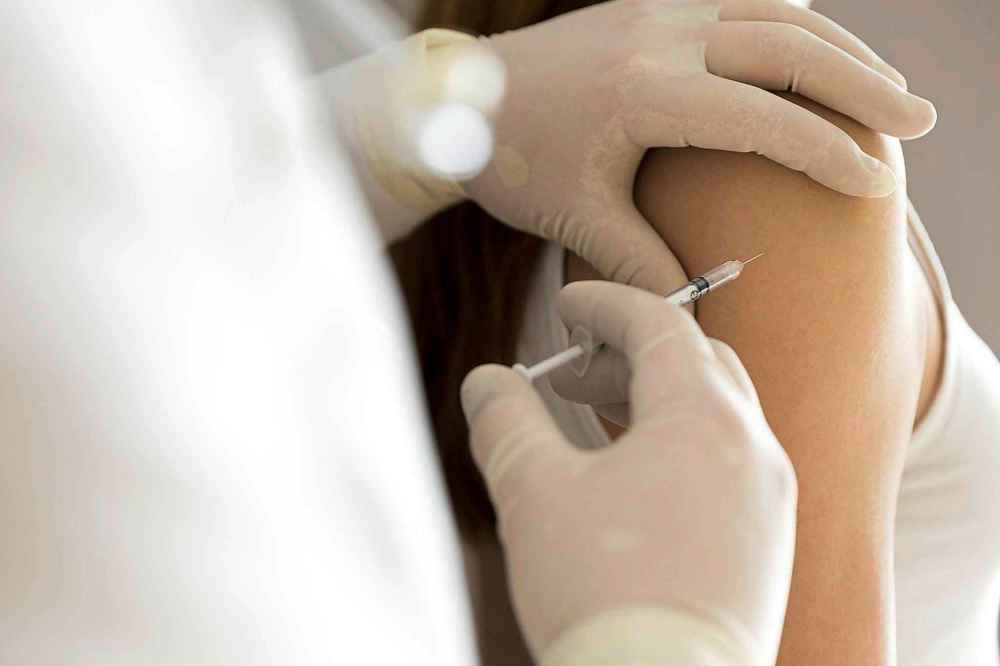
According to the data analyzed last year by public health, only 67 per cent of Winnipeg children born in 2008 have received the recommended two doses of measles vaccine. That’s well below the Manitoba average of 73 per cent.
(Arturs Budkevics/Dreamstime/TNS) According to the data analyzed last year by public health, only 67 per cent of Winnipeg children born in 2008 have received the recommended two doses of measles vaccine. That’s well below the Manitoba average of 73 per cent.

According to the data analyzed last year by public health, only 67 per cent of Winnipeg children born in 2008 have received the recommended two doses of measles vaccine. That’s well below the Manitoba average of 73 per cent.

The numbers represents a serious erosion of “herd immunity,” which is the term used to describe the protection afforded when a sizable proportion of a given population — say 90 to 95 per cent — are vaccinated against various infections such as measles

The relatively low immunization rate means as many as one in three Winnipeg children born in 2008 may be at risk for measles — and the risk may higher depending on which part of the city a child lives. The numbers show rates in the city range from a low of 55 per cent in St. Vital North to a high of 76 per cent in St. James-Assiniboia West and River East North.

Meanwhile, the recent surge in outbreaks of measles in Canada and United States is concerning.

Public officials are often caught between a rock and hard place when it comes to raising awareness about potential health issues such as measles. (I don’t want panic, but I don’t want to underplay the potential for a serious outbreak, either.)

In this case, the facts speak for themselves: measles is a serious public health threat. And while most children will recover from the infectious disease, children with measles are at risk for serious complications that can affect the lungs and brain, and may even cause death.

Reducing the risk of a measles outbreak in our city is both an individual and community responsibility.

First and foremost, make sure you and your children’s immunizations are up to date. It is recommended children receive two doses of the measles vaccine, the first at 12 to 15 months of age, and the second at four to six years. The effectiveness of a single dose is estimated to be 85 to 95 per cent. With a second dose, efficacy is almost 100 per cent.

If you are travelling, talk to your health-care provider and ask whether your child is properly immunized. (If you aren’t sure about which immunizations are due when, check the schedule online at Manitoba Health’s website.)

Second, make an effort to learn more about the measles vaccine.

Misinformation campaigns, particularly on social media, have been one of the attempted measures to erode trust in vaccines. Fortunately, social media platforms are beginning to take action to correct the dissemination of misinformation but we must all do more to build trust. It is now more important than ever people address their concerns and educate themselves about the role immunization plays in preventing disease.

Health professionals can also do more. It is important health-care providers assess the vaccination needs of their practice populations and develop strategies to address the immunization gap.

Public health officials across the country are doing their part by supporting National Immunization Awareness Week, which starts Saturday (April 20). It’s the perfect time to talk to your health-care provider to address any concerns you may have about immunization.

In addition, people looking for information online can visit Immunize Canada’s website, which offers numerous resources, including detailed information on various infectious diseases and a parent’s guide to immunization.

Dr. Bunmi Fatoye is a medical officer of health with the Winnipeg Regional Health Authority.

Report Error Submit a Tip

More Stories

Letters, Oct. 7

6 minute read Yesterday at 2:01 AM CDT

On diet and humanity

Re: “Maybe ASI will need us” (Letters, Oct. 5)

Mr. Martin, humans eating animals is not part of the circle of life. Many cultures with abundant plant resources, or for religious beliefs, have historically subsisted on largely or strictly vegetarian diets. Likewise, in extreme environments such as the Arctic, Inuit rely heavily on animal products due to the near-absence of arable land. Humans adapt locally to their environments and do not have a single ancestral diet.

Clearly vegetarian or vegan diets are not fringe, as evidenced by plant-based products on main-stream grocery store shelves. To suggest the Free Press is morally endorsing a fringe diet is rubbish, (the newspaper) merely gives the public a platform for diverse opinions, thus generating individual, thought-provoking ideas and conversations — a practice that is desperately needed these days.

Manitoba spends, what comes next?

Rafiq Andani 4 minute read 2:00 AM CDT

Whatever Manitobans think of this government’s health-care record, its willingness to spend is impressive. The promise to rebuild care has inspired a massive mobilization of public money.

Health, Seniors and Long-Term Care spending reached $9.66 billion in 2025-26. Next year’s budget allocates $10.59 billion, an almost 10 per cent increase above last year’s actual spending, following increases of approximately 5.6 and 6.8 per cent in the preceding years. The government has found room for another $931 million in a single year.

That allocation stands roughly $2 billion above spending in 2023-24, the year the government changed, and represents an increase of nearly one-quarter. At $10.59 billion, the budget amounts to approximately $29 million a day.

Let’s consider the province’s reported additions and funding commitments:

Federal COVID-19 aid bill passes into law

Mia Rabson and Joan Bryden, The Canadian Press 6 minute read Preview

Federal COVID-19 aid bill passes into law

Mia Rabson and Joan Bryden, The Canadian Press 6 minute read Wednesday, Mar. 25, 2020

OTTAWA - An emergency federal bill to give the government billions of dollars to spend to help anxious workers, families and employers cope with COVID-19 is now law.

Gov. Gen. Julie Payette signed the bill at 12:18 p.m. Eastern time Wednesday, after both the House of Commons and Senate issued speedy approvals earlier in the day.

The bill allows the federal government up to $52 billion in funds to directly help Canadians, including a repackaged aid program for workers who can't work for almost any reason connected to the virus.

That Canada Emergency Response Benefit will offer $2,000 a month in direct support through the Canada Revenue Agency, and is the main reason the cost of direct COVID-19 aid nearly doubled from an estimated $27 billion last week to $52 billion now.

Read
Wednesday, Mar. 25, 2020

Time’s up on smartwatches in class: education minister

Maggie Macintosh Local journalism initiative reporter 3 minute read Preview

Time’s up on smartwatches in class: education minister

Maggie Macintosh Local journalism initiative reporter 3 minute read Wednesday, Sep. 11, 2024

Manitoba’s education minister wants to make clear the new ban on cellphones in classrooms across the province is all-encompassing and applies to more than just handsets.

“You can’t be having a smartwatch that’s cell-enabled in a classroom. It’s no different than a phone,” Education Minister Nello Altomare told the Free Press.

“That’s a personal device that can cause a distraction and it doesn’t belong in a classroom, unless of course it monitors your glucose level.”

Over the summer break, the NDP government announced a sweeping phone ban in elementary schools and stricter rules that only give Grade 9-12 students access to devices during breaks. Exemptions are being made to accommodate medical and inclusion-related needs.

Read
Wednesday, Sep. 11, 2024

Roundup of Olympic gold medals from Tuesday, Feb. 8

The Associated Press 6 minute read Preview

Roundup of Olympic gold medals from Tuesday, Feb. 8

The Associated Press 6 minute read Tuesday, Feb. 8, 2022

BEIJING (AP) — A roundup of gold medals from Tuesday, Feb. 8, at the Beijing Games:

___

ALPINE SKIING

MEN'S SUPER-G

Read
Tuesday, Feb. 8, 2022

Letters, Oct. 8

6 minute read 2:01 AM CDT

A call for digital revolution

Re: MPI on new path after Project Nova debacle (Oct. 6)

Computer scientist Melvin Conway once stated, “Any organization that designs a system (defined broadly) will produce a design whose structure is a copy of the organization’s communication structure.”

This is seen clearly in the Manitoba government’s online service. The Manitoba government has a “Data MB” portal to view government data sets, but data about vehicle collisions is only accessible from Manitoba Public Insurance’s Manitoba Collision Dashboard. If you need to find information on a Manitoba surgeon, that information is on Shared Health’s website, but if you need surgical wait times, that’s on the main government website.