Los Angeles wildfire deaths rise to 24 as more fierce winds are forecast

Advertisement

Advertise with us

LOS ANGELES (AP) — A growing force of firefighters moved into the Los Angeles area Monday as more powerful winds were expected to trigger new wildfires that could set back the recent progress made in containing blazes that have destroyed thousands of homes and killed at least 24 people.

Read this article for free:


By clicking the button above, an account will be created and you will begin to receive some of our recommended newsletters. You may opt out of any newsletter by visiting your Email and Communication Preferences page or by clicking "unsubscribe" at the bottom of any email.

or

Already have an account? Log in here »

To continue reading, please subscribe:

Digital Subscription

One year of digital access for only $1.44 a week*

  • Enjoy unlimited reading on winnipegfreepress.com
  • Read the E-Edition, our digital replica newspaper
  • Access News Break, our award-winning app
  • Play interactive puzzles

*Billed as $5.77 plus GST every four weeks. After 52 weeks, price increases to the regular rate of $19.95 plus GST every four weeks. Offer available to new and qualified returning subscribers only. Cancel any time.

To continue reading, please subscribe:

Add Free Press access to your Brandon Sun subscription for only an additional

$1 for the first 4 weeks*

  • Enjoy unlimited reading on winnipegfreepress.com
  • Read the E-Edition, our digital replica newspaper
  • Access News Break, our award-winning app
  • Play interactive puzzles
Start now

*Your next Brandon Sun subscription payment will increase by $1.00 and you will be charged $17.95 plus GST for four weeks. After four weeks, your payment will increase to $24.95 plus GST every four weeks.

Hey there, time traveller!
This article was published 13/01/2025 (657 days ago), so information in it may no longer be current.

LOS ANGELES (AP) — A growing force of firefighters moved into the Los Angeles area Monday as more powerful winds were expected to trigger new wildfires that could set back the recent progress made in containing blazes that have destroyed thousands of homes and killed at least 24 people.

Crews and equipment arrived from across the U.S., and from Canada and Mexico — including water trucks and planes that drop firefighting chemicals — as the National Weather Service warned that the coming days could become “particularly dangerous.”

It predicted severe fire conditions will last through Wednesday, with wind gusts in the mountains reaching 65 mph (105 kph). The most dangerous day will be Tuesday, warned fire behavior analyst Dennis Burns at a community meeting Sunday night.

The relative calm Sunday allowed some people to return to previously evacuated areas. But even as containment increased in the worst of the fires, more bad news emerged from the ashes: The death toll surged late Sunday with an update from the Los Angeles County medical examiner. At least 16 people were missing, a number authorities said was also likely to rise.

Fierce Santa Ana winds have been largely blamed for turning the wildfires sparked last week into infernos that leveled entire neighborhoods around the nation’s second-largest city where there has been no significant rainfall in more than eight months.

In less than a week, four fires around the nation’s second biggest city have ignited more than 62 square miles (160 square kilometers), roughly three times the size of Manhattan.

Most of that destruction has been from the Eaton Fire near Pasadena and the Palisades Fire, in a wealthy enclave along the Pacific Coast. Firefighters have made progress on both fronts in recent days, with the Eaton Fire roughly one-third contained.

The returning high winds could trigger explosive growth of the existing fires and new outbreaks in areas untouched so far, creating new challenges for firefighting crews already stretched thin.

Los Angeles County Fire Chief Anthony C. Marrone said 70 additional water trucks arrived to help firefighters fend off flames spread by renewed gusts. “We are prepared for the upcoming wind event,” Marrone said.

Fire retardant dropped by aircraft will act as a barrier along hillsides, officials said.

A group of artists, musicians, and friends in Topanga Canyon banded together to stop fires breaking out in new areas by turning off gas lines and propane tanks.

“We helped hopefully save a couple houses and we put out a couple spot fires, Derek Mabra said as he drove along the coast looking at the destruction. “It’s complete and total devastation.”

Residents check on their homes

Some residents have been able to return to their homes to survey the damage.

Jim Orlandini, who lost his hardware store in Altadena, a hard-hit neighborhood next to Pasadena, said his home of 40 years survived.

“Tuesday night we didn’t sleep at all because we figured the house was gone,” he said Sunday as he recalled the moment the fires spread to his neighborhood.

“The whole time I was thinking, I don’t know what I’m going to find when I get back here and after 40 years, you know, you got a lot of stuff you forget about that would disappear if the house burned down. So we’re thankful that it didn’t.”

Sixteen of the 24 deaths were attributed to the Eaton Fire and eight to the Palisades Fire, according to the Los Angeles County coroner’s office.

Twelve people were listed as missing within the Eaton Fire zone and four were missing from the Palisades Fire, Los Angeles County Sheriff Robert Luna said.

In the meantime, LA city Fire Chief Kristin Crowley urged people to stay away from scorched neighborhoods.

“There are still active fires that are burning within the Palisades area, making it extremely, extremely dangerous for the public,” Crowley said Sunday. “There’s no power, there’s no water, there’s broken gas lines, and we have unstable structures.”

Officials warned the ash can contain lead, arsenic, asbestos and other harmful materials.

About 50,000 people in Los Angeles County remained under evacuation orders, with more than 700 residents taking refuge in nine shelters, Luna said. Officials said most of the orders in the Palisades area were unlikely to be lifted before the red flag warnings expire Wednesday evening.

“Please rest assured that first thing Thursday we will begin talking about repopulation,” Marrone said.

Firefighters continue to battle flames

Crews from California and nine other states are part of the ongoing response that includes nearly 1,400 fire engines, 84 aircraft and more than 14,000 personnel, including newly arrived firefighters from Mexico.

Firefighters over the weekend managed to fight back flames in Mandeville Canyon, home to Arnold Schwarzenegger and other celebrities near Pacific Palisades not far from the coast, where swooping helicopters dumped water as the blaze charged downhill.

Arrests for looting

Looting continued to be a concern, with authorities reporting more arrests as the devastation grew. Those arrested included two people who posed as firefighters going into houses, Los Angeles Police Department Capt. Michael Lorenz said.

With California National Guard troops on hand to guard properties, Gov. Gavin Newsom posted on X: “California will NOT allow for looting.”

Historic cost

The fires that began Tuesday just north of downtown LA had burned more than 12,000 structures. No cause for the largest fires was determined.

AccuWeather’s early estimates suggest the fires could be the nation’s costliest ever, topping $250 billion including what’s to come in the next days.

Rebuilding will be a challenge

Newsom issued an executive order Sunday aimed at fast-tracking rebuilding by suspending some environmental regulations and ensuring that property tax assessments were not increased.

“We’ve got to let people know that we have their back,” he said. “We want you to come back, rebuild, and rebuild with higher quality building standards, more modern standards.”

Los Angeles Mayor Karen Bass said Sunday that she had spoken with President-elect Donald Trump’s incoming administration and expected that he would visit the city.

___

Ramer reported from Concord, New Hampshire. Associated Press journalists Julie Walker in New York, Sophia Tareen in Chicago, Ben Finley in Norfolk, Virginia, and Mead Gruver in Cheyenne, Wyoming, contributed.
Report Error Submit a Tip

More Stories

The long and winding road

Editorial 4 minute read Preview

The long and winding road

Editorial 4 minute read Yesterday at 2:01 AM CDT

As theatre goes, it sent a strong message.

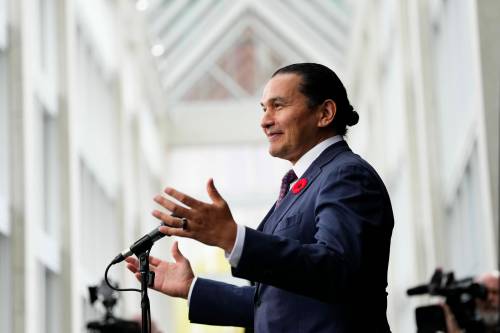
Manitoba Premier Wab Kinew, standing in front of microphones and television cameras, holding up his Indigenous status card and saying that he didn’t feel Canada should have “a race-based form of identification in this country, but that is a reality,” adding that it was time to abolish the Indian Act.

“I think it’s time to abolish the Indian Act, get rid of the Indian Act, move past the Indian Act, and it needs to be done with First Nations people and First Nations governments, of course. I think it’s long overdue that we have a relationship with Indigenous Peoples in Canada that reflects who we are as Canadians today,” he said.

The Indian Act — the name alone suggests how out-dated and out of place the law has become. Originally dating from 1876, the law was put in place to “amend and consolidate the laws respecting Indians” and gave the Minister of the Interior the responsibility to “control and management of the reserves, lands, moneys and property of Indians in Canada.”

Read
Yesterday at 2:01 AM CDT

The new normal in Canadian politics

David McLaughlin 5 minute read Preview

The new normal in Canadian politics

David McLaughlin 5 minute read Yesterday at 2:01 AM CDT

“Nothing happening, all at once.”

Welcome to the new normal of Canadian politics, where normality is the new normal. Routine and stable are in; disruptive and excessive are out. Exhibits A and B are the Alberta referendum and the British Columbia election. Voters opted for stability over volatility.

The opposite of being normal is being different from the norm. In politics that means different from where we’ve been and what we’ve come to expect. Two competing trends have dominated our politics for the past decade and a half — progressivism and populism. Think Justin Trudeau and liberal, progressive identity politics in Canada, and Donald Trump and conservative, populist MAGA politics in America. We are now experiencing a swing away from both those trends.

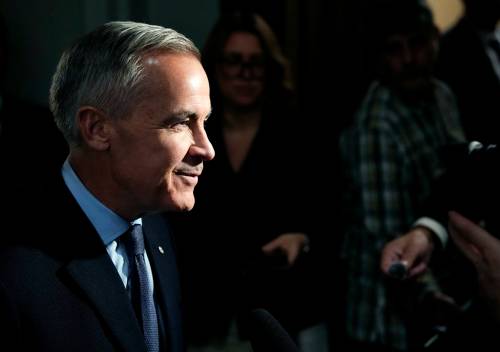
Representing this “new normal” are Prime Minister Mark Carney, for one, and newly elected British Columbia premier, Lorne Doerksen, for another. Both are considered normal because they talk and act like adults in a childish political world. Their political flair is to not have any political flair. They stand out for not standing out.

Read
Yesterday at 2:01 AM CDT

Court ruling concludes Canadian Wheat Board saga

Laura Rance-Unger 4 minute read Preview

Court ruling concludes Canadian Wheat Board saga

Laura Rance-Unger 4 minute read Yesterday at 2:01 AM CDT

It remains to be seen whether the recent court ruling in a lawsuit filed after Canadian Wheat Board’s dissolution in 2012 puts the whole debate to rest, as some no doubt hope.

But either way, the dust has settled on the post-CWB world. The sun still rises and a new generation of farmers on the land only knows by name an institution that for generations influenced every aspect of Prairie grain farming.

The first Rural Revival column I wrote for this newspaper more than 30 years ago was about a thousand farmers from Western Canada demonstrating in support of the Wheat Board. It was in the aftermath of the Western Grain Marketing Panel report, one of several efforts that eventually included a plebiscite to help the federal government decide what to do about a vocal minority of farmers who wanted marketing “freedom.”

The polls at the time suggested about two-thirds of farmers were comfortable enough with the single-desk system for food wheat and barley to keep it around. It served as a counterbalance to canola, which they sold on the open market. They essentially had a dual market.

Read
Yesterday at 2:01 AM CDT

Province changes Thompson ‘Vaxport’ plan

Carol Sanders 5 minute read Preview

Province changes Thompson ‘Vaxport’ plan

Carol Sanders 5 minute read Thursday, Jan. 14, 2021

The Manitoba government has changed its plans for a vaccination "super site" for the North — just days after it was announced — after local officials argued the original proposal was unworkable.

Some northern residents will still get their COVID-19 shots at Thompson's airport, but "Vaxport" will be less super than originally planned, providing injections only to residents of fly-in communities.

Most northern residents will get their shots at the Thompson Community Recreation Centre, which is centrally located in the city of about 13,000.

"This makes much more sense logistically, and for the citizens of Thompson," Mayor Colleen Smook said Thursday after touring the airport site, which is located 10 kilometres from the city and isn't serviced by public transportation.

Read
Thursday, Jan. 14, 2021

‘We’re just all thankful to have some baseball’

Mike McIntyre 6 minute read Preview

‘We’re just all thankful to have some baseball’

Mike McIntyre 6 minute read Wednesday, Jun. 24, 2020

Driving more than 2,000 kilometres in less than a day might seem like the equivalent of getting a root canal to many. But it's a journey Winnipeg Goldeyes manager Rick Forney was happy to make this week, one that started from his residence in Maryland and ended in his most unusual temporary baseball home of Fargo, N.D.

Unable to play games at Shaw Park this summer owing to COVID-19 restrictions banning large gatherings for sporting events until at least September, the Fish will instead fly in enemy territory. An abbreviated spring training gets underway Thursday followed by an abbreviated 60-game American Association baseball season starting July 3.

Forney's 24th season with the Goldeyes, including the past 15 as skipper, is going to be unlike any other.

"It's not ideal, but it's not a reason to not work. If the Goldeyes are going to operate in any fashion, then I want to be a part of it," Forney said by telephone as he passed the midway point of his solo trek just outside Chicago.

Read
Wednesday, Jun. 24, 2020

SNC planned U.S. move if no deal: documents

Jordan Press and Christopher Reynolds, The Canadian Press 5 minute read Preview

SNC planned U.S. move if no deal: documents

Jordan Press and Christopher Reynolds, The Canadian Press 5 minute read Thursday, Mar. 28, 2019

OTTAWA - SNC-Lavalin warned federal prosecutors last fall about a possible plan to split the company in two, move its offices to the United States and eliminate its Canadian workforce if it didn't get a deal to avoid criminal prosecution, newly obtained documents show.

The documents, part of a PowerPoint presentation obtained by The Canadian Press, describe something called "Plan B" — what Montreal-based SNC might have to do if it can't convince the government to grant a so-called remediation agreement to avoid criminal proceedings in a fraud and corruption case related to projects in Libya.

Under that plan, SNC would move its Montreal headquarters and corporate offices in Ontario and Quebec to the U.S. within a year, cutting its workforce to just 3,500 from 8,717, before eventually winding up its Canadian operations.

“The government of Canada needs to weigh the public interest impact of the prosecution of SNC-Lavalin," the presentation reads.

Read
Thursday, Mar. 28, 2019