China, Saudi Arabia must be part of new fund for climate loss and damage: Guilbeault
Advertisement
Read this article for free:
or
Already have an account? Log in here »
To continue reading, please subscribe:
Digital Subscription
One year of digital access for only $1.44 a week*
- Enjoy unlimited reading on winnipegfreepress.com
- Read the E-Edition, our digital replica newspaper
- Access News Break, our award-winning app
- Play interactive puzzles
*Billed as $5.77 plus GST every four weeks. After 52 weeks, price increases to the regular rate of $19.95 plus GST every four weeks. Offer available to new and qualified returning subscribers only. Cancel any time.
To continue reading, please subscribe:
Add Free Press access to your Brandon Sun subscription for only an additional
$1 for the first 4 weeks*
- Enjoy unlimited reading on winnipegfreepress.com
- Read the E-Edition, our digital replica newspaper
- Access News Break, our award-winning app
- Play interactive puzzles
*Your next Brandon Sun subscription payment will increase by $1.00 and you will be charged $17.95 plus GST for four weeks. After four weeks, your payment will increase to $24.95 plus GST every four weeks.
Read unlimited articles for free today:
or
Already have an account? Log in here »
Hey there, time traveller!
This article was published 18/11/2022 (1443 days ago), so information in it may no longer be current.
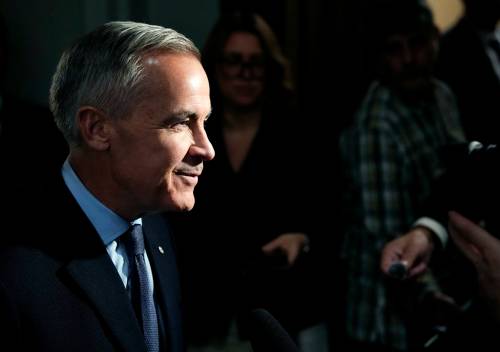
OTTAWA – All big emitters — including China — must contribute to a new global fund to compensate developing countries for the losses and damages they incur from climate change, Environment Minister Steven Guilbeault said Friday.
The call, which originated in a proposal from the European Union, would shift traditional divides in global climate responsibilities between the wealthiest countries, which have historically emitted the largest amounts of greenhouse gases, and developing and emerging economies.
The developed world is usually required to do more to curb emissions, and to help finance those efforts in the developing world. It has been a massive problem getting buy-in for climate efforts in countries such as Canada and the United States, where some leaders say it’s unfair that China doesn’t have to do as much heavy lifting.

China, whose economy has only exploded in the last 25 years, is usually considered a developing country, as are some of the richest oil states, including Saudi Arabia and Qatar.
But Guilbeault said the state of the world is not what it was when the UN climate framework was signed 30 years ago in Brazil.
China wasn’t among the top 10 global economies in 1992. Now it’s number two. Three decades ago, its emissions accounted for about 12 per cent of the world’s annual total. In 2020, its share hit 31 per cent.
“So we can’t continue to pretend that we live in the world of 1992,” Guilbeault told reporters in a virtual news conference from Egypt Friday. “We have to realize that we live in the world of 2022.”
The issue is mainly about who will finance a new loss-and-damage fund that would essentially see wealthy countries compensating developing countries for the harms of climate change.
The COP27 climate talks in Egypt are the first UN climate negotiations to include efforts to create such a fund. Europe proposed that the lineup of countries required to contribute should expand beyond the traditional list and include countries such as China. Canada agrees.
“We believe that the funds should include all large emitters,” said Guilbeault.
He said he doesn’t necessarily think China’s contribution should be on par with other developed countries, but it should still have to give something.
The Association of Small Island States has also pushed for China and India to be included.
In a statement, a group of 24 countries that call themselves the “Like-Minded Developing Countries Group” accused Europe and Canada of trying to shift the burden for loss and damage off themselves.
The Chinese government has said that any contribution it makes must be voluntary.
Scott Moore, director of China programs and strategic initiatives at the University of Pennsylvania, said China’s emissions have grown so much that there is diminishing credibility for the argument it is less culpable for climate change than countries that have been industrialized longer.
Data suggest the U.S. accounts for about one-fifth of cumulative greenhouse gas emissions since the industrial era began, while China is second at about half that amount.
Canada sits in 10th place at 2.6 per cent of cumulative emissions.
But Moore, who worked extensively on the Paris climate agreement in 2015 when he served at the U.S. State Department, said the push to include China and others in the loss-and-damage contributions is a bit of a deflection.
“There is a reluctance, which has been there since the beginning, of rich countries like Canada, or other advanced industrial countries, to accept too much direct responsibility or liability for loss and damage,” he said.
“It’s a way to deflect and dilute the loss-and-damage claim.”
Canada’s call for China to do more comes as relations between the two countries are in shambles following years of diplomatic rows. It also comes as the two countries are preparing to jointly host negotiations towards restoring natural habitats and slowing species decline at a UN biodiversity summit in Montreal next month.
The loss and damage debate is among several outstanding issues still being negotiated as COP27 comes to a close in Sharm el-Sheikh.
The talks reached a frantic pace as parties tried to reach a final 2022 climate agreement to keep alive hope of limiting global warming. A consensus was elusive Friday, which was to be the final day of negotiations, and talks are now dragging into the weekend.

Some of the delay is being blamed on chaotic organization from Egypt, which as the COP27 president gets to oversee the talks. Egypt didn’t produce a draft text of the final agreement until Friday morning, almost a week later than usual.
It left the toughest decisions and final negotiations to the last minute, prompting one Canadian observer to describe the process as “3D chess played by tired, grumpy humans who just don’t want to be here.”
Julia Levin, national climate program manager for Environmental Defence in Canada, said the two-week COP27 event has been very frustrating.
“This is the worst organized COP ever,” she said.
This report by The Canadian Press was first published Nov. 18, 2022.
Related Articles
COP27 moved the needle, but only very slightly
Advertisement Advertise With Us
Advertisement Advertise With Us